

Some weeks the phone won’t stop. Then referrals dry up, a job gets pushed back, and suddenly you’re staring at a quiet patch wondering where the next solid run of work is coming from.
That’s where content marketing for local businesses stops being a nice idea and starts being practical. A few strong posts, published consistently, can keep your business visible while you’re on the tools. You don’t need to become a full-time marketer. You need a system that keeps your name in front of local customers often enough that, when they need help, they think of you first.
Table of Contents
- Why Your Local Business Needs a Content Plan
- Building Your Simple Local Content Strategy
- Content Ideas That Attract Local Customers
- Your Repeatable Weekly Content Calendar
- How to Automate Your Posting and Save Time
- Measuring Results That Actually Matter
- Frequently Asked Questions
Why Your Local Business Needs a Content Plan
A lot of tradies still run on the same pattern. Referrals bring in work. Repeat customers fill some gaps. A local recommendation in a Facebook group gives you a good week. Then nothing lands for a few days, and you feel it immediately.
That model works until it doesn’t. Referrals are valuable, but they’re not a system you control.
Content keeps you visible between jobs
When a homeowner has an urgent problem, they don’t want to do deep research. They look for someone local, reliable, and active. If your profiles look abandoned, you create doubt. If they see recent project photos, practical advice, and signs that you’re busy and professional, trust goes up fast.
That's the primary job of content. It makes your business look alive, credible, and established before you ever answer the phone.
Content marketing delivers 3 times more leads than traditional outbound marketing methods while costing approximately 62% less, according to these content marketing statistics. For a local trade business, that matters because wasted spend hurts more when every booked job has to count.
A plan beats random posting
Posting once when you remember won’t do much. Posting only when work is slow usually means your marketing disappears when you’re busiest, which is exactly when you should be building the next pipeline of enquiries.
Practical rule: treat your content like a crew member doing quiet background work all week. It should keep showing up even when you can’t.
A content plan doesn’t need to be fancy. It just needs to answer a simple business problem. How do you stay visible in your area without stealing hours from quoting, site visits, and actual billable work?
That’s why this matters in 2026. Customers expect to check your business online before they call. If they can’t see recent proof of work, helpful advice, or any sign of consistency, they move on.
Building Your Simple Local Content Strategy
Most tradies hear the word strategy and think it means a thick document full of marketing jargon. It doesn’t. A usable strategy fits on one page.
If you can answer three questions clearly, you’ve already got the bones of a strong content plan.
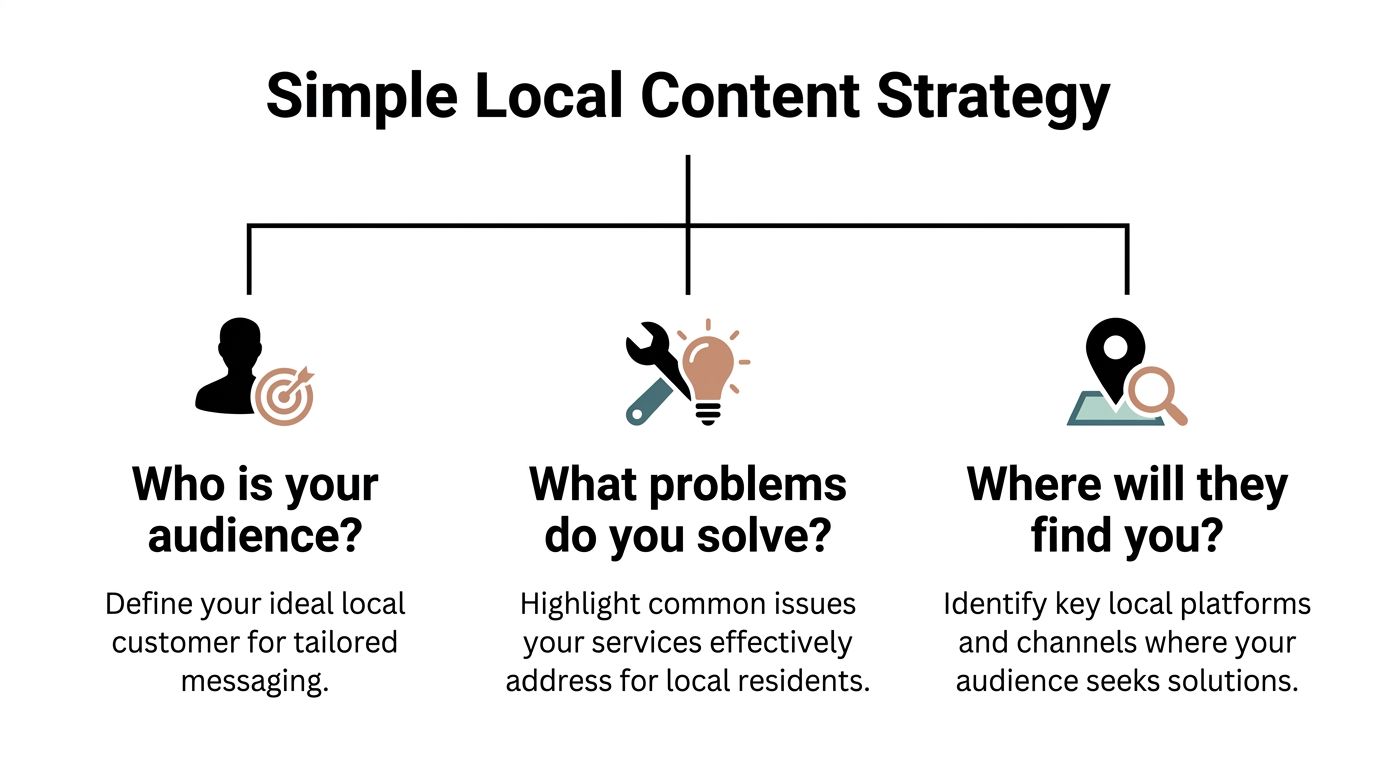
Decide who you want to reach
Start narrow. Don’t say “anyone who needs a tradie.”
Say things like:
- Homeowners in my service area: people who need fast, reliable work and want someone local.
- Property managers: people who care about response time, communication, and dependable follow-through.
- Builders or small commercial clients: people who want a contractor who turns up and makes the process easy.
When your audience is too broad, your content gets vague. Vague posts don’t build trust.
Be clear about the next step
Every post should lead somewhere. Not in a pushy way. Just clearly.
Some examples:
- Call for urgent work
- Send a message for a quote
- Ask about availability
- Book an inspection
- Save the post for later
If a post gets attention but gives people no obvious next move, you lose momentum.
A good post doesn’t just look professional. It points the customer toward one simple action.
Say why you’re the right choice
In this regard, many local businesses go flat. They copy what everyone else says. Quality service. Reliable team. Competitive pricing.
That isn’t enough on its own.
Try to define what customers repeatedly appreciate about your work:
- You explain things in plain English.
- You turn up when you say you will.
- You specialise in tricky fault-finding.
- You leave sites tidy and communicate well.
- You handle both urgent jobs and planned upgrades.
Those are usable trust points. Build content around them.
A documented plan matters because consistency matters. For 2025, 69% of marketers plan to increase their content marketing budgets, according to Content Marketing Institute’s content marketing statistics. Local operators don’t need enterprise budgets to compete, but they do need clarity and regular output.
If you want to see how this thinking applies in a trade-specific setting, this guide on electrician digital marketing is a useful example of how focused messaging beats generic promotion.
Content Ideas That Attract Local Customers
Most tradies don’t run out of work to talk about. They run out of time to turn that work into posts.
That’s why the best content formats are simple, repeatable, and easy to capture on a phone.

Post formats that are easy to repeat
Here are the formats I’d use first for any local trade business.
- Before and after jobs: Show the result, but add context. A switchboard upgrade, a hot water replacement, a deck frame, a ducted system install. Explain what the issue was and what changed.
- Quick phone videos: Keep them short. Show a common problem, a warning sign, or a small maintenance tip. Speak like you would to a customer on site.
- Project spotlight posts: Walk through a job in plain language. What was the customer dealing with, what did you do, and what outcome did they get?
- Meet the team content: One photo, one name, one sentence on what they do well. This humanises the business quickly.
- Tool or process posts: Show how you diagnose, prepare, test, or finish work. People don’t just buy the outcome. They judge how professional your process looks.
- Seasonal reminders: Tie your advice to real local conditions. Safety checks, maintenance timing, upgrade planning, storm prep, heating or cooling changeovers.
- Customer questions turned into posts: If people ask the same thing on calls, in messages, or during quotes, that topic belongs in your content rotation.
What works better than polished fluff
A glossy post with no substance gets ignored. A clear photo and a useful explanation usually does better for a local service business.
For example, a plumber might post a photo of a failed tempering valve with a short explanation of the symptoms a homeowner might notice. An electrician might post a simple warning about repeated breaker trips and explain when it’s time to stop resetting and call a professional.
That kind of content builds trust because it sounds like real work.
If you want more examples specific to one trade, this list of plumbing advertising ideas shows how strong local service posts can stay practical instead of gimmicky.
Keep one idea moving across multiple posts
One completed job can become several pieces of content:
| Content angle | Example |
|---|---|
| Photo post | Finished switchboard upgrade with a short caption |
| Educational post | Signs your board may need attention |
| Video | Quick explanation of what was replaced |
| Team post | Tech on site with a note about the job |
| Follow-up post | Why the customer chose the upgrade now |
That’s how busy operators stay consistent. They stop treating every post like it needs a brand new idea.
A short visual explainer can also help when you’re stuck on what to publish next:
Most good trade content doesn’t come from brainstorming sessions. It comes from paying attention on the job and documenting what already happened.
Your Repeatable Weekly Content Calendar
Consistency sounds harder than it is. You do not need to post all day, every day. You need a rhythm you can maintain when you’re busy.
A simple weekly cadence removes the daily question of what to post. It also stops the stop-start pattern that makes profiles look neglected.
A schedule you can keep
A step-by-step content marketing methodology optimized for local visibility can yield 3x more leads, but it often requires 3-6 months to show significant ROI, according to these content marketing benchmarks. That timeline matters because many business owners quit too early, usually just before consistency starts compounding.
Here’s a workable structure.
| Day | Content Theme | Example Post |
|---|---|---|
| Monday | Project showcase | Recent job with 2 to 3 photos and a short explanation |
| Wednesday | Educational tip | Common issue homeowners should watch for |
| Friday | Team or community post | Staff spotlight, work-in-progress shot, or local update |
How to make this calendar realistic
Monday works well for proof. You’re showing completed work from the previous week.
Wednesday is for trust. Teach something small and useful.
Friday is for familiarity. Let people see the people behind the business, your standards, or the kind of work you’re doing locally.
You can batch this in one sitting:
- Collect photos during jobs: take a few clean shots before you leave site.
- Write short captions in notes: don’t wait until the end of the month.
- Set posting times once a week: one admin block is enough.
- Reuse winning themes: if switchboard posts get good response, do more of them from different angles.
Field-tested advice: if your schedule only supports three solid posts a week, do three. Reliable beats ambitious every time.
The point isn’t volume. The point is that your business keeps showing up.
How to Automate Your Posting and Save Time
Most content plans fail for this reason. Not because the ideas are bad. Because the owner is flat out.
A tradie can know exactly what to post and still never get around to it. Jobs run over. Quotes pile up. Phones ring at the wrong time. Then the month disappears.
The bottleneck isn’t ideas
Guidance for local businesses often misses the execution bottleneck: most independent tradies lack the time, design skills, or marketing knowledge to consistently create and schedule content themselves, as discussed in this article on content marketing for small businesses.
That’s the trade-off. DIY posting gives you control, but it usually falls apart when work gets busy. Manual posting also creates inconsistency, and inconsistency is what makes a business look smaller than it is.
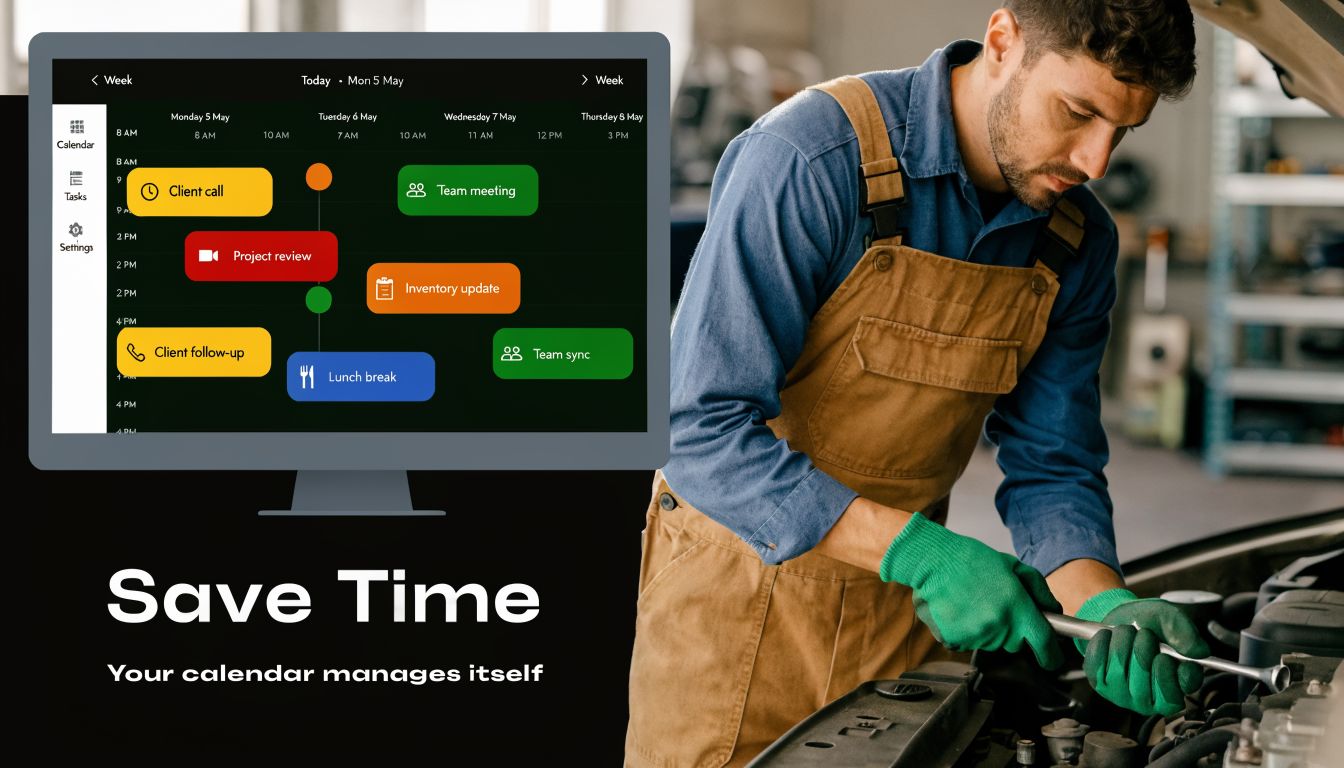
What automation should actually do
Useful automation doesn’t just schedule content. It should remove the parts that stall people out:
- Writing captions
- Designing graphics
- Choosing what to post next
- Remembering to publish
- Keeping branding consistent
The best setup is one where you approve a plan once, load in job photos when you have them, and let the system keep your profiles active.
If you want to see what that kind of workflow looks like in practice, this overview of how it works shows the type of process busy trade businesses need. The key point is simple. If posting depends on you remembering to do it at the end of a long day, it won’t stay consistent.
Automation isn’t about removing your voice. It’s about making sure your business still shows up when you’re too busy to post manually.
Measuring Results That Actually Matter
A lot of business owners get distracted by likes, views, and follower counts. Those numbers can be encouraging, but they don’t pay wages or fill next month’s schedule.
For a tradie, the question is simpler. Did this content lead to an enquiry, a quote request, or a booked job?
Track the signals tied to work
A critical gap in content advice for trades is the lack of specific frameworks for attributing content to booked jobs, even though that’s what time-poor tradies need most, as noted in Salesforce’s content marketing guidance for small businesses.
You don’t need a complicated reporting stack to start tracking better.
Use a basic checklist:
- Ask every new caller: “How did you hear about us?”
- Check direct messages weekly: note which posts triggered enquiries.
- Watch contact form submissions: look for patterns after certain content themes.
- Log quote sources: referral, social post, repeat customer, website, local group, or other.
Stop rewarding vanity metrics
A post with modest reach that brings one strong quote request is more valuable than a post with lots of likes and no action.
Don’t judge content by applause. Judge it by conversations that lead to work.
That shift matters because it changes what you create next. You stop chasing broad attention and start publishing the content that attracts the right local customers.
Frequently Asked Questions
How long does content marketing take to start working
Usually longer than people want, but sooner than people think if they stay consistent. Expect a steady build, not an overnight spike. The businesses that get value from content marketing for local businesses are the ones that keep showing up long enough for customers to notice the pattern.
Do I need to be good at writing or video
No. You need clear photos, plain language, and useful observations from real jobs. A short explanation filmed on your phone often works better than an overproduced post because it feels honest and relevant.
How much time should I spend each week
Keep it lean. One short admin block to review, queue, and respond is enough if your system is organised properly. A common mistake is trying to create everything from scratch every few days instead of working from repeatable formats and a simple calendar.
What if I’m too busy to post consistently
That’s the exact reason to set up a system. If posting only happens when you have spare time, it will disappear during busy periods. That’s when automation, batching photos, and a documented weekly schedule make the biggest difference.
What should I post first
Start with proof and clarity. One recent project, one practical tip, and one team or business post is a strong first week. That gives potential customers three things they want to see fast. Evidence, expertise, and a sense that you’re a real local operator.
If you want a simpler way to stay visible without writing posts after hours, GrowTradie is built for that. It creates and auto-posts trade-specific content so your business keeps showing up online while you focus on the actual work.