

You're probably in the same spot as a lot of tradies. You're flat out quoting, ordering materials, chasing suppliers, finishing jobs, and answering the phone when you can. Then someone tells you to “work on your marketing” as if that's a normal thing to fit into a packed week.
That's why small business marketing packages sound appealing. In theory, you pay for a system and stop guessing. In practice, a lot of packages are built for businesses that sell all day online, not for a plumber, sparkie, chippy, or HVAC crew that wins work through local trust, visible proof, and quick follow-up.
If you want a package that helps, you need one built around booked jobs. Not vanity. Not busywork. Not a pile of services you'll never use.
Table of Contents
- Why Finding Good Marketing Help Is So Hard for Tradies
- What's Inside a Standard Marketing Package
- The Tradie-Focused Package What to Actually Look For
- How to Choose a Package and Understand the True Cost
- Your Simple 30-Day Onboarding Plan
Why Finding Good Marketing Help Is So Hard for Tradies
Most tradies don't struggle because they're lazy. They struggle because marketing advice is usually vague, bloated, or made for the wrong type of business.

You know your trade. You know how to quote a job, solve a problem on site, and keep a customer happy. What wastes time is trying to decode agency language, compare random packages, and work out whether you're paying for something useful or just paying for activity.
A lot of providers sell the same bundle to everyone. A few posts. A few graphics. Maybe email. Maybe ads. Maybe a monthly report full of charts that don't tell you whether the phone rang more often. That's the problem. The package looks complete, but it isn't built around how trade businesses actually win work.
Practical rule: A good package for a tradie should help a local customer find you, trust you, and contact you. If it can't do those three things, it's clutter.
The primary issue is that most recommendations assume every small business requires identical services. In reality, tradespeople often prioritize local visibility and trust signals over expansive reach. The essential question is which two or three specific tasks yield the best results for a busy business owner, according to this analysis of common marketing packages for small businesses.
Why generic packages miss the mark
A cafe can post daily specials. An online shop can push offers every week. A trade business works differently. Your proof comes from finished jobs, tidy workmanship, clear service areas, strong reviews, and being visibly active enough that a customer feels safe calling.
That's why broad “brand awareness” packages often miss. They can keep you busy without making you easier to trust.
Common signs a package isn't right for a tradie:
- Too much emphasis on reach: More eyeballs doesn't mean more local enquiries.
- No system for job photos: If no one is collecting proof of work, the content dries up fast.
- Generic posting: If every post could belong to any business in any suburb, it won't build local credibility.
- Weak reporting: Likes and impressions are easy to show. Enquiries are what matter.
- Heavy owner workload: If you still need to write every caption and approve every post, you bought admin.
What good help actually looks like
A useful package is less like a campaign and more like a routine. It should keep your business looking active between jobs, show real work, and support the channels that help local customers decide you're legitimate.
That usually means fewer moving parts, not more.
The best small business marketing packages for tradies aren't the biggest ones. They're the ones you can actually sustain during a busy month.
What's Inside a Standard Marketing Package
Most standard packages aren't scams. They're just broad. If you understand what's usually included, it gets easier to strip out the fluff and keep what serves the business.
Why agencies bundle services together
Providers bundle services because a business is usually stronger when customers see it in more than one place. Research summarised here found that businesses using three or more digital marketing channels saw a 250% increase in conversion rates versus using just one, and 72% of buyers prefer interacting with brands across several media before purchase in this review of how multi-channel digital marketing affects small business success.
That's the logic behind a package. Not one channel doing all the work. A few channels supporting each other.
For tradies, that idea still applies. The mistake is assuming every channel deserves equal effort.
What each common service is really for
Here's what you'll usually see in small business marketing packages, and what each piece is supposed to do.
- Social posting: This is your open sign. It shows you're active, real, and still taking work. Done well, it also proves what kind of jobs you handle.
- Content creation: This means the photos, captions, graphics, and updates a provider produces for you. For a tradie, this should show real jobs, real service types, and real locations.
- Profile setup and optimisation: This is about making sure your business details are accurate, consistent, and easy to trust across the places customers check.
- Review and referral support: Good providers don't just post. They help you turn happy customers into public proof and repeat work.
- Email follow-up: Useful if you already have a customer list and want to stay in touch with past clients, builders, or property managers.
- Reporting: This should tell you what activity happened and whether it's lining up with calls, quote requests, and booked jobs.
A lot of owners also need help judging whether a provider's results look credible. One practical shortcut is to review real marketing service social proof examples so you can compare polished promises against the kind of feedback actual clients leave.
If you want a plain-English view of the basics before buying anything, this guide on online marketing for contractors is useful because it frames digital activity around contractor workflows rather than generic business advice.
A package isn't valuable because it includes more line items. It's valuable because the parts support each other without creating extra work for you.
One more thing matters. Some services only work if you can feed them consistently. Email needs a list. Content needs photos. Reviews need a follow-up process. If the provider includes these services but has no system to get the raw material, the package will stall after the first month.
The Tradie-Focused Package What to Actually Look For
A tradie doesn't need a bloated stack. A tradie needs a short list of things done properly, every month, without fail.
That's why a focused package usually beats a bigger one. Small businesses with a documented plan are reported to be 6.7 times more likely to report marketing success in these small business marketing statistics. For a tradie, the package should function as that plan. It should stop random posting and replace it with steady, useful activity.
The three things that matter most
If I were narrowing a package for a trade business, I'd start here.
Consistent proof of work
Customers want evidence. Not polished slogans. They want to see the kind of jobs you do, how you present on site, and whether your work looks competent and professional.
That proof can be simple:
- Before and after shots
- Job progress photos
- Short updates about the problem solved
- Service-specific posts tied to actual work completed
Local presence management
If your details are wrong, patchy, or inconsistent, trust drops fast. Customers checking your business want to confirm you're active in their area, offer the service they need, and look established enough to call.
Many generic packages fall short in this area. They create content but don't support the local signals that help convert attention into enquiries.
Reviews and trust signals
A tradie gets hired on confidence. Reviews, recent activity, and visible proof of work all reinforce each other. If a package ignores trust-building, it's missing the part that often tips a customer from “maybe” to “call them.”
For contractors comparing options, this overview of lead generation for contractors is a useful reference because it stays close to the actual outcome. More qualified local enquiries.
Sample Marketing Packages for Trade Businesses
Sample Marketing Packages for Trade Businesses
| Feature | Starter Visibility Package | Job Growth Package |
|---|---|---|
| Best fit | Solo operator | Small crew with regular jobs |
| Content focus | Regular job-photo posts and service updates | Higher post volume with multiple service types and suburbs |
| Business profile support | Basic profile accuracy and updates | Ongoing profile upkeep plus stronger service-area coverage |
| Review process | Simple review request system | Review requests plus follow-up process |
| Owner input needed | Send photos and approve key points | Send photos from multiple jobs and confirm team schedule |
| Reporting | Simple enquiry-focused summary | Broader reporting tied to enquiries and job types |
| Main goal | Stay active and credible locally | Build stronger visibility across a wider service area |
A focused package like this is easier to run. It's also easier to judge. You can ask a simple question every month. Did this make us more visible, more credible, and easier to contact in the suburbs we want?
If the answer isn't clear, the package needs trimming or rebuilding.
How to Choose a Package and Understand the True Cost
A good sales pitch can hide a weak service. The fastest way to cut through that is to ask blunt questions.
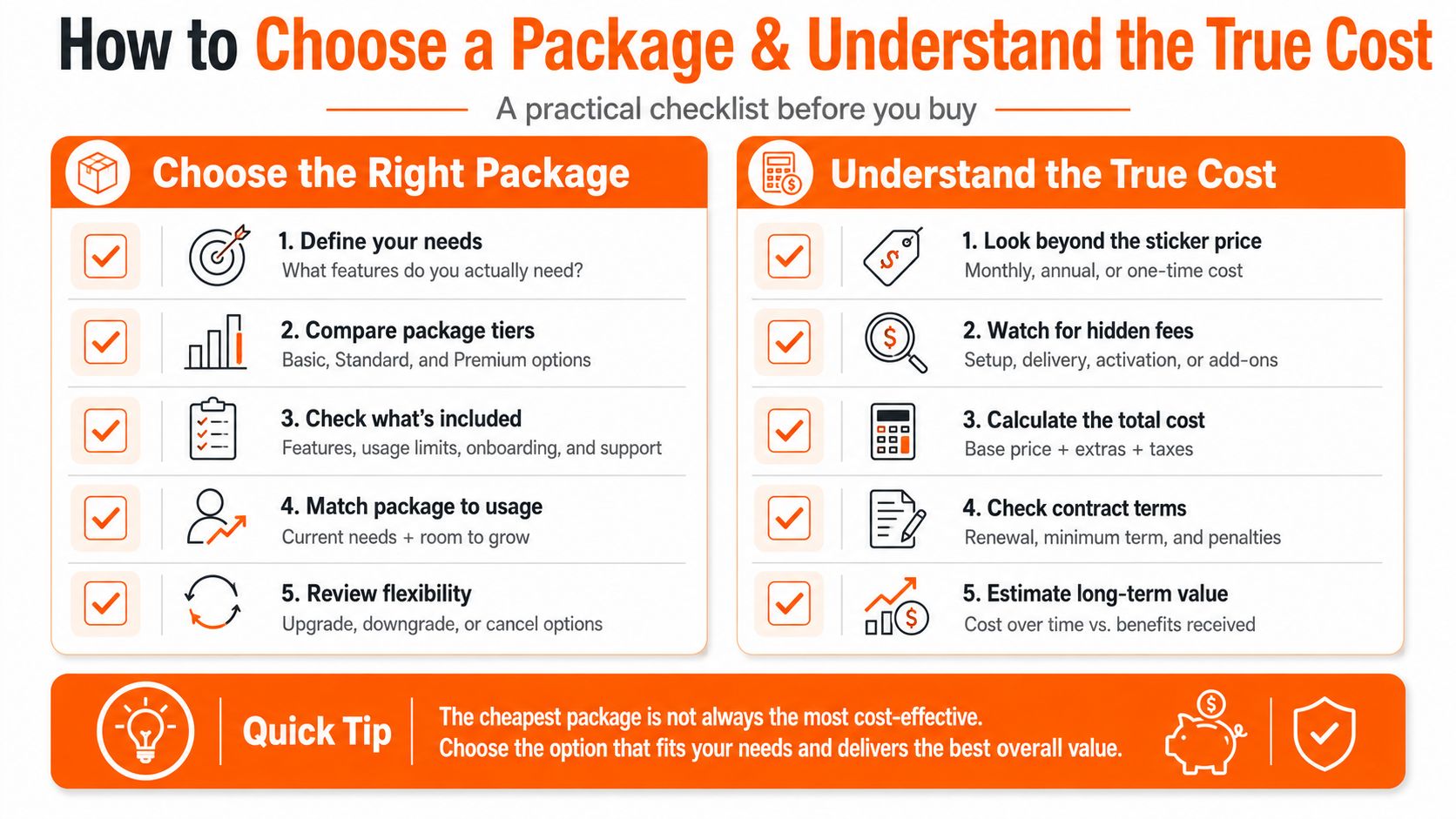
Questions that expose a weak package fast
Ask these before you sign anything.
- Who do you work with now: If they've never worked with trades, expect a longer learning curve and more generic content.
- What do you need from me each week: This tells you whether the package is light-touch or whether you're secretly buying yourself another admin job.
- How do you handle photos and job details: If they don't have a simple process, consistency will fall apart.
- What do your reports focus on: You want enquiries, calls, booked work, and signs of stronger local trust. Not just surface-level engagement.
- How specific will the content be: Service area, job type, and real proof matter. Generic posts won't carry much weight.
- What happens in a busy month when I send less content: Good systems have fallback content and reuse rules. Weak ones go quiet.
If you're comparing providers broadly, this guide on vetting marketing agencies for growth is a practical way to sharpen your checklist before you sit through another sales call.
If the provider can't explain the workflow in plain English, expect confusion after you sign.
The hidden cost is your time
Owners often find themselves caught here. A package is sold as done-for-you, but the hidden cost remains your time. Approval time. Photo capture. Clarifying service details. Fixing wrong suburb names. Chasing missed posts.
That hidden workload matters even more now. Guidance for small businesses notes that marketing packages are often sold as done-for-you, but the actual cost includes the owner's approval time, photo capture, and service details, and in 2026 it's worth asking what level of automation is being used versus what still needs manual input, as explained in this piece on affordable marketing tactics for small businesses in 2026.
So ask direct questions about automation:
- What gets generated automatically
- What still needs my review
- How long will I spend each week
- Can old job photos be reused intelligently
- What happens if I'm too busy to send content
One practical option in this category is GrowTradie, which is built for trade businesses and handles content generation, design, and auto-posting based on your trade, services, and local area. The main point isn't the brand name. It's the model. You want a system that reduces owner effort without turning your business into generic filler.
A cheap package that eats your evenings is expensive. A more structured package that saves hours can be the better buy.
Your Simple 30-Day Onboarding Plan
Starting is where a lot of tradies stall. Not because they're against marketing, but because they expect a messy setup and weeks of back-and-forth.
It doesn't need to be like that.
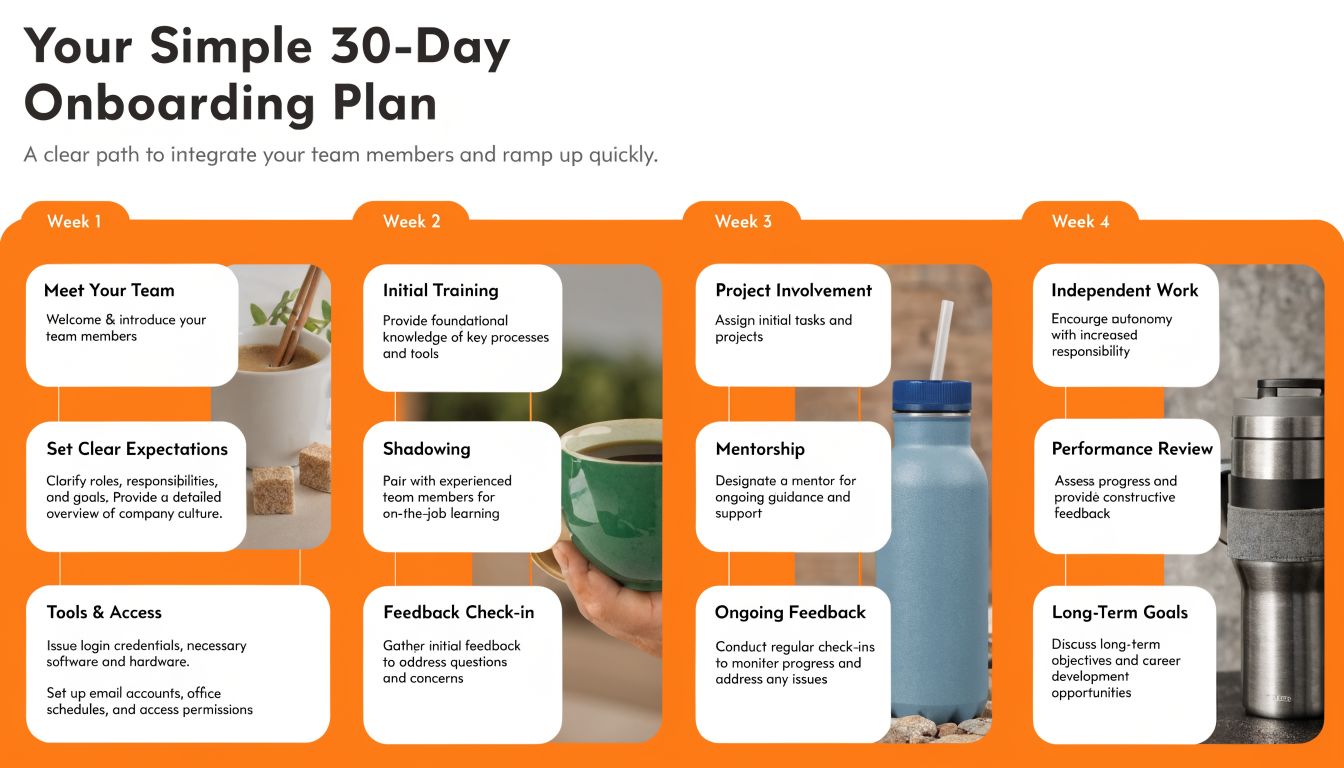
Week 1 and Week 2
Week 1 is for getting the basics right. Keep it simple and practical.
Send over:
- Core business details: Business name, phone, service areas, and main job types
- Priority services: The work you most want more of
- Job photos: Even a rough batch from your phone is enough to start
- Brand basics: Logo, colours if you have them, and any wording you always use
- Proof points: Reviews, licences, years in trade, or specialisations if relevant
A proper setup should also pin down how approvals work. One person. One method. One turnaround expectation. If three people are commenting on every post, the process will drag.
Week 2 is for first-round content review. During this stage you check whether the provider understands your business.
Review for:
- Accuracy: Are services described properly?
- Local relevance: Are the right suburbs or areas being referenced?
- Tone: Does it sound like a real trade business?
- Proof: Do the posts show real work, not stock-style fluff?
A solid first review should feel like minor corrections, not a full rewrite.
Week 3 and Week 4
Week 3 is go-live week. Posting starts. Profiles become active again. You begin building consistency instead of relying on random bursts.
At this point, don't overcomplicate it. Let the system run. Watch for obvious issues, but don't micromanage every word.
Week 4 is your first check-in. You're not looking for miracles. You're looking for signs that the workflow is working.
Use a short review:
- Was content posted consistently
- Did the posts reflect the right services
- Was the approval process easy enough
- Are customers mentioning they found or checked you online
- What content felt strongest
If you want to see what a lower-friction setup looks like before committing, the GrowTradie process explained step by step gives a clear picture of how an onboarding flow can work without turning into a project you have to manage yourself.
A good first month should leave you with less stress, not more. You should feel like the machine is finally running in the background while you get on with the work that pays.
If you want a simpler way to stay visible without writing posts yourself, GrowTradie is built for trade businesses that need steady content, auto-posting, and a practical setup that fits around real job schedules.