
Running ads can feel like guesswork. You boost a post, try a few things, and the phone still doesn't ring any more than usual. That frustration is common because most advice about ads for cleaning services is either too generic or written for businesses that don't rely on local trust, fast response, and booked jobs.
In this guide, “cleaning services” means something broader. It means businesses that clean up a customer's problem. The plumber fixing a leak, the electrician sorting out unsafe wiring, the remodeler replacing an outdated room, the HVAC tech restoring comfort when a system fails. These businesses don't need fluffy campaigns. They need ads that match real buying behaviour, local intent, and the way people choose a service provider.
That matters because this isn't a tiny market. One forecast valued the global cleaning services market at USD 442.09 billion in 2025 and projected USD 770.76 billion by 2033 at 7.3% CAGR. If you're running ads for cleaning services, the takeaway is simple. Demand is big enough, and growing enough, that visibility still matters.
Table of Contents
- 1. Emergency Service Ad
- 2. Before & After Showcase
- 3. Customer Testimonial Ad
- 4. Educational How-To Ad
- 5. Limited Time Offer Ad
- 6. Problem-Agitation-Solution PAS Ad
- 7. Local Community Ad
- 8. Booking Incentive Ad
- 8-Point Comparison: Cleaning Service Ad Types
- From Clicks to Booked Jobs Key Takeaways
1. Emergency Service Ad
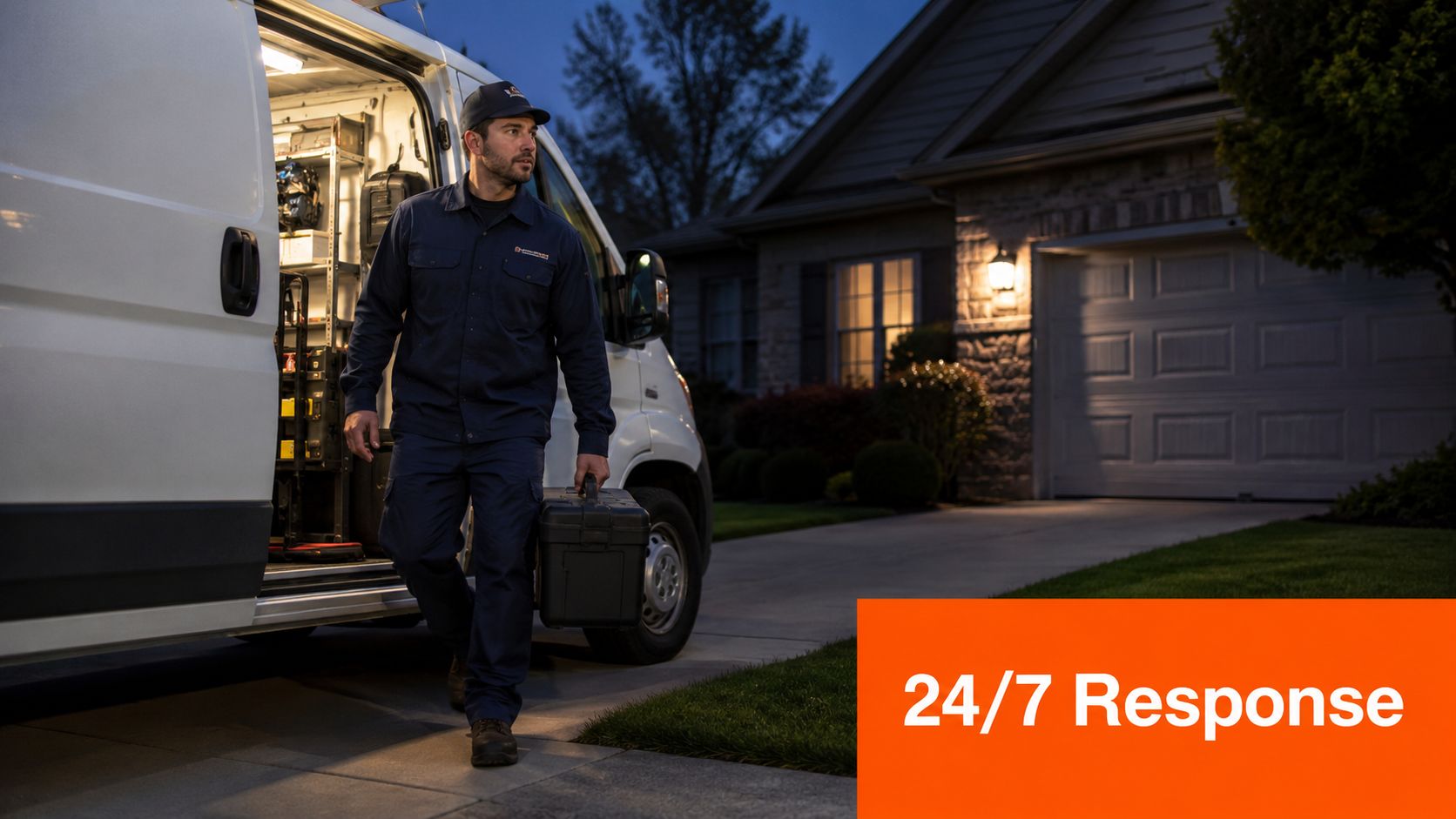
If your customer has an urgent problem, a soft brand ad won't win. They want a provider who looks available, nearby, and easy to contact. That's why emergency ads work best when they strip the message down to speed, service area, and one clear next action.
The copy should sound like a dispatcher, not a marketing agency. “Burst pipe in West Brisbane? Call now.” “Power fault in Parramatta? Local electrician available today.” That kind of wording usually outperforms vague slogans because it matches the customer's mindset.
Lead with speed and location
For local service businesses, mobile intent matters. One industry roundup reported that 78% of local mobile searches in the home-services sector result in a purchase within 24 hours. If someone is searching from a phone while a problem is active, don't send them to a long form with eight fields. Use click-to-call, call extensions, or a booking page with one obvious button.
A good emergency ad usually includes:
- A real service area: Use suburb, city, or region names customers recognise.
- A clear urgency cue: “Open now,” “same-day help,” or “after-hours callouts.”
- A frictionless action: Call now beats “learn more” for this kind of job.
Practical rule: If the job is urgent, your ad should feel urgent too. Fast words, simple layout, phone-first CTA.
What to test first
Start by testing two versions of the same ad. One should lead with the problem, such as “No hot water?” The other should lead with the outcome, such as “Hot water restored today.” Keep the image and audience the same so you can tell which angle pulls more calls.
Also split timing. After-hours campaigns often behave differently from daytime campaigns because the customer problem is different. At night, reassurance matters. During business hours, convenience often matters more.
2. Before & After Showcase
Some services sell best when the result is obvious. Remodelers, painters, flooring specialists, carpenters, and restoration crews all benefit from ads that show visible change without overexplaining it. The key is speed. The customer should understand the improvement within a second or two.
Strong before-and-after ads don't just show nicer visuals. They remove doubt. People often struggle to picture what a finished result will look like in their own property, so a clear transformation closes that gap faster than a long paragraph ever will.
Show the contrast fast
Carousel ads on Facebook and Instagram are a natural fit here because they let you sequence the story. Card one shows the original problem. Card two shows the finished result. Card three can explain what was done and who the project suited.
Use the same angle, similar lighting, and tight captions. “Dated ensuite to modern upgrade” is clearer than “Another happy client.” If you can add the suburb name naturally, even better. It makes the work feel real and nearby.
A few practical rules matter:
- Get written permission: Don't assume a customer is fine with their property in an ad.
- Label the job type clearly: Renovation, repaint, fit-out, repair, restoration.
- Avoid overediting: If the after shot looks fake, trust drops fast.
Where this format usually works best
This ad type performs best when the buyer is comparing providers and needs proof of finish quality. It tends to be weaker for highly urgent problems, where speed and availability matter more than visual polish.
Good before-and-after ads don't brag. They let the work do the convincing.
If your team has a decent camera phone and a repeatable shot list, this format is one of the easiest to scale. The hard part isn't production. It's discipline. Most businesses forget to capture the “before” because they're in a rush. Fix that habit and you suddenly have months of ad creative.
3. Customer Testimonial Ad

Most ad copy sounds self-congratulatory. Testimonials fix that because the praise comes from someone else. For local service businesses, that's useful because buyers usually want one thing before they enquire. They want a reason to believe you won't waste their time.
This format works especially well when the testimonial names the actual problem and the actual outcome. “Turned up when they said they would and fixed the fault without pushing extra work” is stronger than generic praise. Specificity sounds like truth because it usually is.
Borrow trust from real customers
One paid-search case study for a service business reported 17.35% conversion from organic search and 20.63% from paid search over the last 90 days, with paid search driving 37.11% of conversions. The practical takeaway isn't that every business will match those figures. It's that high-intent traffic converts well when the message, landing page, and trust signals line up.
Testimonial ads help create that alignment. A searcher clicks because they have a problem. They stay because a real customer confirms you solved a similar problem professionally.
What makes a testimonial ad believable
Video is ideal when you can get it, but simple image-based testimonial ads still work if they feel grounded in a real job. Use the customer's first name, suburb, and service type when permission allows. Pair the quote with a job photo, team photo, or finished result.
The best testimonial ads usually include:
- A recognisable problem: Faulty switchboard, failed unit, damaged room, poor previous workmanship.
- A practical outcome: Fast diagnosis, tidy work, clear communication, fair quote.
- A direct CTA: Call, request a quote, or book an assessment.
Rotate testimonials by suburb and service category. That gives you a more relevant ad for each audience segment without having to invent new offers every week.
4. Educational How-To Ad
Educational ads work when the customer knows something is wrong but isn't sure how serious it is. They don't need a lecture. They need a useful explanation that lowers confusion and makes your business look competent.
This ad style is especially good for more complex work. Electrical safety, system replacement decisions, ventilation issues, water damage signs, and renovation planning all lend themselves to short practical education. The trick is to teach enough to build trust without giving so much detail that the ad becomes a wall of text.
Teach enough to earn the click
Short videos, static carousels, and simple talking-head clips work well here. “Three signs your switchboard needs attention.” “When a leak is structural, not cosmetic.” “Repair or replace? What changes the answer.” These topics pull in people who are researching a problem and deciding who to trust.
This kind of ad also fits how discovery is changing. A Google-focused industry discussion highlighted that 46% of searches have local intent, while AI Overviews are appearing across a growing share of informational searches. For local service businesses, that means broad awareness alone isn't enough. Your ads need to support brand recognition, reviews, and local credibility when buyers compare options.
If someone learns something useful from your ad, you've already separated yourself from half the market.
Turn attention into follow-up
Don't end educational ads with a hard sell unless the topic has obvious urgency. A softer CTA often works better. “Not sure which option fits your property? Ask for an assessment.” “Need a second opinion before replacing the unit? Get a quote.”
A simple sequence works well:
- Ad one teaches: Short tip, warning sign, or common mistake.
- Ad two follows up: Offer an inspection, quote, or call-back.
- Ad three reassures: Customer review or local proof.
That sequence is more durable than running the same sales ad every day and hoping repeated exposure does the work for you.
5. Limited Time Offer Ad
Offers work. Bad offers attract the wrong jobs.
That's the trade-off most owners learn the hard way. If you discount too aggressively, you fill the schedule with price shoppers, low-margin work, and customers who disappear the next time someone cheaper shows up. If you never offer anything, you miss buyers who just need a reason to stop delaying the decision.
Use deadlines only when capacity is real
The best limited-time ads are tied to a genuine business reason. Slow winter week. Spare install capacity. New crew availability. End-of-month scheduling gap. That makes the message believable, and it helps you avoid creating an offer your team can't deliver.
A 2026 Facebook Ads case study reported that a carpet-related local service campaign spent about $285 over two weeks and used local audience targeting plus retargeting of site visitors and partial form-fill users. The useful lesson isn't the exact spend. It's the structure. Warm audiences usually respond better to an offer than cold audiences do.
Good offers protect margin
Good examples include waived call-out fees, bundled add-ons, seasonal assessments, or priority scheduling. These reduce friction without chopping the core service price to pieces. “Book this month and get a free system check with the repair” is often healthier than a flat percentage discount.
Try offers like these:
- New customer nudge: Waive the initial visit fee if work proceeds.
- Seasonal relevance: Pair the offer with a weather-driven or calendar-driven need.
- Capacity control: Limit the offer to specific suburbs, days, or service categories.
Keep the expiry date visible. If the deadline is fake, customers can smell it.
6. Problem-Agitation-Solution PAS Ad
PAS ads work because they mirror how customers experience a problem. First, something goes wrong. Then the consequences start to feel bigger. Then they want relief. When the copy follows that sequence, the ad feels relevant instead of forced.
This format is especially useful for stressful jobs where the customer is already imagining cost, delay, damage, or disruption. Leak damage, electrical faults, heating failure, unsafe structures, and half-finished renovations all fit well.
Write to the actual pain
Weak PAS ads stay generic. Strong ones get specific. “Leaking pipe?” is decent. “Water stain spreading across the ceiling?” is better because the customer can picture it. Agitation should also stay grounded. You don't need melodrama. You need consequences the buyer already believes.
A simple version might sound like this in practice:
- Problem: “Lights flickering and power tripping?”
- Agitation: “That fault can interrupt the whole day and leave you wondering if the system is safe.”
- Solution: “Local electricians available to inspect, diagnose, and fix the issue.”
For another angle on local service ad messaging, this guide to pest control ad ideas for tradies is worth a look because the psychology is similar. The customer wants the problem gone, not a clever slogan.
A simple PAS template you can adapt
Write one sentence for each part. Keep it blunt. Then test whether the ad performs better with a problem-led headline or a solution-led headline.
“Stop writing ads like a brochure. Write them like the customer is already dealing with the issue.”
This format usually performs well in video and static image ads because the structure is simple enough to absorb quickly. Pair it with imagery that shows the situation clearly. Not stock-office smiles. Actual fault, damage, or technician-at-work visuals.
7. Local Community Ad
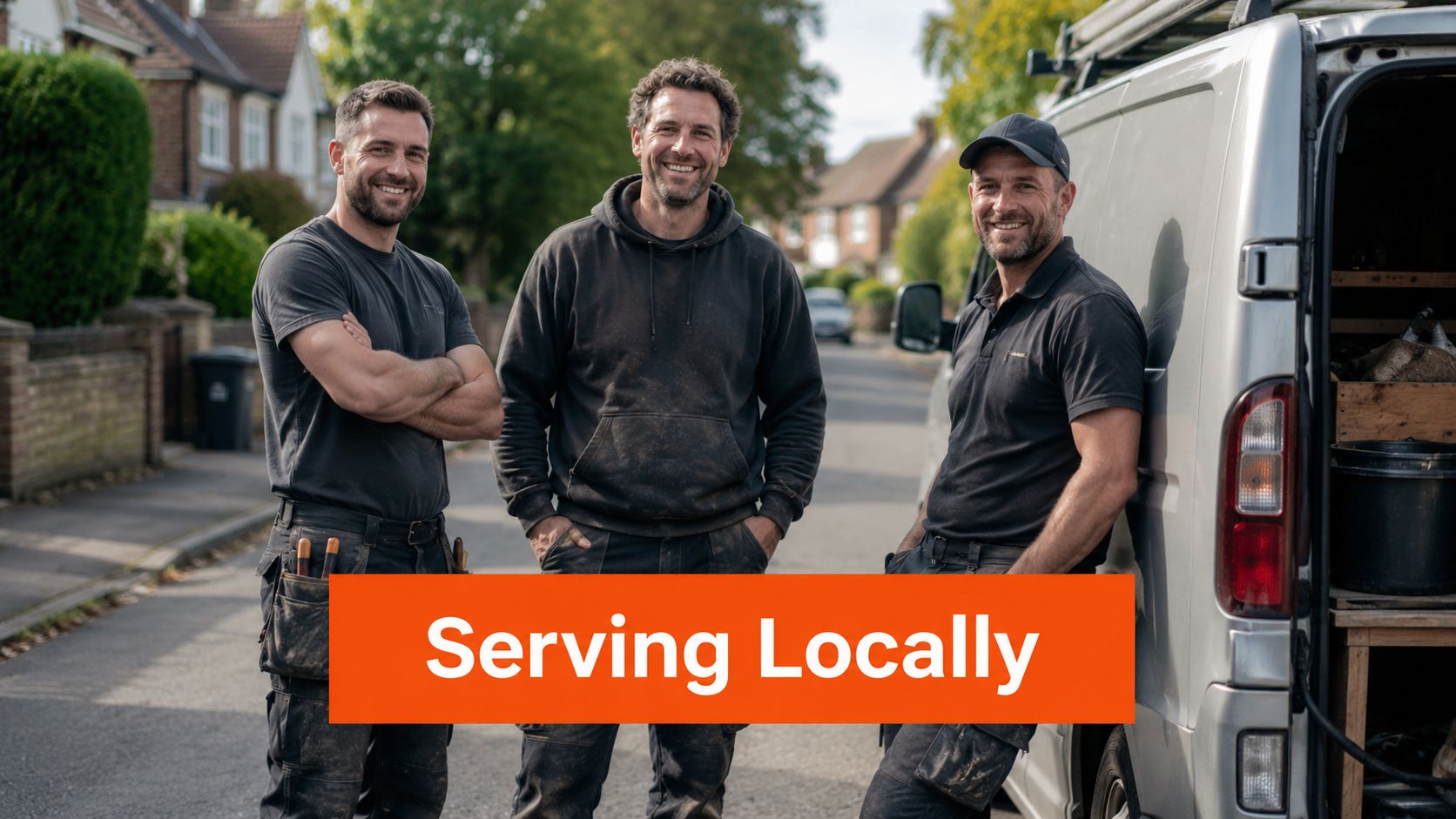
A lot of service ads fail because they look interchangeable. Same stock images, same promises, same headline about quality and reliability. Local community ads fix that by making your business look rooted in a specific area, with specific people, serving specific neighbourhoods.
That matters because many buyers don't choose the cheapest provider or the most creative ad. They choose the business that feels nearby, established, and accountable. Familiarity lowers risk.
Make local proof visible
Show the van. Show the team. Mention the suburbs. Use real photos from jobs, local landmarks, sponsorships, or community events if you have them. Even a simple “Serving homeowners across [suburb] and surrounding areas” line can do more work than fancy branding copy.
This style of ad gets stronger when paired with suburb-specific pages, location-based creative, and printed material that matches the same message. If you want ideas for supporting offline visibility too, this roundup of flyer ideas for local service businesses is a practical complement.
This ad supports everything else
Community ads often don't drive the fastest direct conversion. That's fine. Their job is different. They make your emergency ads, testimonial ads, and booking offers easier to trust because the business already feels familiar.
Use local community ads to highlight:
- Real team identity: Names, faces, branded vehicles, uniforms.
- Service-area relevance: Separate creatives for separate suburbs if possible.
- Community presence: Sponsorships, repeat local work, recognisable locations.
Plainly put, these ads help you stop looking like a random company that appeared in the feed yesterday.
8. Booking Incentive Ad
Some prospects are interested but still don't book. They hesitate because they expect hassle, hidden cost, or an awkward sales process. A booking incentive ad tackles that final bit of resistance by making the first step easier.
This is different from a broad discount. You're not just lowering price. You're increasing the odds that someone commits to a date, a call, or a quote request. That's a better objective because enquiries without bookings don't keep the schedule full.
Reduce friction at the booking step
The offer should reward action, not curiosity. Free consultation, waived call-out fee, priority booking, no-obligation assessment, or a written report can all work if they fit your service model. The simpler the booking path, the better. If possible, use one landing page, one form, and one clear next step.
A useful angle is to frame the incentive around certainty. “Book this week for a no-obligation assessment.” “Reserve a site visit and get a written scope before proceeding.” That kind of message reduces fear more effectively than generic “special offer” language.
What to test in the offer
Run small A/B tests on the wording rather than changing everything at once. “Free quote” and “free assessment” can attract different expectations. So can “book now” versus “reserve your spot.”
The practical setup is straightforward:
- Test the incentive: Free inspection, waived fee, written report, priority slot.
- Test the CTA: Call now, book online, request a callback.
- Test the landing step: Form, calendar booking, or direct phone call.
If you need examples of moving local prospects from interest to enquiry, this guide on lead generation for plumbers offers ideas that apply to many trade categories, not just plumbing.
8-Point Comparison: Cleaning Service Ad Types
| Ad Type | 🔄 Implementation Complexity | 💡 Resource Requirements | ⚡ Speed / Conversion | 📊 Expected Outcomes / Impact | ⭐ Ideal Use Cases & Key Advantages |
|---|---|---|---|---|---|
| Emergency Service Ad – Urgency-Driven with Local Emphasis | Moderate, needs accurate availability claims and after-hours targeting | Phone-ready team, local targeting, urgency creatives | Very fast, converts during real emergencies | High volume of urgent enquiries; higher booking intent, possible lower margins | Plumbers, Electricians, HVAC, Advantage: immediate local conversions and trust in emergencies |
| Before & After Showcase – Visual Proof of Quality Work | Moderate–High, requires consistent visuals and staging | Professional photography/videography, client releases, editing | Moderate, visual appeal drives considered leads | High-quality, high-intent leads; strong shareability and trust | Remodelers, Painters, Carpenters, Advantage: tangible proof that influences decisions |
| Customer Testimonial Ad – Trust-Building Social Proof | Low–Moderate, collect and format genuine reviews | Customer testimonials (text/video), basic video/photo editing | Moderate–High, trust lifts conversion rates | Significant trust uplift and improved conversion; long-term social proof | All trades, Advantage: highest trust factor, cost-effective for text testimonials |
| Educational How-To Ad – Positioning as Expert Authority | Moderate–High, requires credible, structured content | Subject expertise, video/carousel production, time to craft | Slower, builds intent over time rather than immediate sales | Builds authority, organic reach and warmer leads; harder to attribute revenue | Complex trades (HVAC, Structural, Electricians), Advantage: positions as expert and drives long-term leads |
| Limited Time Offer Ad – Urgency & Conversion Driver | Low–Moderate, promo setup, clear terms and timing | Discount budget, countdown creatives, tracking | Very fast, creates short-term spikes in bookings | Strong short-term revenue uplift; may attract deal-seekers | All trades (seasonal focus), Advantage: fast conversions and demand management |
| Problem-Agitation-Solution (PAS) Ad – Emotional Engagement | High, needs skilled copywriting and testing for authenticity | Experienced copywriter, targeted creatives, emotional visuals | Moderate–High, emotionally driven clicks and engagement | Higher engagement and qualified leads; more memorable messaging | High-ticket services (Electrical, HVAC, Plumbing), Advantage: emotional persuasion for outcome-focused customers |
| Local Community Ad – Building Neighborhood Authority | Low–Moderate, requires genuine local content and consistency | Local team photos, community event assets, geo-targeting | Moderate, builds steady local consideration | Strong local brand recall, referrals, higher customer LTV | Hyperlocal services/all trades, Advantage: trust through community presence and local relevance |
| Booking Incentive Ad – Conversion-Focused Offer | Low, straightforward offer messaging and booking flow | Valuable booking incentive, scheduling tool (Calendly/etc.) | Very fast, highest conversion to booked appointments | Highest booking conversion; removes first-step friction but may attract bargain seekers | All trades, especially higher-ticket, Advantage: converts warm leads into scheduled appointments quickly |
From Clicks to Booked Jobs Key Takeaways
The most effective ads for cleaning services don't rely on clever wording alone. They work because they match the customer's situation. Urgent jobs need urgency. Visual services need visual proof. High-trust decisions need testimonials, local presence, and a booking process that doesn't feel like work.
The mistake most owners make is running one type of ad and expecting it to do everything. That's rarely how it works in practice. Emergency ads are for fast-response jobs. Before-and-after ads help when finish quality sells the work. Testimonial ads reduce trust friction. Educational ads warm up people who are still figuring out the problem. Limited-time offers help fill gaps and move hesitant buyers. PAS ads connect emotionally when the problem feels stressful. Local community ads build familiarity. Booking incentive ads push warm leads across the line.
Consistency matters just as much as the ad type itself. Sporadic campaigns produce sporadic results because buyers forget you between jobs. A local service business usually gets better outcomes when ads are part of a repeatable system. Fresh creative, clear offers, local relevance, and regular posting all support the same goal. Staying visible long enough to be chosen.
There's also a bigger reason this matters. The market is large, buyer intent is often local and immediate, and attention is splitting across paid placements, maps, reviews, and AI-influenced discovery. That means your ad strategy can't be “boost a post and hope.” It needs to be practical. Platform-aware. Built around how people enquire and book.
The good news is that none of these ad types are complicated. Most can be built from assets you already have. Job photos, customer feedback, team shots, service-area knowledge, seasonal offers, and a few well-written scripts. What separates the businesses that get results is usually execution. They test one variable at a time. They keep the CTA simple. They match the ad to the service. They keep showing up.
Tools like GrowTradie make that consistency easier. Instead of scrambling to come up with new content between jobs, you can keep your business visible with professional, locally focused posts that support your ads, strengthen credibility, and help turn attention into real enquiries.
If you want a simpler way to stay visible without writing posts yourself, GrowTradie is built for trade businesses that need steady local marketing without the daily admin. It creates and posts professional content customized for your services and area, helping you stay active, build trust, and win more booked jobs.