
Some weeks the phone won’t stop. You’re juggling urgent callouts, quotes, supplier runs, and jobs that all want doing yesterday. Then a quiet patch hits and you start wondering whether you should spend money on ads, post more online, ask for reviews, or just wait for word-of-mouth to kick back in.
That swing is common in plumbing. It usually doesn’t mean you’re bad at the trade or bad at business. It means your lead flow depends too heavily on chance. A mate’s referral, a past customer calling back, a random online enquiry. Good when it lands. Unreliable when it doesn’t.
Lead generation for plumbers works better when you stop treating it like a scramble and start treating it like a system. Not a complicated marketing machine. Just a few practical actions that make it easy for local customers to find you, trust you, and book you.
Table of Contents
- Moving Beyond the Feast-or-Famine Cycle
- Build Your Digital Foundation for Local Enquiries
- Run Targeted Ads That Bring Ready-to-Book Jobs
- Use Social Proof and Simple Posts to Build Trust
- Create a Simple Follow-Up Funnel to Win More Quotes
- Your Quick-Win Checklist for More Plumbing Leads
Moving Beyond the Feast-or-Famine Cycle
A lot of plumbers build their business in a way that feels natural at first. Do solid work. Answer the phone. Be reliable. Ask happy customers to pass your name on. That can carry you for a long time.
Then the gaps show up.
One week is packed with hot water systems, blocked drains, and emergency repairs. The next week has room in the diary you didn’t plan for. You start saying yes to jobs you’d rather avoid, or discounting work just to keep the schedule full. That’s where frustration creeps in. Not because there’s no demand, but because there’s no steady process bringing enquiries in.
What a real system looks like
A workable system for lead generation for plumbers doesn’t need a full-time office team or a big agency retainer. It needs a few parts doing their job consistently:
- Visibility: Local customers can find you quickly when they need help.
- Trust: They see enough proof that you’re credible before they call.
- Speed: Their enquiry gets answered and tracked.
- Follow-up: Quotes don’t get forgotten after you send them.
- Consistency: Your business stays visible even when you’re flat out on the tools.
That’s the difference between chasing work and building a business that attracts work.
If the phone only rings when someone remembers to recommend you, the problem isn’t your workmanship. The problem is the system around it.
Why simple beats clever
Tradies often get bad advice because most marketing talk is built for people who like dashboards, jargon, and endless tweaks. You don’t need that. You need a setup that survives busy weeks.
That usually means a complete Google profile, a site that makes it easy to call or request a quote, a paid channel you can turn on when you want faster enquiries, regular proof that you’re active and trusted, and a follow-up routine for every quote sent.
None of that is flashy. It works because customers don’t need to be impressed by your marketing. They need to feel confident enough to contact you.
Build Your Digital Foundation for Local Enquiries
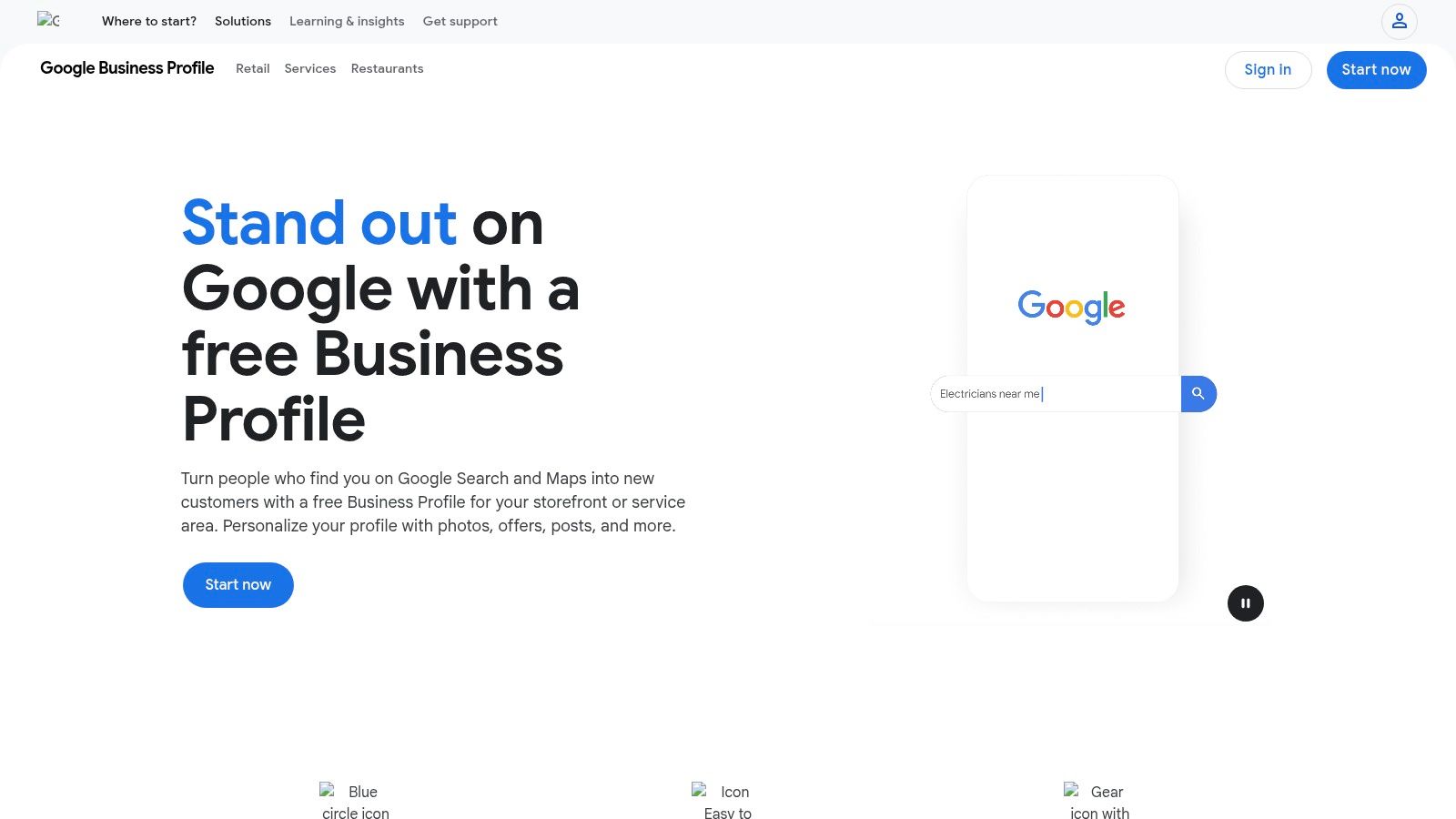
Before you spend a dollar on ads, get your basics right. For most plumbing businesses, the two assets that matter most are your Google Business Profile and your website. If those are weak, every other effort leaks.
The starting point is simple. Rank Me Top’s plumbing lead guide notes that effective plumbing lead generation starts with optimizing your Google Business Profile with weekly posts and photo responses, plus a high-converting website with a user-friendly design and clear calls-to-action.
Get your Google Business Profile fully filled out
This is often the first thing a homeowner sees when they search for a plumber nearby. If it looks half-finished, outdated, or neglected, people move on.
Make sure these parts are complete:
- Business details: Your trading name, phone number, hours, and service areas need to be accurate.
- Services list: Add your core jobs clearly. Think blocked drains, leak repairs, hot water systems, emergency plumbing, gas fitting if relevant, and maintenance work.
- Photos: Upload real images of your van, team, tools, job sites, and finished work.
- Updates: Post regularly so the profile doesn’t look abandoned.
- Review responses: Reply to reviews so people can see you’re active and professional.
The reason this matters is simple. Customers compare quickly. A complete profile feels safer than an empty one.
If you want a broader guide on improving your local visibility, this breakdown of local search basics for contractors is useful, even if you keep the execution simple.
Make your website simple enough to convert
A plumbing website doesn’t need to win design awards. It needs to help a stressed customer take the next step.
That means three absolute essentials:
- Your phone number is easy to find
- Your contact or quote form is short
- Your services are clearly listed
Too many tradie websites bury the important stuff under walls of text, tiny buttons, or generic claims. A customer with a leaking pipe won’t hunt around. They’ll back out and call someone else.
A practical homepage should answer these questions fast:
| What the customer wants to know | What your site should show |
|---|---|
| Do you service my area | Service areas or suburbs served |
| Can you handle my problem | Clear service list |
| Can I trust you | Reviews, photos, team details |
| How do I contact you | Click-to-call number and simple form |
A short explainer like this can also help if you’re fixing up your online presence:
Practical rule: If a customer can’t work out who you are, what you do, and how to call you within a few seconds, the site is underperforming.
Keep the language plain. Use real photos where possible. Show the suburbs you cover. Make the contact path obvious on mobile. That’s what turns online visibility into local enquiries.
Run Targeted Ads That Bring Ready-to-Book Jobs
A quiet Tuesday hits, the phone slows down, and the temptation is to throw money at whatever promises leads fast. That usually ends in wasted spend, patchy enquiries, and no clear idea what worked.
Paid ads do work for plumbers. The key is to use them as a simple system, not a gamble. Put your offer in front of people already searching for help, answer fast, and track which calls turn into booked jobs. That is the link between the action and the outcome.
If you want a plain-English overview before you spend, this guide on PPC marketing for plumbers is a useful starting point.
Start with the jobs people want done now
The best ad campaigns for plumbers usually target high-intent searches. Someone looking up an emergency plumber, blocked drain repair, or hot water service replacement is far closer to booking than someone casually scrolling social media after dinner.
Google’s Local Services Ads were built for that kind of demand. They show up where local customers are already looking for a tradie, and they are set up to drive direct enquiries instead of vague “brand awareness.”
That matters because plumbing ads should answer one simple question. Will this bring in work I want?
Local Services Ads are often the best first move because they help with four practical problems:
- They catch urgent intent: You are showing up for people who already need a plumber.
- They reduce hesitation: The format is built to help customers choose a provider quickly.
- They keep the path short: Search, call, book. Fewer steps means less drop-off.
- They are easier to judge properly: You can compare leads against real jobs, not just clicks.
A smaller number of good enquiries beats a pile of time-wasting calls every day of the week.
Avoid lead sources that drain margin
Shared lead platforms can fill the inbox, but they often create the wrong kind of competition. The same enquiry goes to several plumbers, everyone scrambles to respond first, and price becomes the fastest way to win.
That model is hard on margins. It also burns admin time, because the team ends up chasing quotes that were never a good fit in the first place.
Direct response ads give you more control. You choose the service, the area, and the type of work you want more of. That makes it easier to connect spend with booked work instead of guessing based on lead volume.
Use a simple filter before spending a dollar
Any paid campaign needs a quick sense check first. Otherwise ads just magnify the weak spots in the business.
Ask these questions:
- Can someone answer calls quickly?
- Are you advertising the work you want more of?
- Can you tell which enquiry came from which campaign?
- Is the service area tight enough to stay profitable?
If the answer is no to any of those, fix that before increasing spend.
Paid ads are not magic. They are fuel. Put fuel into a setup that is clear and responsive, and you get more of the right jobs. Put fuel into a messy setup, and you get more noise.
Use Social Proof and Simple Posts to Build Trust
A lot of plumbers are visible enough to get considered, but not trusted enough to get chosen. That gap usually comes down to social proof. Customers want evidence that you’re active, reliable, and already doing good work for people like them.
Hook Agency’s plumbing lead article notes that having 10 to 20+ glowing 5-star reviews and maintaining consistent social posting are critical for turning online visibility into enquiries. That lines up with what happens on the ground. People often check your reviews, scan a few photos, and look at your recent posts before they call.
If you want help staying consistent without having to think up content from scratch, this page on social media marketing for plumbers is worth a look.
Make review requests part of the job closeout
The easiest time to ask for a review is right after the job is done and the customer is relieved the problem is sorted. Leave it too long and the moment passes.
Keep the process simple:
- Ask while the result is fresh: A happy customer is far more likely to respond right after completion.
- Send the link directly: Don’t make them search for your business.
- Keep the wording short: Long requests feel awkward and get ignored.
- Build it into your routine: Same point in the workflow every time.
A text message works well:
Hi [Name], thanks again for choosing [Business Name]. If you were happy with the work today, would you mind leaving us a quick Google review? It really helps local customers feel confident calling us. [Review Link]
An email version can be nearly identical. No need to overcomplicate it.
Post the kind of content customers actually check
Most tradies overthink social media because they assume every post needs to be clever. It doesn’t. For lead generation for plumbers, social posting has one job. Show that your business is real, active, and trusted.
The simplest content mix is:
- Completed job photos: Show before and after where appropriate, or a tidy finished result.
- Customer feedback: Turn a good review into a simple graphic or screenshot.
- Team and van photos: Let people see who they’re dealing with.
- Helpful tips: Short, practical advice on common plumbing issues.
You’re not trying to go viral. You’re giving potential customers enough confidence to pick you over the next name on the list.
A workable posting rhythm also needs to be realistic. If you can’t keep up a complex content plan, don’t start one. Use photos you’re already taking on the job. Save good review messages. Keep captions short and local.
Here’s a simple weekly pattern any plumbing business can sustain:
| Day | Post idea | Why it helps |
|---|---|---|
| Early week | Recent job photo | Shows active work |
| Midweek | Customer review | Builds trust |
| Late week | Team, van, or quick tip | Makes the business feel real |
Customers often decide before they call. Reviews and recent posts help them make that decision in your favour.
Create a Simple Follow-Up Funnel to Win More Quotes
You send the quote on Friday. Monday is flat out. By Thursday, that customer still has not replied, and you are left wondering whether the price was wrong, whether they chose someone else, or whether they forgot.
A lot of quoted work is lost in that gap.
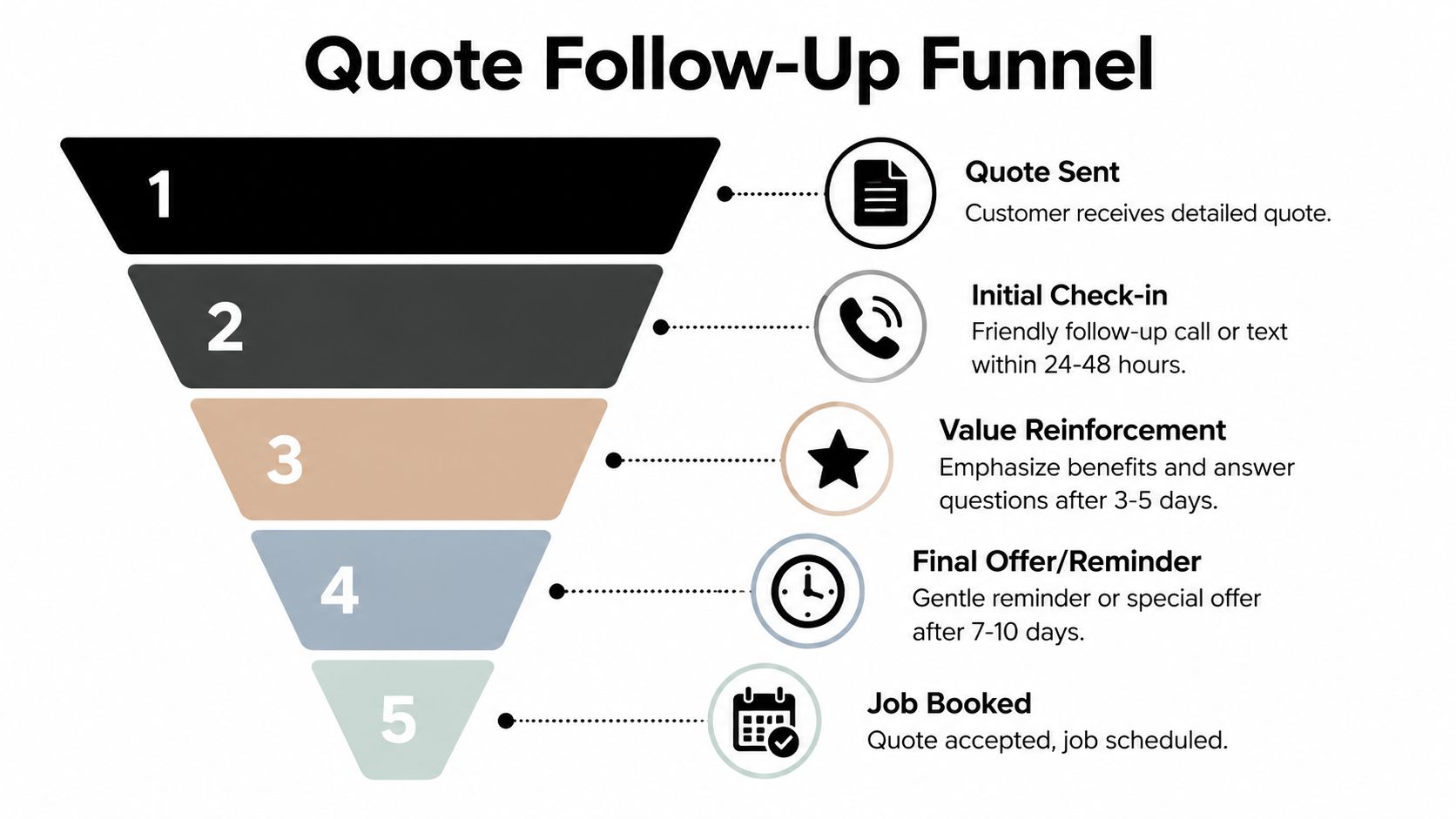
For many plumbing businesses, the problem is not getting a lead. It is what happens after the quote goes out. If there is no clear follow-up process, good jobs drift away for reasons that have nothing to do with your workmanship. People get busy, compare options, wait to talk it over at home, or mean to reply and never do.
A simple follow-up system fixes that. It keeps your name in front of the customer, answers hesitation before it turns into silence, and gives them an easy next step.
Why quotes go cold even when the customer sounds keen
Customers rarely make decisions as neatly as tradies hope. They can be happy with your quote and still do nothing for days. That does not always mean you lost the job.
What usually happens is simpler than that:
- They opened the quote while at work and forgot to come back to it.
- They want to check money or timing with a partner.
- They asked two or three businesses for prices and have not decided yet.
- They have one small question, but not enough urgency to chase you.
The plumber who follows up calmly often gets the booking. The plumber who waits usually gets silence.
That is the trade-off. No one wants to sound pushy, but no follow-up is not polite. It is expensive.
A three-message sequence you can actually stick to
Keep this basic. You do not need fancy software or a complicated sales setup. You need a repeatable routine that happens every time a quote goes out.
Message 1. Send it with the quote
The job here is simple. Confirm they received it and tell them how to say yes.
Hi [Name], I’ve sent through your quote for [job]. If you have any questions or you’d like to book it in, just reply here or call us and we’ll sort a time.
Message 2. Send it three days later if there is no reply
This catches the customer who meant to respond but got sidetracked.
Hi [Name], just checking you received the quote for [job]. If you want to talk through anything or get it booked, let me know.
Message 3. Send it about a week after the quote
Keep the tone steady and easy to answer.
Hi [Name], just following up on the quote for [job]. If you’d like to go ahead, reply here and we can lock in a day that suits.
That is the whole funnel. Three touches. Clear timing. No jargon. No hard sell.
Use the channel people actually reply to
Text usually gets seen faster. Email is better if the quote has detail, options, or attachments. Phone calls work well on larger jobs where customers often have questions before committing.
Pick one main method and use it consistently. If a customer contacted you by text, start there. If they came through email, keep the thread going there. Matching the follow-up to how they already communicate removes friction.
Keep every quote visible
Follow-up falls apart when quotes disappear into the day-to-day rush. A simple tracker solves that fast.
Track these five things:
- Customer name
- Job type
- Quote sent date
- Next follow-up date
- Booked, pending, or lost
That can live in a spreadsheet, job management app, or your diary if that is what you use. The best system is the one you will update at the end of a long day.
One more practical point. If a customer says no, mark it and move on. The goal is not to chase every quote forever. The goal is to stop good work from slipping away because nobody followed up.
A lot of extra bookings come from jobs you already priced. That is why this part of the system matters. You have already paid for the enquiry with your time, ad spend, or both. A short, consistent follow-up process helps you turn more of that effort into booked work.
Your Quick-Win Checklist for More Plumbing Leads
The plumbers who generate steady work usually aren’t doing dozens of fancy things. They’re doing a handful of useful things consistently. That’s the thread running through this whole system.
Get found. Look trustworthy. Make it easy to call. Follow up on quotes. Keep showing signs that your business is active. That combination beats random bursts of effort every time.
If your lead generation for plumbers feels messy right now, don’t try to fix everything in one weekend. Start with the jobs that create the fastest lift and the least friction.
Your First 30-Day Quick-Win Checklist
| Action Item | Why It Works | Time to Complete |
|---|---|---|
| Fully complete your Google Business Profile | Customers can find accurate business details, services, and photos in one place | A few focused sessions |
| Upload real photos of your team, van, and recent jobs | Real images make the business feel active and credible | Ongoing, but easy to start this week |
| Fix your website so the phone number and quote form are obvious on mobile | Makes it easier for local customers to contact you fast | One short review and update cycle |
| Start asking every happy customer for a Google review | Builds visible trust and helps future customers choose you | A few minutes after each completed job |
| Create a simple weekly posting routine | Keeps your business visible between jobs and quiet periods | One hour to plan, then small ongoing effort |
| Set up a three-message quote follow-up process | Stops good leads from being forgotten after the quote is sent | One setup session |
| Track where each enquiry came from and whether it booked | Helps you see which channels bring the right work | Ongoing admin habit |
A few practical notes matter here.
First, don’t measure success by how busy your inbox looks. Measure it by booked jobs, quote quality, and the kind of work you want more of. Plenty of plumbers waste money because they chase volume instead of fit.
Second, make the system durable. If it only works when you have spare time, it won’t last. Use templates. Use reminders. Keep admin simple. Build routines that survive busy weeks.
Third, don’t expect one tactic to carry the whole business. A complete profile without reviews is weak. Reviews without recent posts can make the business look dormant. Ads without follow-up waste good opportunities. The strength comes from how the parts support each other.
The good news is none of this requires you to become a marketer. It requires you to run a few business habits with the same consistency you bring to the job itself.
If you want an easier way to stay visible without having to write posts yourself, GrowTradie is built for trade businesses that need a practical system, not more admin. It creates and auto-posts customized social content for your trade and local area, helping you stay active online, build trust, and turn attention into real enquiries while you stay focused on the work.