
Pest control ads can feel like a money pit when you're busy on jobs all day, post something at night, and still wake up to no new calls. One week it's a boosted post. The next week it's a local ad with a stock photo and a vague headline. The result is usually the same. A few clicks, maybe a message or two, and no consistent booking flow.
The problem usually isn't that advertising doesn't work. It's that most pest control ads are too generic, too broad, or too disconnected from what a worried homeowner is thinking in the moment. People don't want "quality service" and "trusted solutions." They want someone to fix rats in the roof, cockroaches in the kitchen, or termites before the damage gets worse.
That's why this guide stays practical. You won't get fluffy branding advice or a gallery of ads with no explanation. You'll get eight usable pest control ad formats with sample headlines, visual ideas, audience angles, and simple A/B tests you can run without turning yourself into a full-time marketer.
There's also real proof that digital lead generation can work in this category. One pest control campaign set reported 3,920 tracked leads over 40 months through Google Ads campaigns. That doesn't mean every ad works. It means the right system can.
Table of Contents
- 1. Before & After Visual Transformation
- 2. Educational Problem-Solution Posts
- 3. Customer Testimonial & Review Showcase
- 4. Local Problem Awareness & Seasonal Warnings
- 5. Quick-Tip Video Shorts & Reels Format
- 6. Live Treatment Process & Behind-the-Scenes Content
- 7. Service Special Offers & Limited-Time Promotions
- 8. Pest Problem Prevention & Property Care Tips
- 8-Point Pest Control Ad Comparison
- Putting These Pest Control Ads into Action
1. Before & After Visual Transformation
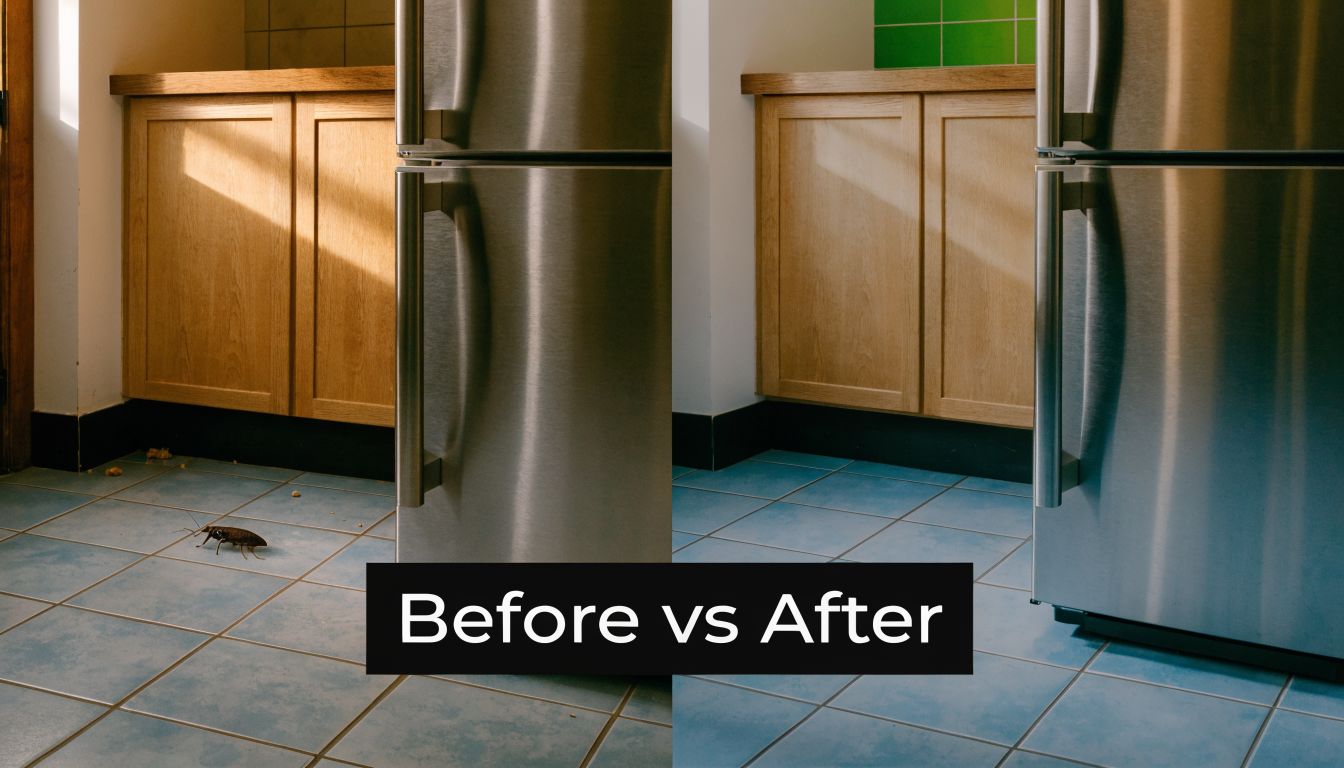
This format works because it answers the only question most homeowners care about. Can you solve the problem or not?
A clean before-and-after image beats a polished brand graphic almost every time. When someone sees visible pest activity, then sees a restored space after treatment, the ad feels concrete. It stops being marketing and starts looking like proof.
What to show
Use the same angle, similar lighting, and a simple label on each image. "Before treatment" and "After treatment" is enough. If the job took multiple visits, note that in the caption rather than crowding the image.
The best examples are tight and specific. Rodent droppings near skirting boards. Cockroach activity around kitchen kickboards. Termite damage around timber framing. Broad room shots often look less dramatic and get ignored.
Practical rule: Don't fake drama with stock images. Real job photos from your own phone usually outperform polished graphics because they look believable.
If you're building a content bank for regular posting, save every decent job photo into folders by pest type, suburb, and season. That gives you a repeatable system, especially if you're already using a posting workflow like content support for local trade businesses.
Ad copy you can use
Try copy like this:
- Headline: Cockroaches gone. Fast local treatment.
- Primary text: Found active roaches in this kitchen and treated the problem at the source. If you're seeing activity at home, book an inspection before it spreads.
- CTA: Book now
Or:
- Headline: Termite signs caught early
- Primary text: This is why early inspections matter. Small signs turn into expensive repairs when they get ignored.
- CTA: Get a quote
A/B test one version with the pest named in the headline, and another with the result named first. "Cockroach treatment in Blacktown" versus "Kitchen cleared of cockroaches." Both can work, but one usually matches local intent better.
2. Educational Problem-Solution Posts
A homeowner hears scratching in the roof at 11 pm, finds a few droppings in the laundry the next morning, and starts searching before breakfast. That person does not want a long lesson on pest biology. They want help working out what the sign means, how urgent it is, and what to do next.
That is why educational problem-solution posts pull their weight. They sit between awareness content and straight offer ads. Done well, they pre-handle objections, filter out tyre-kickers, and bring in better enquiries because the customer already understands the problem.
The best-performing posts usually start with one specific symptom, then move straight to the likely cause and next step. Keep it practical. Keep it local. If heavy rain has pushed ants inside across your service area, say that. If colder nights have rodents nesting in roof voids, say that.
Topics that get attention
Use the questions people already ask on the phone:
- Early warning signs: "Mud tubes along timber?" or "Tiny black droppings near the pantry?"
- Seasonal patterns: rain bringing ant activity indoors, heat increasing cockroach sightings, cold weather pushing rodents into ceilings
- DIY mistakes: spraying the visible insects only, placing bait where pests are not travelling, waiting until damage is obvious
A post like "Seeing ants in Penrith kitchens after rain?" will usually beat "Ant control services available" because it matches the customer's exact situation.
This format also scales well. If you want a steady stream of useful local posts without writing every caption from scratch, content marketing support for local businesses can turn common service questions into repeatable ad and organic content.
Ad copy you can use
Here are two simple angles that work.
- Headline: Scratching in the roof at night?
- Primary text: Hearing movement after dark usually points to rodents, not "just the house settling." We inspect the entry points, nesting areas, and activity level so you know what you're dealing with before it gets worse.
- CTA: Ask us
Or:
- Headline: 3 termite signs homeowners miss
- Primary text: Hollow-sounding timber, mud tubes, and tight-fitting doors can all point to termite activity. If you've noticed one of these, book an inspection before hidden damage spreads.
- CTA: Book an inspection
A/B tests worth running
Test the hook first.
- Version A: Problem-first headline
"Why are ants suddenly showing up in the kitchen?" - Version B: Solution-first headline
"How to stop ant activity after rain"
Then test the next step:
- Soft CTA: Send us a photo and we'll point you in the right direction.
- Direct CTA: Book a local inspection today.
I'd also test image style. One version can use a close-up phone photo of the actual sign, like droppings, mud tubes, or grease marks near an entry point. The other can use a clean text graphic listing the signs. The photo often gets more attention. The graphic can get better saves and shares. Both are useful, and the right winner depends on the pest and platform.
The ad gets stronger when it names the symptom the homeowner has already noticed.
If you want these posts to bring in jobs, do not stop at "educational." Give each one a clear structure: symptom, likely cause, consequence of waiting, and next action. That turns a helpful post into a working ad.
3. Customer Testimonial & Review Showcase
Review-based pest control ads work when they feel like evidence, not decoration. A five-star graphic by itself is weak. A real customer comment tied to a specific pest problem is much stronger.
Good testimonial ads reduce hesitation. The homeowner sees that someone nearby had the same problem, booked the job, and felt relieved afterward. That's the whole sale for many local service businesses.
What makes review ads believable
Specificity matters more than polish. "Great service" is forgettable. "They found the rodent entry points, explained everything clearly, and came back when promised" sounds real.
The strongest testimonial ads usually include at least two of these details:
- Named service: termite inspection, rodent treatment, cockroach control
- Named location: suburb or local area
- Named technician: if the customer mentioned a team member
- Clear result: problem solved, fast response, easy booking, good communication
A lot of operators make the mistake of stripping reviews down until they sound fake. Keep a little of the customer's natural wording. That's what makes it persuasive.
Sample testimonial ad formats
Format one is a screenshot-style graphic with a short headline above it.
- Headline: Local homeowners trust us for termite inspections
- Body text: Real feedback from a recent customer in your area. Need help fast? Send us a message today.
Format two is a simple phone-shot video. Ask the customer one question after the job: "What was happening before you called us?" Their answer is often better than anything a copywriter would script.
You can also pair a testimonial with a team photo, van photo, or quiet shot from the job. That gives the review context and makes it feel less recycled.
What doesn't work is stuffing five tiny reviews into one crowded graphic. Nobody reads them. Use one strong review at a time and rotate them.
4. Local Problem Awareness & Seasonal Warnings
A homeowner hears scratching in the roof after the first cold snap. Another spots ant trails after a week of rain. They do not search for a broad pest service ad. They look for someone who already understands what is happening in their area, right now.
That is why local seasonal ads pull better than generic promotions. The message matches the problem, the timing, and the suburb.
Why local wording lifts response
Pest control is a crowded category, so vague ads disappear fast. A headline that names the area, season, and pest gives people a reason to stop.
Use the first line to prove relevance. Name the suburb, nearby region, or property type you want more of. If you only service the western suburbs, say it. If your best jobs come from older timber homes near the coast, say that too. Clear targeting filters out poor leads and improves response from the right ones.
This approach also fits how social media marketing for contractors works at a local level. Specific service areas and timely problems usually outperform broad awareness posts because homeowners decide fast when the message feels close to home.
Ad angles to rotate through the year
A good seasonal campaign needs a simple rotation, not endless new ideas. Build four or five ad types you can reuse with fresh suburb names, images, and timing.
- Wet weather warning: drain activity, garden buildup, cockroaches, ants, mosquitoes
- Hot weather warning: wasps around eaves, ant activity in kitchens, increased flying insects
- Cold weather warning: rodents in roof voids, garages, wall cavities
- High-risk property angle: older homes, timber framing, rentals, cafes, restaurants, warehouses
The best time to run these ads is just before call volume rises. Once every operator in town starts posting the same rodent warning, cost goes up and the message loses punch.
Ready-to-use ad examples
Use direct copy. Keep the problem obvious.
Example 1. Rodent season
- Headline: Rodents start moving indoors when temperatures drop
- Body text: We are already seeing roof and ceiling activity in Hills District homes. If you have heard scratching at night or found droppings in the garage, book an inspection before it gets worse.
- Visual idea: Technician in a roof void pointing to droppings or entry gaps
- Audience: Homeowners in selected suburbs, 30+, detached homes
- A/B test: Test suburb name in headline vs suburb name in first sentence
Example 2. Wet weather ant and cockroach spike
- Headline: Rain often pushes pests closer to the house
- Body text: After heavy rain, ants and cockroaches often turn up around kitchens, laundries, and drains. We are servicing local homes this week. Book early if activity has started.
- Visual idea: Close-up of pest activity near a drain or back door
- Audience: Homeowners and tenants in high-density suburbs
- A/B test: Test problem-focused CTA, "Book inspection," against urgency CTA, "Get help this week"
Example 3. Termite risk reminder
- Headline: Older timber homes need termite checks before damage shows
- Body text: Termites are often found after damage is already done. If your property has subfloor access, garden beds against walls, or past moisture issues, schedule an inspection.
- Visual idea: Technician checking a skirting board or subfloor area
- Audience: Owners of older houses, investors, property managers
- A/B test: Test property-risk angle vs cost-of-delay angle
What to avoid
A seasonal warning ad fails when it stays too broad. "Pest problems? Call now" gives people nothing to connect with. It also fails when the warning goes out late, after local Facebook groups are already full of the same issue.
Run early. Name the area. Name the pest. Show a real sign homeowners recognize. That combination turns a general awareness ad into something a busy pest control business owner can use to get more booked inspections.
5. Quick-Tip Video Shorts & Reels Format
Short video works when it gets to the point fast. If the first few seconds are slow, people scroll. If the first line matches a problem they're worried about, they stop.
This style is one of the easiest pest control ads to produce because you don't need a polished setup. A phone, clear voice, decent light, and one useful point is enough.
Best short-form hooks
Strong hooks usually come from urgency, recognition, or curiosity.
Try lines like:
- Hook: If you see this in your pantry, don't ignore it
- Hook: Here's one sign rodents are already inside your roof
- Hook: Cockroaches hide in these spots when homeowners think they're gone
Then spend the next few seconds showing the sign, the location, and what action to take. End with a direct next step.
- CTA: Need help identifying it? Message us.
- CTA: Book a local inspection today.
A wildlife and pest removal campaign case study reported a 127% increase in conversions while reducing cost per acquisition from $31.08 to $20.72 after campaign optimization. The useful lesson isn't to chase one format. It's to test hooks, relevance, and follow-through until response improves.
Simple shooting plan
Film five clips in one session:
- Clip one: technician points out a common entry point
- Clip two: close-up of signs homeowners miss
- Clip three: one prevention tip
- Clip four: one mistake that leads to bigger infestations
- Clip five: simple call to book help
Keep the text big on screen. Many people watch with sound low or off. If you want a repeatable social workflow around this format, social media marketing support for contractors can help turn short-form ideas into a consistent schedule.
What doesn't work is trying to cram a full service explanation into one short clip. One problem. One point. One next step.
6. Live Treatment Process & Behind-the-Scenes Content
A homeowner sees your ad at 9 pm after finding droppings in the pantry. They are not asking whether you can post polished content. They want to know what will happen when you arrive, whether the treatment is safe around the family, and whether your crew looks like professionals who have done this a hundred times before.
That is why behind-the-scenes ads work. They remove uncertainty before the call.
What to film on real jobs
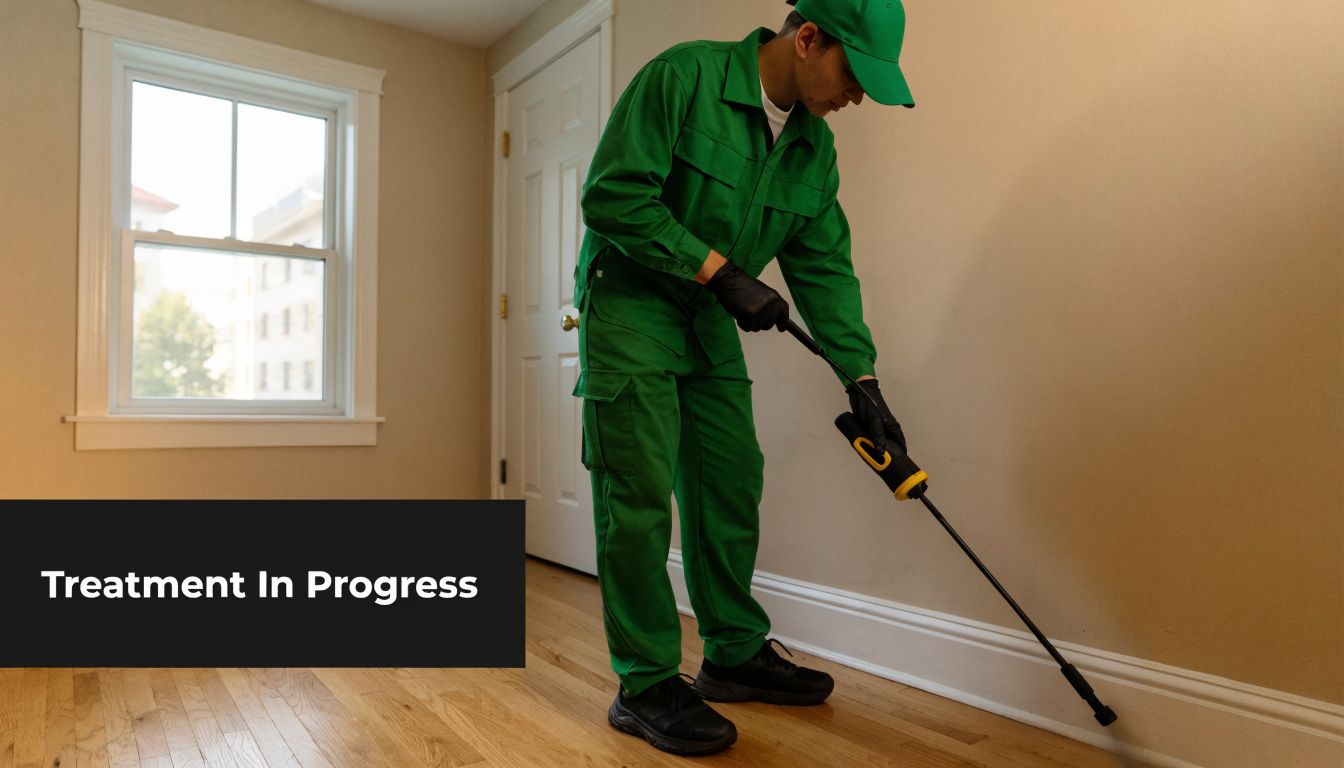
Use actual treatment footage with the client's permission. Clean, honest footage beats overproduced video every time in this format because the point is proof.
Show the parts of the job that answer buyer objections fast:
- Arrival and inspection: technician walks the site and explains what they're checking
- Treatment setup: PPE, tools, product prep, and how the area is handled safely
- Key treatment zones: roof voids, external perimeter, subfloor, cracks, bait stations
- Customer handover: what was done, what happens next, and when results should be expected
This works especially well for termite, rodent, and crawling insect work where the homeowner may not see a dramatic visual result straight away. If the finish is invisible, the process becomes the proof.
Turn the process into an ad people trust
The mistake is filming a treatment like a highlight reel and leaving out the explanation. Good behind-the-scenes ads use plain language at each step.
Say what you are doing and why. "We're treating this perimeter because pests track along edges and entry points" is stronger than listing product names or technical terms the customer does not care about.
A simple ad structure usually performs well:
- Hook: What happens during a real pest treatment?
- Middle: Show inspection, treatment, and safety steps
- Close: Book an inspection if you want us to check your property
Here's a good place to use video as proof in the feed:
Ready-to-use ad angle
Busy owners do better with a repeatable template than with vague creative advice. Use this one.
- Headline: See how our pest treatment works
- Primary text: We show you exactly what happens on site. Inspection, treatment, safety steps, and what to expect after the visit.
- Visual idea: 20 to 30 second edit with captions, inspection footage, treatment close-ups, and a short technician voiceover
- Target audience: Homeowners in your service area who searched for pest help recently, visited your site, or engaged with local service content
- A/B test: Test "See how our pest treatment works" against "What happens during a real pest treatment visit?"
There is a trade-off here. Full job walkthroughs build trust, but they can attract low-intent views if the ad stays too broad. Keep the video tight, localise the copy, and pair it with a direct offer or booking prompt so the right people take the next step.
7. Service Special Offers & Limited-Time Promotions
Offers work, but only when the offer is easy to understand and tied to a real reason to act now. A weak special just trains people to ignore you.
Most pest control operators make one of two mistakes. They either hide the offer inside a busy graphic, or they run discounts so often that the urgency disappears.
Offers that pull bookings
The simplest promotions are usually the strongest:
- Inspection-led offer: Free inspection with booked treatment
- Seasonal offer: Termite season booking window
- Bundle offer: Initial treatment plus follow-up visit
- First-visit offer: Introductory booking incentive for new customers
Keep the wording blunt. Say what's included, who it's for, and when it ends. If there are conditions, state them clearly.
Useful ad copy looks like this:
- Headline: Book your termite inspection this week
- Text: Limited local bookings available. Fast response for homeowners who want peace of mind before the season peaks.
- CTA: Call now
What usually goes wrong
A promotion without tracking is risky. You need to know which offer brought the enquiry and whether the lead turned into a job. That's one of the biggest gaps in the pest control advertising space. A review of the category pointed out that most advice talks about platforms and creative ideas, but offers almost no practical guidance on connecting ad spend to booked jobs or comparing channels properly, as discussed in this analysis of pest control ad gaps and ROI tracking issues.
Don't judge an offer by clicks alone. Judge it by calls, booked inspections, and completed work.
One more trade-off. Promotions can create action fast, but they can also attract price shoppers. If your team is already flat out, you may be better off running urgency around availability, speed, or local demand rather than pushing the lowest price.
8. Pest Problem Prevention & Property Care Tips
A homeowner spots a mouse in the laundry, checks your Facebook page, and sees a post on sealing gaps around pipe penetrations. You gave them a useful tip, showed you know what causes the problem, and made the next step obvious. That kind of ad works because it meets people before the infestation feels urgent.
Prevention content is one of the best trust-builders in a pest control campaign. It gets saved, shared, and revisited. It also brings in better leads than straight discount ads in many cases, because the customer is looking for someone who can assess the property properly, not just quote the cheapest spray.
The trade-off is simple. If you give vague advice, the ad feels empty. If you give away the whole process, the call-to-action disappears. The sweet spot is practical guidance plus a reason to book.
Prevention content that gets enquiries
Focus on issues a homeowner can spot, but may not know how to fix well or safely:
- Rodent entry points: gaps around pipes, roof void access, garage door edges, damaged vents
- Termite risk areas: timber touching soil, poor drainage, leaking taps, dense garden beds against the house
- Cockroach pressure points: food debris under appliances, warm motor areas, unsealed bins, cluttered cupboards
- Outdoor attractors: standing water, stacked firewood, overgrown fencing, stored materials near external walls
These topics work well in paid ads and organic posts because they answer a real question. They also qualify the job. Someone who clicks on a termite risk checklist usually has a property concern worth inspecting.
Ready-to-use ad angles
Use these formats if you want prevention content that does more than collect likes:
Checklist post
Headline: 5 places rodents get into older homes
Text: Small gaps around pipes, vents, and rooflines are enough. Check these common entry points before a minor problem turns into an infestation. Want a full inspection? Book a local visit.
Visual: Branded checklist graphic with arrows pointing to likely access points on a house photo
Target audience: Owners of older homes, recent rodent enquiry audiences, local suburb targeting
A/B test: "older homes" vs "family homes" in the headlineCarousel ad
Headline: Common termite risk spots around your property
Text: Moisture, timber contact, and hidden garden edges create ideal conditions. Swipe through the main problem areas, then book an inspection if any of these look familiar.
Visual: One risk point per slide, with close-up jobsite photos and short labels
Target audience: Homeowners in termite-prone areas, high-value property suburbs
A/B test: Risk-focused CTA vs peace-of-mind CTAShort video
Headline: Check this after heavy rain
Text: Water pooling near the slab or under decking can lift termite risk fast. This 20-second video shows what to look for and when to call for a proper inspection.
Visual: Phone-shot walkthrough of drainage trouble spots on a real property
Target audience: Homeowners after storms, wet-season audiences, remarketing viewers
A/B test: Presenter on camera vs voiceover with captionsStatic image ad
Headline: Signs your property may be attracting pests
Text: Overflowing bins, stacked timber, dense vegetation, and hidden moisture all increase pest pressure. Fix what you can. Get an inspection if you want the risk areas checked properly.
Visual: Clean split-image with four common attractors called out
Target audience: Broad local homeowners, property managers
A/B test: Four-sign layout vs single strong image with one warning
What usually goes wrong
A lot of prevention ads stop at "helpful." Helpful is not enough if you want booked work.
Give the viewer a next step every time. "Book a pest risk inspection." "Send us photos for a quick opinion." "Call for a termite check this week." Clear actions convert better than vague lines about learning more.
Keep the advice specific to the property. General pest facts get attention, but property care tips tied to garages, gardens, drainage, subfloors, and roof voids lead to stronger enquiries because the customer can picture the issue at home.
One more point from experience. Prevention content often performs best as a repeated series, not a one-off post. A busy owner can batch a month of ads in one shoot if each piece follows the same playbook: one problem, one visual, one action, one offer to inspect.
8-Point Pest Control Ad Comparison
| Creative Angle | Implementation Complexity 🔄 | Resource Requirements ⚡ | Expected Outcomes 📊⭐ | Ideal Use Cases 💡 | Key Advantages ⭐ |
|---|---|---|---|---|---|
| Before & After Visual Transformation | Low–Medium 🔄, simple shoots, needs consistency | Low ⚡, smartphone + basic editing; client permission | High engagement & visual proof 📊; strong conversions for visible issues ⭐⭐ | Social feeds, ad creatives, visible infestations | Immediate credibility; highly shareable |
| Educational Problem-Solution Posts | Medium 🔄, research + design required | Medium ⚡, research, design templates, time | Builds authority & organic reach over time 📊⭐ | Long-term branding; lead nurturing; SEO/social search | Positions as expert; trust-building content |
| Customer Testimonial & Review Showcase | Low–Medium 🔄, coordination with customers | Low ⚡, collect reviews, simple editing | Very high trust & conversion potential 📊⭐⭐ | Trust-building, objection handling, ads | Peer validation; cost-effective social proof |
| Local Problem Awareness & Seasonal Warnings | Medium 🔄, timing and local data needed | Medium ⚡, local insights, scheduling tools | High local relevance & urgency-driven inquiries 📊⭐ | Seasonal campaigns; geo-targeted audiences | Drives immediate local bookings; timely relevance |
| Quick-Tip Video Shorts & Reels Format | Low–Medium 🔄, fast production but frequent | Low ⚡, smartphone + quick edits; trend tracking | High algorithmic reach and brand awareness 📊⭐ | Rapid reach on Reels/TikTok; snackable education | Great organic distribution; quick to produce |
| Live Treatment Process & Behind-the-Scenes Content | High 🔄, filming, editing, permissions | High ⚡, decent audio/video gear; safety consents | Deep trust and differentiation; time-consuming impact 📊⭐ | Showcasing complex services; professionalism proof | Transparency builds confidence; humanizes brand |
| Service Special Offers & Limited-Time Promotions | Low 🔄, simple creative + clear terms | Low–Medium ⚡, design, tracking codes, margins | Immediate bookings and measurable ROI 📊⭐ | Peak season conversions; short-term demand spikes | Drives fast conversions; easy to track performance |
| Pest Problem Prevention & Property Care Tips | Medium 🔄, expert content balance required | Medium ⚡, expert input, downloadable assets | Long-term loyalty and reduced emergency churn 📊⭐ | Retention, education, referral generation | Positions business as trusted advisor; shareable resources |
Putting These Pest Control Ads into Action
The difference between pest control ads that waste money and pest control ads that bring in jobs usually comes down to clarity. Clear problem. Clear location. Clear proof. Clear next step. Most underperforming ads miss at least one of those.
If you're starting from scratch, don't build a giant campaign calendar and promise yourself you'll post every day. That usually falls apart the first busy week. Pick two formats and commit to them for a month. A before-and-after post plus a local seasonal warning is a strong starting pair because one shows proof and the other creates urgency.
Once those are running, add one trust format and one education format. Testimonials help reduce hesitation. Quick-tip videos help you stay visible between urgent bookings. Behind-the-scenes treatment content helps homeowners understand what they're paying for. Promotions can then be layered in when you need to fill gaps in the schedule or push a seasonal service.
There are trade-offs with every format. Before-and-after ads are persuasive, but you need a habit of taking photos on jobs. Educational posts build trust, but they won't always convert on the first touch. Special offers can drive enquiries fast, but they can also pull in people who only want the cheapest option. Testimonial ads are strong, but only if the reviews feel specific and real.
Tracking matters just as much as creative. If you don't know which ads are driving calls, quote requests, and completed jobs, you can't improve them. Even simple tracking helps. Ask every caller where they found you. Use separate landing pages or offer codes for promotions. Keep notes on what message triggered the enquiry. Small businesses often overcomplicate ads and under-measure results.
Patience matters too. One campaign optimization case study in this space noted that meaningful improvement often follows a period of data collection rather than instant wins, which is a useful reminder not to kill every ad after a few days if the fundamentals are solid. Good pest control ads improve when you tighten the headline, sharpen the visual, narrow the geography, and make the call to action more direct.
The goal isn't to become a marketing expert. It's to build a practical system that keeps your business visible while you're out doing real work. When your ads show real jobs, real local relevance, and real reasons to contact you, they stop looking like filler and start acting like a reliable source of enquiries.
GrowTradie helps tradies stay visible without having to write posts after hours or figure out what to publish next. If you want a simpler way to keep high-quality pest control ads and local content going out consistently, GrowTradie can create, design, and post for you so your business keeps showing up while you focus on booked work.