
A snow-covered driveway at first light can turn a simple job into a slow, slippery argument with the weather. The phone rings, the site needs to be open before the crew arrives, and the machine sitting in the shed has to do real work, not just look ready. That's where ATVs with plows earn their keep, if the rig is matched properly to the job, the surface, and the local rules.
A plow changes an ATV from a transport machine into a front-loaded work tool. The trick is not just buying a blade and bolting it on; it's understanding what the ATV can push, where it can legally operate, and how the surface under the snow changes everything. Get those pieces right, and you've got a practical setup for driveways, access lanes, and small property work. Get them wrong, and you'll fight traction, damage the blade, or end up with a setup that's awkward, unsafe, or unusable.
Table of Contents
- Introduction
- Understanding Key Concepts
- When to Use an ATV with Plow
- How to Choose the Right ATV with Plow
- Installation and Setup Process
- Safe Operating Practices
- Maintenance Checklist
- Evaluating Local Regulations and ROI
Introduction
A tradie clearing a small yard does not need a full-size loader for every job. They need a setup that can move snow or light material without turning a short task into an afternoon of recovery. ATVs with plows can fill that gap, but only when the machine, blade, and surface all line up.
Buying decisions in this category tend to come from steady, practical demand. The ATV plow market has grown into a well-used attachment segment because these setups get put to work, worn down, and replaced as the job changes. That pattern matches what contractors already see on the ground, plow attachments are chosen for specific tasks, then judged by how well they hold up under repeated use.
What buyers usually get wrong
Most confusion starts with horsepower. A bigger engine helps, but plowing depends more on traction, blade width, weight transfer, and lift control than on raw speed. If the blade is too wide for the ATV, the machine can bog down or shove the front end around instead of moving snow cleanly.
Another common mistake is treating every surface like compacted pavement. Gravel, dirt, grass, and road edges behave differently, and that difference changes how low the blade should sit and how much force you should use. The wrong setup can dig into loose material, scar the surface, or make the rig harder to control.
Practical rule: choose the plow as part of the whole system, not as a standalone accessory. The ATV, the mount, the winch, the blade width, and the surface all have to work together.
A good buying decision also depends on where the work happens. Driveways, farm lanes, site access tracks, and road-adjacent snow removal can each bring different limits, especially when local regulations get involved. A setup that works well in a private yard may be the wrong choice near public roads or mixed-surface access points, where legal use and surface protection both matter.
Understanding Key Concepts
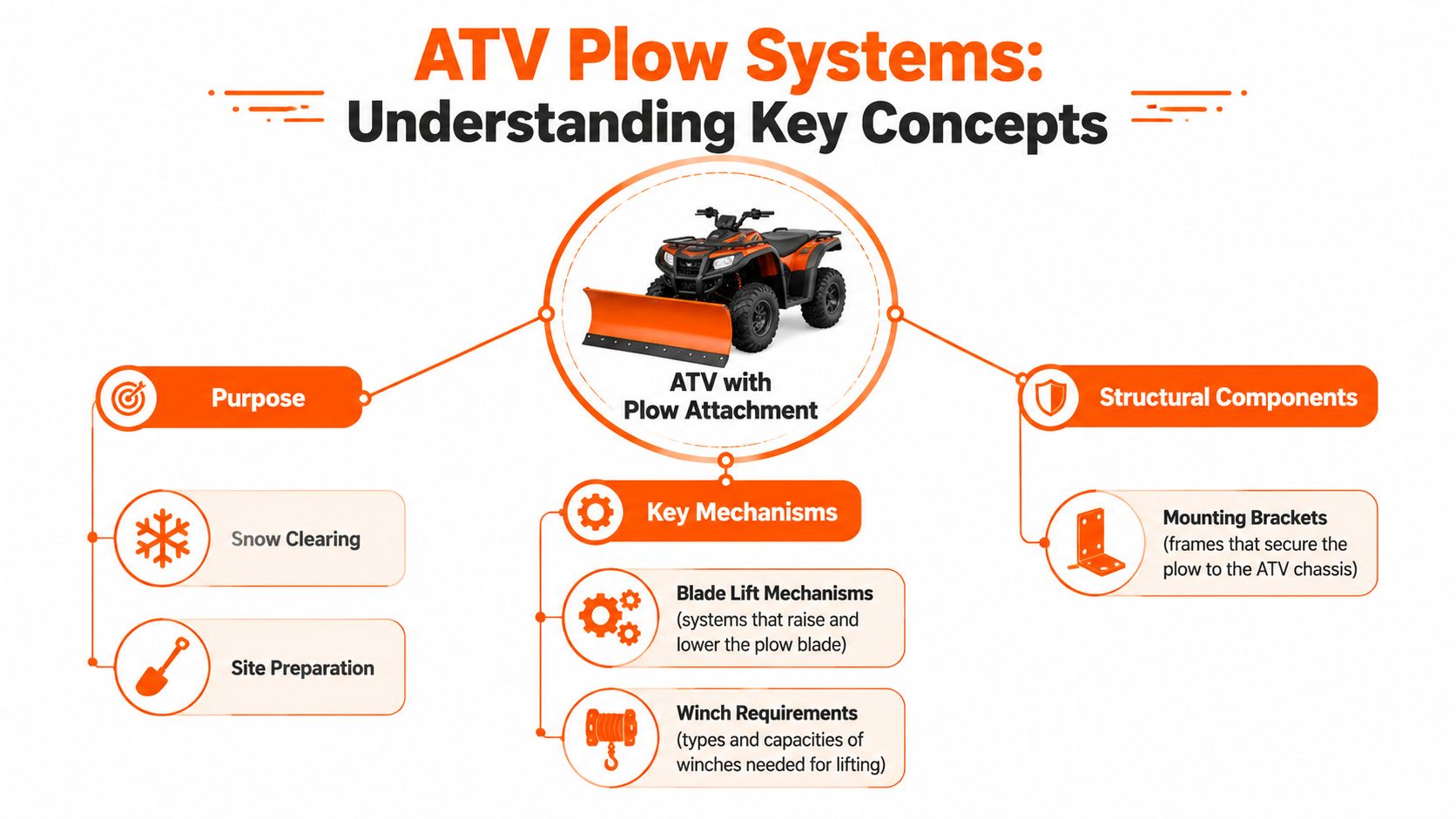
A ATV plow attachment does three jobs at once. It gives the machine a pushing edge, it transfers load through a front mount, and it turns the ATV's engine and drivetrain into controlled forward force instead of simple travel. That is why the attachment has to be matched to the machine, not just to the task.
On a job site, the setup works like a hand tool with the wrong handle. The blade may be right for the surface, but if the mount, lift, and traction do not suit the ATV, the operator feels every weak point through the bars and the front suspension.
What the blade, mount, and lift actually do
The blade is the part people see first, but the mounting bracket is what keeps the setup attached to the frame under load. The lift system matters just as much because the blade has to rise, settle, and angle without fighting the ATV's front end. If the lift is weak or poorly adjusted, the operator ends up dragging the blade too low or lifting it too high, both of which reduce control.
Winch-based lifts are common because they are simple and direct, but they still need the right capacity and cable setup to work smoothly. A front-mounted blade does not just glide forward. It pushes snow, meets resistance, and shifts stress into the frame, suspension, and tires. That is why traction matters so much. The machine has to stay planted while the blade does the work.
A plow does not care how good the engine sounds if the tires cannot keep grip.
That is the part many new buyers miss. A strong ATV with poor traction can underperform a smaller machine that is properly matched to a narrower blade and a better surface. In practical terms, the right setup is a balance between engine size, blade width, ground contact, and plow angle.
Why market size matters for buyers
The market is large enough to show broad use across property work, seasonal snow clearing, and small-scale land management. For buyers, that usually means more accessory choices, more replacement parts, and more variation in blade and mount options. Growth Market Reports points to that wider demand pattern in its market coverage Growth Market Reports.
When to Use an ATV with Plow
A plow on an ATV makes sense when the job is small enough that maneuverability matters more than brute force. That includes residential driveways, short access lanes, tight parking corners, and light site prep where a bigger machine would be awkward to move or too expensive to justify for repeated use. The machine earns its place when the operator needs quick setup and precise control.
Match the task to the snow depth
Snow depth changes the game fast. One guide states that a 400cc ATV can handle only lighter accumulation of about 3–5 inches, while a well-equipped ATV can typically move 6–12 inches of light, fresh snow per pass, though deeper falls need to be handled in layers Edge Performance Sports. That's a useful dividing line because it shows where the machine is working efficiently and where the operator is asking too much from the setup.
For a tradie, that means the right approach is often incremental. Clear the top layer first, then come back for the packed base, instead of trying to ram through one heavy pass. Fresh snow is lighter, more forgiving, and easier to move before it gets compacted by tires or foot traffic.
Use the ATV where tight spaces matter
An ATV plow shines where a truck or skid-steer feels oversized. Narrow turnarounds, odd-shaped corners, and short paths are all easier to work with a smaller machine that can pivot quickly. The operator spends less time repositioning and more time moving material where it needs to go.
For property maintenance, that can mean clearing a client's driveway without tearing up landscaping or blocking access with a larger rig. For light work on mixed terrain, it can mean shaving down loose accumulation without hauling in heavier equipment for a task that doesn't justify it.
Good judgment beats machine size. If the snow is deep, wet, or packed, a smaller ATV is often better in repeated passes than in one aggressive push.
How to Choose the Right ATV with Plow
Blade width has to fit the ATV's displacement band, or the whole setup starts working against itself. The clearest compatibility guide is simple, 400-500cc machines pair with 48-50" plows, 500-650cc machines with 50-55" plows, and 650cc+ machines with 55-60" plows Alibaba. Wider blades move more material, but they also demand more traction and side stability.
Compatibility table
| ATV Displacement | Recommended Blade Width |
|---|---|
| 400-500cc | 48-50" |
| 500-650cc | 50-55" |
| 650cc+ | 55-60" |
That table is the starting point, not the finish line. A wide blade on the wrong machine will feel heavy, especially when angled. A narrower blade on a stronger ATV may be more nimble and less tiring to run in confined spaces.
What else should be on the checklist
The drivetrain matters, especially if the surface is uneven or the snow is heavy. 4×4 or AWD helps the front end stay engaged, and a suitable winch gives the lift system the strength it needs to raise the blade reliably. If the winch is undersized, the operator ends up fighting slow lift action or inconsistent height control.
The other mistake is buying for the biggest possible job instead of the job you do most often. A blade that's too wide can make a machine feel sluggish, while one that's too narrow can make the operator take extra passes. A balanced setup saves time because it pushes cleanly without overworking the ATV.
If you're comparing options for a client-facing service package, it helps to keep your pricing and scope documents tidy. A simple service template can make it easier to explain what's included and what isn't, especially when plow work is seasonal and variable. You can use this proposal template for services as a planning reference alongside your equipment shortlist.
Installation and Setup Process
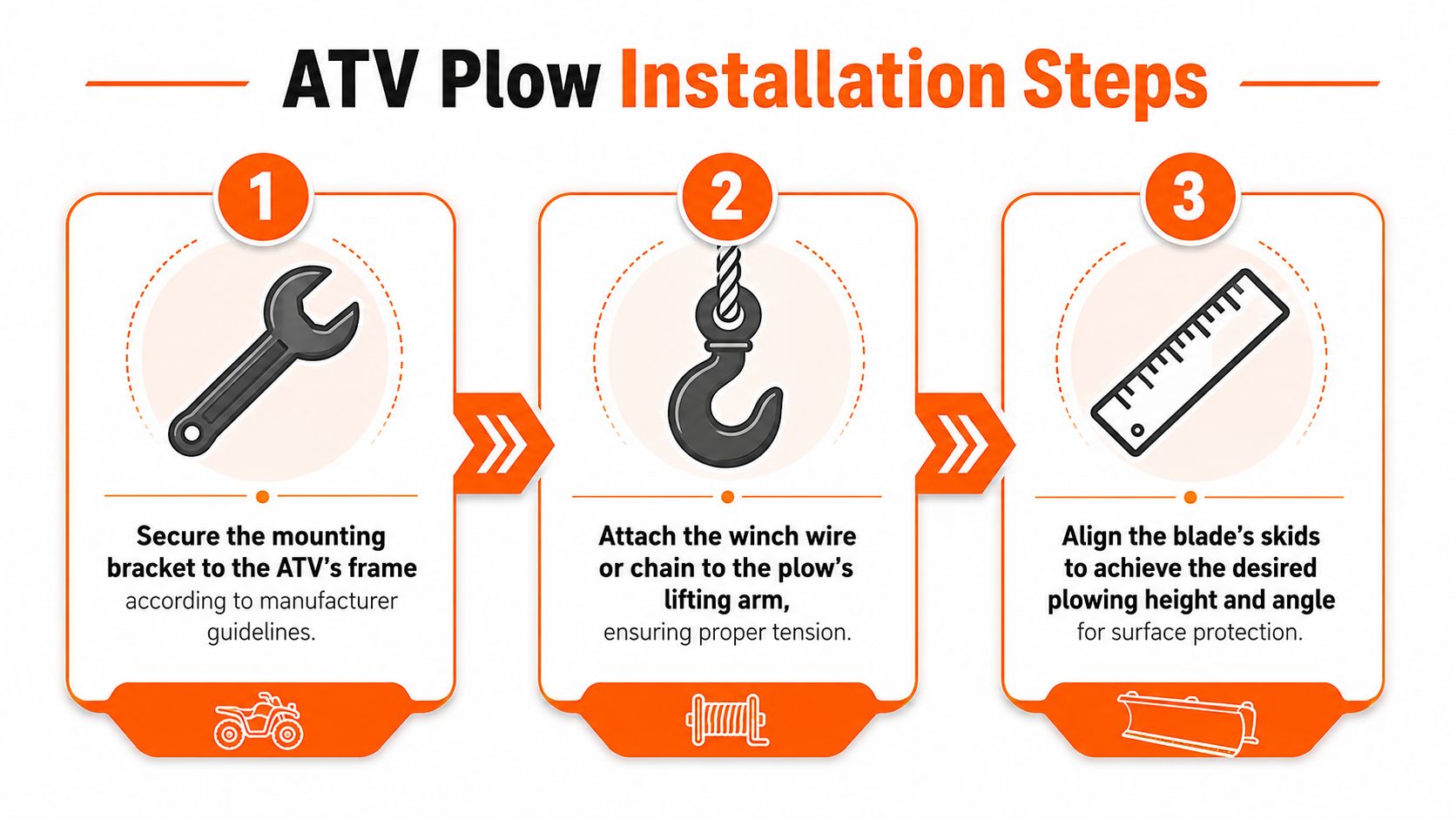
A clean install starts with the frame, not the blade. The mounting bracket has to sit securely, because every shove through snow sends force back through that connection point. If the bracket flexes, the rest of the setup never feels right.
Step one, mount the bracket correctly
Begin by securing the mounting bracket to the ATV frame exactly as the manufacturer specifies. That sounds basic, but bracket alignment decides whether the plow tracks straight or pulls to one side. Tight hardware matters here because a loose mount can settle under load and change the blade's angle.
Once the bracket is in place, inspect the line of the lift point before attaching the blade. The frame should look square, and the plow should sit centered. If the mount is off, the operator will feel it immediately during the first push.
Step two, connect the lift system
Attach the winch wire or chain to the plow's lifting arm and make sure the tension is even. Too much slack can cause an uneven lift, while too much tension can make the lift feel jerky. The goal is a smooth rise and controlled drop, not a hard yank each time you raise the blade.
Step three, set blade height and test the first push
Adjust the skids so the blade rides at the right height for the surface. That matters because the plow should move snow without chewing into the ground underneath. On mixed surfaces, that first height setting is what protects the blade and the driveway at the same time.
Workshop habit: do a short test push on the edge of the work area before committing to a full pass. A small adjustment early saves a lot of correction later.
The included installation video can help visual learners see the sequence in motion.
Safe Operating Practices
The biggest safety mistake is trying to plow as if the ATV were a truck. It isn't. The machine is lighter, the blade sits lower, and the front end can react sharply if the operator hits hidden obstacles or grabs too much material at once. Control matters more than speed.
Surface choice changes the risk
An independent buying guide notes that ATV plows are best on paved surfaces or grass, and that gravel and dirt can damage the blade or let it dig in. It also recommends raising skids to keep the blade above loose ground and avoiding excessive downward force Powersport Financing. That's the kind of detail that keeps a job from turning into a repair bill.
Mixed surfaces need extra judgment. A driveway that starts on pavement and ends on gravel can force the operator to change blade height mid-pass. If the blade stays too low, it can scrape loose stone or catch under frozen edges. If it sits too high, the snow stays behind and the pass becomes inefficient.
What safe operating looks like on the ground
Keep the approach steady, avoid abrupt steering inputs, and let the blade do gradual work. If the snow gets dense, use shorter passes instead of pushing harder. That reduces stress on the front end and gives the tires a better chance to keep grip.
Protective gear still matters because plowing is outdoor work with moving equipment, low visibility, and unpredictable terrain. A pre-run check should catch loose hardware, worn skids, and any obvious cable damage before the machine leaves the yard.
Don't push the blade down just to make it look like it's cutting better. On loose ground, that habit usually causes more trouble than it solves.
Maintenance Checklist
Plow maintenance is easier when you treat it like a seasonal routine instead of an emergency fix. A blade that works well in November can rattle itself loose by midwinter if no one checks the hardware, the cable, or the pivot points. Small checks keep the rig dependable when the weather turns.
Seasonal checks that prevent trouble
- Inspect mounting bolts and winch cable: Look for looseness, fraying, or visible wear before the first heavy use and again during the season.
- Grease pivot points regularly: Moving joints should stay smooth so the blade lifts and angles without binding.
- Check skids for wear: Worn skids change blade height and make it easier to scrape or dig in.
- Tighten blade hardware after the first uses: Bolts can settle once the plow has taken a few real pushes.
The maintenance habits above are the difference between a blade that stays predictable and one that starts wandering under load. If the mount shifts, the operator feels it in the steering. If the skids wear unevenly, the surface protection disappears.
Don't ignore the machine behind the plow
The ATV itself needs attention too. Battery health, tire pressure, and frame corrosion spots all affect how well the machine handles winter work. A low tire or weak battery can make a good plow setup feel tired before the first job is finished.
Storage matters as well. Keeping the blade dry helps reduce rust, and it makes the next season's setup much easier. If you manage multiple jobs or track maintenance for different trade assets, it helps to keep your records organized with a small business tax deductions checklist PDF so equipment-related costs are easier to document.
Maintenance rule: if you have to force a part into position, stop and fix the cause before it becomes a failure.
Evaluating Local Regulations and ROI
Road-adjacent snow removal is where many buyers get caught out. Some jurisdictions only allow ATV snow-removal use on or near roadways under conditions including a 15 mph limit, a 2-mile travel limit, seasonal limits such as October 1 to April 30, and required flashing yellow lights Superior, WI municipal summary. That means the machine might be capable, but the local law may still restrict where and how it can be used.
Check the legal path before you buy
A lot of buyers ask whether an ATV with a plow can be used on a street, shoulder, or neighborhood roadway. The honest answer is that it depends on the local rule set, not just the hardware. If the route to the driveway crosses a public road, or if the job includes road-edge work, the rules matter before the blade ever touches snow.
That makes compliance part of the purchase decision. Flashing yellow lights, visibility requirements, and travel limits can change whether the setup is practical for a given site. If you only discover that after buying, the equipment may still work, but not in the places you needed it most.
Decide whether the numbers make sense
ROI is simpler than people make it. Add up the purchase cost, the seasonal maintenance, and the time you'll use the machine. Then compare that with what you'd pay to have the work handled another way. If the ATV is already in the shed for other jobs, the plow attachment may make a lot more sense than buying a dedicated snow machine.
Local service pricing also matters. If you're comparing ownership against outsourcing, a clear benchmark helps you judge whether the attachment pays for itself through repeated use. You can use this average cost of snow removal reference point while you compare the work you do most often with the cost of bringing in help.
The best business decision is usually the one that fits the actual pattern of work. If the ATV is already earning its keep on property tasks, the plow can extend that value. If the local rules are tight and the snow work is occasional, hiring out may be the cleaner option.
If you're weighing an ATV plow for your own truck, yard, or service business, start with the surface, the blade width, and the local road rules before you spend a dollar. Then compare that setup against the jobs you really do through winter, not the ones you hope will show up. If you want a faster way to keep your trade business visible while you're busy on-site, GrowTradie can help you stay in front of local customers without adding more admin to your week.