

Some weeks your phone won't stop. You're quoting panel upgrades, rushing to emergency callouts, and pushing small jobs to next Tuesday. Then the next week goes quiet and you start wondering where the next run of work is coming from.
That stop-start cycle wears people down. Word-of-mouth is still valuable, but it isn't a system you control. It depends on timing, memory, and whether the last customer talks about you when their neighbour needs an electrician.
A better approach is simple. Be visible when someone in your area is already looking for help. That's the modern version of local referral. It happens on Google, on maps, and on the pages people check before they decide who to call.
The reason this matters is practical, not theoretical. One industry report says leads from people actively searching online close at 14.6%, compared with 1.7% for outbound methods like mailers, and the Map Pack attracts 55% of clicks, which is why visibility there can have a direct effect on call volume and booked jobs, according to the 2025 electrician market report.
If you want more local jobs, you don't need jargon. You need a repeatable system that makes it easy for homeowners to find you, trust you, and contact you fast. That's what electrician local SEO marketing is really about, even if the work itself is mostly basic business discipline done consistently.
Table of Contents
- Introduction Moving Beyond Word-of-Mouth
- Your Foundation for Local Calls Your Google Business Profile
- Your Digital Showroom Building a Website That Wins Jobs
- Creating Local Proof and Staying Visible
- Get Seen Faster with Local Service Ads
- Tracking What Matters and Turning It into Work
- Frequently Asked Questions About Attracting Local Customers
Introduction Moving Beyond Word-of-Mouth
Word-of-mouth works best as a bonus, not as the whole plan. If your pipeline depends on past customers remembering your name at exactly the right moment, your workflow will always swing harder than it needs to.
Electrician local SEO marketing is really about showing up when local intent is already there. A homeowner with a dead circuit, an old switchboard, or a new EV charger project isn't browsing for entertainment. They're looking for someone nearby who looks credible and available.
That means your online presence has to answer three questions fast:
- Are you real: clear business details, real photos, and a proper profile
- Do you do this job: visible services like fault finding, rewiring, panel upgrades, and EV charger installs
- Can I contact you now: clickable phone number, easy form, and no confusion about your service area
Practical rule: If a customer has to hunt for your number, wonder whether you cover their suburb, or guess whether you handle their type of job, you're losing calls before the conversation starts.
Most electricians don't need a complicated strategy. They need accurate business details, solid location pages, active reviews, and a website that doesn't feel neglected. Done together, that creates a system that keeps bringing in local enquiries instead of leaving you at the mercy of referrals alone.
Your Foundation for Local Calls Your Google Business Profile
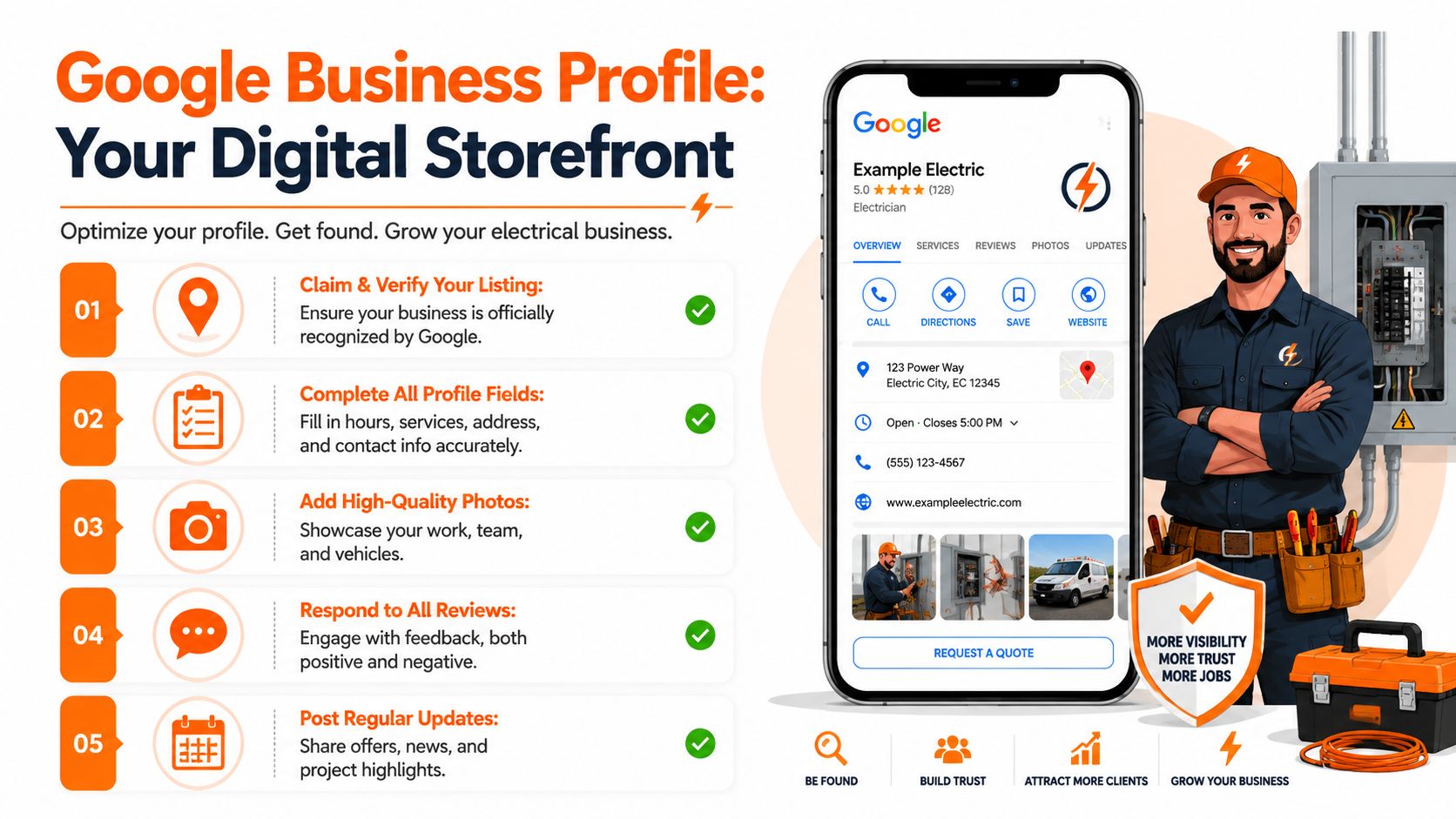
Your Google Business Profile is often the first thing a customer sees. In many cases, it's the only thing they look at before calling. If it's incomplete, outdated, or thin, you'll feel that in the phone log.
Start with the non-negotiables
Claim and verify the profile first. If you don't control it, you can't manage the basics properly.
Then tighten up the information that customers and Google both rely on:
- Business name: use your real trading name, not a stuffed list of services and suburbs
- Phone number: use the main number you answer
- Address or service area: set this correctly for how your business operates
- Primary category: choose the core category that best fits your business, with electrician as the main one where appropriate
- Hours: keep them current, especially around public holidays and emergency availability
A lot of underperforming profiles fail on boring details. Wrong hours. Old phone number. Loose service-area settings. Missing verification. None of that is advanced, but all of it affects whether customers trust what they're seeing.
Fill the profile like a real storefront
Once the profile is controlled, complete it properly. Treat it as fitting out a shopfront, not ticking boxes.
Add a business description in plain English. List your actual services. Upload photos of your vans, your team, your switchboard work, your lighting installs, your EV charger jobs. Real images outperform generic stock because they remove doubt.
Use this checklist as a working standard:
| Area | What to include |
|---|---|
| Contact details | Correct phone, business name, hours, and service area |
| Services | The jobs you want more of, written clearly |
| Photos | Team, vehicles, completed work, branded gear |
| Reviews | Ongoing requests and professional responses |
| Updates | Occasional project highlights or business updates |
A neglected profile tells customers you might be hard to reach. An active one tells them you're trading, organised, and worth contacting.
Industry guidance for electricians says most businesses begin seeing noticeable improvement in about 3 to 6 months of consistent work on their online presence, as gains build through content, profile updates, and reviews, according to Joseph Studios' local guidance for electricians. That timeline matters because this isn't like flicking on an ad and hoping for calls by lunch. It compounds.
The profile that wins usually isn't the one with the cleverest wording. It's the one that looks complete, current, and trustworthy.
If you want more examples of what tradie marketing looks like in practice, the marketing for electricians articles on GrowTradie are worth a look.
Your Digital Showroom Building a Website That Wins Jobs
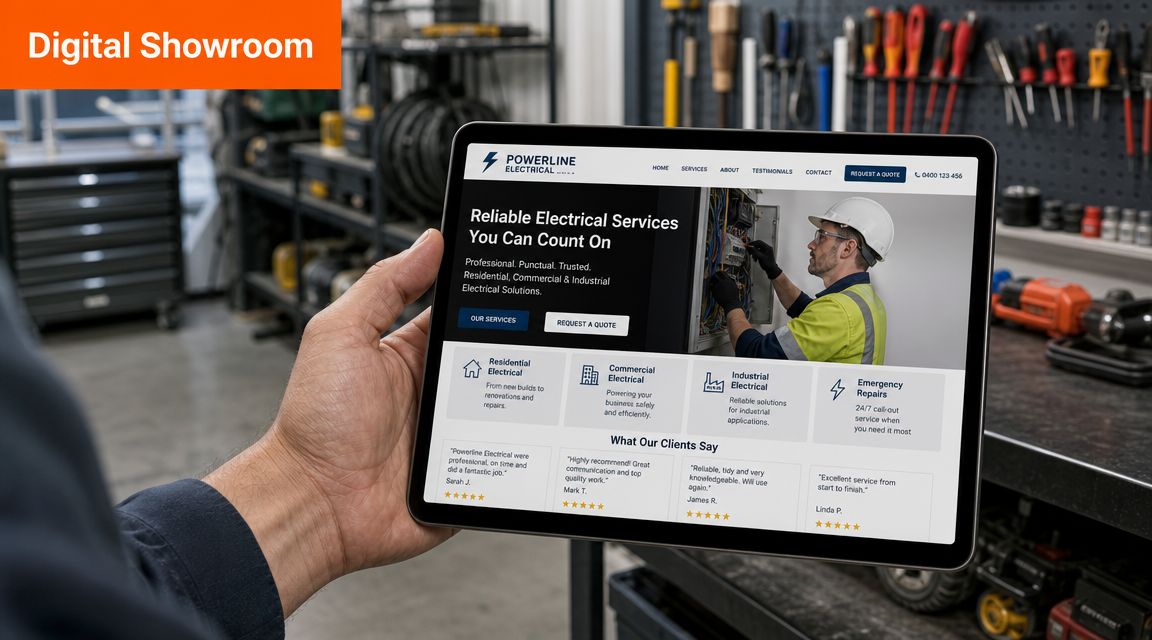
A good website doesn't need to impress another marketer. It needs to help a homeowner make a decision. That means clarity beats cleverness every time.
What a job-winning site needs
Your homepage should answer the basics in seconds. Who you are, what you do, where you work, and how to contact you.
The structure matters. Independent guidance for electricians recommends that your page title stays around 60 characters, your main service appears in the headline and first 100 words, and you build dedicated pages for each core service area instead of stuffing city names into the footer, as noted in Four Winds Marketing's electrician local visibility guide.
That advice lines up with what works in the field. Customers don't land on a page and read every word. They scan. If the page opens with vague copy and no clear service match, they bounce and call the next business.
Focus on these essentials:
- Clear headline: say exactly what service you provide
- Fast contact options: click-to-call button, short quote form, visible phone number
- Trust builders: reviews, licence details, photos of actual work
- Mobile usability: text that's easy to read and buttons easy to tap
Why separate pages beat one generic page
A lot of electricians try to rank one homepage for everything. It's convenient, but it's weak. A single page can't do a strong job for switchboard upgrades, emergency faults, smoke alarm compliance, EV charger installs, and every suburb you service.
Dedicated pages are the fix. Build pages around the work you want more of, then build location-focused pages for the areas you cover. Each page should be distinct and useful.
A simple format works well:
- Use a specific heading: “EV Charger Installation in Geelong” is stronger than “Welcome to Our Website”
- Write a short local introduction: mention the service and area naturally
- Add proof: include a relevant project image, service details, and a testimonial if you have one
- Make contact easy: one call button and one simple form are enough
Here's a useful explainer on how content supports visibility over time:
There's also a practical difference between a homepage and a service-area page. The homepage introduces the business. The service-area page proves relevance for one place and one kind of job. That's why dedicated pages tend to pull their weight better than a homepage with a giant suburb list jammed into the bottom.
If you want help thinking through content for trade businesses, the content marketing ideas for contractors on GrowTradie are a practical starting point.
Creating Local Proof and Staying Visible
Plenty of electricians have decent profiles and decent websites, then still look quiet online. That hurts trust. People notice when the last review was ages ago and the last update looks forgotten.
Reviews are sales tools
Reviews do two jobs at once. They reassure the customer, and they create a visible track record of completed work.
The easiest review system is usually the one that happens right after the job is done. Send a short text with a direct review link while the customer still remembers the service clearly. Don't overthink the wording. Keep it polite and easy.
A workable review routine looks like this:
- Ask at the right moment: after the customer says they're happy, not weeks later
- Use one simple link: remove friction
- Respond to every review: thank the good ones, handle the rough ones calmly
- Reference real work: if a review mentions a panel upgrade or urgent fault repair, that helps future customers connect the dots
A profile with recent reviews feels active. A profile with old reviews feels uncertain, even if the business is still doing great work.
Consistency beats bursts of effort
Visibility isn't only about a profile and a website. It's also about not looking dormant. Regular updates, recent job photos, short posts about completed work, and service reminders all help reinforce that your business is operating and engaged locally.
That's where time becomes the primary bottleneck. Most tradies don't want to stop between jobs to write posts, design graphics, and schedule content. One option built for this is GrowTradie's local visibility tools for contractors, which generate and auto-post trade-specific content based on your services and local area.
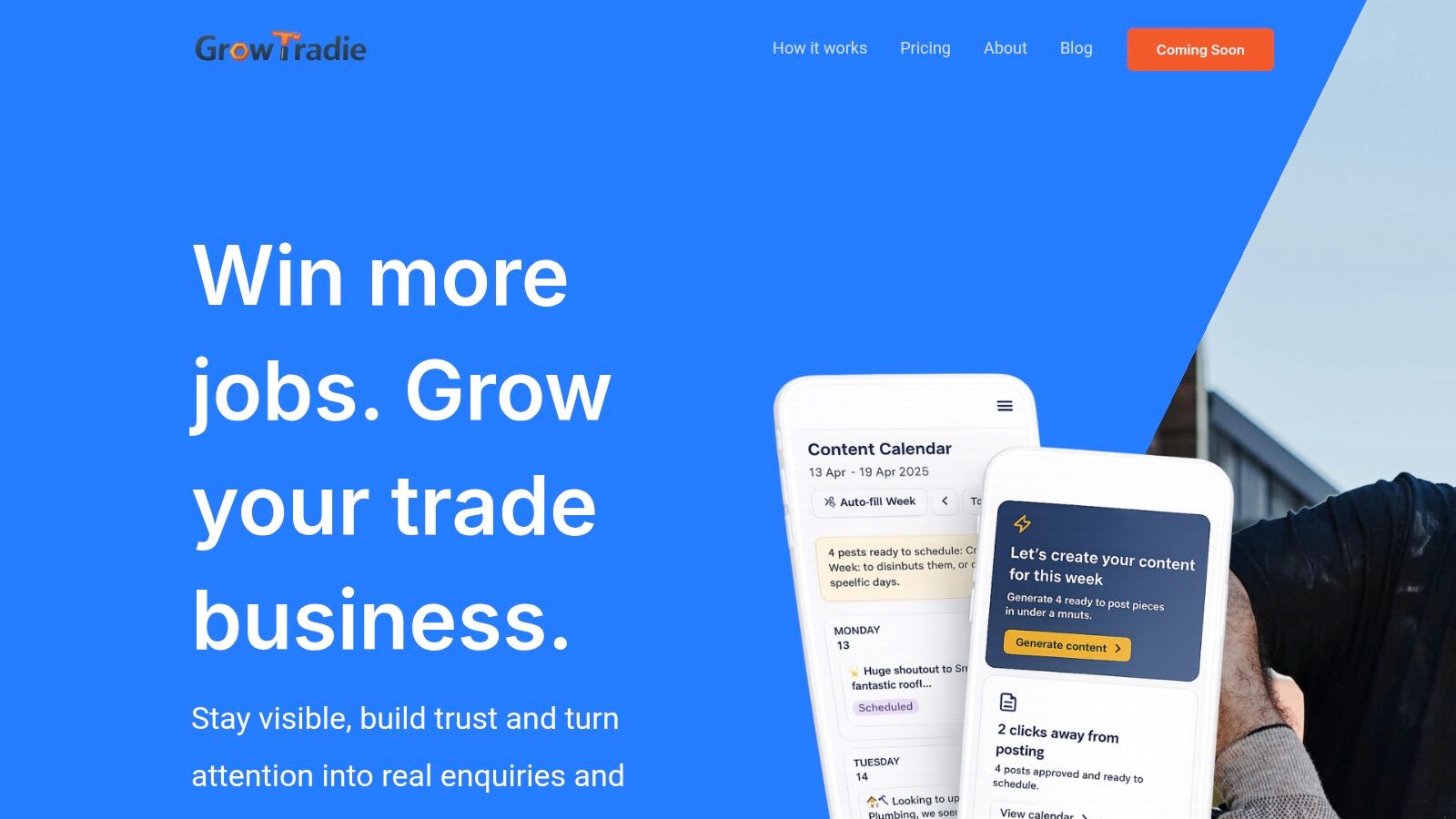
That kind of system helps with a common problem. The business is legitimate, the workmanship is solid, but the online presence looks abandoned because nobody has time to maintain it.
If you want a simple rule, keep your public-facing channels current enough that a customer can tell you're active without needing to guess.
Get Seen Faster with Local Service Ads
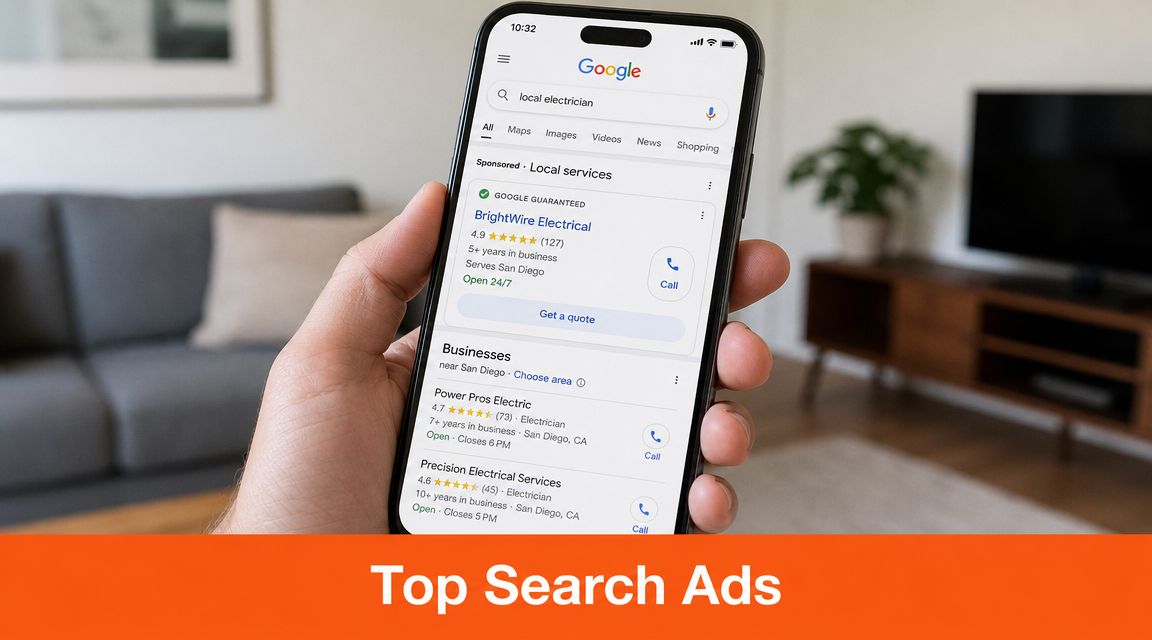
If you need leads sooner while your long-term visibility builds, Local Service Ads are worth a look. They sit prominently in search results and are designed for local service businesses, including electricians.
When these ads make sense
These ads are useful when your schedule has gaps, when you want to push certain job types, or when you're entering a more competitive area and need visibility now rather than later.
The main appeal is straightforward:
- Top-of-page placement: you can appear before standard organic results
- Trust signal: the Google Guaranteed badge can reduce hesitation for first-time customers
- Lead-based charging: you pay for customer contacts through the ad rather than paying for every click
That makes them easier for some tradies to understand than a full search ad account with endless settings. You're buying exposure tied more directly to enquiries.
What to watch once they are live
Don't judge them only by lead volume. Judge them by job quality.
A campaign can look busy and still be poor if the leads are outside your service area, wrong for the work you want, or too price-driven to convert. Keep an eye on what customers are calling about. If you want EV charger installs and panel upgrades but keep getting minor repair calls from fringe suburbs, your setup needs tightening.
The right question isn't “Did the ad produce leads?” It's “Did the ad produce the kind of work I want more of?”
Make sure your business documents are ready before you start. Licence, insurance, and business details usually need to be in order. Also plan who answers the phone. Better visibility won't help much if calls go unanswered during the busiest parts of the day.
Tracking What Matters and Turning It into Work
Most tradies don't need a giant dashboard. They need a short list of numbers that connect to booked jobs. If a metric doesn't help you decide what to do next, it's noise.
Check the numbers that connect to jobs
Start with actions that show buying intent, not vanity activity.
Track things like:
- Phone calls: how many came in, and which channel drove them
- Form submissions: quote requests, service enquiries, callback requests
- Profile actions: website clicks, calls, and direction requests from your Google Business Profile
- Lead quality notes: suburb, job type, and whether the job was won
A basic call tracking setup helps if you're running multiple channels. It gives you a clearer view of whether your profile, website, or ads are producing better enquiries.
Use a simple monthly review
Once a month is enough for most small electrical businesses. Pull the numbers, scan the lead quality, and ask practical questions.
| Question | What to look for |
|---|---|
| Which source drove calls? | Profile activity, website forms, or paid leads |
| What jobs came through? | Emergency work, upgrades, installs, maintenance |
| Were they in-area? | Good suburbs vs time-wasting fringe areas |
| Did enquiries convert? | Quotes sent, jobs booked, calls missed |
If one service page attracts the right jobs, build more pages like it. If one suburb keeps producing poor enquiries, adjust your targeting. If calls are coming in but not turning into work, the issue may be quoting, response speed, or the kinds of jobs you're attracting.
Good electrician local SEO marketing isn't just about being seen. It's about knowing which visibility turns into revenue and which visibility just looks busy.
Frequently Asked Questions About Attracting Local Customers
Busy electricians usually ask practical questions first. Time, effort, and whether this will bring in work. Fair enough.
Common questions from tradies
| Question | Answer |
|---|---|
| How long does this take to start working? | It depends on your starting point, competition, and how consistently you maintain your profile, website, and reviews. This is usually a compounding channel, not an overnight fix. |
| What should I fix first? | Start with your Google Business Profile. Then make sure your website has clear service pages, location pages, and visible contact options. |
| Do I need a new website? | Not always. Many electricians can improve results by tightening structure, copy, mobile usability, and service-area pages rather than rebuilding from scratch. |
| Should I ask every customer for a review? | Ask happy customers consistently. Keep the process simple and do it soon after the job is complete. |
| Are social posts necessary? | They help your business look active and current. They support trust, especially when someone checks your business before calling. |
| What if I service multiple suburbs? | Build separate, useful pages for core service areas. Avoid dumping a long suburb list into the footer and hoping it does the job. |
| Do paid ads replace long-term visibility work? | No. They can fill gaps or create faster exposure, but your core local presence still matters because customers check profiles, reviews, and your site before deciding. |
| What should I track every month? | Calls, quote requests, profile actions, lead quality, and which services or suburbs are producing the best work. |
A lot of confusion disappears once you stop thinking about marketing as a pile of disconnected tasks. It's one system. Profile, website, reviews, visibility, and tracking. Each part supports the others.
If you keep that system simple and maintain it properly, you'll give your business a much better shot at steady local work instead of relying on luck and referrals alone.
If you want a simpler way to stay visible between jobs, GrowTradie helps trade businesses generate and auto-post local content without having to write everything manually. For electricians who want a more consistent online presence without adding more admin to the week, that can make the system easier to maintain.