
A Thumbtack lead lands at 7:15 a.m. You reply before the van leaves the driveway. By lunch, the customer has gone cold or picked the lowest quote. That pattern gets expensive fast, especially for trades that already run on tight margins and packed schedules.
That is why tradies look for websites like Thumbtack. The important question is not which platform looks similar. It is which one sends the right type of work for your trade, your pricing, and the way you want to run jobs.
Some platforms are better for small, fast-turnaround work like repairs, assembly, and callouts. Others fit larger projects where homeowners compare portfolios, reviews, and past jobs before they even ask for a quote. The trade-off matters. High lead volume can still be a bad deal if you are paying for weak enquiries or fighting ten other contractors on every job.
A 2025 industry comparison projects that platforms in this category continue to attract both homeowners and service pros at scale. Size alone does not make a platform worth using. Lead quality, competition level, and job fit matter more than brand recognition.
The list below keeps that filter front and center. It looks at where each platform tends to work best, where costs or competition can get ugly, and which ones suit quick repair work versus higher-value remodels. If you want more control outside lead marketplaces, building your own content marketing for local service businesses also helps reduce reliance on paid leads.
Table of Contents
- 1. Angi
- 2. Yelp
- 3. Houzz Pro
- 4. Porch
- 6. Taskrabbit
- 6. Taskrabbit
- 7. Networx
- 8. HomeGuide
- 9. BuildZoom
- 10. Fixr for Pros
- Top 10 Home Services Platforms Comparison
- Final Thoughts
1. Angi
Angi is one of the first places many homeowners check when they want a contractor, especially for established trades. If you want volume, it’s a serious option. If you hate shared leads and slow follow-up from shoppers, it can get expensive fast.
One comparison of platforms similar to Thumbtack says Angi covers over 500 service categories and uses trust signals like badges and awards, with lead conversion rates improving by up to 30% in major US markets according to that source’s platform analytics (PhoneStaffer review of apps similar to Thumbtack). Take that as a sign of what Angi is trying to do well: trust and volume.
Where Angi works best
Angi suits plumbers, electricians, HVAC techs, and general contractors who need a steady stream of local enquiries and can respond quickly. It’s stronger in busy metro areas where homeowner demand is already high.
What usually works on Angi:
- Fast contact: The first pro to call often has the best shot.
- Tight service selection: Don’t switch on every category. Stick to the work you quote well and profitably.
- Strong profile proof: Reviews, job photos, and clear service descriptions matter because homeowners compare you side by side.
Practical rule: If you can’t respond quickly during the workday, don’t buy broad lead flow on shared-lead platforms.
The catch is simple. Many leads are shared. That means you’re not just selling your trade skills. You’re competing on speed, trust, and how clearly you explain the next step.
If you’re trying to balance paid lead platforms with a steadier long-term visibility play, this guide on content marketing for local businesses is worth pairing with your lead strategy.
2. Yelp
Yelp for Business is different from most websites like thumbtack because it starts with reputation. Homeowners often arrive there already comparing businesses, reading reviews, and checking who looks credible before they message anyone.
That makes Yelp strongest for trades where trust and responsiveness matter as much as price. If a homeowner is nervous about letting someone into the property or wants a business that looks established, Yelp can help. If your reviews are weak or your messaging is slow, it won’t.
What wins jobs on Yelp
Yelp lead flow usually comes through quote requests and messages. You’re often in a comparison set right away, so your profile has to do more of the selling before you ever speak to the customer.
A good Yelp setup usually includes:
- Clear job photos: Show actual work, not generic branding.
- Tight service list: Make it obvious what you do and what you don’t.
- Quick inbox habits: Messaging cuts down the phone tag, but only if you answer quickly.
- Review discipline: Ask happy customers for reviews consistently, not only after your best jobs.
Yelp can be frustrating because one customer request may go to several businesses. That can push conversations toward price. Still, for review-driven trades, it often filters out some low-intent shoppers because customers can see your history before reaching out.
Strong Yelp profiles tend to win before the first phone call. Weak ones rarely get the chance.
If your work is highly visual or your jobs need more explanation, another platform below may fit better. Yelp is more about local proof and quick response than deep project selling.
3. Houzz Pro
Houzz Pro pricing appeals to a different kind of tradie. It’s not built around quick-fix, same-day work. It’s built for businesses that need to show the finish, explain the scope, and manage a longer sales cycle.
That makes it a better fit for remodelers, design-build firms, cabinet installers, painters doing full interiors or exteriors, and specialty trades selling bigger outcomes instead of single-call fixes. Homeowners on Houzz often browse with their eyes first. If your portfolio is weak, the platform gets harder to justify.
Best fit for bigger visual jobs
Houzz works when the customer needs confidence in taste, finish quality, and project handling. It’s less useful if your jobs are mostly urgent service calls.
Use it if your work depends on:
- Before and after proof: Finished project photos matter.
- Higher-ticket quoting: Customers often need proposals, revisions, and a slower decision process.
- Sales follow-up: Houzz combines lead capture with business tools, so it can help if your current quoting process is messy.
One practical upside is that Houzz can replace several separate tools if you use its estimating, proposal, and client workflow features. If you won’t use those tools, the subscription feels heavier.
For painting businesses in particular, clear quoting matters as much as visuals. This walkthrough on how to price a painting job pairs well with a Houzz-style sales process.
Houzz makes the most sense when the customer is buying judgment, finish quality, and project confidence. Not just labor.
The trade-off is patience. You may get fewer enquiries than on a broad lead marketplace, but the better-fit projects can be worth more time and attention.
4. Porch
Porch Pro tends to get less talk than bigger names, but it has one practical advantage. It gives some tradies a more structured way to deal with bad leads and credit rules, which matters if you’re tired of paying and hoping.
Here’s the dashboard view many pros care about before they sign up:
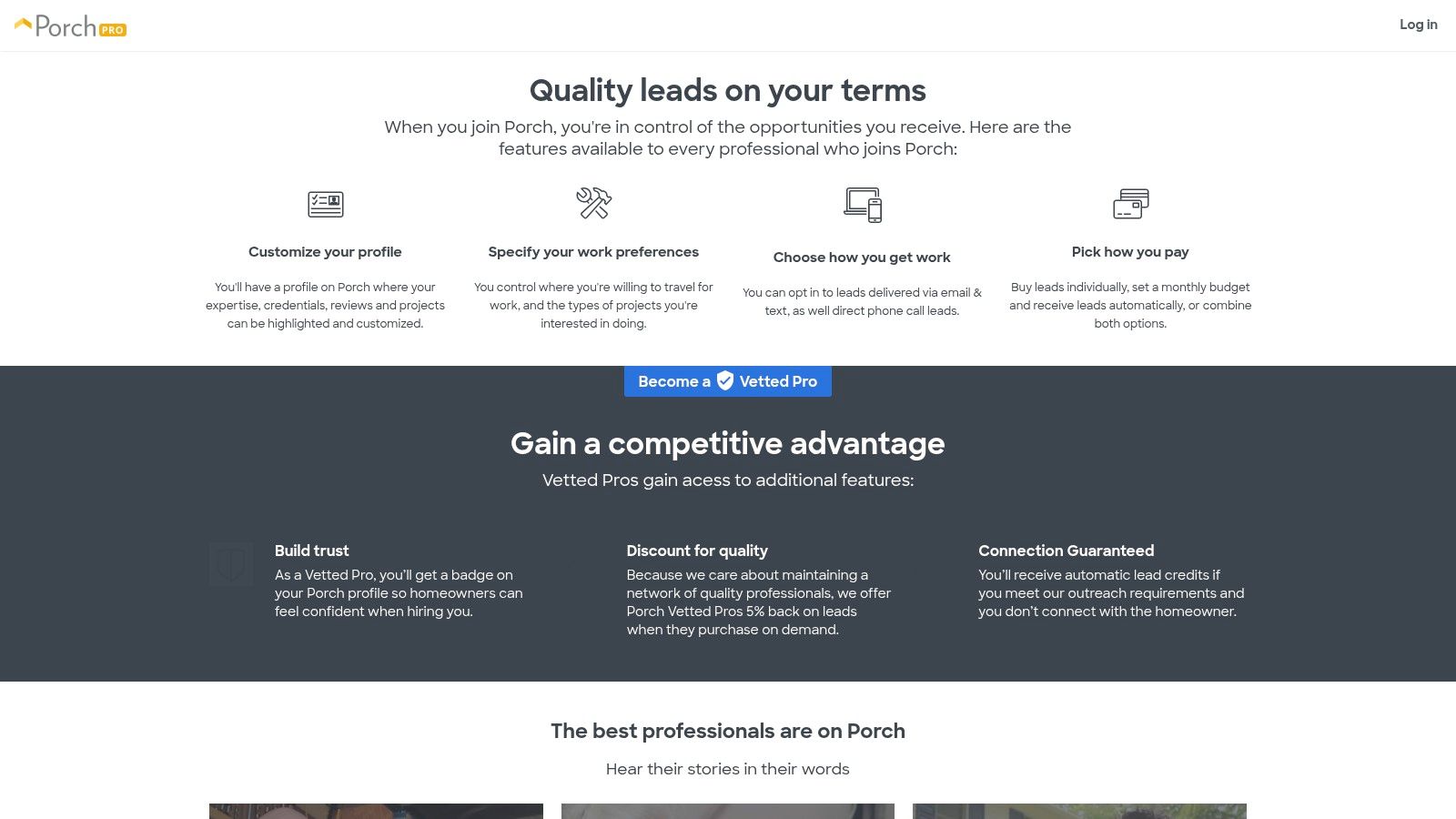
Porch can work well for contractors who want flexibility. Some prefer on-demand buying. Others want more predictable access through subscriptions. It also benefits from partnerships that can put your business in front of homeowners who are already moving or buying retail-linked services.
Why some tradies prefer Porch
The main practical draw is structure. If the platform offers crediting or connection guarantees, that gives you a clearer process when a lead is dead on arrival. You still need to follow the rules. But rules are better than guesswork.
Porch is worth testing if you want:
- Defined lead handling: Better for owners who track every dollar.
- Flexible buying options: Helpful if your workflow changes seasonally.
- A triage mindset: Good for businesses that qualify leads fast and drop poor fits early.
The downside is that availability can vary by trade and city. A platform can look solid on paper and still be thin in your area. That’s why Porch is usually a test platform first, not an automatic main channel.
If you run a smaller team, that’s not a bad thing. Test local volume, watch lead quality, then decide whether it deserves a bigger share of your budget.
6. Taskrabbit
A painter has two open hours tomorrow. A handyman has a cancelled afternoon. An installer wants quick, local jobs without a long quoting process. That is the lane where Taskrabbit can earn its keep.
Best for small task work
Taskrabbit works best for short, clearly defined jobs that a customer is comfortable booking fast. Furniture assembly, minor repairs, mounting, light home maintenance, and other hourly work fit the model well. If you're building a business around that kind of service, this guide on how to start a handyman business is a useful next step.
The trade-off is simple. You get speed, but you give up some job size and quoting control. Homeowners on Taskrabbit usually want quick booking and a clear price path. That makes it less suitable for larger remodels, permit-heavy work, or jobs where site visits and custom scopes are part of the sale.
Taskrabbit is usually a strong fit for:
- Schedule gaps: Good for filling empty slots without a full sales cycle.
- Small repeatable jobs: Better if your team can complete common tasks fast and profitably.
- Hourly service models: Useful when your pricing is already built around labor time.
Watch the margins. Small jobs can keep the calendar full, but travel time, platform fees, and low-value enquiries can eat profit if you treat every booking the same.
For many tradies, Taskrabbit works best as a side channel rather than the main pipeline. Use it for fast-turn service work. Keep your bigger installs, renovation leads, and higher-ticket quoting on platforms built for those jobs. That split tends to produce better lead quality and less wasted estimating time.
6. Taskrabbit
Taskrabbit is not a straight replacement for Thumbtack. It’s a different lane. It focuses on fast-turn task work and on-demand booking, which makes it useful for certain trades and a poor fit for others.
The business scale shows there’s real demand in this model. A 2025 comparison says TaskRabbit earned USD 75 million annually, while Thumbtack earned far more, reflecting how TaskRabbit stays focused on quicker on-demand jobs rather than the full spread of lead-generation categories (FATbit comparison of Thumbtack and TaskRabbit).
Here’s the kind of platform experience you’re stepping into:
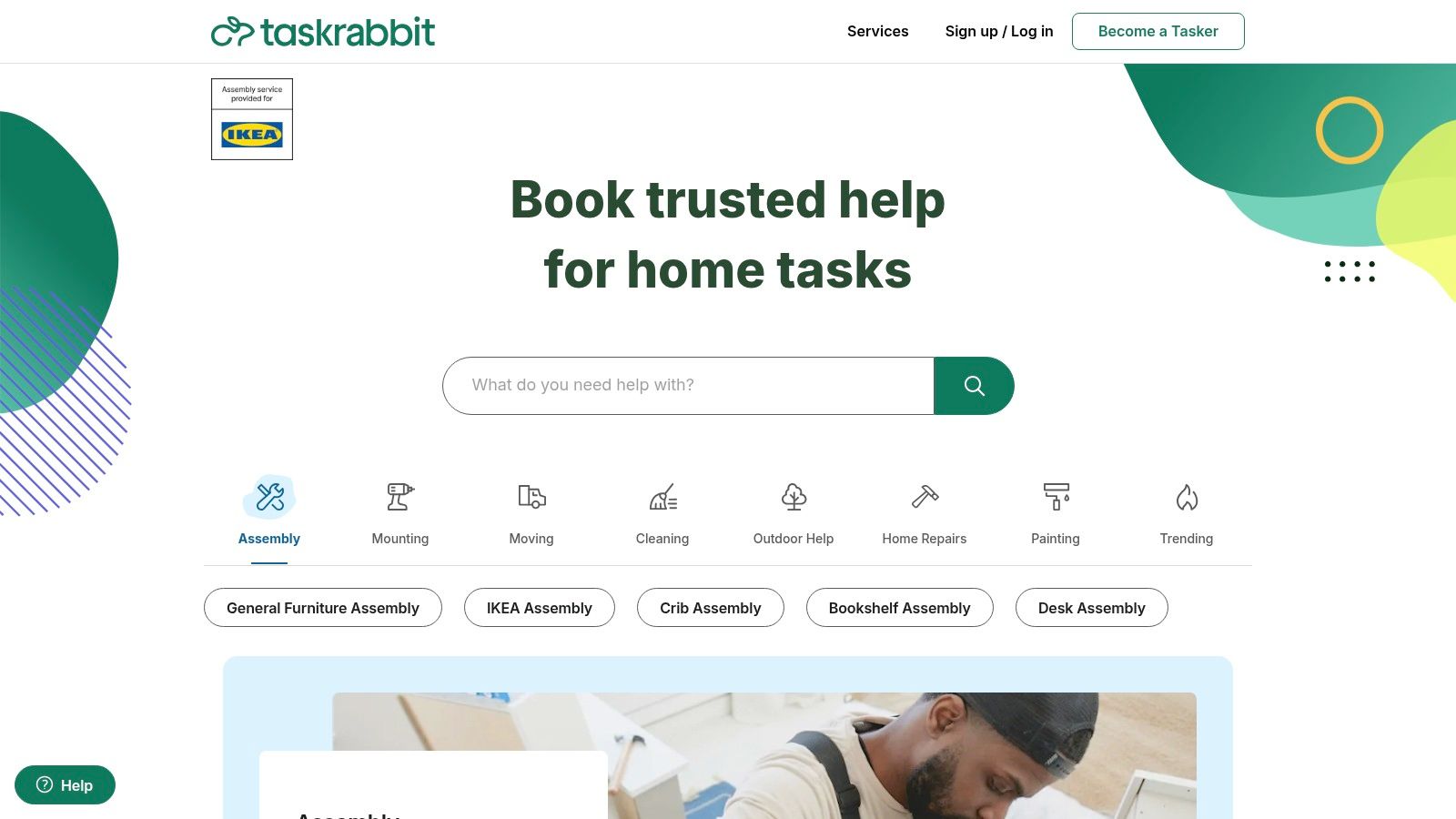
Best for small task work
Taskrabbit is strongest for tradies or handymen who want quick, bookable jobs and can work comfortably on an hourly model. It’s not where most licensed contractors will want to build their whole pipeline.
Taskrabbit suits you if you want:
- Schedule fillers: Good for short gaps in the week.
- Repeat small-job clients: A small task can lead to direct repeat work later.
- Fast booking: Less friction than a quote-heavy platform.
The limitation is category fit. If your business depends on larger installs, permitted work, or custom quoting, Taskrabbit can feel too transactional. Customers there are often comparing speed and price first.
If you’re building a smaller general repair business, this guide on how to start a handyman business can help you judge whether a task-based platform is the right lane.
One 2025 business model breakdown also notes the key difference from Thumbtack. Thumbtack runs on pay-per-lead, while TaskRabbit is built around completed transactions and in-app booking (Yo!Gigs business model comparison). That difference affects everything, from customer expectations to how much control you have over pricing.
7. Networx
Networx sits in a familiar spot for tradies who’ve used broad lead marketplaces before. It matches homeowners to contractors by trade and location, and the mechanics feel closer to Angi-style lead buying than to a platform like Yelp or Houzz.
That’s useful if you want a straightforward marketplace focused on home improvement trades. It’s less useful if you’re hoping for a dramatically different lead experience from the shared-lead world.
Practical trade-offs on Networx
Networx can work for contractors who want another stream of local homeowner requests without rebuilding their whole sales process. The dashboard and onboarding support can help if you’re new to platform-based lead buying.
What to watch:
- Lead structure: Ask early whether the program in your area is shared or exclusive.
- Pricing clarity: Public transparency is limited, so you need to judge fit during onboarding.
- Response process: Like similar platforms, speed usually matters more than polished wording.
Networx is usually worth considering if Angi volume feels too aggressive but you still want a trade-focused lead platform. It’s not the obvious best choice for everyone. It’s more of a practical middle option.
For many businesses, that’s enough. Not every platform needs to be exciting. It just needs to send work you can close at the right margin.
8. HomeGuide
HomeGuide pricing for businesses stands out because it uses a different payment trigger from many websites like thumbtack. The platform says the charge applies when a customer replies to your first message, which can feel fairer than paying just to open a conversation.
That change in risk matters to small operators. If you’re careful with quoting and follow-up, paying only after customer engagement can feel easier to justify than buying access upfront.
Here’s the pricing page many tradies check first:
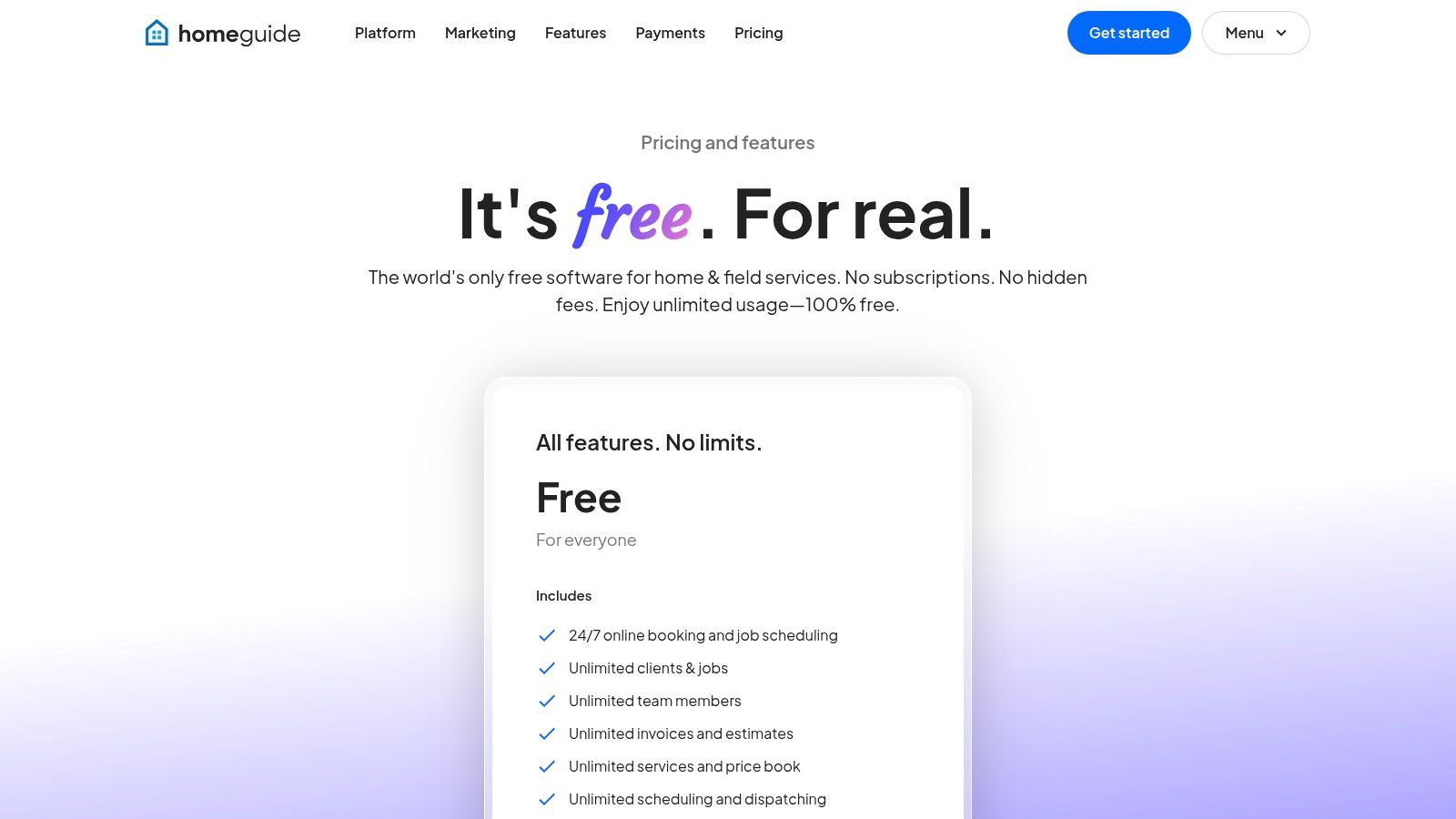
Why HomeGuide appeals to smaller crews
One competitor overview says HomeGuide shows starting cost estimates on 80% of provider profiles across 1,000+ categories and reports 40% year-over-year growth in tradie sign-ups in North American markets, while also describing a push toward more transparent pricing and exclusive lead handling in parts of the platform (Semrush competitor overview for Thumbtack). Even if you treat that cautiously, the broad takeaway is clear. HomeGuide leans into transparency.
That makes it attractive for businesses that want:
- Lower friction entry: No core subscription requirement.
- Simple messaging workflows: Good for owners who don’t want a heavy system.
- Customer engagement before spend: Easier to stomach than pure pay-to-access models.
The trade-off is local volume. In smaller cities, you may not see the same flow as on larger national names. And like nearly every marketplace, customers still compare multiple bids.
If your closing process is solid but you hate paying before a customer shows any real interest, HomeGuide is one of the more sensible tests.
9. BuildZoom
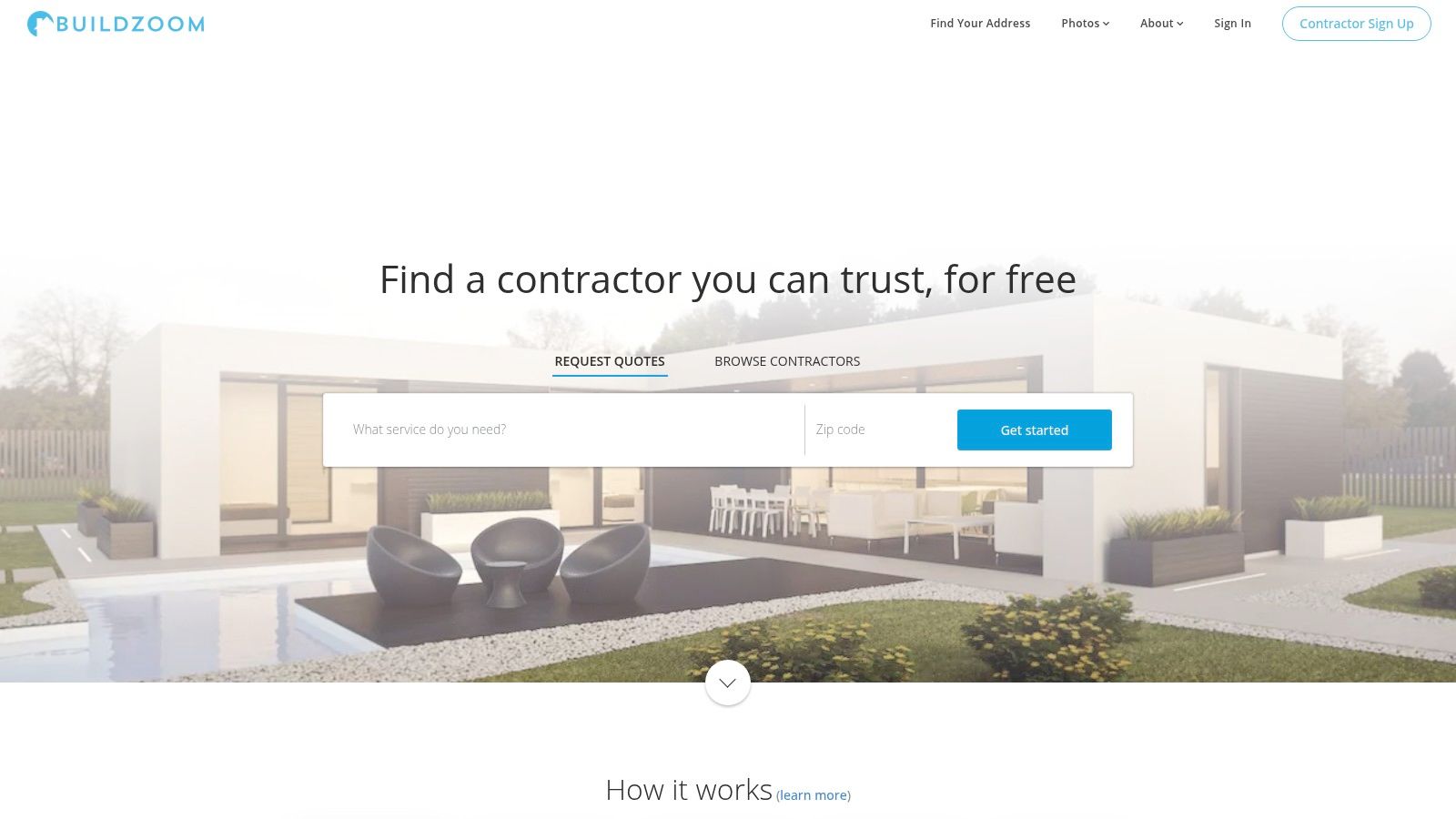
BuildZoom belongs in a different category from most lead marketplaces. It’s built for larger, more serious projects where permit history, licensing, and contractor track record carry real weight.
That means BuildZoom is usually a poor fit for quick repair work and a much better fit for additions, remodels, and other substantial jobs where homeowners do more homework before choosing a contractor.
Here’s what the platform looks like from the homeowner side:
Where BuildZoom earns its place
BuildZoom works best when your past projects and compliance record help you win. If your business looks stronger on paper than in glossy marketing photos, that can indeed be an advantage here.
Use BuildZoom if your work depends on:
- Permitted projects: Homeowners want evidence you’ve done this kind of work before.
- Longer sales cycles: Customers compare more carefully and take longer to decide.
- Higher trust thresholds: Public records and project history help serious buyers narrow the field.
This isn’t a platform for impatient lead buyers. The jobs are larger, but the cycle is slower. You need a real sales process and enough margin to justify the wait.
For the right contractor, though, that slower pace is exactly the point. Fewer tyre-kickers. More emphasis on proof.
10. Fixr for Pros
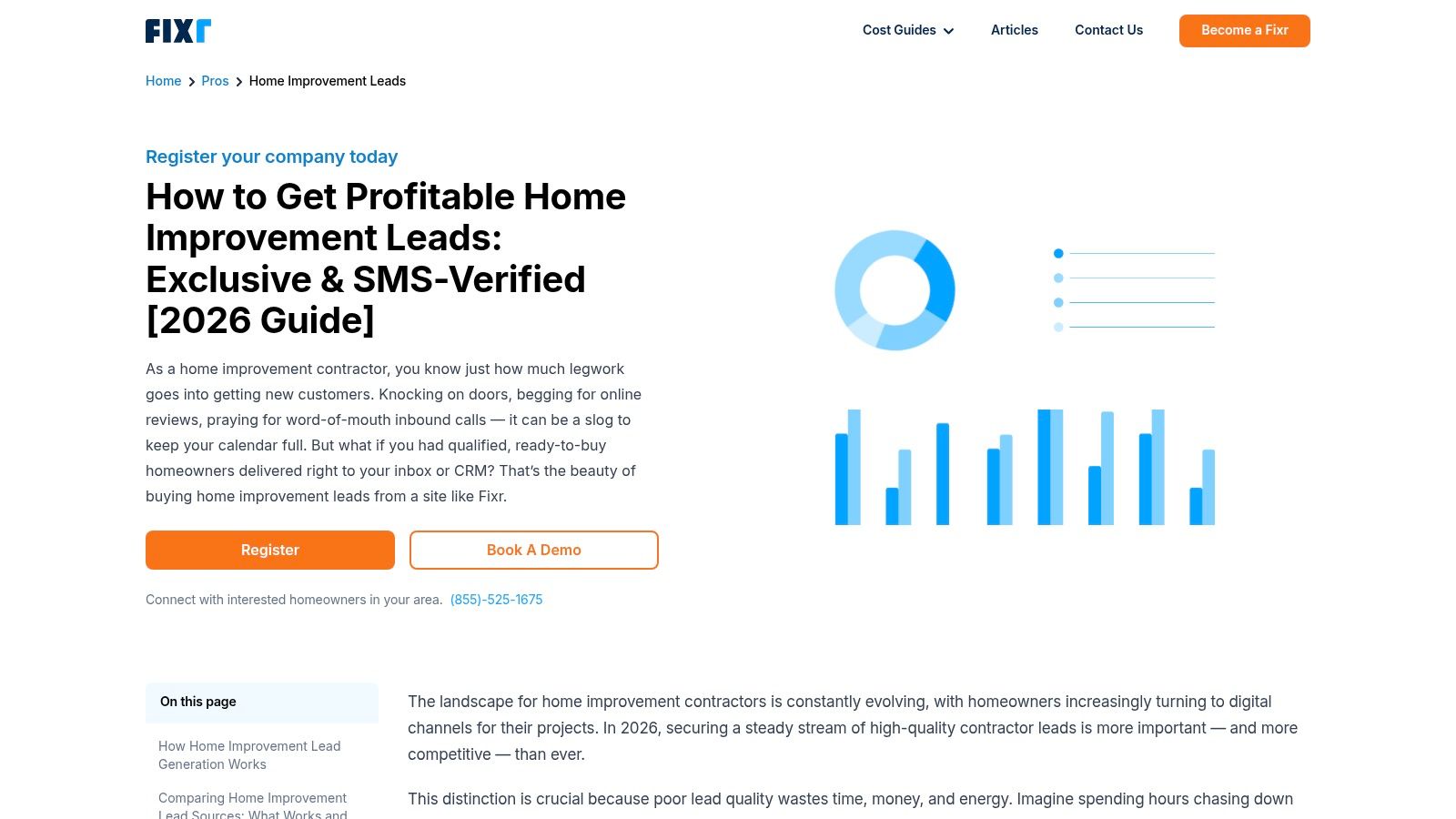
Fixr for Pros sits in a practical niche. It attracts homeowners who are already researching project costs, then lets pros buy leads without committing to a monthly subscription.
That matters because customer intent looks a bit different here. People who spend time reading cost guides are often trying to understand scope and budget before they start reaching out. That doesn’t guarantee a perfect lead, but it can produce better conversations than a vague “need help” enquiry.
Here’s the pros page where that setup starts:
A good option for budget-aware homeowners
Fixr is a sensible option for contractors doing renovation and improvement work where budget education is part of the sale. It’s less attractive if your jobs depend on emergency response or immediate dispatch.
Fixr can suit you if you want:
- Project-minded leads: Better for planned work than urgent calls.
- No subscription pressure: Buy only what you want.
- Home-improvement focus: Narrower than broad local marketplaces.
The limitation is volume and city coverage. Because it’s more focused, you may not get the same lead quantity as the largest platforms. But if the lead quality lines up with your trade, that can still be a better deal.
Top 10 Home Services Platforms Comparison
| Platform | Core features ✨ | Target audience 👥 | Lead quality & UX ★ | Pricing/value 💰 | USP / Best for 🏆 |
|---|---|---|---|---|---|
| Angi | Large consumer reach; ZIP/service/budget targeting; reputation tools | Contractors in metro areas; volume-driven pros | ★★★★, high volume but often shared; speed-to-lead critical | 💰 Pay-per-lead/contracts; variable refunds | 🏆 Broad reach & recognizable brand for steady leads |
| Yelp (RAQ) | Request-a-Quote; business inbox; profile upgrades & ads | Reputation-driven trades; review-focused homeowners | ★★★★, high intent; messaging streamlines follow-up | 💰 Free profile; ads usually needed for ROI | 🏆 Reviews + local search intent for trust-based hires |
| Houzz Pro | Visual portfolios; CRM, estimates, proposals; 3D tools | Remodelers, design-build, kitchens/baths | ★★★★, visual-first leads; good pipeline tools | 💰 Subscription tiers (higher cost for exposure) | 🏆 All-in-one visual marketplace + business software |
| Porch | Area/category targeting; verified leads; connection guarantees | Pros who value refund/credit rules and retailer referrals | ★★★, verified leads cost more; quality varies by market | 💰 On-demand or subscription; crediting policy | 🏆 Connection guarantees and retail partnerships |
| Bark | Pay-per-lead credit packs; profiles & reviews | Solo trades & small teams testing lead volume | ★★★, flexible but mixed lead quality reports | 💰 Pay-to-respond credit packs; no subscription | 🏆 Simple, no-contract testing for incremental work |
| Taskrabbit | Tasker-set rates; in-app booking, messaging, payments | Handyman, assembly, small-ticket local jobs | ★★★, fast bookings; price-sensitive clients | 💰 No monthly fee; platform fees reduce margins | 🏆 Quick fill-in work and immediate bookings |
| Networx | Category pricing; exclusive/shared leads; dashboard | Home-improvement trades seeking targeted leads | ★★★, trade-focused; exclusivity in some programs | 💰 Pay-per-lead; pricing shown after onboarding | 🏆 Trade-centric alternative to large marketplaces |
| HomeGuide | Pay-on-first-reply; price book; automation & payments | Tradies who prefer pay-when-engaged model | ★★★, simpler flow; customers often seek multiple bids | 💰 No subscription; charged when customer replies | 🏆 Straightforward billing and messaging tools |
| BuildZoom | Permit/license matching; project advisors; enriched profiles | Contractors for high-ticket, permitted remodels | ★★★★, higher-trust, longer sales cycles | 💰 Commission/referral fees on closed projects | 🏆 Best for large, permit-driven projects with vetted data |
| Fixr (for Pros) | Pay-per-lead; cost guides that attract budget research | Pros targeting homeowners researching costs | ★★★, leads primed by budget research; variable volume | 💰 Buy-only leads; no subscription | 🏆 Cost-guide audience for better-qualified inquiries |
Final Thoughts
The right alternative to Thumbtack depends less on features and more on job type, margin, and how your business sells.
If you do fast, smaller jobs, Taskrabbit can help fill gaps. If reviews and local credibility drive your close rate, Yelp is stronger. If you sell remodels or visual work, Houzz Pro and BuildZoom make more sense. If you want broad lead volume, Angi is still one of the biggest names. If you want a lighter test with more control over spend, HomeGuide, Bark, Porch, Networx, or Fixr may be easier to trial.
What usually fails is using all of them the same way.
A solo electrician, a two-person carpentry crew, and a remodeling contractor should not judge platforms by the same standard. The electrician may need fast, local, high-intent enquiries. The carpentry crew may need steady medium-size jobs without spending the whole day quoting. The remodeler may be fine with fewer leads if they’re better qualified and tied to larger work.
That’s also why paid marketplaces alone can become a trap. One verified market summary points out an underserved reality for independent tradies: high lead costs and low conversion on some Thumbtack alternatives can make them a poor fit for time-poor operators, pushing many toward lower-effort organic social visibility instead (Block Renovation guide to Thumbtack alternatives). That doesn’t mean lead platforms are useless. It means they work best when you treat them as one channel, not the whole business.
A simple way to choose:
- Pick one high-volume option if you need work now.
- Pick one reputation or portfolio option if trust drives your jobs.
- Track which job types close well instead of judging a platform on raw lead count.
- Stop buying weak-fit leads fast. Don’t “give it more time” if the economics are clearly off.
- Build direct visibility outside marketplaces so you’re not forced to buy every future job.
The best websites like thumbtack aren’t the ones with the longest feature list. They’re the ones that match your trade, your sales process, and the kind of jobs you want more of.
If you’re tired of relying only on paid lead platforms, GrowTradie gives you a practical way to stay visible in your local area without having to write posts yourself. It creates and publishes customized social content for tradies, so your business keeps showing up between jobs, builds trust over time, and turns that visibility into real enquiries instead of more bidding wars.