
Branded content is any post, video, or story that shows your work and values without being a hard sales pitch. It sits inside a market that was valued at USD 524.73 billion in 2025 and is projected to reach USD 989.84 billion by 2030, which tells you this isn't a side tactic.
If you're a tradie, you already know the feeling. You finish a solid job, snap a quick photo, throw up a post, and get almost nothing back. No calls. No quote requests. No sign that anyone noticed.
That doesn't always mean your work isn't good. It usually means your posts aren't giving people a reason to trust you yet. Most local customers don't hire the first business they see. They hire the one that looks reliable, switched on, and easy to deal with.
That's where branded content earns its keep. Instead of shouting "book now" into the void, you show people how you work, what you care about, and why your standard is worth paying for.
Table of Contents
- What Branded Content Actually Means for a Tradie
- Branded Content vs Traditional Advertising
- Branded Content Examples for Trade Businesses
- The Benefits Why This Approach Wins More Jobs
- How to Know If Your Content Is Actually Working
- Putting Your Branded Content on Autopilot
What Branded Content Actually Means for a Tradie
You post a finished bathroom fit-out, a switchboard upgrade, or a custom timber job. Then nothing happens. That silence makes a lot of tradies think social posting is pointless, but the main problem is usually the type of content.
Branded content isn't complicated. It's content funded or produced by your business that gives people something useful, interesting, or reassuring before it asks for the sale. In plain English, it means showing your standard, your process, and your values so people can decide you're the right person to call.
Showing beats shouting
A hard-sell post says, "Need a plumber? Call now."
A branded content post says, "What that banging pipe usually means, and when it needs urgent attention."
One demands attention. The other earns it.
Practical rule: If your post helps a customer understand a problem, spot quality work, or feel safer choosing you, you're in branded content territory.
Local service businesses don't win on visibility alone; they win when someone looks at a profile and thinks, "These people know what they're doing."
Why this matters in local trades
The wider market has already moved this way. The content marketing market analysis from Mordor Intelligence says the global content marketing market, which includes branded content, was valued at USD 524.73 billion in 2025 and is projected to grow to USD 989.84 billion by 2030. For tradies, the practical takeaway is simple. Businesses are putting serious effort into long-term credibility, not just quick promotions.
That lines up with how people choose trades locally. They want a business that looks professional, communicates clearly, and seems trustworthy before they make contact.
A useful way to think about it is this:
- A sales post asks for action right away.
- A branded post lowers risk in the customer's mind.
- A strong profile does both over time.
If you're still wondering what is branded content in day-to-day terms, it's the proof around your business. Job photos with context. Short videos explaining common issues. Before-and-after comparisons. A post that explains why you chose one material over another. It isn't corporate fluff. It's your reputation, turned into content people can see before they ever ring you.
Branded Content vs Traditional Advertising
Traditional ads still have a place. If you've got an offer, a seasonal push, or a gap in the schedule, ads can help. But they do a different job.
Branded content works better when the customer needs confidence before they commit. That's most trade work.
The technical difference
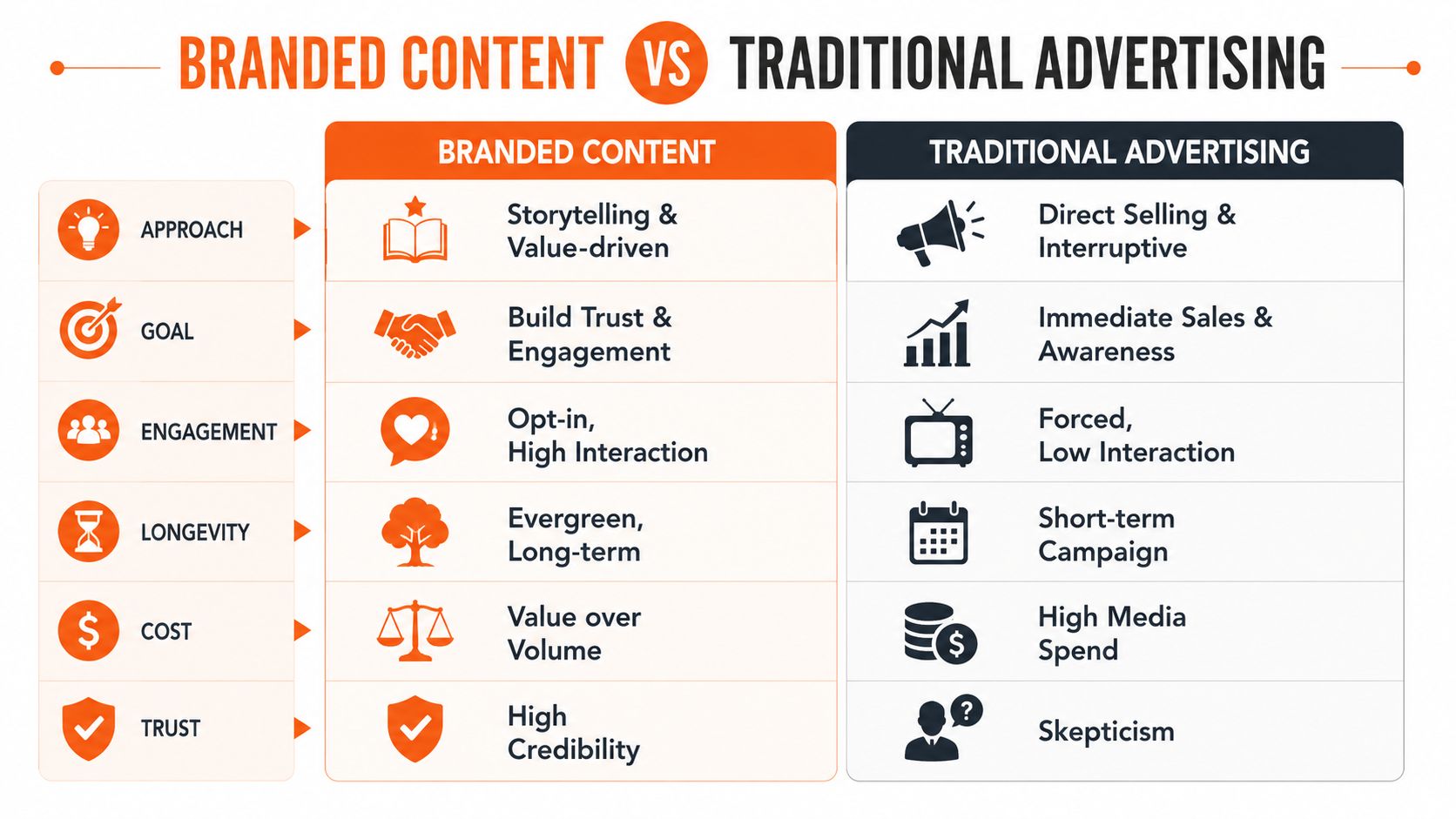
Branded content is editorial content funded by an advertiser that prioritizes entertainment or educational value over direct product promotion.
That definition comes from the Content Marketing Institute's guide to branded content. The important part isn't the jargon. It's the logic. Good branded content helps the audience first and sells second.
A quick example makes the difference obvious.
A traditional ad might say: "Boiler service this month. Book today."
A branded content post might say: "Quick check you can do before your heating starts making noise this winter."
The first pushes. The second helps.
Side by side comparison
| Attribute | Traditional Ad | Branded Content |
|---|---|---|
| Purpose | Drive an immediate action | Build trust and familiarity |
| Tone | Promotional | Helpful, informative, or story-led |
| Customer feeling | Interrupted | Engaged by choice |
| Focus | Offer, discount, booking | Expertise, standards, values |
| Lifespan | Short campaign | Can keep working over time |
| Best use | Fast response and promotions | Long-term reputation and better-fit enquiries |
There are trade-offs.
- Ads are faster for direct offers. If you've got a limited-time service push, an ad can be useful.
- Branded content takes consistency. One post won't change much. A steady stream will.
- Trust-heavy services benefit more from content. Rewires, renovations, repairs, installations, and higher-ticket jobs often need more confidence before someone reaches out.
A local customer won't always remember your ad. They will remember the business that kept showing useful, solid work.
If you want a practical model for doing this consistently, this guide on content marketing for contractors is a useful next step.
Branded Content Examples for Trade Businesses
Most tradies hear the term and picture a big brand with a film crew. That's not what this needs to look like. For a trade business, branded content is usually simple, job-based, and easy to understand.
What this looks like on a real job
An electrician finishes upgrading an old panel. Instead of posting "Available for all electrical work," they post a photo of the old setup beside the safer replacement, then explain what made the original risky and what the upgrade improved for the customer.

A plumber records a short clip on site and explains what a gurgling drain usually points to, plus when the issue can wait and when it can't. A carpenter shares a sequence of photos from frame to finish and adds a few lines on how material choices affected the result.
None of those posts are flashy. All of them build confidence.
The best trade content often answers the customer's unspoken question: "If I call this person, will they know what they're doing?"
Formats that are realistic for small crews
You don't need polished studio content. You need repeatable formats that fit around real work.
Before-and-after posts
Show the problem, the finished result, and one sentence on what changed.Quick tip videos
Thirty seconds on a common issue is enough if the advice is clear.Job walkthroughs
Explain what you found, what you fixed, and what mattered most.Material or product choices
Show why you used one option instead of another.Behind-the-scenes content
Let people see your process, your setup, and how you work on site. This article on behind-the-scenes content shows why that format works so well for service businesses.
What doesn't work as well? Generic stock graphics, constant "call now" posts, or random uploads with no context. A photo of a van parked outside a property doesn't tell a homeowner much. A post explaining the job, the challenge, and the outcome does.
If you're asking what is branded content in practical trade terms, it's this. It turns everyday job evidence into trust-building proof.
The Benefits Why This Approach Wins More Jobs
The biggest benefit isn't more likes. It's that customers feel more comfortable contacting you.
For a trade business, trust usually beats clever marketing. People are letting someone into their home, paying for expertise, and hoping the job gets done right. If your content reduces that uncertainty, you're already ahead of a competitor who's only posting offers.
Trust turns attention into enquiries
The shift toward this style of marketing is massive. According to AMRA & Elma's branded content statistics roundup, branded content revenue is projected to reach $118.6 billion in 2026, with a 52% year-over-year increase in branded content sponsorship deals globally. The same source says 92% of marketers plan to maintain or increase brand awareness efforts, with 35% focusing on content that reflects brand values.
For a tradie, that matters because local hiring decisions are heavily trust-based. If your content consistently shows workmanship, reliability, and a straightforward way of communicating, people start to feel like they know your business before they call.
Why better clients respond to this
Branded content also changes the kind of lead you attract.
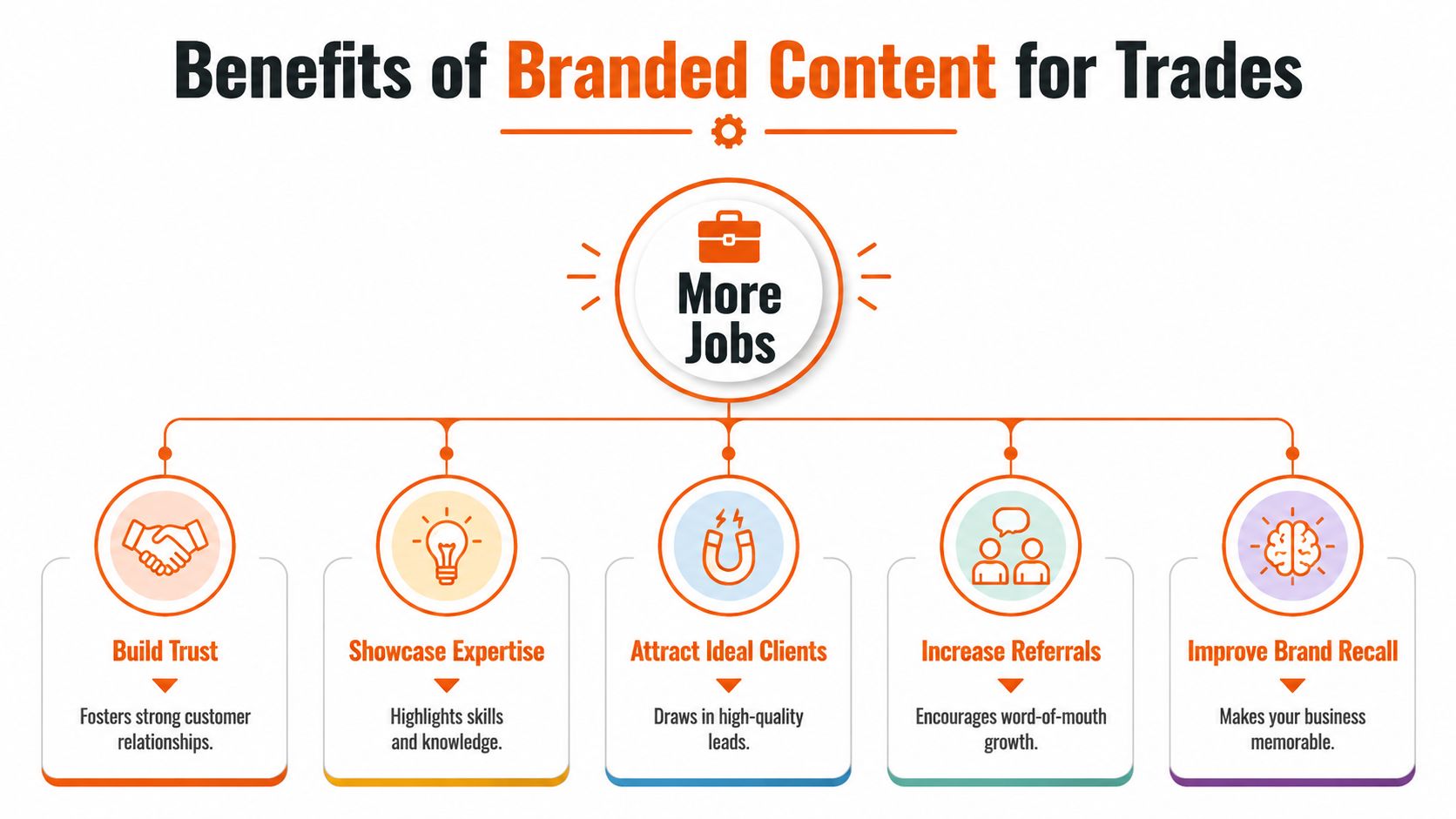
- It filters out bargain hunters. People who only want the lowest price usually skip past quality signals.
- It gives you authority. Helpful explanations make you look like the expert, not just another option.
- It improves recall. When a problem comes up later, they remember the business that taught them something.
- It supports referrals. People share useful posts more readily than obvious ads.
Helpful content doesn't just get seen. It gives other people a reason to recommend you.
This is why branded content often wins more jobs over time. It creates familiarity before the quote, reassurance during the decision, and confidence after the booking. That's hard for a standard ad to match on its own.
How to Know If Your Content Is Actually Working
A lot of tradies judge content the wrong way. They look at likes, follower counts, or whether a post got a few comments. Those signals can tell you if something got attention, but they don't tell you if it helped win work.
Branded content needs a different scorecard.
Track outcomes not vanity
The Angel Ortega Castro article on branded content measurement makes the point clearly. Branded content isn't measured the same way as ads that focus on CPC. It should be judged through engagement rates, shareability, and brand affinity, because useful content builds an emotional connection that leads to real enquiries and booked jobs.
In practice, a tradie should simplify that into business questions:
- Are more people calling after seeing your content?
- Are quote requests sounding warmer and less price-first?
- Are customers mentioning specific posts or videos?
- Are people already familiar with your work before the first conversation?
What to ask every new lead: "How did you hear about us?" and "Did you see any of our posts before getting in touch?"
Those two questions reveal more than a month of staring at platform analytics.
A simple tradie scorecard
You don't need a complicated dashboard. Start with a basic tracking habit.
| What to track | Why it matters | How to track it |
|---|---|---|
| Phone calls | Direct buying intent | Ask callers how they found you |
| Quote requests | Clear commercial outcome | Add a source question to your form |
| Repeat mentions of posts | Proof content is being remembered | Note it in your CRM or diary |
| Shares and saves | Signs the content is useful | Check platform insights weekly |
A few practical rules help keep this grounded:
- Look for patterns, not one-off spikes. One busy week can come from weather, referrals, or seasonality.
- Match content to conversations. If customers ask about a post, that post is doing useful work.
- Judge monthly, not daily. Trade enquiries don't always happen the same day someone sees a piece of content.
The point isn't to become a full-time marketer. It's to know whether your content is helping the phone ring more often and making leads easier to convert.
Putting Your Branded Content on Autopilot
Most advice proves insufficient. The usual branded content model assumes you've got time to plan posts, write copy, sort visuals, and stay consistent every week.
Most tradies don't.
The real problem is time
You're on the tools, quoting jobs, answering calls, chasing materials, and doing paperwork at night. In that setup, branded content can sound good in theory and unrealistic in practice.
That concern is fair. The Salt Agency piece on content brands and branded content argues that this model can be impractical for small businesses without editorial teams and workflows. For a solo plumber or a small crew, the answer often isn't "work harder on content." It's using an automated system that keeps visibility going without the constant hassle.
That changes the question from "How do I become a content creator?" to "How do I stay visible without adding more work to my week?"
What an autopilot system should do
A practical setup should handle the heavy lifting while still making your business look sharp and local.
- It should generate post ideas for your trade. Plumbers, electricians, carpenters, and HVAC businesses need different angles.
- It should write the captions. Most business owners lose time at the blank-page stage.
- It should keep the design consistent. Your profile needs to look reliable, not random.
- It should schedule and publish automatically. Consistency matters most when you're too busy to think about it.
- It should support a simple strategy. The best systems don't expect you to build a newsroom. They reduce the workload.
If you want to see what that kind of approach looks like in practice, this guide to a small business content strategy covers the basics well.
There's also a useful walkthrough below.
The main win with autopilot branded content isn't just convenience. It's consistency. A dead profile makes a business look inactive. A profile that keeps showing useful, professional, trust-building content keeps doing sales work in the background while you're on site.
If that's the answer you needed to what is branded content, keep it simple. It's proof of your business, published consistently enough that local customers remember you and trust you when they need the job done.
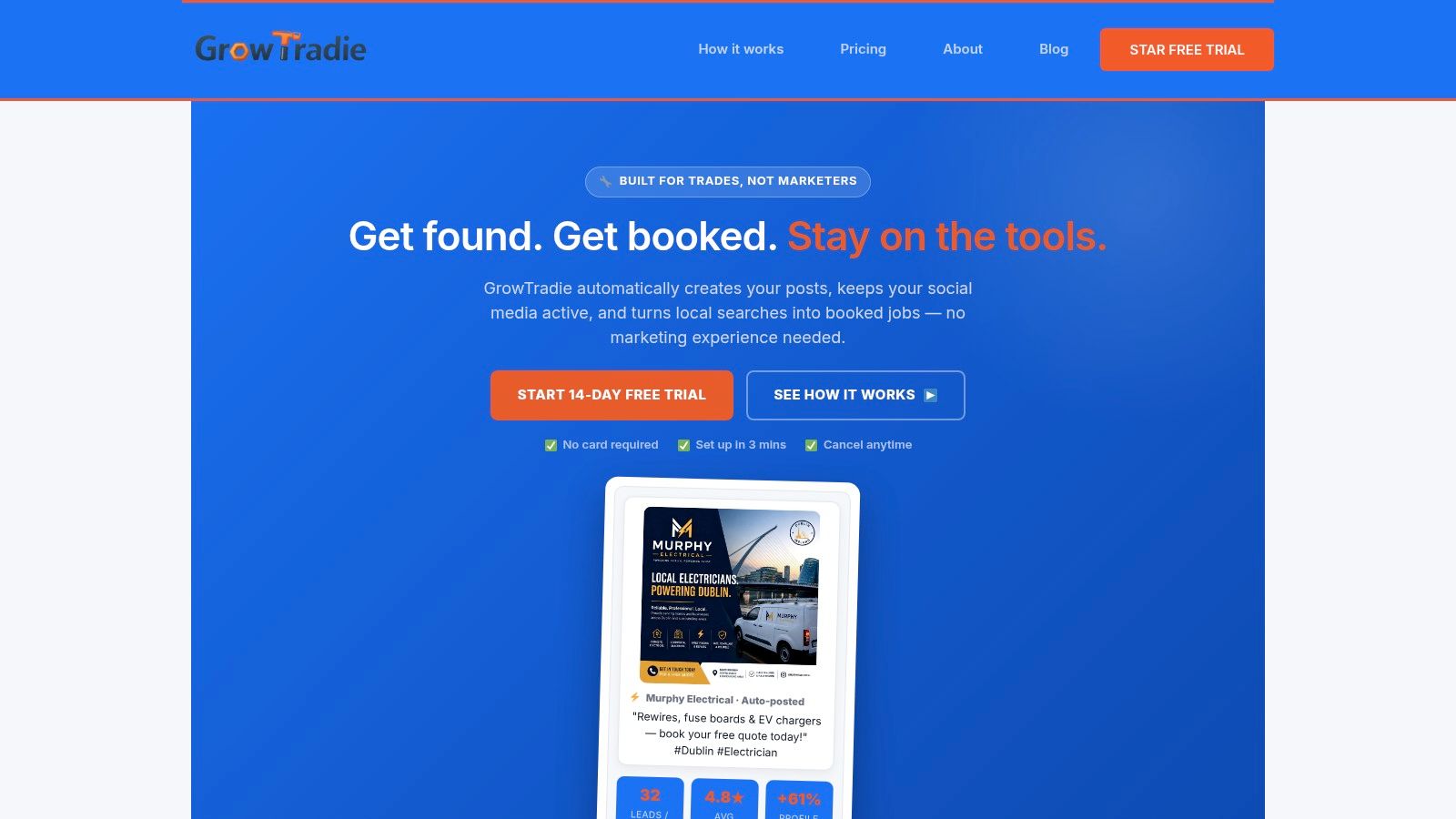
GrowTradie helps trade businesses stay visible without having to become full-time marketers. It creates and posts branded content specific to your trade, services, and local area, so your profiles keep showing useful, trustworthy content even when you're flat out on jobs. If you want a simpler way to turn attention into enquiries, take a look at GrowTradie.