

You’re probably in the same spot as a lot of Long Island plumbers. Work quality isn’t the problem. You know how to handle leak calls, water heater swaps, old pipe runs, emergency weekend jobs, and the oddball issues that show up in Nassau and Suffolk homes. The hard part is staying visible when people need you right now, while also keeping your name in front of past customers so they call you again instead of searching around.
That’s why good plumbing marketing strategies long island businesses use aren’t about flashy tactics. They’re about showing up in the right places, saying the right things, and making it easy for local homeowners to trust you fast. Some people will find you through your business profile. Others will notice your neighborhood posts, ask a friend, read your reviews, or remember the email you sent before storm season.
The practical challenge is that most plumbing owners don’t have time to invent a full marketing system from scratch. You need approaches that fit between service calls and quoting work. The list below focuses on that. It keeps the advice grounded, local, and specific so you can use it.
Table of Contents
- 1. Google Business Profile Optimization for Local Search Dominance
- 2. Hyperlocal Social Media Content Strategy with Service Area Focus
- 3. Review Generation and Reputation Management Strategy
- 4. Strategic Local Partnership and Referral Network Development
- 5. Email Marketing and Customer Retention Campaigns
- 6. Before After Visual Content Strategy and Case Study Portfolio
- 7. Service Area Website Optimization for Long Island Searches
- 8. Community Involvement and Local Brand Building Through Events and Sponsorships
- 8-Point Comparison: Long Island Plumbing Marketing
- Final Thoughts
1. Google Business Profile Optimization for Local Search Dominance
For a lot of plumbers, this is the first place a homeowner checks before calling. They want to see your hours, phone number, service area, reviews, and recent activity without digging through a full website.
In the Long Island plumbing market, local search adoption is tied to 40 to 60 percent higher visibility in map packs, and optimized Google Business Profiles can improve discoverability by up to 70 percent for searches such as “plumbers near me” and “Long Island plumbing leads,” according to Long Island plumbing marketing benchmarks for 2026 strategies. Even if you ignore the projection angle, the practical takeaway is simple. A complete profile gets seen more often.
What Long Island plumbers should fill in first
Start with the fields customers use to make a fast decision. Your business name, phone number, service areas, hours, emergency availability, and service categories should all be accurate.
If you serve both Nassau and Suffolk, don’t leave that implied. Spell out places like Great Neck, Levittown, Huntington, and Port Jefferson. A homeowner in Huntington wants to know you work there regularly, not just “on Long Island.”
- Service area wording: Write town names naturally, not as a giant stuffed list.
- Photos of real work: Add jobsite images, team photos, vans, equipment, and finished installs.
- Questions and answers: Use the Q&A section to answer common customer concerns like after-hours calls, water heater replacement timing, or whether you handle older homes.
Posts and photos that make the profile feel active
Most plumbers claim the profile and then leave it untouched. That makes the business look unattended, especially when the last update is old.
Post short updates tied to actual local issues. In winter, talk about frozen pipe risk on the North Shore. Before storm season, mention sump pump checks and backflow concerns. If Nassau County water efficiency rules or seasonal demand affect customer questions, address that in plain language.
Practical rule: If a homeowner asks the same question twice in a week, turn it into a profile post.
Use photos that prove you do the work you say you do. A clean water heater replacement in Levittown, a pipe repair in an older Nassau basement, or a new shutoff valve install in Suffolk tells a stronger story than generic stock images ever will.
2. Hyperlocal Social Media Content Strategy with Service Area Focus
This is one of the biggest gaps in most advice aimed at plumbers. Plenty of articles tell you to “be on social media,” but they rarely explain what to post when you’re busy and local customers only care about nearby, relevant problems. That gap is specifically called out in Long Island plumbing content marketing coverage that highlights the lack of concrete social posting guidance.
For plumbing marketing strategies long island contractors can sustain, the fix is to stop posting broad tips and start posting neighborhood-specific content. A generic “we fix leaks” update disappears. A post about plumbing issues in older Levittown homes feels local and useful.
Make each post about a place, not just a service
A strong local post combines three things. The town, the plumbing problem, and one practical takeaway.
For example:
- Great Neck post about mineral-heavy water and fixture wear
- Huntington post about older supply lines in established neighborhoods
- Port Washington post about corrosion risks near the coast
- Nassau storm prep post about sump pumps and backflow devices
That gives people a reason to stop scrolling. It sounds like it came from a plumber who actually works there.
If you want a framework for staying consistent without writing every post yourself, this guide to social media marketing for plumbers is useful because it focuses on practical posting for trade businesses.
A simple posting rhythm busy plumbers can keep up with
You don’t need to post all day. You need a repeatable pattern.
Try rotating these content types:
- Neighborhood spotlight: “Common pipe issues we see in older Levittown homes.”
- Seasonal warning: “What North Shore homeowners should check before a cold snap.”
- Recent job story: “Replaced a failing water heater for a family in Huntington.”
- Quick advice post: “What to do before the plumber arrives when a pipe starts leaking.”
The same 2026 Long Island benchmark source notes that small plumbing firms using AI-enhanced geographical and answer-focused local optimization have a 65 percent adoption rate in this area, and it also points to scheduling around evening query windows such as 7 to 9 PM on weekdays in its projections. You don’t need to obsess over the tech terms. The practical lesson is to post with local intent and at times when homeowners are paying attention.
A post tied to a town and a real problem will usually outperform a polished post that could belong to any plumber in any state.
3. Review Generation and Reputation Management Strategy
Most plumbers ask for reviews too late, too vaguely, or not at all. Then they wonder why happy customers disappear without leaving feedback.
The best time to ask is right after the customer sees the problem is solved. That could be when the leak stops, the hot water comes back, or the new fixture is working and the stress drops. Relief is the moment that creates reviews.
Ask at the moment the customer feels relief
Keep the request direct and easy. A short text after the job works better than a long message buried in an invoice email.
Something like this is enough: “Thanks for choosing us today. If the work went well, would you mind leaving a quick review on Google or Facebook?” Add the direct review link. Don’t make people search for you.
A strong Long Island review process usually includes:
- One main platform first: Send people to Google before splitting attention elsewhere.
- A same-day message: Ask while the job is still fresh.
- A simple verbal cue: During the final walkthrough, mention that reviews help local homeowners feel confident calling.
How to respond without sounding scripted
Responses matter almost as much as the review count. A quick, human reply shows that the business is active and accountable.
For a positive review, mention the actual work. Thank them for calling you out for the water heater install, pipe repair, or emergency response time. For a negative review, don’t argue in public. Acknowledge the issue, apologize for the frustration, and offer to continue the conversation by phone.
Customers don’t expect perfection. They do expect professionalism when something goes wrong.
A review profile full of real job details is especially useful for plumbers because it helps future customers picture their own problem in someone else’s feedback. “Fixed our basement pipe leak in Huntington” says more than “great service.”
4. Strategic Local Partnership and Referral Network Development
Some of the best leads never come from a search result or social post. They come from someone already trusted by the customer. On Long Island, that often means a real estate agent, home inspector, property manager, electrician, HVAC contractor, or local hardware store employee.
These partnerships work because they solve a speed problem. When a homeowner needs a plumber during a sale, rental turnover, or renovation, the referring professional wants one name they can pass along confidently.

The best local partners for plumbers
Not every partner sends the same type of work. Real estate agents often send inspection-related jobs and urgent fixes before closings. Property managers send repeat maintenance and tenant issues. HVAC companies and electricians can create cross-referral opportunities on remodels and system upgrades.
Think in terms of overlap:
- Home inspectors: Find plumbing issues buyers need priced fast
- Property managers: Need reliable response and clear invoicing
- Real estate agents: Want contractors who won’t embarrass them in front of clients
- Local suppliers: Get asked for plumber recommendations every week
Keep referrals simple and trackable
A referral network falls apart when the process is fuzzy. Make it easy for partners to send you work. Give them one phone number, one contact person, and a short note on what areas and job types you handle.
Then track where each lead came from. That doesn’t require fancy software. A simple spreadsheet or CRM tag works.
- Partner name: Log every referral source clearly.
- Job type: Note whether the work was emergency, inspection, replacement, or remodel-related.
- Outcome: Record whether it became booked work.
- Follow-up: Thank the partner after the job closes.
One of the most overlooked gaps in plumbing marketing advice is attribution. The challenge is highlighted in plumbing marketing analysis discussing weak guidance on ROI and multi-channel attribution. If you don’t track sources, you’ll keep guessing which relationships deserve more attention.
5. Email Marketing and Customer Retention Campaigns
Email works best for plumbers when it feels like a service reminder, not a promotion blast. Past customers already know who you are. They just need a reason to remember you before the next problem becomes urgent.
That makes email one of the simplest plumbing marketing strategies long island businesses can use to stay visible between jobs. It supports repeat work, referrals, and seasonal planning.
Send emails people actually want to open
The subject line needs to connect to a real homeowner concern. “Winter plumbing reminder for Nassau homeowners” is stronger than “Monthly company newsletter.” So is “Check your sump pump before heavy rain” or “What to inspect before a freeze.”
Inside the email, keep the structure tight:
- one issue
- one explanation
- one next step
- one call button or booking link
You can also segment your list. A customer who used you for a water heater replacement may care about maintenance reminders. A customer in a flood-prone area may care more about storm prep emails.
Tie your calendar to Long Island service seasons
Long Island gives you a natural content calendar. Cold weather, heavy rain, old housing stock, and local regulations all shape what customers care about.
The 2026 Long Island benchmark source notes that Nassau County water efficiency mandates can increase seasonal demand, and it frames that as a useful signal for timing local content and outreach. You don’t need to turn that into a technical campaign. You just need to send relevant reminders when the issue is already on customers’ minds.
A useful yearly email rhythm might look like this:
- Early fall: frozen pipe prevention and shutoff valve checks
- Late winter: sump pump inspection reminders
- Spring: water heater checks and leak inspections
- Late summer: storm preparedness and backup system reminders
Email works well for plumbers because the customer already trusts you. The message just needs to arrive before they forget your name.
6. Before After Visual Content Strategy and Case Study Portfolio
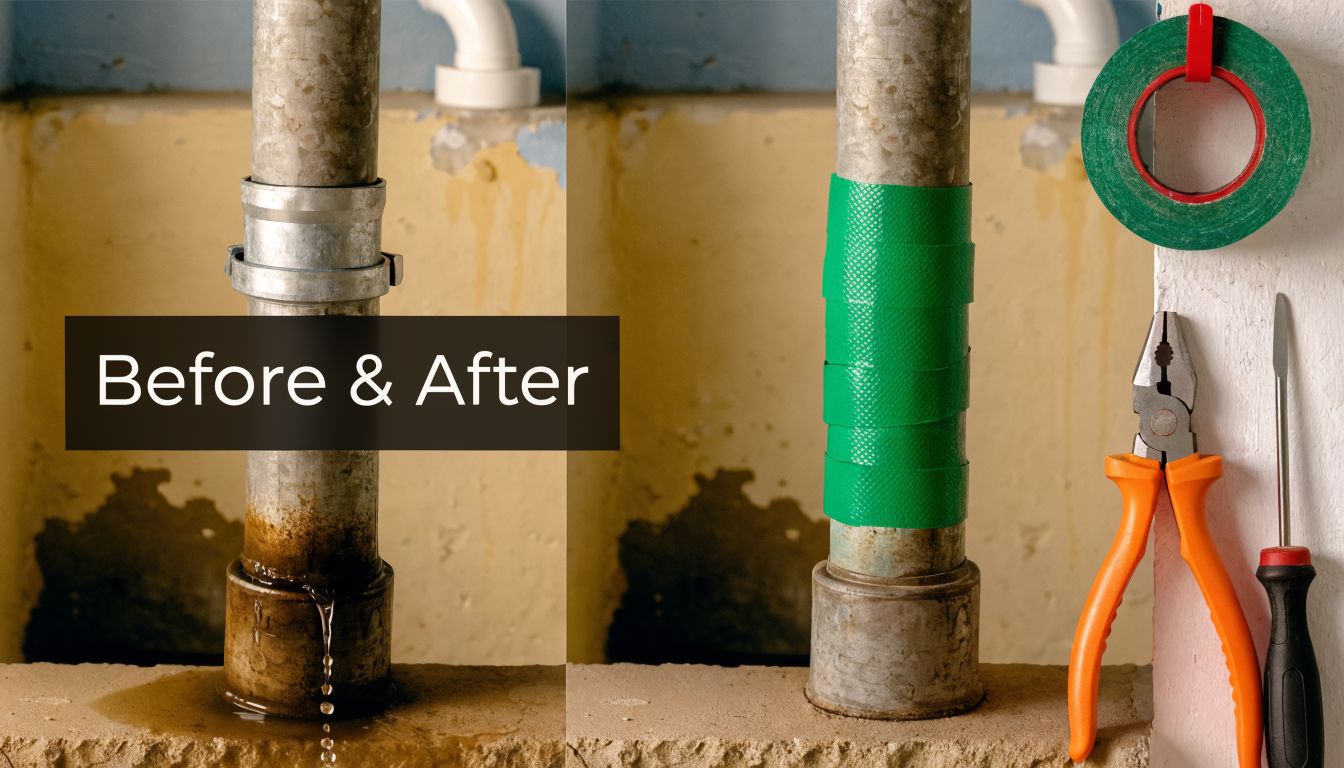
Homeowners don’t usually know how to judge plumbing quality from technical explanations alone. They understand visible proof. That’s why before and after content matters so much.
A clean visual record helps people see the problem, understand the fix, and trust that you’ve handled similar jobs before. It also gives you material you can reuse across your website, social pages, email, and sales conversations.
Show proof instead of making claims
A case study doesn’t need to be long. It just needs to answer four questions clearly. What was wrong, what did you find, what did you fix, and what did the finished result look like?
Examples that work well for Long Island plumbers include:
- old rusted water heater to new installed unit
- damaged supply line to repaired piping run
- wet basement area to completed sump pump setup
- outdated bathroom plumbing to finished renovation rough-in and fixture install
The strongest job stories also include the location context. “Older home in Levittown” or “coastal property in Port Washington” adds credibility because it sounds like real local experience, not generic marketing copy.
Turn one completed job into several useful assets
One job can become a full set of marketing materials if you document it properly:
- Before photo: Show the issue clearly before tools come out.
- Progress photo: Show your team solving the problem.
- After photo: Capture the final result once the area is tidy.
- Short write-up: Explain the job in plain language.
If you want to build a stronger system around that, this guide to content marketing for local businesses is helpful because it shows how to turn everyday service work into repeatable content.
Get customer permission in writing before using photos. Keep the language simple. A one-line consent note on your completion form is often enough if it’s clear.
7. Service Area Website Optimization for Long Island Searches
Your website should reflect the towns you serve and the jobs you do. Many plumbing sites fail here because they have one generic services page and expect it to speak to every neighborhood from Great Neck to Huntington.
That’s too broad. People search with local intent, and they want confirmation that you understand their area.
Build pages around real towns and real jobs
A better approach is to create pages that combine place and service naturally. Not stuffed, not repetitive, just clear.
Examples include pages for:
- emergency plumber in Great Neck
- water heater replacement in Levittown
- drain service in Huntington
- sump pump installation in Port Jefferson
Each page should mention the local housing context where relevant. Older Nassau homes, coastal corrosion concerns, basement flooding patterns, and common fixture issues in suburban family homes all help the page feel grounded.
For a local example of how trade businesses are thinking about this market, see these New York plumber marketing strategies.
Long Island visibility comes from local relevance
The same Long Island benchmark source cited earlier reports that plumbers using geo-targeted backlinks from local sites and community forums can achieve 2.5 times more organic leads than non-optimized competitors in its 2026 strategy benchmarks. You don’t need to chase jargon to use that idea well. You need local relevance.
That means:
- writing town-specific service pages
- getting mentioned by local groups or neighborhood sites
- keeping your business details consistent across directories
- publishing answers to local plumbing questions in plain English
The same source also notes that 82 percent of Long Island homeowners prefer top-three local pack results in aggregated campaign analytics. The practical takeaway is simple. If your site and business presence feel more local, more complete, and more specific, more homeowners are likely to notice and trust you when comparing options.
8. Community Involvement and Local Brand Building Through Events and Sponsorships
Long Island is full of tight local circles. Youth sports, school events, town festivals, neighborhood groups, and charity drives all create repeated exposure in the same communities where your customers live.
That matters because plumbers often win work on familiarity. People call the business name they’ve seen before, especially when it shows up in a context that feels local and trustworthy.
Pick community involvement that matches your customer base
A family-oriented plumbing company may get more value from sponsoring a Little League team than from paying for a broad, forgettable ad. A plumber who works heavily with homeowners might do well at a home expo, school fundraiser, or community preparedness event.
Good fits include:
- youth sports sponsorships in your service towns
- homeowner education workshops
- local charity support after storms or emergencies
- chamber of commerce events with nearby business owners
The point isn’t to look charitable for one week. It’s to become recognizable over time.
Turn sponsorships into recognition, not just a logo
If you sponsor something, show up. Attend the event. Take photos. Thank the organizers publicly. Mention why you support that group.
Then reuse that material in your marketing. Put event photos on your website. Share them on social media. Include a short recap in your email newsletter. Ask the organization if they’ll list your business on their sponsor page or mention your support in their updates.
A local sponsorship works best when it becomes part of your brand story. “We support the communities we serve” means more when homeowners can see specific examples in Great Neck, Huntington, Levittown, or other towns you serve.
8-Point Comparison: Long Island Plumbing Marketing
| Strategy | 🔄 Implementation Complexity | ⚡ Resource Requirements | 📊 Expected Outcomes & ⭐ Quality | 💡 Ideal Use Cases | ⭐ Key Advantages |
|---|---|---|---|---|---|
| Google Business Profile Optimization (Local Search) | 🔄 Moderate, initial setup + ongoing monitoring | ⚡ Low cost (free listing); time for photos & review management | 📊 High local visibility (Maps / Local 3‑Pack), increased calls; ⭐⭐⭐⭐ | 💡 Immediate local visibility, emergency "near me" searches, multi‑location coverage | ⭐ Free to use, mobile‑first, drives calls & map presence |
| Hyperlocal Social Media Content Strategy | 🔄 High, neighborhood research and tailored calendars | ⚡ Moderate, consistent content creation or AI assistance | 📊 Strong community engagement and trust; higher local conversions; ⭐⭐⭐ | 💡 Multi‑neighborhood businesses seeking local differentiation | ⭐ Builds local authority, highly shareable, differentiates from national chains |
| Review Generation & Reputation Management | 🔄 Moderate, process setup, templates, escalation flows | ⚡ Moderate, automation tools, staff time to respond promptly | 📊 Major uplift in trust, conversion, and local rankings; ⭐⭐⭐⭐ | 💡 Emergency services and businesses where reviews drive booking | ⭐ Social proof, higher conversion, continuous feedback for improvement |
| Strategic Local Partnership & Referral Network | 🔄 Moderate, relationship building and formal agreements | ⚡ Low–Moderate, networking time, small partner incentives, tracking | 📊 Steady qualified referrals and lower customer acquisition cost; ⭐⭐⭐ | 💡 B2B referrals (realtors, property managers, home inspectors) | ⭐ Low‑cost leads, high conversion, recurring referral flow |
| Email Marketing & Customer Retention Campaigns | 🔄 Moderate, list building, segmentation, compliance | ⚡ Low cost platforms; moderate content and automation effort | 📊 Very high ROI and repeat bookings; strong retention; ⭐⭐⭐⭐ | 💡 Seasonal maintenance reminders, past customers, promotions | ⭐ Direct measurable channel, automatable, cost‑effective |
| Before/After Visual Content & Case Studies | 🔄 Moderate, consistent photo capture, permission, documentation | ⚡ Low–Moderate, photography time and case writeups | 📊 High social engagement and credibility; improves conversions; ⭐⭐⭐ | 💡 Showcasing complex repairs, renovations, dramatic transformations | ⭐ Visual proof, repurposable content, supports local SEO for problem queries |
| Local SEO Optimization for Service Area Keywords | 🔄 High, technical SEO, content, and link building | ⚡ Moderate–High, skilled work or agency investment | 📊 Sustainable organic traffic and high‑intent leads (slow build); ⭐⭐⭐⭐ | 💡 Long‑term visibility across neighborhoods and specific services | ⭐ Free long‑term leads, high‑intent traffic, scalable asset |
| Community Involvement & Sponsorships | 🔄 Moderate, planning, event coordination, ongoing commitments | ⚡ Moderate, sponsorship budgets and staff time | 📊 Strong brand affinity, word‑of‑mouth and PR; ROI indirect; ⭐⭐⭐ | 💡 Brand‑building for family/community markets, long‑term reputation | ⭐ Emotional connection, local trust, media and networking opportunities |
Final Thoughts
The best plumbing marketing strategies long island companies use aren’t complicated. They’re consistent. They make the business easy to find, easy to trust, and easy to remember.
That usually starts with your Google Business Profile. Then it gets reinforced through local social posts, solid reviews, repeat email contact, clear website pages, referral relationships, visual proof from completed jobs, and visible community involvement. None of those ideas are new on their own. What makes them effective is using them together in a way that fits how Long Island homeowners choose a plumber.
That local detail matters more than many owners realize. A broad message about plumbing services won’t carry the same weight as a town-specific page, a neighborhood post about common local issues, or a review that mentions a job in a nearby area. People want signals that you understand their kind of home, their kind of problem, and their part of Long Island.
It also helps to think less about “marketing” as one big project and more as a repeatable operating habit. Take photos before and after jobs. Ask for reviews while the customer is still relieved. Log referral sources. Post about the same local questions customers keep asking. Send timely emails before weather changes and seasonal issues hit. Small actions stack up.
If you’re trying to improve visibility without wasting time, start with the channels closest to booked work. Tighten your business profile. Build out your local pages. Collect better reviews. Then add a practical social and email rhythm you can maintain. That’s usually enough to create steady momentum.
Don’t copy a generic plan made for every plumber everywhere. Long Island has its own housing stock, weather concerns, regulations, and community patterns. Your marketing should reflect that. When it does, your business feels more credible before a customer ever picks up the phone.
If you want help staying visible without writing posts yourself, GrowTradie gives trade businesses a practical way to keep social channels active with AI-generated local content, professional designs, and auto-posting built for busy crews. It’s a strong fit for plumbers who want consistent local awareness and more enquiries without turning marketing into another full-time job.