
A Manhattan super calls at 7:10 a.m. about a leaking riser. By 7:12, they have already checked three plumbing companies on their phone. The shop that gets the job is usually the one that shows up clearly, looks trustworthy, and makes it easy to call.
That is the core marketing fight in New York. It is not about being everywhere. It is about getting picked fast in the neighborhoods you specifically want to serve, without burning cash on weak leads or wasting hours on tactics you will not keep up with.
A lot of plumbing businesses in the city deal with the same pattern. Emergency work fills the board for a few days, then there are quiet gaps nobody wants. Referrals still carry weight, and repeat customers keep a business steady, but neither gives you enough control if you want predictable growth.
Practical new york plumber marketing strategies fix that. The best ones are local, simple to run, and built around how New Yorkers hire. They check Google, scan reviews, look at recent activity, and call the company that feels legitimate right now.
Busy owners do not need a complicated marketing stack. They need a few repeatable systems for lead flow, follow-up, and trust. If you want a clearer view of what that process looks like, this guide on plumbing lead generation for local service businesses is a useful starting point.
The strategies in this article focus on exactly that. More booked jobs, better consistency, and less time lost trying to manage marketing between calls.
Table of Contents
- 1. Dominate with Google Local Services Ads LSAs
- 2. Master Your Google Business Profile
- 3. Build Trust with Consistent Social Media
- 4. Forge Local Partnerships and Referral Networks
- 5. Create a Powerful Review Generation System
- 6. Turn Your Fleet into Rolling Billboards
- 7. Showcase Work with Video and Before Afters
- 8. Run Targeted Local Ads on Facebook and Instagram
- 9. Drive Repeat Business with Email Campaigns
- 10. Get Seen Through Community Involvement
- Top 10 NYC Plumber Marketing Strategies Comparison
- Making Your Marketing Consistent and Effective
1. Dominate with Google Local Services Ads LSAs
If you handle emergency work, LSAs deserve serious attention. They put you in front of people who aren't browsing around. They're trying to get someone on the phone now.
That urgency matters in New York. Exact Funnel describes strong results from tightly targeted Google Ads setups in the Bronx, including examples where campaigns halved cost-per-call while doubling leads at the same spend when the targeting and call flow were dialed in, as shown in their New York plumber advertising breakdown. The main lesson isn't that every plumber will get the same result. It's that tight geography and call-first setup beat broad targeting.
A Brooklyn plumber shouldn't try to show up for all of New York. A better move is drawing hard service boundaries around the neighborhoods you cover well and staffing those ads for quick response.
LSAs work best when speed is part of the system
There’s a big difference between buying visibility and being ready for it.
- Set narrow service areas: Cover the zones where your trucks can arrive fast. Five miles in Brooklyn is not the same as five miles in Staten Island.
- Use direct-response messaging: Emergency boiler repair, burst pipe, no hot water, backed-up drain. Keep it specific.
- Watch lead quality: If irrelevant leads come through, dispute them. If you don't monitor that, your budget leaks.
Practical rule: LSAs are strongest for urgent jobs. They're weaker for slow-burn remodeling work where customers compare more options.
Independent plumbers can use LSAs to compete with larger companies because the customer is looking for trust signals, reviews, and fast contact, not a huge office. If you want a deeper breakdown of lead channels, this guide on plumbing lead generation is a useful next step.
2. Master Your Google Business Profile
A homeowner in Park Slope has water on the floor, opens Google, and sees three plumbers in the map pack. At that point, your Google Business Profile is doing the selling. If the photos are old, the hours look wrong, or the service list is vague, you lose the call before anyone reaches your website.
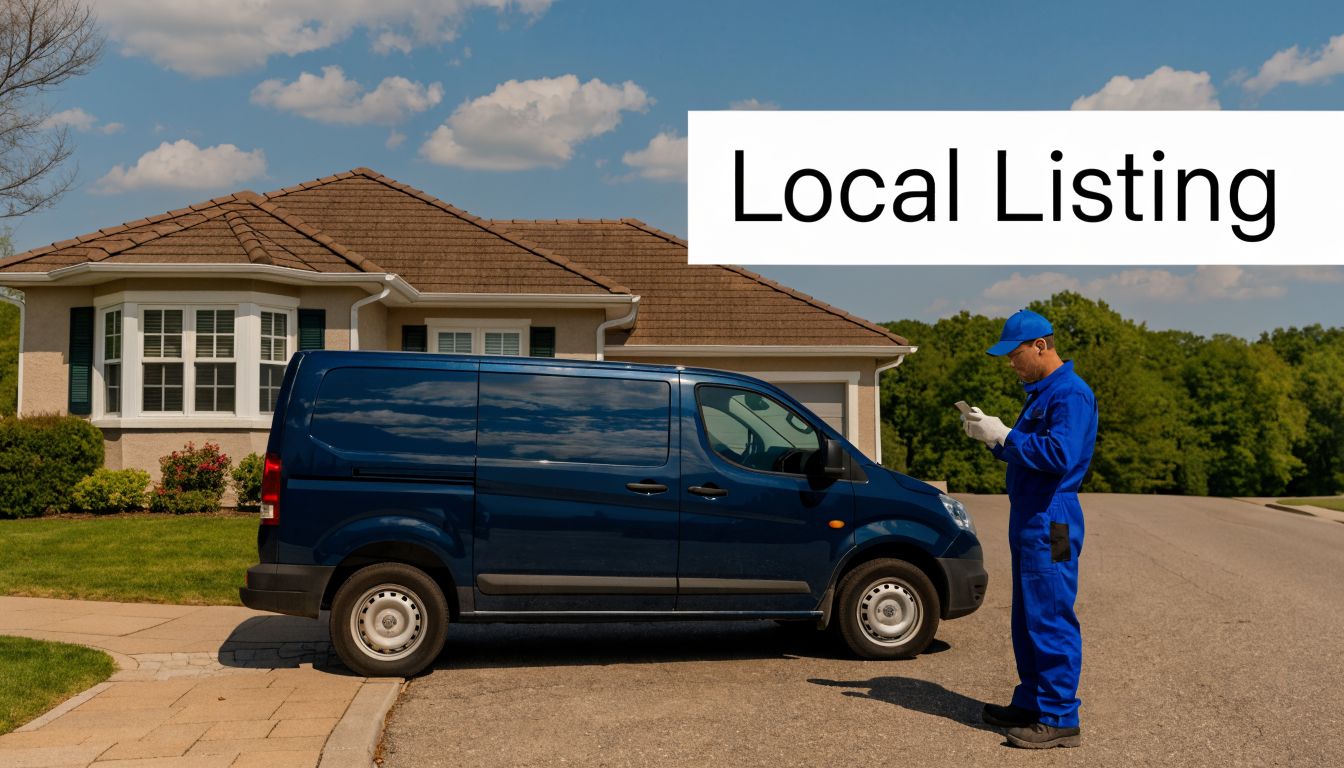
New York customers scan fast. They want three things right away: proof you work in their area, proof you handle their problem, and proof you’ll answer the phone. Your profile needs to cover all three without fluff.
A strong profile starts with the basics done properly. Set your real service areas. Keep hours updated, especially for weekends and emergency availability. List actual services such as drain cleaning, boiler repair, water heater replacement, leak detection, and sewer line work. If you do not offer a service, do not pad the profile with it just to catch extra searches. Bad-fit calls waste time and hurt review quality.
What a strong profile looks like in practice
A plumber serving Astoria and Long Island City should show work from Astoria and Long Island City. Upload finished installs, clean repair photos, team shots in uniform, and van photos with visible branding. Write a short business description in plain English. Skip generic lines about quality and excellence. Say what you do, where you do it, and how customers can reach you.
Then keep it active.
- Add recent photos: New job photos signal that the business is operating now, not coasting on pictures from two years ago.
- Answer reviews: A short, professional reply helps. Prospects read those responses closely, especially on negative reviews.
- Use Google Posts: Post seasonal service updates, common repair issues, and neighborhood-specific jobs.
- Check Q&A and details monthly: Wrong hours, outdated phone numbers, and missing services cost real calls.
There is a trade-off here. A fully maintained profile takes time, and most owners in the field do not have spare hours to write posts and sort photos every week. That is why simple systems beat good intentions. One folder for job photos. One reminder each Friday to upload the best three. One staff member assigned to ask for reviews and flag profile edits. If you want help keeping that visibility consistent without adding more admin work, this guide on social media marketing for plumbers shows a practical way to batch content and stay visible across channels.
A neglected profile makes even solid plumbing work look risky. A current, specific profile makes a smaller shop look organized, local, and ready to book.
3. Build Trust with Consistent Social Media
Most plumbers don't need to become content creators. They need to stay visible often enough that local people remember the name when something goes wrong.
In New York, that matters more than a lot of owners think. Market data cited by V Digital Services says 80% of top-performing NYC plumbing firms use AI-driven content tools for social on platforms like Facebook and Instagram, as outlined in their New York plumber strategy article. That's a signal that consistency has become an operational advantage, not just a branding extra.
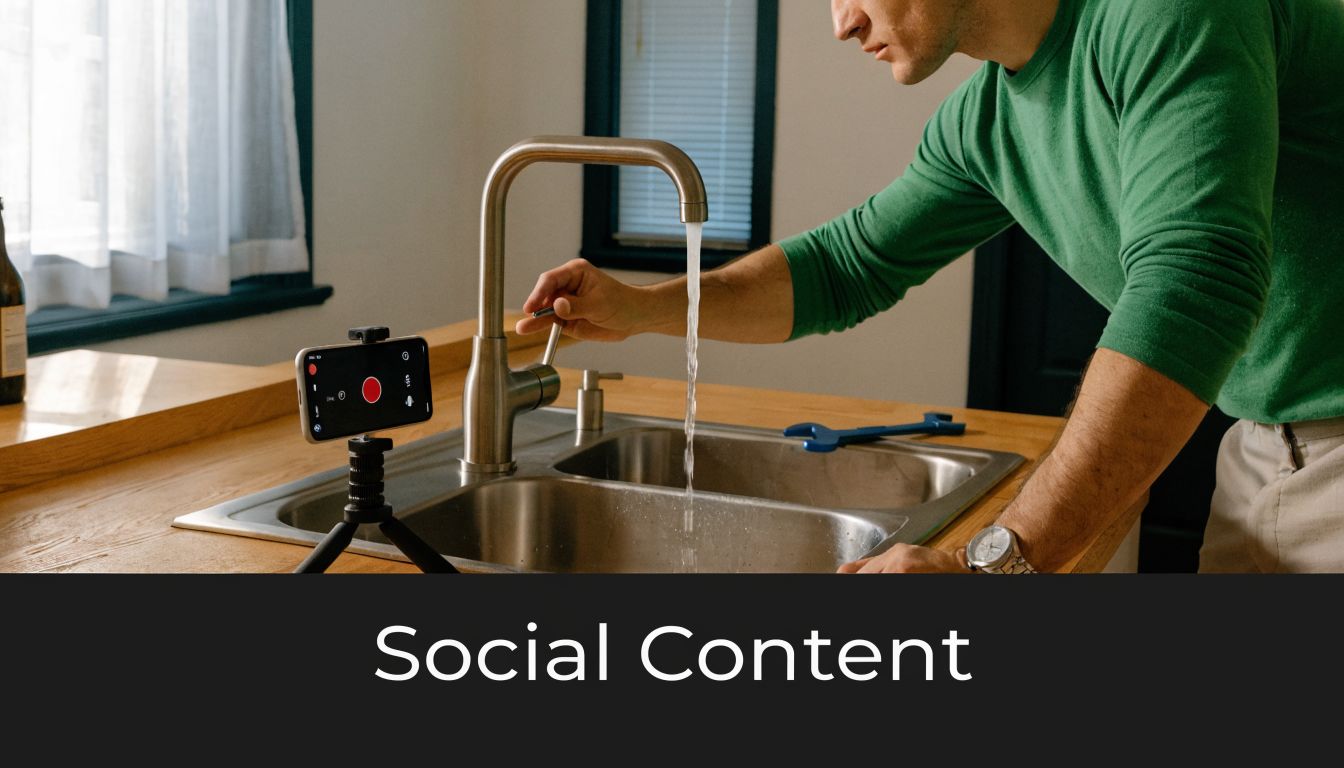
The mistake is posting randomly. One burst of job photos, then silence for three weeks. That doesn't build trust. It just makes your page look abandoned.
What to post when you're busy
You don't need complicated campaigns. You need repeatable categories.
- Before and after jobs: Leak repair, water heater swap, boiler work, rough-in progress.
- Short homeowner tips: Frozen pipe prevention, shutoff valve reminders, what to do before you call.
- Team and van content: People hire businesses that look organized and accountable.
GrowTradie helps with exactly this problem by automating social media marketing for plumbers so your pages keep moving even when you're on the tools all day. That's useful for small crews who know they should post but never get around to it.
The trade-off is simple. Social media rarely fixes a dead pipeline overnight. But it does improve recognition, trust, and conversion when someone checks you out before calling.
4. Forge Local Partnerships and Referral Networks
Some of the best jobs never come from ads. They come from people who already have a homeowner's trust.
In New York, that usually means property managers, supers, builders, remodelers, real estate agents, and HOAs. The verified data specifically points to partnerships with builders and HOAs through sponsorships, group discounts, or branded fridge magnets as a way to secure steady work from new homes and maintenance. That’s practical because these relationships can keep feeding jobs after a single introduction.
A Manhattan property manager with multiple buildings doesn't want to test a new plumber every month. They want one company that answers, shows up, documents the work, and doesn't create problems with tenants. If you become that company, the value of that relationship compounds over time.
Who to approach first in New York
Start with businesses that see plumbing issues before the customer starts searching online.
- Property managers: They need reliable response, clear invoices, and minimal drama.
- General contractors: They need subs who show up on time and communicate.
- Real estate agents: They need fast repairs before closings and after inspections.
- Building supers: They often influence who gets called first.
Don't overcomplicate the approach. Reach out, meet for coffee, explain the areas you cover, and make it easy for them to pass your details along. A simple digital contact card, a fridge magnet, or a clean one-page capability sheet works better than a long sales pitch.
The fastest way to kill a referral relationship is to treat a referred customer like a small job.
5. Create a Powerful Review Generation System
Reviews don't gather themselves. If you leave it to chance, you'll get a few from your happiest customers, a few from your angriest customers, and not much in between.
That creates a distorted picture of your business. The fix is a system. Ask after the job is complete, when the customer has seen the result, the invoice is clear, and the site is left tidy.
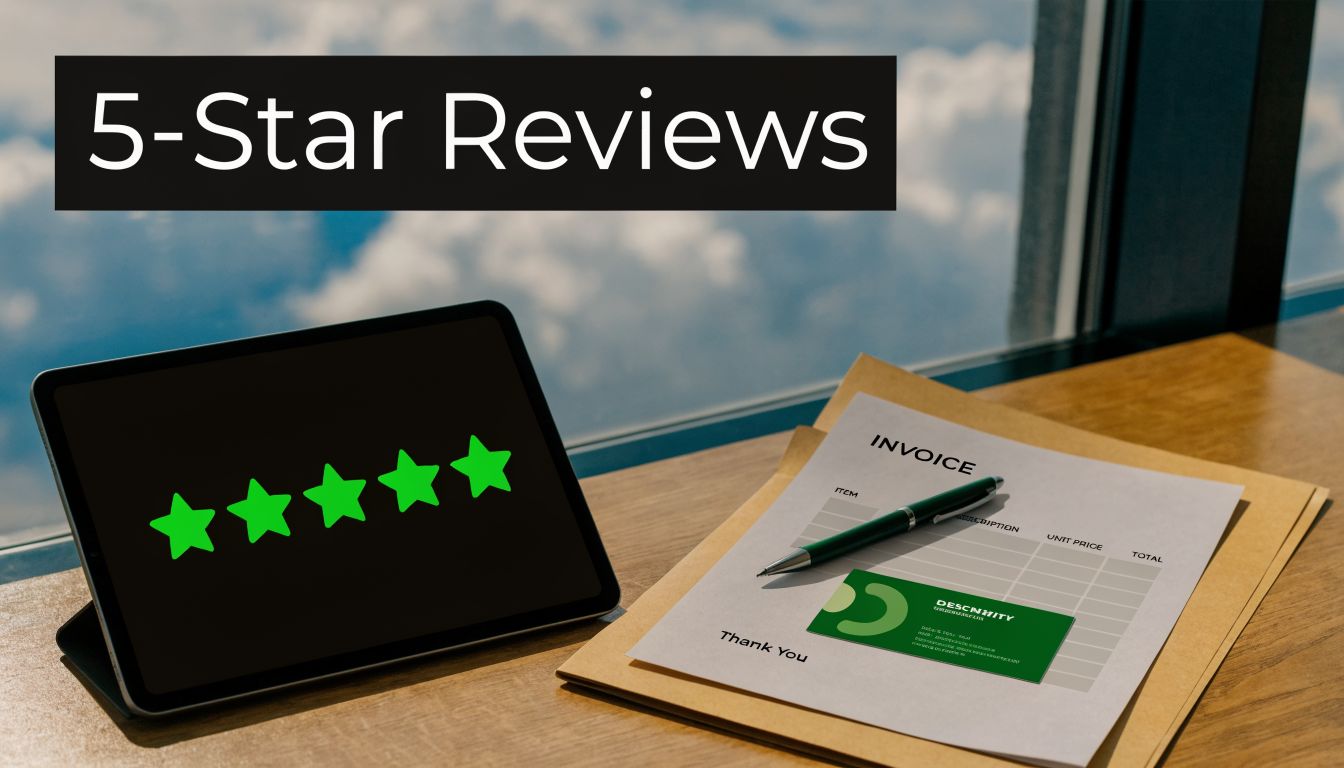
Review volume and review quality both affect trust. They also affect how strong your profile looks when someone compares you with two or three competitors in the same area. In practical terms, that means your field process matters as much as your online profile.
Make review requests part of the closeout
A good review system is boring on purpose. It runs the same way every time.
- Ask in person first: A technician finishes the job and says, "If you're happy with the work, would you mind leaving us a Google review?"
- Send the link fast: Text or email it right after the visit, not two days later.
- Respond to all of them: Good reviews get thanks. Bad reviews get a calm, factual response and an offer to resolve the issue offline.
Don't buy reviews. Don't pressure people. Don't write fake ones. In a city where customers compare fast, authenticity beats polish.
One more point. If you get a negative review, answer like a business owner, not like someone arguing on a jobsite. Future customers are reading that response more closely than the original complaint.
6. Turn Your Fleet into Rolling Billboards
A van wrap won't replace paid lead channels, but it does something they can't. It builds familiarity in the exact neighborhoods you serve while you're already moving between jobs.
That matters in New York because visibility is local by block, by building, and by repeat exposure. Someone might see your van outside a co-op in Park Slope, then again near a supply house, then parked on a side street during another call. By the time they need a plumber, your name feels known.
What belongs on the van
A lot of wraps fail because owners try to fit everything on the side panel. More text doesn't mean more response.
Keep it simple.
- Business name and logo: Big enough to read from a distance.
- Phone number: Large, high contrast, easy to remember.
- Core service promise: Emergency plumbing, boilers, drains, water heaters, or the service you most want to own.
- Service area cues: Boroughs or neighborhood focus if that fits your coverage.
A QR code can work, but only if the page it opens is simple and mobile-friendly. Few will scan it while moving. Your phone number still does the heavy lifting.
Clean vans matter too. A professionally wrapped vehicle covered in grime sends the wrong message. If your truck is your billboard, maintenance is part of the marketing.
7. Showcase Work with Video and Before Afters
If you want homeowners to trust your workmanship, show the work. Nothing explains quality faster than a clear before-and-after.
This is especially useful for jobs customers don't fully understand. A boiler repair, a repipe section, a water heater replacement, or a leak hidden behind a wall all feel abstract until people can see what changed. Video makes that difference obvious.
Here’s a useful example format to study:
Keep the videos simple
You do not need polished production. A clean phone video with decent lighting is enough.
- Show the problem first: Drip, corrosion, failed unit, damaged valve, poor install.
- Show the finished result: Neat lines, clean fittings, organized workspace.
- Explain one thing: What caused it, what you fixed, or what the customer should watch for next time.
Short clips often work better than long ones because local homeowners are usually watching on their phones. A Queens homeowner scrolling Facebook doesn't need a five-minute tutorial. They need quick proof that you know what you're doing.
If you want help building a repeatable content flow around job photos and videos, this guide to content marketing for local businesses is a practical place to start.
Show the result, not just the effort. Customers buy confidence.
8. Run Targeted Local Ads on Facebook and Instagram
Paid social ads are not the same as search-driven ads. They catch people while they're browsing, not while they're urgently hunting for a plumber. That means the job is different.
Use Facebook and Instagram ads to stay visible in your service area, promote seasonal offers, retarget past website visitors, and keep your name in front of homeowners before the emergency happens. They can support your broader mix, especially if you're trying to stay present in a neighborhood where competition is heavy.
The verified data also notes that impressions-focused Meta campaigns can underperform compared with higher-intent channels when the goal is emergency lead generation. That's the key trade-off. Paid social is usually better for awareness, remarketing, and offer promotion than for immediate emergency calls.
What paid social is actually good for
A Bronx plumber might run a winter ad focused on frozen pipe prevention. A Staten Island company might promote water heater replacements before colder months. A Brooklyn shop can retarget people who checked the website but didn't call.
A few ad types tend to work better than generic brand ads:
- Seasonal service offers: Winter pipe prep, boiler tune-ups, sump-related services.
- Retargeting ads: Show follow-up ads to people who already visited your site.
- Lead form ads: Useful when the offer is simple and the response isn't urgent.
Use real team photos, vans, and job visuals when possible. Stock images make local service ads feel fake fast. Also keep the radius tight. Broad citywide campaigns usually waste spend unless your operation is big enough to serve all boroughs well.
9. Drive Repeat Business with Email Campaigns
A customer in Queens calls you for a clogged drain in March. In October, they need a water heater check, but they do not remember your company name. The plumber who sends a short, useful reminder gets that second job more often.
That is why email earns its keep. It keeps your name in front of past customers without paying for every click or impression again. For a busy New York shop, it is one of the few marketing channels that can produce repeat work in the background.
The mistake is sending the same message to everyone on your list. A homeowner who used you for an emergency leak has different needs than a landlord who books routine maintenance across a few units. Job history should shape the follow-up.
A simple email plan works well for plumbers:
- Seasonal service reminders: Cold-weather pipe prep, boiler service timing, drain checks before heavy seasonal use.
- Service-based follow-ups: Water heater customers get maintenance reminders. Leak repair customers get prevention tips and a check-in.
- Referral emails: A short note asking for introductions to neighbors, friends, or other property owners.
- Past-customer offers: Limited offers tied to work they already understand and may need again.
Keep the writing short. Use a clear subject line, one main point, and one action to take. On a phone screen, long emails get ignored fast.
This is also where execution matters. If you are running jobs all day, email often gets pushed aside because nobody has time to sort customer lists, write follow-ups, and send them consistently. GrowTradie helps by keeping your customer base organized and making those repeat-touch campaigns easier to manage without adding admin work after your regular work hours.
A good email is not a newsletter. It is a reminder sent at the right time, to the right past customer, with a clear reason to call.
10. Get Seen Through Community Involvement
Plumbers who are visible in the neighborhood often get trusted faster. That's not because community involvement is magic. It's because familiarity lowers hesitation.
If people have seen your van at the local school event, your logo on a youth team banner, or you at a chamber breakfast, you're no longer just another listing on a phone screen. You're the plumber they've already come across in real life.
Visibility is better when people meet you first
This works best when the involvement is local and consistent. One-off sponsorships with no follow-up rarely do much.
Choose activities that put you in front of the kind of customers you want more of:
- Neighborhood events: Street fairs, school fundraisers, block associations.
- Business groups: Chamber of Commerce meetings, landlord groups, local networking breakfasts.
- Practical sponsorships: Youth sports, community boards, building events, homeowner groups.
Bring simple materials. Clean business cards. A short flyer. Maybe a fridge magnet if it fits your brand. More important, show up and talk to people normally. Don't sell too hard.
The best community marketing feels like participation first and promotion second. New Yorkers are good at spotting the difference.
Top 10 NYC Plumber Marketing Strategies Comparison
| Strategy | 🔄 Implementation Complexity | ⚡ Resource Requirements | 📊 Expected Outcomes | 💡 Ideal Use Cases | ⭐ Key Advantages |
|---|---|---|---|---|---|
| Dominate with Google Local Services Ads (LSAs) | 🔄 High, verification + fast lead handling required | ⚡ Moderate ongoing spend (pay-per-lead) and prompt response time | 📊 Strong intent-driven leads; variable volume by area | 💡 Emergency/urgent service calls; tight service-area targeting | ⭐ Top-of-page placement, Google Guaranteed, pay-for-qualified-leads |
| Master Your Google Business Profile (GBP) | 🔄 Low–Medium, initial setup + regular upkeep | ⚡ Low cost; time for photos, posts, review responses | 📊 Improved local visibility and organic inquiries | 💡 Local discovery and map-pack prominence for neighborhood searches | ⭐ Free listing, Maps presence, review-driven trust |
| Build Trust with Consistent Social Media | 🔄 Medium, regular content and engagement schedule | ⚡ Low monetary cost; moderate time or automation (GrowTradie) | 📊 Gradual brand awareness and referral growth | 💡 Reputation building, before/after showcases, community engagement | ⭐ Personal connection, shareable content, low-cost reach |
| Forge Local Partnerships & Referral Networks | 🔄 Medium, networking and relationship management | ⚡ Low monetary cost; significant time investment | 📊 Steady stream of warm, often high-ticket leads | 💡 Property managers, realtors, contractors, repeat commercial work | ⭐ Low acquisition cost, high-quality referrals, sustained revenue |
| Create a Powerful Review Generation System | 🔄 Medium, process design and consistent follow-up | ⚡ Low cost (automation tools); discipline to request reviews | 📊 Better rankings and conversion; stronger social proof | 💡 Competitive local markets where trust influences choice | ⭐ Boosts local SEO, conversion lift, feedback loop for service |
| Turn Your Fleet into Rolling Billboards | 🔄 Low–Medium, design, install, upkeep logistics | ⚡ High one-time cost ($2k–$5k/vehicle); maintenance | 📊 Long-term brand recognition and local visibility | 💡 High local driving presence; neighborhood saturation strategy | ⭐ Continuous hyper-local advertising; perceived professionalism |
| Showcase Work with Video & Before/Afters | 🔄 Medium, filming, editing, and consent management | ⚡ Moderate (smartphone + editing time); occasional tools | 📊 High engagement and shareability; credibility boost | 💡 Complex installs, dramatic transformations, social growth tactics | ⭐ Strong visual proof, algorithmic reach, higher engagement |
| Run Targeted Local Ads on Facebook & Instagram | 🔄 Medium, audience setup, creative testing, tracking | ⚡ Ongoing ad budget ($20+/day recommended) + creative assets | 📊 Fast lead generation; measurable cost-per-lead when optimized | 💡 Seasonal offers, lead capture, retargeting website visitors | ⭐ Precise targeting, rapid results, scalable and measurable |
| Drive Repeat Business with Email Campaigns | 🔄 Low–Medium, list building and regular campaigns | ⚡ Low cost (email platform); time to segment and write | 📊 High ROI for repeat bookings and customer lifetime value | 💡 Past customers, seasonal maintenance reminders, upsells | ⭐ Very low cost per contact, measurable engagement, retention |
| Get Seen Through Community Involvement | 🔄 Medium, planning, presence, and relationship building | ⚡ Time-intensive; occasional sponsorship costs | 📊 Long-term trust and word-of-mouth referrals; less immediate ROI | 💡 Local family events, sponsorships, Chamber networking | ⭐ Authentic goodwill, local credibility, earned media opportunities |
Making Your Marketing Consistent and Effective
It’s 6:40 a.m. in Queens. A no-heat call comes in, your phone is already buzzing, and by lunchtime the day is running you instead of the other way around. That is exactly when weak marketing systems fall apart. The profile goes stale, nobody asks for the review, the social feed goes quiet, and the leads you paid for stop turning into booked work.
Good marketing for a New York plumbing business has to hold up during busy weeks, not just during slow ones. The shops that stay visible usually are not doing everything. They are doing a few things on schedule, with clear follow-up, in the neighborhoods they want to serve.
That is the standard. Be easy to find, easy to trust, and easy to contact.
For one plumber, that means Google Business Profile, review requests, and LSAs for emergency jobs. For another, it means property manager referrals, email reminders, and steady social posting in a tight service area. Both can work. The trade-off is simple. More channels can create more reach, but they also create more admin, more missed follow-up, and more half-finished work.
A lot of owners lose momentum because marketing gets treated like a side task. In reality, it needs the same discipline as dispatch or invoicing. If nobody owns it, it slips. If it depends on memory, it gets skipped. If it takes too many steps, it dies the first time the week gets hectic.
Keep it practical:
- Lock down your local basics: accurate hours, service areas, phone number, and recent photos
- Show proof often: reviews, job photos, short videos, and fast replies to new enquiries
- Match the channel to the job type: paid search for urgent intent, social for visibility and remarketing
- Keep past customers warm: seasonal emails and simple follow-up bring in repeat work
- Stay visible offline too: van signage, local partners, and community presence still matter in New York
Simple systems usually outperform ambitious plans because they get used. A technician finishes a job, takes two photos, and the office sends a review text. A short email goes out at the start of winter. Referral partners hear from you once a month instead of once a year. None of that is flashy. It does bring in work.
If you are stretched thin, cut the parts that do not need your direct attention. Use tools for posting, reminders, and content scheduling, then keep your own time for callbacks, estimating, and relationship-building. That is how marketing becomes part of the business instead of another job hanging over it.
If you want steady visibility without having to write posts, plan content, or remember to publish between jobs, GrowTradie is built for that. It helps trade businesses stay active online with AI-generated, locally relevant social content, clean branded designs, and auto-posting that keeps your profiles from going quiet. For busy New York plumbers, that means less time fiddling with marketing and more time turning attention into real enquiries and booked jobs.