

One week the phone won't stop. The next week you're staring at the diary, hoping a quote turns into a job. Most tradies know that cycle. Word of mouth still matters, but it doesn't fill every gap, and it definitely doesn't show up on demand when a homeowner's hot water system fails at 7 a.m.
The contractors who stay consistently busy usually do one thing better than everyone else. They show up when someone nearby is already looking for help. That's why local seo for contractors matters so much. 46% of Google searches have local intent, and over 60% of those happen on mobile for service-area businesses. If you're a plumber, electrician, roofer, carpenter, or HVAC contractor, that means your next customer is often searching on a phone while standing in the driveway, kitchen, or plant room.
This also applies if you don't have a shopfront. Plenty of independent tradies work from a ute, a home office, or a small yard. A physical storefront isn't the deciding factor anymore. A strong online footprint, clear service areas, and proof of work can do the heavy lifting.
Table of Contents
- Why Some Contractors Are Always Busy and Others Are Not
- Your Digital Storefront on Google
- Building a Website That Wins Local Work
- Earning Trust with Reviews and Online Listings
- Becoming the Go-To Contractor in Your Community
- A Simple Scorecard to Know What's Working
Why Some Contractors Are Always Busy and Others Are Not
Some contractors live off referrals and stay flat out for years. Others get the same referrals, do solid work, and still hit quiet patches. The difference often isn't workmanship. It's visibility.
When someone asks a mate for a recommendation, you're in the running. When someone grabs their phone and searches for help nearby, you're either visible or you're invisible. There isn't much middle ground.
A common pattern looks like this. A roofer gets busy through repeat work and referrals, stops paying attention to their online presence, then slows down when the referral stream dries up. Meanwhile, another roofer with similar skills keeps showing up in local results, answers calls quickly, and books the jobs that would've gone elsewhere.
The modern version of word of mouth
Google has become the first stop for a lot of local buying decisions. People still trust recommendations, but they often verify them online before they call. If they can't find clear service info, photos, suburb coverage, and a working phone number, they move on.
Your online presence now does the first part of the sales job. It tells people whether you're local, active, and worth calling.
Many tradies get tripped up. They assume you need an office with signage out front to compete. You don't. Service-area businesses can still dominate local markets if they build a strong footprint online with area pages, job photos, and proof that they work in those suburbs.
What busy contractors do differently
They don't treat visibility like a side project. They treat it like keeping the ute stocked. It has to be ready before the job comes in.
A contractor who's consistently visible usually has:
- A complete Google business listing with the right trade category, current hours, and real photos
- A simple website that clearly says what they do and where they work
- Pages for key services and suburbs instead of one generic page trying to cover everything
- Recent reviews that sound like real customers in real areas
- Matching business details across the web
None of that requires marketing experience. It requires a basic system and a bit of discipline. For busy tradies, the payoff is simple. Fewer dead weeks. Better leads. More calls from people who already need the work done.
Your Digital Storefront on Google
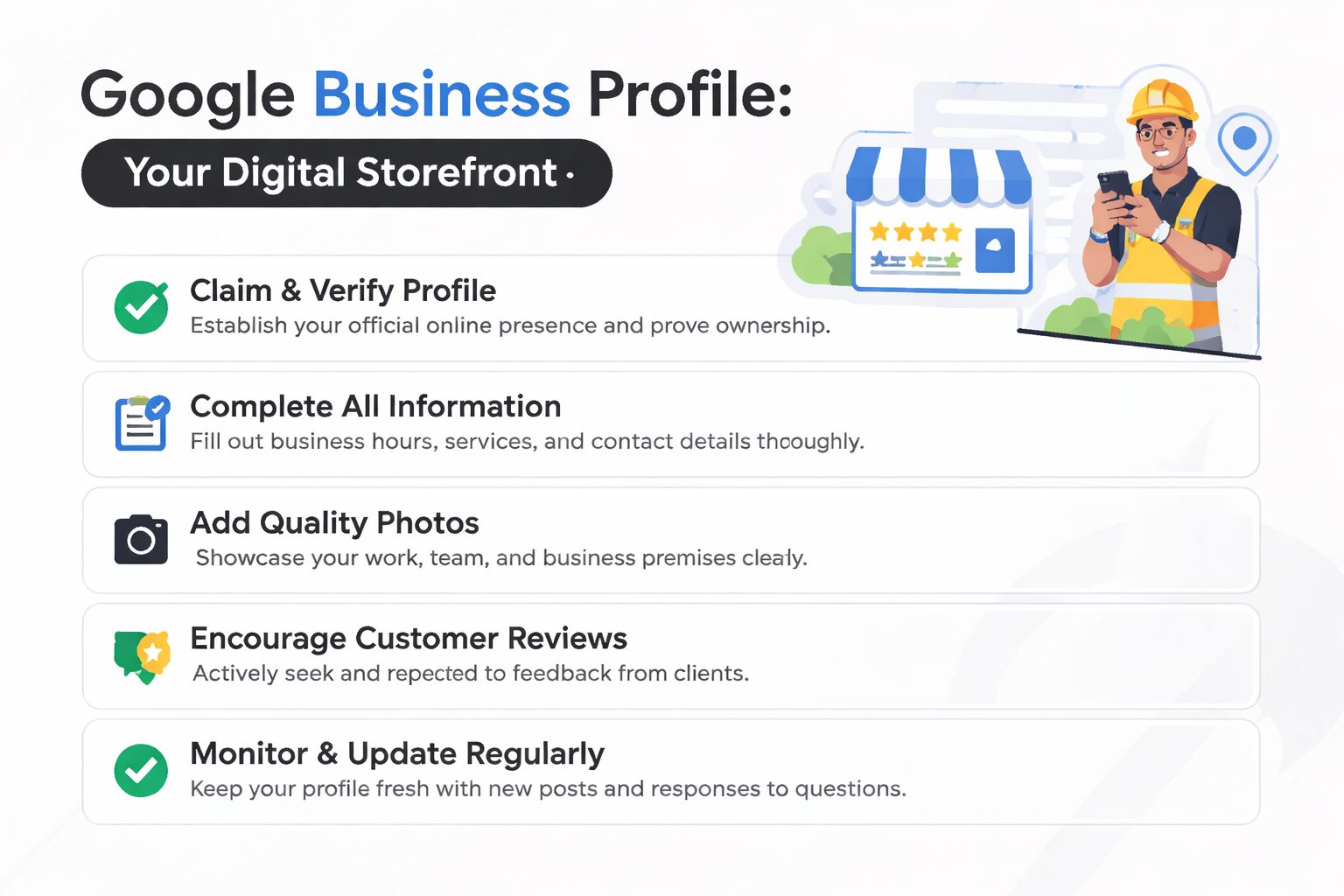
If you only fix one thing this month, fix your Google Business Profile. For most contractors, it's the first thing a customer sees. In plenty of cases, it's the only thing they look at before calling.
A half-finished profile makes a good business look sloppy. A complete profile makes a small operator look established and easy to hire. That matters because complete Google Business Profiles receive 7 times more clicks than incomplete ones, and 28% of local searches result directly in a purchase or service booking.
What to set up first
Start with the basics that affect whether people trust you enough to tap the call button.
Claim and verify the profile
If you haven't taken ownership, you're leaving your first impression to chance.Choose the closest main category to your actual trade
Pick "Plumber", "Electrician", "HVAC contractor", or the closest direct fit. Don't go broad if a precise option exists.Check your phone number carefully
Use the number you answer. Not the old office line. Not a number that forwards badly after hours.Set business hours accurately
If you offer emergency callouts, make that clear. If you don't answer weekends, don't pretend you do.Add every relevant service
Don't just say "contractor". List drain repairs, switchboard upgrades, ducted system servicing, roof leak repairs, deck builds, or whatever you sell.
Photos matter more than most tradies think
Use real photos from real jobs. Wide shots, close-ups, team photos, vans, workshop shots, before-and-after work, and finished outcomes all help. Skip stock images. Homeowners can spot fake marketing a mile away.
A good photo set does two jobs. It proves you're active, and it helps people picture you doing the same work at their place.
Practical rule: If a customer can scroll your profile and instantly understand what you do, where you work, and how to call you, you're ahead of a lot of competitors.
A quick profile checklist
Use this before smoko or when the day finishes:
- Business name exactly as you use it in real life
- Primary category matched to your main trade
- Phone number checked and tested
- Service areas added if you travel to customers
- Services listed in plain English
- Photos uploaded regularly
- Description written for humans, not jargon
- Questions and answers monitored
- Reviews answered
A strong profile won't fix everything on its own. But it's the fastest practical win in local seo for contractors because it sits right where buying decisions happen. If someone's comparing three businesses on a phone, the complete, trustworthy profile usually gets the first call.
Building a Website That Wins Local Work
A website doesn't need to be fancy. It needs to answer the questions a customer has before they call. What do you do, where do you work, can I trust you, and how do I contact you right now?
The biggest mistake contractors make is building one broad service page and expecting it to cover every suburb. That rarely works. Dedicated service-location pages with geo-specific content are the leading factor for ranking in local organic results.
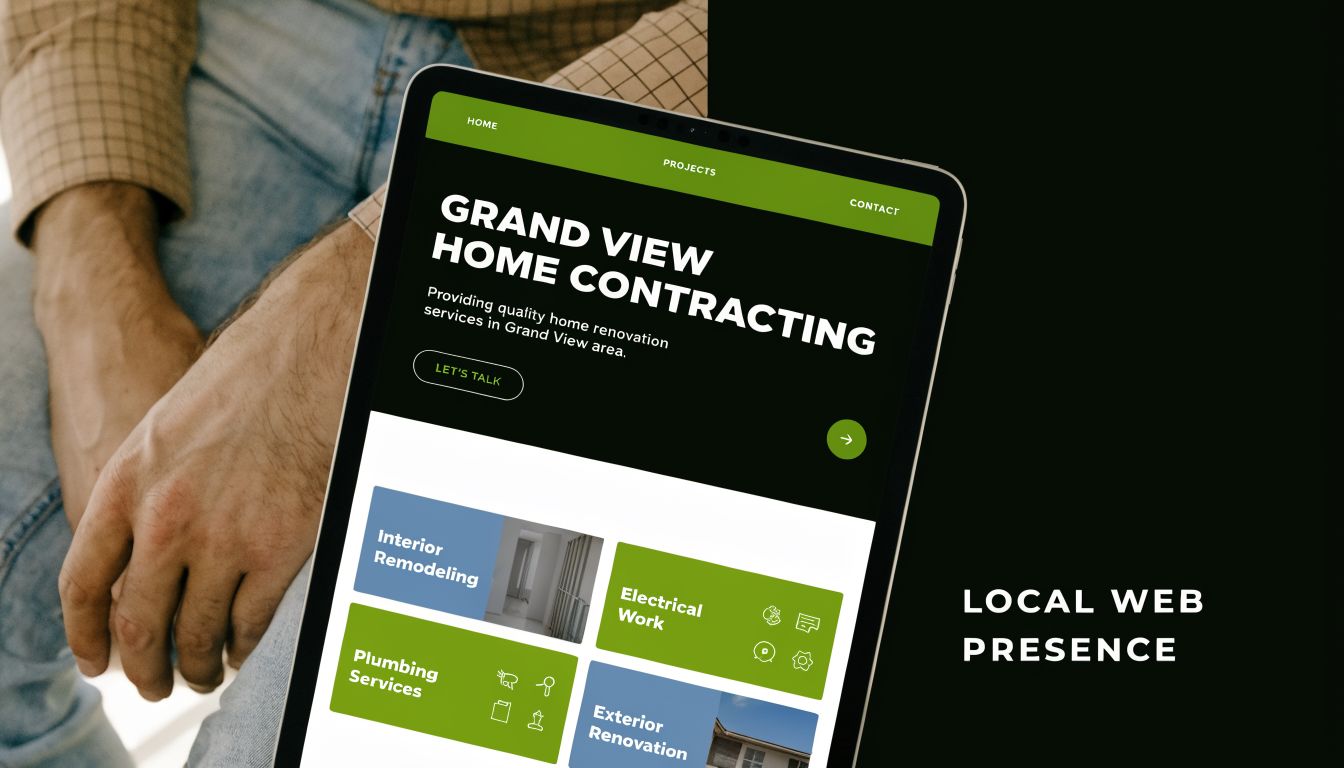
Think of each page like a suburb flyer
If you service five towns and offer four main services, don't hand out one generic flyer and hope everyone sees themselves in it. Build pages that match the actual jobs people search for.
Examples:
- Emergency electrician in Geelong
- Hot water repairs in Newcastle
- Timber decking contractor in Wollongong
- Ducted heating service in Ballarat
That structure gives Google and customers a much clearer signal. This is what we do. Here is where we operate.
What each local page should include
You don't need corporate copywriting. You need useful, specific detail.
A strong local page should have:
- A clear heading with the service and area
- A short opening explaining the job type and who it's for
- Real local references like suburbs, landmarks, housing types, or common property issues
- Photos from similar work
- A testimonial from someone in that area if you have one
- A contact option that doesn't make people hunt for your number
Keep the wording natural. If you work on older homes in one suburb and newer estates in another, say so. That's the sort of detail that sounds real because it is real.
Most tradies don't need more pages. They need the right pages.
One practical shortcut is to start with your highest-margin services in your best suburbs. Don't try to build pages for every possible combination in one weekend. Build a few strong ones first, then expand.
If you want a better handle on how consistent content supports local visibility between jobs, this guide on content marketing for local businesses is worth a look.
A quick walkthrough helps if you're reviewing your own site or briefing whoever built it for you.
What doesn't work
Contractors waste a lot of time on the wrong things. A sleek homepage with drone footage won't help if every service is buried. A page that says "we service all areas" is too vague. Copying the same paragraph for ten suburbs with only the town name swapped out also falls flat.
A website that wins local work is usually plain, direct, and easy to use on a phone. The customer should land on the exact page they need, see proof, and call.
That's the standard.
Earning Trust with Reviews and Online Listings
Good tradies lose jobs every week to businesses that look easier to trust online. That's frustrating, but it's fixable.
Two things shape that trust fast. Reviews from customers, and consistent business listings across the web. One shows what people say about you. The other shows whether your business details look reliable.
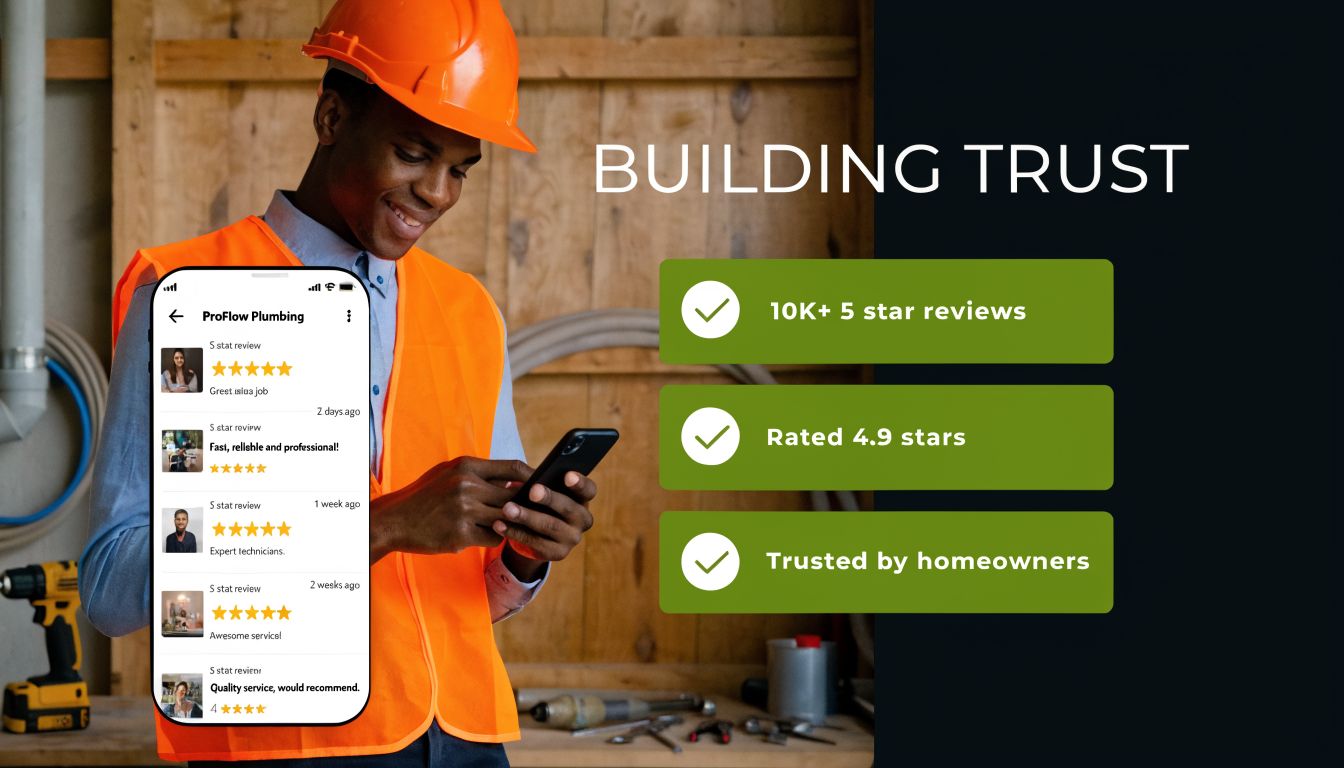
Reviews that actually help you win work
You don't need a complicated review funnel. You need a repeatable habit.
The best time to ask is right after the customer is happy and the result is visible. The hot water is back on. The switchboard is sorted. The new pergola is finished. That's when a simple text works best.
Try something like this:
Thanks again for having us out today. If you're happy with the job, would you mind leaving a quick review? It helps local customers find us.
Short. Polite. No pressure.
A few ground rules matter:
- Ask consistently instead of only asking your easiest customers
- Make it simple by sending the direct review link
- Reply to every review so future customers can see you're engaged
- Stay calm with negative feedback and answer like a professional, not like someone arguing on a job site
If you're in a competitive market, this matters even more. People compare tradies quickly. Reviews often decide who gets the call.
For ideas on how trade businesses build trust in crowded markets, this roundup of New York plumber marketing strategies shows the kind of practical positioning that stands out.
Listings need to match everywhere
Now for the unglamorous part that gets ignored. Your business name, address, and phone number need to match across your website, your Google profile, and every directory that mentions you.
This is one of the fastest clean-up jobs in local seo for contractors because citation audits found NAP inconsistencies affect 40% to 50% of local business listings, and getting to 100% consistency can lift visibility by 15% to 25%.
That means if your website says "Unit 2", your directory says "Suite 2", and your old listing still shows a previous phone number, you're creating doubt.
A simple listing clean-up routine
Check these places first:
- Your own website including footer and contact page
- Google Business Profile
- Yelp
- Yellow Pages
- Houzz
- Facebook business page
- Industry directories relevant to your trade
- Local chamber or supplier listings
Use one exact format everywhere. Same business name. Same phone. Same address if you show one. If you're a service-area business, be clear about that and keep the rest of the details consistent.
This work isn't exciting, but neither is fixing a callback. You still do it because it protects the result.
Becoming the Go-To Contractor in Your Community
The contractors who become the default choice in a suburb usually aren't the loudest marketers. They're the ones people keep seeing in the right places. On local websites. In community groups. Through business partnerships. At school fundraisers. On the supplier's recommended trades list.
That kind of presence creates local trust before a customer ever calls.
Real-world trust beats clever marketing
A good example is a sparky who sponsors a junior footy team. Their logo goes on the club site, their business gets mentioned in the community, and locals start seeing the name repeatedly. Another example is a carpenter who partners with a painter and a garden and yard specialist. They refer each other work and list each other on their websites as trusted local partners.
None of that feels like hard-selling because it isn't. It's normal local business behavior. Online, those mentions act like votes of confidence.
A few practical ways to do it:
- Join the local chamber and make sure your listing is complete
- Sponsor community groups that publish supporter pages
- Ask suppliers for a listing if they feature preferred installers or contractors
- Partner with non-competing trades for referrals and website mentions
- Support local events where your business can be mentioned online
If you're also trying to keep your social presence active without adding another job to the day, this guide on social media marketing for contractors gives a practical starting point.
Keep your business details locked in
Small trust signals stack up. One that's easy to miss is your website footer. Competitor analysis found that an exact match between the NAP on your website footer and your Google Business Profile can boost trust signals by as much as 25%.
That means the footer matters more than most tradies think.
Check it carefully:
- Business name should match exactly
- Phone number should be the same one shown on Google
- Address or service-area wording should be consistent with the way you present the business elsewhere
If a local customer sees your name in three different places and everything matches, you look established. If it doesn't match, you look uncertain.
The best local presence feels boring in the right way. Consistent. Familiar. Easy to verify. That's what gets the call when someone needs a contractor and doesn't want to gamble.
A Simple Scorecard to Know What's Working
Most contractors don't need a giant reporting dashboard. They need a quick way to answer one question. Is this getting us more calls and quote requests?
If you're measuring the wrong things, you'll get distracted. More website visitors sounds good, but it means nothing if the phone stays quiet. Track outcomes tied to real work.
Track outcomes not vanity numbers
Use a simple monthly check-in. Ten minutes is enough.
Look for changes in:
- Calls from your Google profile
- Quote requests from the website
- Whether you're showing up in Google Maps for your main service
- The number and quality of new reviews
Write it down in a notes app, spreadsheet, or whiteboard in the office. The method doesn't matter. Consistency does.
Straight test: If visibility improves but calls don't, your profile, pages, or reviews probably aren't building enough trust.
Your Monthly Local Visibility Scorecard
| Metric to Track | Where to Find It | What It Means |
|---|---|---|
| Google profile calls | Your Google Business Profile insights | Shows whether local searchers are choosing to contact you directly |
| Website quote requests | Contact form submissions or enquiry emails | Tells you whether your site is turning interest into leads |
| Map visibility for your main service | Search your core service in your main town or use a tracking tool like BrightLocal | Shows whether you're appearing where local buyers are comparing options |
| New customer reviews | Your Google review section | Tells you whether trust is growing and whether recent customers are backing your work |
Keep the action list just as simple.
Week 1
Check your Google profile. Fix hours, services, photos, and phone number.
Week 2
Review your website. Make sure each main service has its own clear page. Build one suburb page for your best area if you don't have one already.
Week 3
Ask recent happy customers for reviews. Then reply to every review already sitting there.
Week 4
Clean up your business details across directories and your website footer.
That cycle is manageable even if you're on the tools every day. It's practical, and it focuses on the parts of local seo for contractors that move the needle for real enquiries.
If you want to stay visible without having to think up posts after hours, GrowTradie gives trade businesses a simple way to keep their profiles active with professional, locally specific content. It’s built for busy tradies who don't have time to write, design, schedule, and post manually, and it helps keep your business in front of local customers between jobs so more attention turns into real enquiries.