
Some weeks the phone won't stop. Other weeks you're looking at the board, wondering whether the next decent job is coming from an old customer, a builder, or pure luck. That's how a lot of plumbing businesses operate for years. They rely on referrals, a van sign, repeat work, and whatever comes in next.
The problem isn't that those channels are bad. It's that they're unpredictable.
Lead generation plumbing works when you stop treating marketing like random tasks and start treating it like an operating system. One part gets you found. One part gets the call. One part gets the booking. One part keeps your name in front of people until they need you. If any piece is weak, the whole thing leaks.
That matters even more now because plumbing is a huge U.S. market, estimated at about $169.8 billion in 2025, and the country is projected to face a shortfall of 550,000 plumbers by 2026, according to Linxup's plumbing industry breakdown. In plain terms, demand exists. The businesses that win are usually the ones that capture and convert that demand faster.
Table of Contents
- From Unpredictable Work to a Steady Flow of Calls
- The Foundation Your Local Customers Trust
- Winning Immediate Jobs with Paid Search
- Staying Visible Between Emergency Calls
- Turning Enquiries into Booked Work
- Your 30-60-90 Day Implementation Plan
From Unpredictable Work to a Steady Flow of Calls
Plumbers don't need more marketing theory. They need booked jobs.
The usual pattern is familiar. Word-of-mouth works well until it slows down. Paid directories send the occasional lead, but quality is all over the place. Social pages exist, but nobody updates them. The website gets some visits, yet the phone doesn't ring enough. That's not a lead problem. That's a system problem.
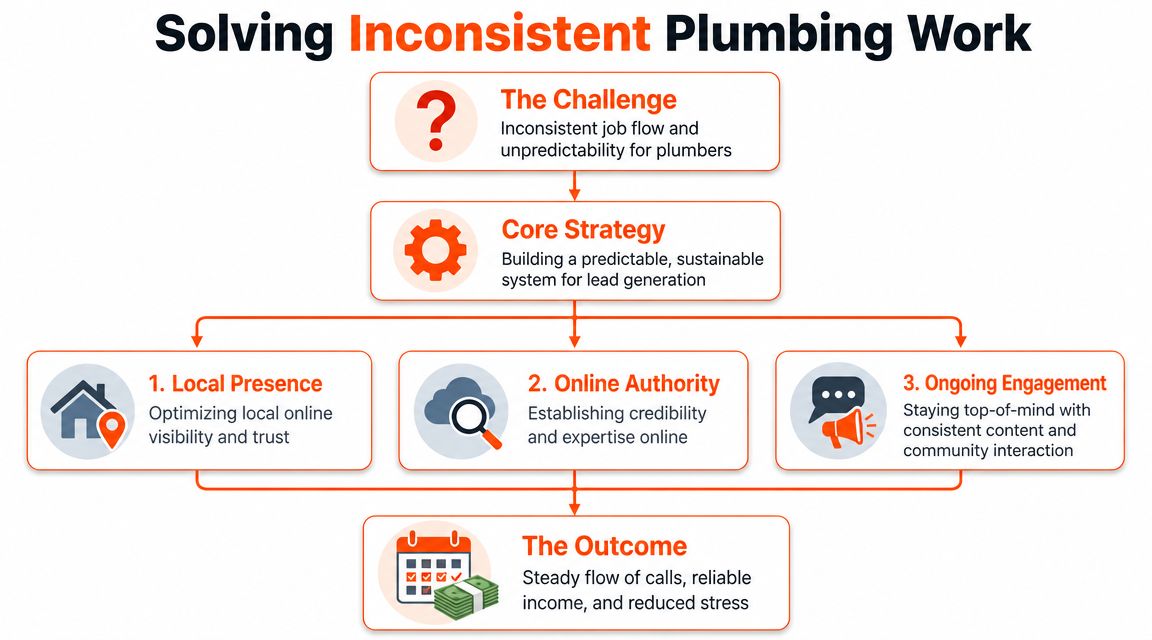
A proper lead generation plumbing system does four jobs at once. It makes your business visible when someone needs help now. It gives them enough confidence to contact you. It makes it easy to book. Then it keeps your company visible so you're remembered before the next issue happens.
Most plumbers already do pieces of this. Very few connect the pieces.
Random tactics create random results
One-off actions feel productive because they're easy to start. Boost a post. Buy a few leads. Ask for reviews when you remember. Change the home page. Run an ad for a week. Then stop. That approach creates noise, not momentum.
A system is different because each channel supports the next:
- Local presence gets you considered.
- Paid ads capture urgent demand.
- Content and updates make your business look active and trustworthy.
- Fast follow-up turns enquiries into scheduled work.
- Tracking shows which channels produce booked jobs.
Practical rule: If a lead source sends enquiries but your team doesn't answer fast or book confidently, that source isn't your main problem. Your process is.
There's another reason this matters. Modern plumbing lead generation has moved heavily online, with businesses combining local visibility, paid ads, social media, and AI-driven tactics. But average lead conversion often sits at only 10% to 12%, which means weak follow-up wastes a large share of incoming opportunities, as noted in this plumbing lead generation guide from Gushwork.
The goal is control
Control doesn't mean you'll eliminate seasonality or emergency swings. It means you won't be fully dependent on them.
A controllable system gives you a few important advantages:
| Part of the business | What happens without a system | What happens with a system |
|---|---|---|
| Lead flow | Good weeks and dead weeks | More consistent enquiries |
| Staffing | Hard to plan ahead | Easier to schedule crew capacity |
| Ad spend | Money goes out with little clarity | You can see what leads to booked work |
| Sales follow-up | Missed calls and forgotten forms | Repeatable intake and booking process |
The best operators don't chase every lead source. They build a machine that captures the right calls, responds quickly, and filters out poor-fit work. That's what creates steadier revenue and less stress.
The Foundation Your Local Customers Trust
Before paying for more visibility, get the basics right. If your Google Business Profile is incomplete, your reviews are stale, or your contact details are inconsistent, you're making every other marketing effort harder.
When someone has water where it shouldn't be, they don't want a brand story. They want a real local business that looks available, credible, and easy to contact.
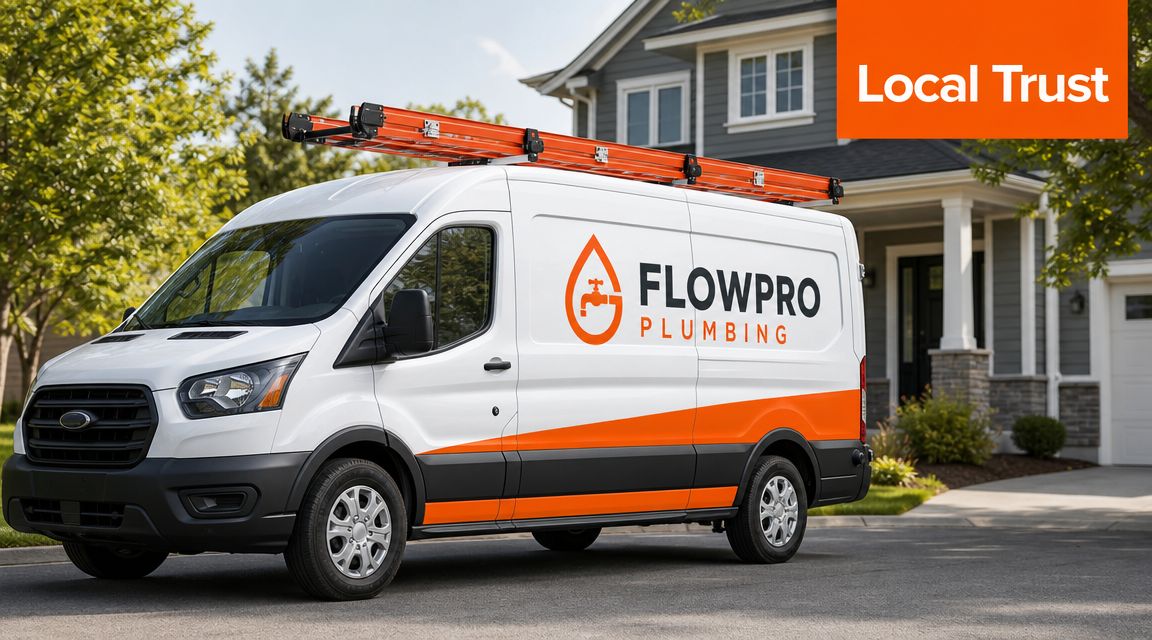
Get your Google Business Profile fully usable
A lot of plumbers claim the profile and stop there. That's not enough. Your profile should answer the customer's first questions before they ever call.
Check these items first:
- Business name and phone must match what you use on the road and on your site.
- Service areas should reflect where you dispatch.
- Hours need to be accurate, especially for emergency availability.
- Photos should show your vans, team, and completed plumbing work.
- Services should be listed clearly so people can tell whether you handle their issue.
- Messaging and calls should be enabled if you have someone ready to respond.
Profiles that look neglected create doubt. Profiles that look active create trust.
Build a review habit, not a review scramble
Reviews do more than flatter the ego. They reduce hesitation. A homeowner choosing between two plumbers often uses a simple filter: who looks real, recent, and reliable?
That matters a lot on urgent jobs. Customers rarely comparison shop for long in plumbing emergencies. They contact the first credible provider who answers, and 40% to 60% of inbound leads can be lost before dispatch because of friction or uncertainty, according to FieldEdge's plumbing lead generation analysis.
The review request should happen when the customer is relieved, not three weeks later when they've forgotten your technician's name.
A workable review system looks like this:
- Finish the job cleanly. Technicians confirm the customer is satisfied.
- Ask in person. Keep it simple and direct.
- Send the link fast. Text it before the van leaves or immediately after.
- Reply to reviews. Thank people, answer concerns, and show you pay attention.
Later in the sales process, visual proof helps too. This short video is useful if you're tightening up your local trust signals and profile setup:
A few review-request habits work better than grand campaigns:
- Ask after visible wins like leak repairs, water heater replacements, or emergency callouts that ended with a happy customer.
- Use the technician's name in the follow-up text so the request feels personal.
- Don't script it too heavily. Natural asks outperform robotic ones.
- Make response part of office admin. A profile with unanswered reviews looks unmanaged.
If this foundation is weak, ads will still send traffic. They just won't convert as well. Trust gets built before the first call, not during the invoice.
Winning Immediate Jobs with Paid Search
Some plumbing work is planned. A lot of the best opportunities are not.
When a drain backs up or a pipe bursts, people want help now. Paid search earns its place in such scenarios. You're not paying for vague awareness. You're paying to appear in front of high-intent local customers at the exact moment they need a plumber.
Pay for urgency, not for random traffic
The most useful paid options for plumbers are usually Google Local Services Ads and call-focused search campaigns. Both can put your business in front of someone ready to ring, not someone casually browsing.
This only works if the campaign is tight. Don't advertise every service in every suburb on day one. Start with the jobs that matter most to margin, urgency, or schedule quality.
A smarter setup usually includes:
- High-value service focus such as emergency callouts, blocked drains, hot water issues, leak detection, or commercial maintenance.
- Clear service-area targeting so you don't pay for calls you'll decline.
- Call-first landing paths that make it easy to reach your team quickly.
- Ad copy that matches real jobs instead of generic "best plumber" claims.
If you need a practical breakdown of campaign setup and paid traffic strategy, this guide on PPC marketing for plumbers is a useful reference.
Paid search works best when it fills open capacity or captures urgent demand you already know how to service profitably.
Why exclusive leads usually beat shared leads
A lot of plumbers get burned by lead generation because they buy leads instead of building a channel. Shared lead platforms are attractive because the upfront price looks cheap. The problem is that you're rarely the only contractor calling.
That creates a race. Fastest answer often wins. Lowest price often follows. Margin disappears.
Economics tell the story. One plumbing marketing example shows a $50 exclusive lead converting at 40%, while a $15 shared lead converts at 8%, making the exclusive lead stronger on a booked-job basis, according to Built Right Digital's comparison of shared and exclusive plumbing leads.
Here's the practical difference:
| Lead type | What usually happens | Long-term value |
|---|---|---|
| Shared lead | Several plumbers chase the same enquiry | Unstable and margin-sensitive |
| Exclusive lead | You're the only contractor handling it | Better control and cleaner sales process |
| Your own paid campaign | You control targeting, message, and intake | Best for repeatable growth |
Shared leads can still have a place. They can help fill short-term gaps when you have crew capacity to use. They just shouldn't be the core of your growth plan.
If you're spending money to generate demand, own as much of that path as possible. Control the ad, the message, the call handling, and the booking process. That's how paid search becomes a profitable channel instead of an expensive guessing game.
Staying Visible Between Emergency Calls
Emergency demand keeps a plumbing business alive. Familiarity helps it grow.
The plumbers people remember aren't always the ones with the flashiest branding. They're the ones who seem active, established, and present in the local area. That visibility often comes from simple content posted consistently, not polished marketing campaigns.
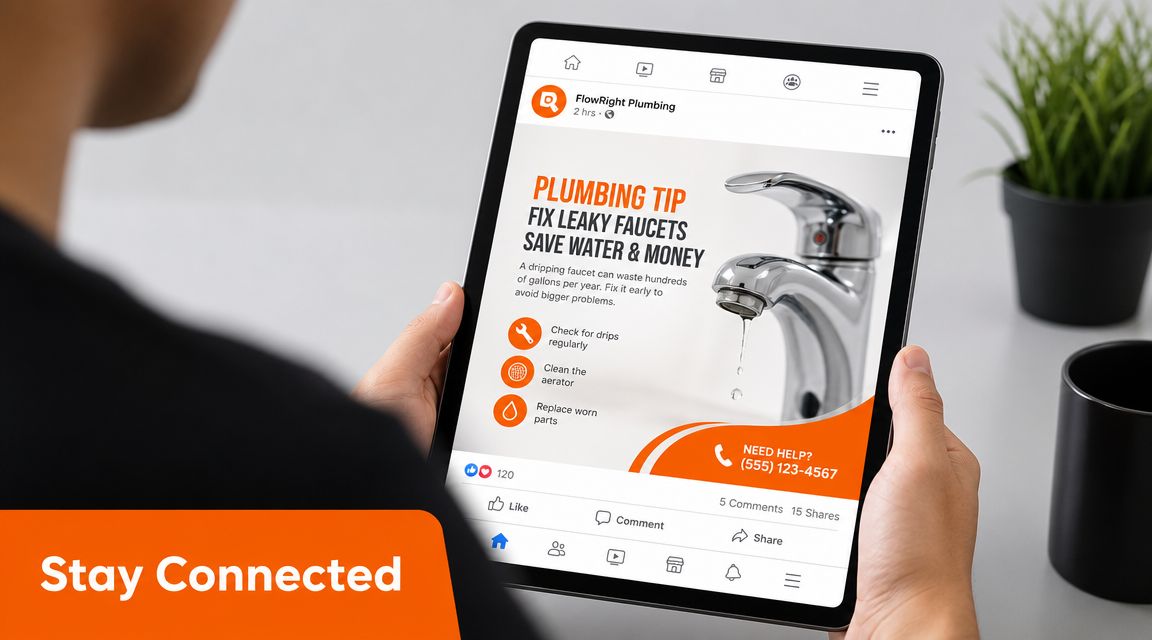
Simple posts that make a plumber look established
Think about what a homeowner sees when they check your profiles. If the last post was months ago, the business feels dormant. If they see recent jobs, team faces, useful tips, and local proof of work, the business feels active.
The good news is that useful plumbing content is straightforward. A few examples:
- Finished job photos with a short note on the problem solved.
- Before-and-after shots of replacements or repairs.
- Seasonal reminders about common plumbing issues in your area.
- Team introductions so the business feels personal.
- Short videos from a van, job site, or workshop answering common questions.
- Customer feedback posts turned into simple trust-building graphics.
A solid resource for planning this kind of visibility is this guide to content marketing for plumbers.
Consistency beats cleverness
The mistake most trade businesses make is assuming every post needs to be original, funny, or highly produced. It doesn't. It needs to be clear, local, and steady.
A practical monthly content rhythm might include:
| Week | Post idea | Why it works |
|---|---|---|
| Week 1 | Recent completed job | Shows proof of real work |
| Week 2 | Plumbing tip for homeowners | Builds credibility |
| Week 3 | Team or van photo in the field | Makes the business feel real |
| Week 4 | Reminder about a service you offer | Keeps services top of mind |
A quiet profile makes people wonder whether you're still active. A steady profile answers that question before they ask it.
This part of lead generation plumbing doesn't usually create an instant flood of calls. It does something just as important. It reduces doubt. It helps referrals convert faster. It gives past visitors a reason to remember you. It makes your business look established when someone checks you out before calling.
Plumbers don't need to become influencers. They need to stay visible enough that local customers see a trustworthy business, not an empty page.
Turning Enquiries into Booked Work
A lead is not a job. It's just a chance.
Many plumbing businesses lose money. They invest time and cash into being found, then handle the incoming call like it's an interruption. Or a web form sits unread until the end of the day. By then the customer has already hired someone else.
Industry guidance for plumbers is blunt on this point. Follow-up needs to happen within minutes, average lead-to-job conversion sits around 10% to 12%, and businesses are advised to aim for 20%+ by improving lead quality and follow-up, according to CI Web Group's plumbing lead generation guide.
What the first response should do
The first contact doesn't need to solve everything. It needs to do four things well:
- Acknowledge urgency
- Show competence
- Reduce uncertainty
- Move toward a booking
That means whoever answers the phone needs a process. Not a rigid script. A process.
A useful call structure sounds like this:
"Thanks for calling. Tell me what's happening."
"Is the water still running or contained?"
"We handle that type of job."
"The next step is getting you booked in. I can help with that now."
Short. Calm. Direct.
For non-phone enquiries, your message response should do the same work. Confirm receipt. State when you'll call. Then call when you said you would.
A simple intake workflow your team can follow
If the office is busy or the plumber answers calls between jobs, the system has to be simple enough to use under pressure.
Use a workflow like this:
Capture the essentials first
Name, phone number, suburb, service needed, urgency, and whether the customer is new or existing.Qualify without interrogating
You don't need a full diagnosis on first contact. You need enough to know whether it's a fit, whether it's urgent, and whether it belongs on today's board.Set expectations clearly
Give a time window for the call back, visit, or next step. Uncertainty kills bookings.Offer the booking while attention is high
Don't end with "We'll let you know." End with a booked slot or a defined next step.Log the lead source
Ask how they found you, or track it in your form and call process. Otherwise you won't know which channels deserve more budget.
Offline material still supports this stage too. If a customer gets your details from a local contact, van, or handout, make sure what they receive feels professional. These examples of plumber business cards are a reminder that credibility starts before the call as much as during it.
A few common mistakes cost plumbers jobs every week:
| Mistake | What the customer hears |
|---|---|
| Slow callback | "They're probably too busy for me." |
| Vague pricing talk | "This could get expensive fast." |
| No clear booking step | "I should keep calling around." |
| Untrained call handling | "They don't sound organised." |
The businesses that convert well don't always have the most leads. They waste fewer of them.
Your 30-60-90 Day Implementation Plan
Monday starts with three missed calls, two web forms, and a full job board by 8:30. If the basics are loose, that pressure turns into wasted spend fast. The order of work matters because each step supports the next. Clean local presence first. Then buy intent. Then tighten the numbers so the system produces booked jobs, not extra admin.
30-60-90 Day Lead Generation Rollout
Print this out. Put one owner beside each task. Give every item a deadline.
| Phase | Key Actions | Goal |
|---|---|---|
| 30 days | Claim or clean up your Google Business Profile, correct business details, update service areas and hours, add real job and van photos, make sure calls and messages are monitored, set a review request process for every completed job | Build trust and make local customers more likely to call |
| 60 days | Launch a focused paid search test for high-intent services, tighten service-area targeting, make sure call handling is ready, begin posting simple local content consistently, review which enquiries look like good-fit work | Create a controlled stream of immediate opportunities while staying visible between jobs |
| 90 days | Track every lead source, record response times, review booked-job rate, refine call scripts, cut weak channels, increase spend only on sources producing profitable work, standardise follow-up for missed calls and web forms | Turn lead generation plumbing into a repeatable operating system |
What to focus on at each stage
The first 30 days are about getting the foundation tight enough to support everything else. A strong Google profile, accurate service areas, recent photos, and a steady review process make every later tactic work better. If those pieces are weak, paid traffic exposes the weakness and costs more than it should.
Days 31 to 60 are for controlled testing. Keep paid search narrow. Focus on service types with clear intent and decent margins, such as emergency repairs, blocked drains, or hot water issues if those jobs fit your team and coverage area. At the same time, keep your business visible with simple local content so prospects who are not in a panic today still see an active, credible company when they check you out.
The 90-day mark is where plumbers usually find significant wins. Not in flashy campaigns. In small fixes to how leads are handled, tracked, and filtered.
A source that sends plenty of calls can still be poor value if the jobs are outside your area, price shoppers tie up the phone, or the work is low margin. Another source may bring fewer enquiries but better jobs that fit your team, schedule, and target suburbs. That is the difference between activity and a system.
Use these rules to keep the plan practical:
- Protect response time. Fast follow-up gives you a better chance of speaking to the customer before they ring the next plumber.
- Protect job fit. More leads are not useful if they fill the board with poor-margin work.
- Protect channel focus. Two or three channels run well beat six channels run badly.
- Protect tracking discipline. If lead sources are not logged, budget decisions turn into guesswork.
One rule matters throughout the full 90 days. Do not add a new tactic until the current one is being handled properly. A plumbing business does not need a complicated marketing stack. It needs a simple system where local trust brings the click, paid search captures urgent demand, ongoing visibility keeps you remembered, and solid call handling turns interest into booked work.
If you want help staying visible without adding more work to your week, GrowTradie is built for trade businesses that need consistent posting without the hassle of writing, designing, and scheduling content themselves. It creates and auto-posts trade-specific content for your local area, so your business stays active online between jobs and keeps building trust while you focus on the work.