

Some weeks the phone won't stop. You finish one leak, jump to a hot water issue, then squeeze in a blocked drain before dark. Other weeks are strangely quiet, and you can't point to one clear reason why.
That's where most plumbing businesses get stuck. They don't have a lead problem as much as they have a system problem. Work comes in, but it isn't predictable.
Plumber lead generation doesn't need to feel like marketing fluff. It needs to work like the rest of your business. A simple setup. Clear steps. Fewer missed opportunities. More booked jobs. If you want a practical starting point for building that setup, this guide on lead generation for contractors is useful alongside the playbook below.
Table of Contents
- From Unpredictable Weeks to a Steady Flow of Work
- Be Seen Where Local Customers Are Looking
- Create Simple Offers That Make People Call
- Build a System to Capture Every Single Enquiry
- Turn Enquiries Into Booked Jobs with Rapid Follow-Up
- Measure What Matters to Keep Growing
From Unpredictable Weeks to a Steady Flow of Work
A lot of plumbers still rely on habit-based growth. A few repeat customers. Some word-of-mouth. A listing that's half complete. Maybe a few ads turned on and off when work slows down. That can keep you busy for a while, but it won't give you control.
The reason plumber lead generation matters so much now is simple. The market is big, customer demand is ongoing, and people search online the moment a problem becomes urgent. The U.S. plumbing industry is projected to reach $169.8 billion by 2025, and 97% of people search online for local services, while about 28% of local searches lead directly to a transaction, according to FieldEdge's plumbing lead generation breakdown. When someone has a burst pipe or no hot water, they usually don't start by asking around. They start by searching.
Practical rule: If people can't find you quickly, they can't hire you quickly.
That shifts the job of marketing. It isn't about being clever. It's about making sure the right homeowner sees the right business at the right time, then gets a fast path to call, message, or book.
A steady flow of work usually comes from four things working together:
- Visibility: Your business shows up where local people already look.
- Trust: Reviews, photos, and clear service details make you look like a safe choice.
- Response: Someone answers the call, text, or form quickly.
- Tracking: You know which channels produce booked work, not just noise.
When one of those is weak, the whole pipeline leaks. You can pay for traffic and still lose jobs. You can have a decent reputation and still stay quiet because your listing is thin or your site is hard to use on a phone.
Good plumber lead generation fixes that by replacing randomness with a repeatable system.
Be Seen Where Local Customers Are Looking
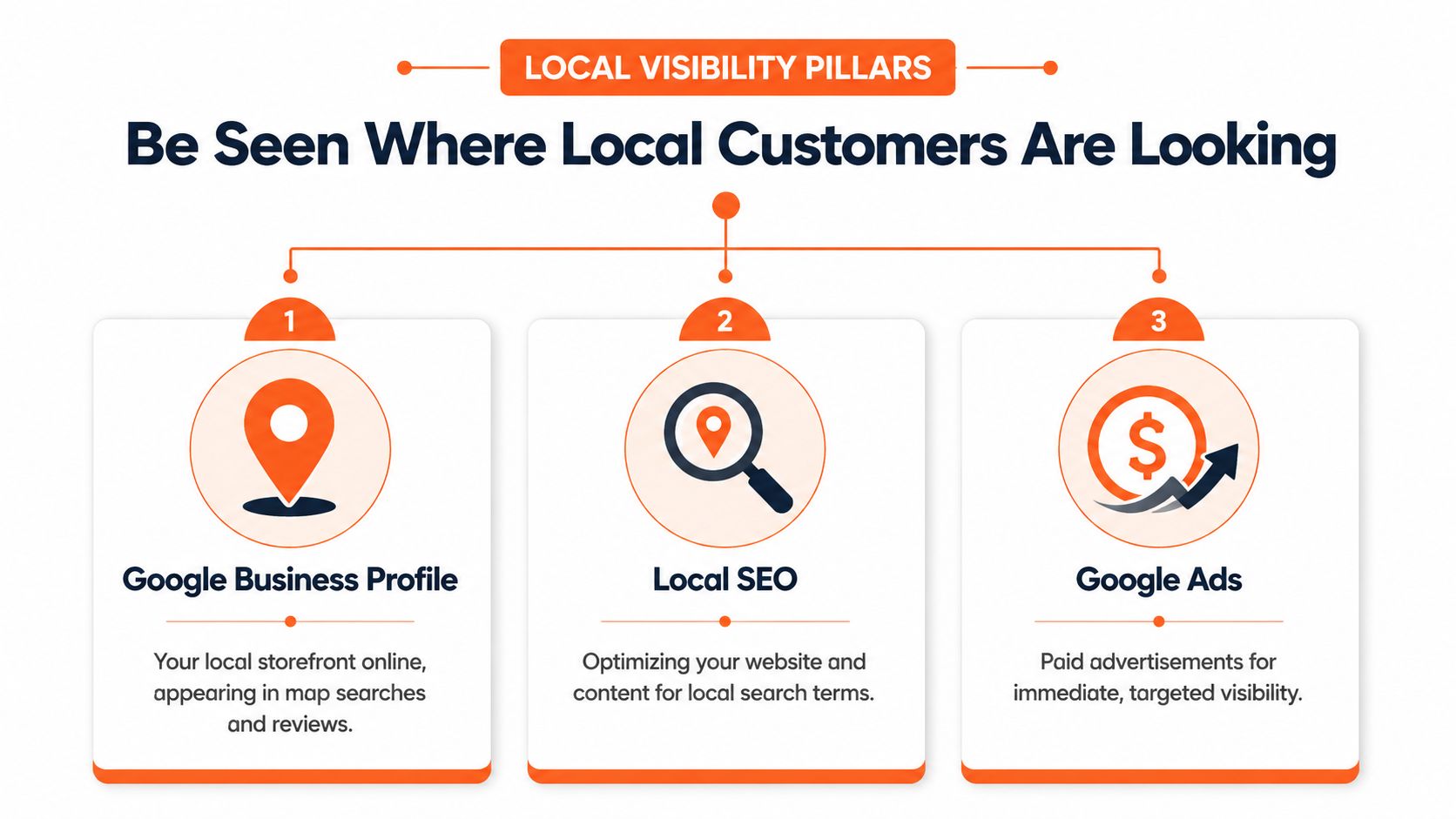
Most plumbers don't need more channels. They need the right few channels handled properly. A strong setup combines a maintained Google Business Profile, paid ads for urgent demand, a fast mobile-friendly website, and a process to capture leads, as noted in Housecall Pro's guide to plumbing leads generation. The same source also warns against buying low-quality shared leads, where multiple plumbers compete for the same homeowner.
If you want a deeper look at location-based visibility for trade businesses, this guide on local search visibility for contractors complements the checklist below.
Your Google Business Profile is your first impression
For a lot of local service searches, the customer's decision to call takes place. Not your van. Not your brochure. Not your social page.
Treat it like your online shopfront:
- Use your real business details: Make sure your business name, phone number, hours, and service areas are accurate.
- List actual plumbing services: Don't leave it vague. Add services like blocked drains, leak detection, hot water repairs, toilet repairs, gas fitting if applicable, and emergency callouts.
- Upload job photos: Use real before-and-after photos, team photos, van photos, and close-ups of clean finished work.
- Collect reviews steadily: Ask after completed jobs, not once every few months when you remember.
- Reply to reviews: A short, professional response shows you're active and accountable.
A neglected profile sends the wrong signal. If your last photo is old, your hours are unclear, and reviews go unanswered, people assume the business runs the same way.
Paid visibility works best for urgent jobs
Some plumbing searches are immediate. The customer doesn't want to research for a week. They want someone now.
That's where paid placements help. They put you in front of people who are ready to act, especially for emergency work, blocked drains, leaks, and no-hot-water calls. In practical terms, there are two broad approaches plumbers usually consider:
| Option | Best use | Watch-out |
|---|---|---|
| Google search ads | High-intent searches for specific services | Poor setup can waste budget on the wrong suburbs or wrong jobs |
| Local Services Ads | Calls from customers wanting a local provider quickly | You still need fast response or the lead goes elsewhere |
| Shared lead platforms | Filling gaps when your own pipeline is weak | You often compete against several plumbers for the same enquiry |
Shared leads look easy when the diary is empty. The problem is control. You're paying to enter a race that started before you picked up the phone.
The best lead is the one that comes to your business first, not the one sold to five competitors.
Your website has one job
A plumbing website doesn't need fancy animations or long-winded copy. It needs to help someone decide, fast.
The essentials are simple:
- Make it work properly on mobile. Most urgent plumbing enquiries start on a phone.
- Put the phone number at the top. Don't make people hunt for it.
- Create separate service pages. Blocked drains, leak repairs, hot water, emergency plumbing, gas services if relevant.
- Create separate location pages. If you serve multiple suburbs or regions, say so clearly.
- Use strong calls to action. "Call now", "Request a quote", "Book urgent plumbing help".
- Show proof. Reviews, licences, insurance details, and photos of recent work.
A weak website usually fails in ordinary ways. It loads slowly. It has one generic services page. The contact form asks too many questions. The phone number is tiny. None of that feels dramatic, but every bit of friction costs enquiries.
Create Simple Offers That Make People Call
A lot of plumbers describe their business in a way that sounds accurate but doesn't help the customer choose. "Quality plumbing services." "Reliable local plumber." "All general plumbing work." None of that is wrong. It just isn't strong enough when someone needs help today.
If you're running paid campaigns, this resource on plumbing PPC marketing can help you line up your ad message with the offers on your landing pages.
Generic wording loses urgent jobs
A homeowner with a leaking pipe isn't looking for a broad company description. They want to know three things fast:
- Can you fix this problem?
- Can you come soon?
- Do you seem trustworthy?
That means your offer should match the problem, not just describe the business.
Compare the difference:
| Weak message | Stronger message |
|---|---|
| Plumbing services available | Same-day leak repair |
| Contact us for a quote | Fixed-price drain unblocking |
| We handle hot water systems | Hot water repair and replacement |
| Emergency plumbing | 24/7 emergency burst pipe response |
The stronger version works because it's specific. It sounds like a solution, not a category.
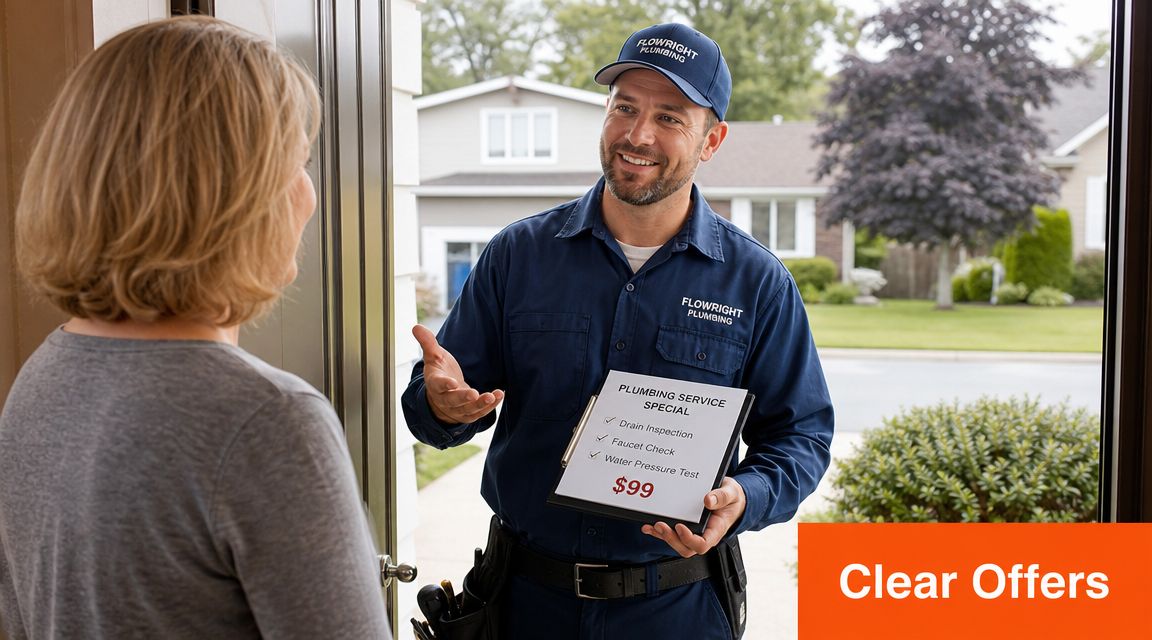
Offers that fit real plumbing calls
You don't need gimmicks. You need offers that reduce hesitation.
Good examples include:
- Same-day service offers: Good for leaks, hot water, blocked drains, and urgent faults.
- Fixed-price service offers: Useful where the customer fears an open-ended bill.
- Inspection-based offers: Helpful for gas, water pressure, recurring issues, and replacement decisions.
- Problem-specific offers: "Toilet not flushing properly?" or "No hot water this morning?"
Customers don't respond to service menus. They respond to clear solutions to painful problems.
One mistake plumbers make is trying to sound broad to attract everyone. In reality, specific offers usually pull better-quality enquiries because the customer feels understood.
Simple message templates
These aren't magic words. They're practical starting points you can use on your website, Google posts, or social content.
Homepage headline
- Need a local plumber today? Fast help for blocked drains, leaks, hot water problems, and urgent repairs.
Service page headline
- Blocked drain plumber for fast diagnosis and reliable clearing work.
Short social post
- No hot water? We handle urgent hot water repairs and replacements. Call now to get your system checked and your hot water back on.
Offer-style post
- Fixed-price drain unblocking available in selected service areas. If your sink, shower, or toilet is backing up, get it checked before it turns into a bigger repair.
Keep the wording plain. Customers don't need polished marketing language. They need a reason to believe you'll solve the problem without wasting their time.
Build a System to Capture Every Single Enquiry
Generating enquiries and failing to capture them is one of the most expensive mistakes a plumbing business can make. If someone calls and gets no answer, fills in a form that nobody checks, or sends a message that sits unread, that lead is already sliding to the next plumber.
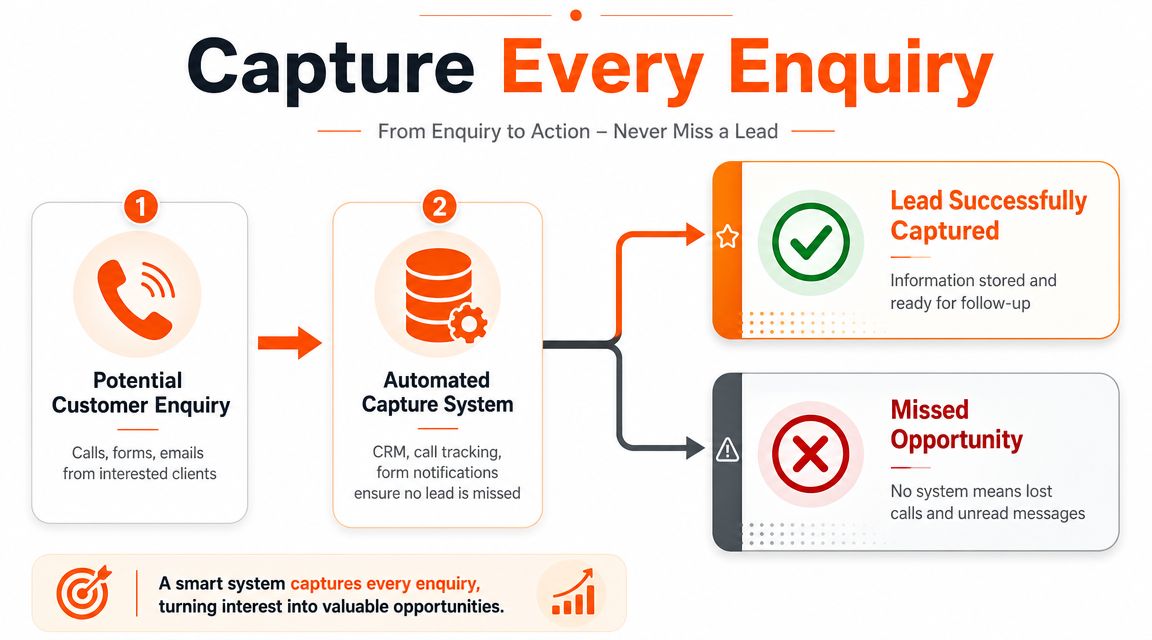
The fix doesn't need to be fancy. It needs to be reliable. You can build a solid capture system with basic tools and clear habits.
Start with the phone
For plumbers, the phone is still the highest-value contact point in most cases. People with urgent issues want reassurance and availability, not a long email exchange.
Use a dedicated business number and make sure it does three things:
- Tracks where calls came from
- Alerts you to missed calls
- Routes calls to the right person during business hours
Call tracking matters because it tells you which channel produced the enquiry. Without that, you're guessing which listing, ad, or page is driving results.
If you miss calls often because you're on the tools, set up a backup. That could be a receptionist, office staff member, or a simple missed-call text response that tells the customer you've received the enquiry and will call back shortly.
Make your form dead simple
A lot of contact forms are built like job applications. That's a bad fit for plumbing leads.
Keep the form short. Ask only for what you need to make contact and understand the problem:
- Name
- Phone number
- Suburb or service area
- What plumbing issue do you need help with?
That's enough to start.
The form should send an instant notification to your phone or inbox. If you don't see a new enquiry until the end of the day, the form isn't helping much.
Field rule: If the customer has to work hard to contact you, many of them won't.
Log every enquiry somewhere
You don't need a complex CRM on day one. A spreadsheet is better than memory. A notebook is better than nothing. The point is to create one place where every enquiry gets recorded.
Include:
| Field | Why it matters |
|---|---|
| Date | Helps you spot busy periods and slow patches |
| Name and phone | Gives you a clean follow-up list |
| Job type | Shows which services generate the most enquiries |
| Source | Tells you where the lead came from |
| Outcome | Shows whether it became a quote, job, or dead lead |
Most leaks in plumber lead generation happen after the click, not before it. The traffic came in. The call happened. The form was sent. The failure was operational.
That should be good news. Operational problems are fixable.
Turn Enquiries Into Booked Jobs with Rapid Follow-Up
A lead isn't valuable because it exists. It's valuable if someone follows up while the customer is still ready to act.
Industry sources cited by Gushwork's plumbing lead generation article put the average plumber lead conversion rate at 10% to 12%, with a recommendation to target 20% or higher through stronger speed-to-response. The same guidance warns that if form submissions and missed calls aren't answered within minutes, the first-responder advantage is lost.
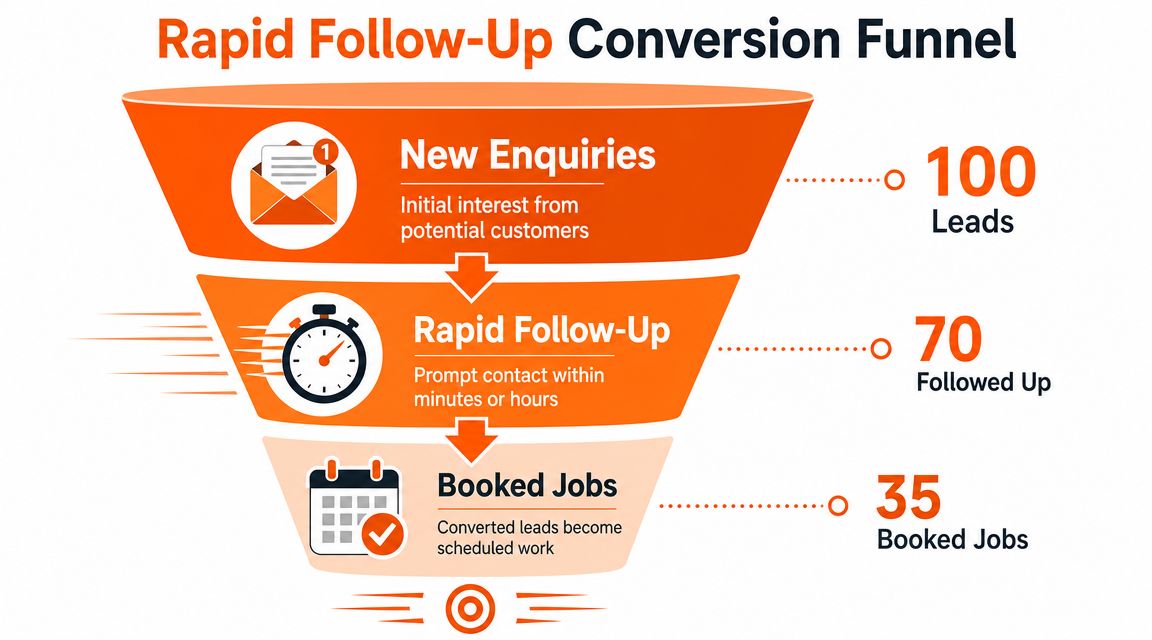
That lines up with what plumbers see on the ground. The customer usually doesn't submit one enquiry and wait patiently. They contact multiple businesses. The first credible response often wins.
Speed beats polished marketing
You don't need a perfect script. You need a fast, competent response.
For phone leads, that means:
- Answer if you can.
- If you miss it, call back fast.
- Get the location, issue, urgency, and best contact number.
- Give the next step clearly.
For form leads, don't leave them sitting in an inbox. Send a quick text first, then call.
A simple text template:
Hi [Name], it's [Your Name] from [Company]. I've received your request about your [problem] and I'll call you in the next few minutes.
That message does two things. It reassures the customer that a real business has seen the request, and it buys you a little time to make the call properly.
A short call opener works well too:
Hi [Name], it's [Your Name] from [Company]. I saw your enquiry about the [issue]. Can I ask a couple of quick questions so I can tell you the best next step?
That sounds organised. It moves the conversation forward. It doesn't ramble.
Here's a useful walkthrough on the same idea:
A follow-up playbook that works
A lot of plumbing businesses lose jobs because follow-up is casual. Someone means to call back. Someone forgets. Someone assumes the customer will ring again.
Use a simple sequence instead:
- First contact: Immediate text or call acknowledgment
- Second contact: Actual call as soon as possible
- If no answer: Leave a voicemail and send a text
- Later follow-up: One more check-in if the job still looks active
- After job completion: Ask for a review and note any referral opportunity
The tone matters. Be calm, direct, and helpful. Don't over-sell. Customers with urgent plumbing problems usually want confidence more than persuasion.
Measure What Matters to Keep Growing
Plumber lead generation gets expensive when you don't measure it. Money goes into ads, listings, software, and admin time, but nobody can say which channel produced good jobs.
Tracking the right numbers changes that. One industry source reports the average cost per lead for plumbers from search ads is around $66, and also notes that phone calls can generate 10 to 15 times more revenue than web leads, according to Amra & Elma's plumber marketing statistics. That's why lead volume alone can fool you. A channel that sends fewer enquiries may still be the better investment if those enquiries turn into stronger jobs.
Track booked jobs, not just leads
Most plumbers should care about a short list of numbers:
- Leads received by channel
- Jobs booked by channel
- Monthly spend by channel
- Cost per booked job
- Revenue quality by channel
This gives you a much clearer picture than raw enquiry count.
A common mistake is celebrating lots of cheap leads that never convert. Another is turning off a channel because the lead cost looks high, even though those leads book solid work. If calls are producing better jobs than form fills, your process should reflect that.
Don't ask which channel gets the most attention. Ask which one puts profitable work in the diary.
Simple Monthly Performance Tracker
You can run this in a spreadsheet, job management tool, or even a paper-based tracker if that's what you'll use.
| Channel | Monthly Spend | Leads Received | Jobs Booked | Cost Per Job |
|---|---|---|---|---|
| Google Business Profile | ||||
| Google Ads | ||||
| Referrals | ||||
| Website Forms | ||||
| Repeat Customers |
Review it every month. Keep what produces profitable work. Fix what underperforms. Cut what sends poor-fit leads.
A good plumbing growth system isn't complicated. Be visible. Make the offer clear. Capture every enquiry. Respond fast. Measure the result.
If you're too busy on the tools to keep posting consistently and staying visible online, GrowTradie is built for that exact problem. It helps trade businesses create and publish professional content without having to write posts, design graphics, or remember to stay active. That means your business keeps showing up, building trust, and generating enquiries while you focus on the actual work.