

You hand over a card at the end of a job, the customer says thanks, and then nothing happens. No callback. No referral. No follow-up job. That’s the part most plumbers get wrong about business cards. They treat them like a formality instead of a tool.
A good plumber business card should do one job. Make it easy for the next customer to call you. If the card only carries your name and number, it’s underperforming. If it helps a homeowner remember what you do, trust your work, and take action fast, it starts pulling its weight.
Table of Contents
- Why Your Plumber Business Card Is More Than Just Paper
- What to Write on Your Card to Get a Call
- Designing a Card That Looks Professional and Trustworthy
- Choosing the Right Materials and Printer
- Putting Your Cards to Work with Smart Distribution
- Your Simple Plan for Better Business Cards
Why Your Plumber Business Card Is More Than Just Paper
Most cards get handed over casually. That’s why they get treated casually.
The hard truth is that nearly 100 billion business cards are printed globally each year, but 88% are discarded within one week. The useful part of that same data is what comes next. For every 2,000 business cards distributed, a company can expect a 2.5% increase in sales, according to UPrinting’s business card statistics. That means plumber business cards still work, but only when they’re treated as part of how you win work, not just something you leave behind.
For plumbers, that matters because jobs often start with a face-to-face moment. You’re in the home, at the quote, at the repair, or finishing up a callout. The customer has seen how you speak, how you work, and whether you look organised. The card is the reminder they keep after you leave.
A business card isn’t there to impress another plumber. It’s there to stay in a homeowner’s hand long enough to trigger the next call.
That changes how you should think about it. A weak card says, “Here’s my number if you need it.” A strong card says, “Here’s exactly who I am, what I do, and why you should keep this.”
If you want more consistent enquiries, your card has to connect to the way people choose a tradie. It needs to support trust, recall, and easy contact. That’s also why plumber business cards work best alongside other visibility channels such as steady plumber lead generation, not in isolation.
A card is cheap to print. It’s expensive to waste. If you’re going to carry them, build them to do a real job.
What to Write on Your Card to Get a Call
The words on your card matter more than most plumbers think. If the card is vague, the customer forgets why they should call you. If it’s clear, specific, and easy to scan, it does selling work after you’ve left.
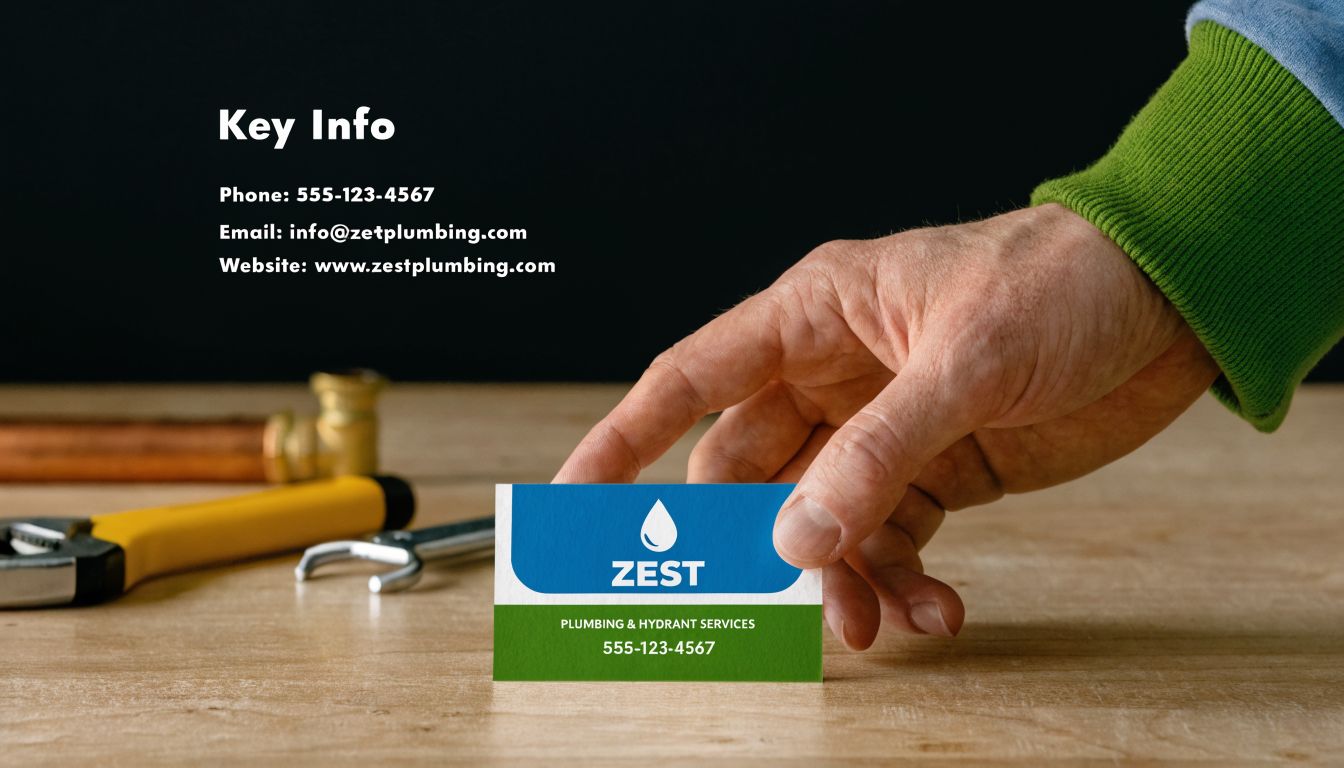
Start with the details that remove doubt
A plumber business card should answer five questions fast.
- Who are you. Use your business name clearly. If you trade under your own name, make sure the service is obvious, such as “Ryan Cole Plumbing”.
- What do you do. List core services, not everything under the sun. Good examples are “Emergency Repairs”, “Hot Water Systems”, “Blocked Drains”, and “Leak Detection”.
- How do I contact you. Your phone number should be the easiest thing to find. If you want calls, don’t bury it under a logo.
- Where do you work. Add your service area so local customers know you cover them.
- Why should I trust you. If relevant in your area, include your licence number and any short trust marker that’s real and verifiable.
A cluttered card usually comes from trying to cram every service onto it. Don’t do that. Homeowners don’t need your full capability list. They need enough to know you solve the problem they’re likely to have.
Here’s a simple front-of-card structure that works well:
| Element | What to include |
|---|---|
| Business name | Clear and readable |
| Main service line | Short description of what you do |
| Phone number | Primary action point |
| Service area | Local suburbs or region |
| Trust marker | Licence number, if applicable |
Add a reason to act now
Once the basics are covered, give the card a small push. Don’t leave the customer to guess the next step.
Good calls to action for plumber business cards include:
- Call for a quote if your work is mostly planned jobs
- 24/7 emergency service if you offer that
- Scan to book if you’re using a QR code
- See recent jobs and reviews if the card points to your online presence
Trust signals matter here. 86% of consumers read reviews for local businesses before choosing, and 81% rely on Google Reviews, according to Jobber’s plumbing industry statistics. That’s why a card shouldn’t just hold contact details. It should point people toward the proof that backs up your work.
Practical rule: If a homeowner picks up your card three weeks later, they should know what you do and what to do next in under five seconds.
One more point. Keep your email and website only if they support the main action. If your best outcome is a phone call, don’t make the card feel like a mini brochure. Every extra line fights for attention.
If you want your online content to support what the card promises, it helps to keep your public presence active with consistent local business content. The card gets remembered. The online proof closes the gap.
Designing a Card That Looks Professional and Trustworthy
A card can say the right things and still lose the job if it looks cheap. People make snap judgments from design. That isn’t fair, but it is real.
Good design for plumber business cards isn’t about making them flashy. It’s about making them easy to trust.
Clean beats clever
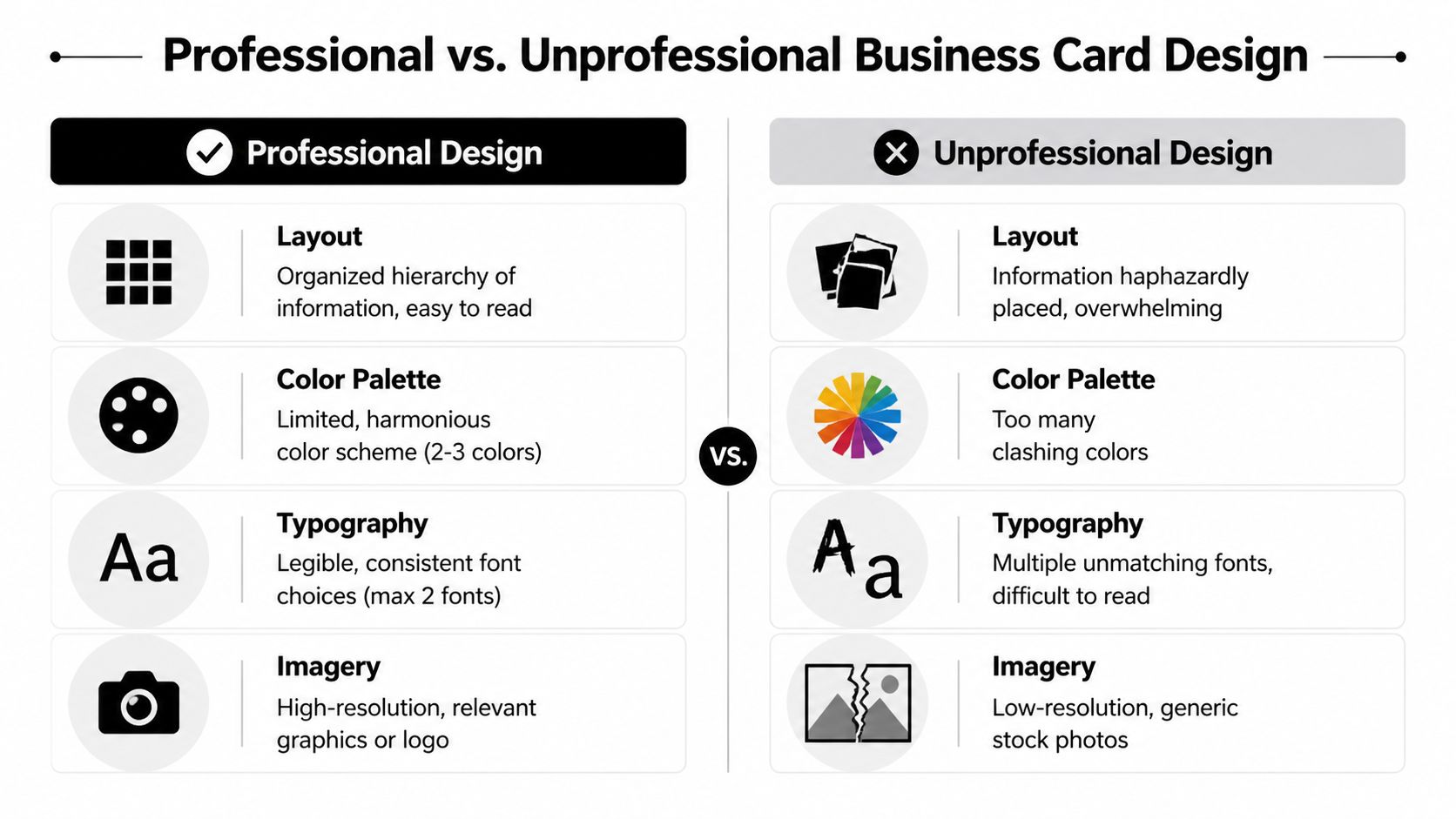
The fastest way to weaken a card is to overload it. Too many colors, too many fonts, a giant logo, tiny text, and every service squeezed into the corners. That sort of card feels messy, even if the plumbing work is solid.
A cleaner card does three things well:
- Creates hierarchy so the eye lands on the business name and phone number first
- Uses space properly so the card feels organised instead of crowded
- Stays readable in bad kitchen lighting, on the bonnet of a van, or pulled from a drawer months later
If you’re choosing between “memorable” and “clear,” choose clear.
What a strong layout looks like
Most plumbers don’t need a custom artwork concept. They need a layout that’s hard to mess up.
Use this as a practical guide:
- Front side. Put the logo or business name at the top, one short service line underneath, then phone number, service area, and trust marker.
- Back side. Use it for a QR code, a short list of core services, or a referral prompt.
- Font choice. Stick to one readable primary font and one secondary font at most.
- Color use. Use one main brand color with black, white, or grey support. Blue, green, charcoal, and white usually read well for plumbing.
A useful test is to print it on plain paper first. If the card still reads clearly in black and white, the layout is doing its job.
If the homeowner has to search the card for your number, the card is badly designed.
Avoid these common mistakes:
| Poor choice | Better choice |
|---|---|
| Script or decorative fonts | Clean sans serif fonts |
| Full card background image | Plain background with strong contrast |
| Long list of services | Short list of core jobs |
| Tiny logo plus tiny text | Fewer elements, larger text |
| Cheap stock photos | No photo at all, or a sharp logo |
Professional design doesn’t need to be expensive. It needs restraint. A simple, well-laid-out card looks more competent than a busy one trying too hard.
Choosing the Right Materials and Printer
Once the design is sorted, the next decision is physical quality. Many decent cards fall short in this aspect. The layout may be fine, but the finished card feels thin, glossy in the wrong way, or printed with muddy color.
That matters because customers judge the business by the object in their hand. Research cited by Wave CNC shows that 72% of people judge a company’s quality based on the quality of its business cards, and 88% of cards are tossed within a week if they feature a generic or low-quality design. The same source notes that using at least 16pt premium stock is a common recommendation in Wave CNC’s business card statistics roundup.
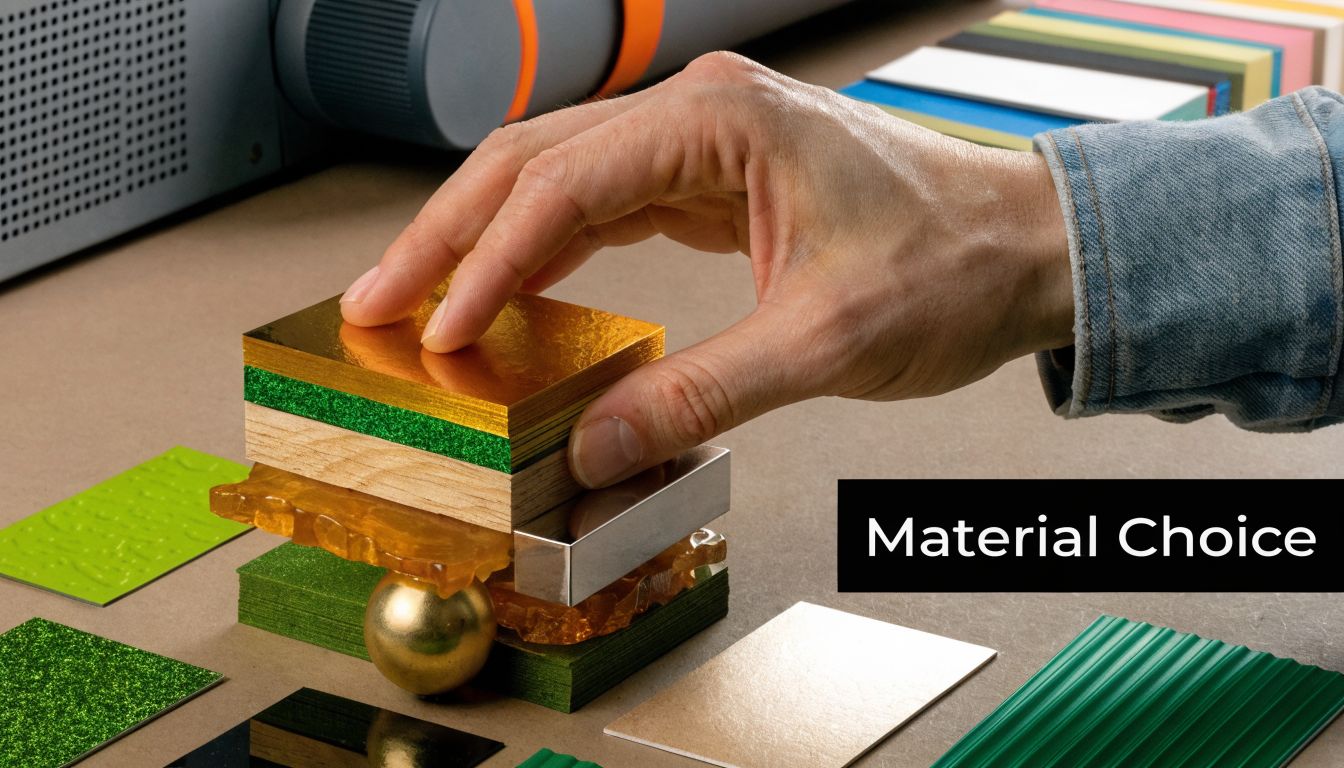
Stock and finish change the impression
You don’t need luxury card stock. You do need something that feels deliberate.
Here’s the practical difference between common options:
| Option | Best for | Watch out for |
|---|---|---|
| Standard stock | Tight budgets, basic reprints | Can feel flimsy |
| 16pt premium stock | Most plumbers | Good balance of cost and quality |
| Matte finish | Clean, modern, easy to read | Colors look less shiny |
| Gloss finish | Bold colors, photo-heavy designs | Can reflect light and mark easily |
For most plumbing businesses, 16pt stock with a matte finish is the safe choice. It feels solid, reads well, and doesn’t scream “cheap print run.” If your branding uses dark colors and sharp contrast, matte usually keeps it looking cleaner.
Rounded corners, foil, spot gloss, and other upgrades can work, but they’re rarely the reason someone keeps the card. Clear information and a solid feel matter more.
Online printer or local print shop
There are two sensible paths here.
An online printer suits plumbers who already have the artwork ready and want a straightforward reorder process. Brands like VistaPrint and MOO are commonly used because they’re familiar and easy to compare. The trade-off is that what you see on screen isn’t always what arrives.
A local print shop is useful when you want help checking paper samples, color, and cut quality before ordering. If the logo looks slightly off, or the text feels cramped, a local printer can often catch that faster than an online checkout page will.
Choose based on what problem you need solved:
- Use online printing if speed and convenience matter most
- Use local printing if you want hands-on advice and sample checking
- Order a small first run if you’re testing a new design
- Reorder in larger batches once you know the card works and the details won’t change soon
Card quality should match the way you want people to describe your business. Reliable. Tidy. Professional.
Don’t overthink exotic finishes. Spend that energy on making sure the final print is crisp, the phone number stands out, and the card still looks good after riding around in the van.
Putting Your Cards to Work with Smart Distribution
A box of well-made cards does nothing if it stays in the glovebox.
Most plumber business cards fail not because the design is bad, but because distribution is random. A card handed out at the wrong time, with no context and no next step, usually goes nowhere.
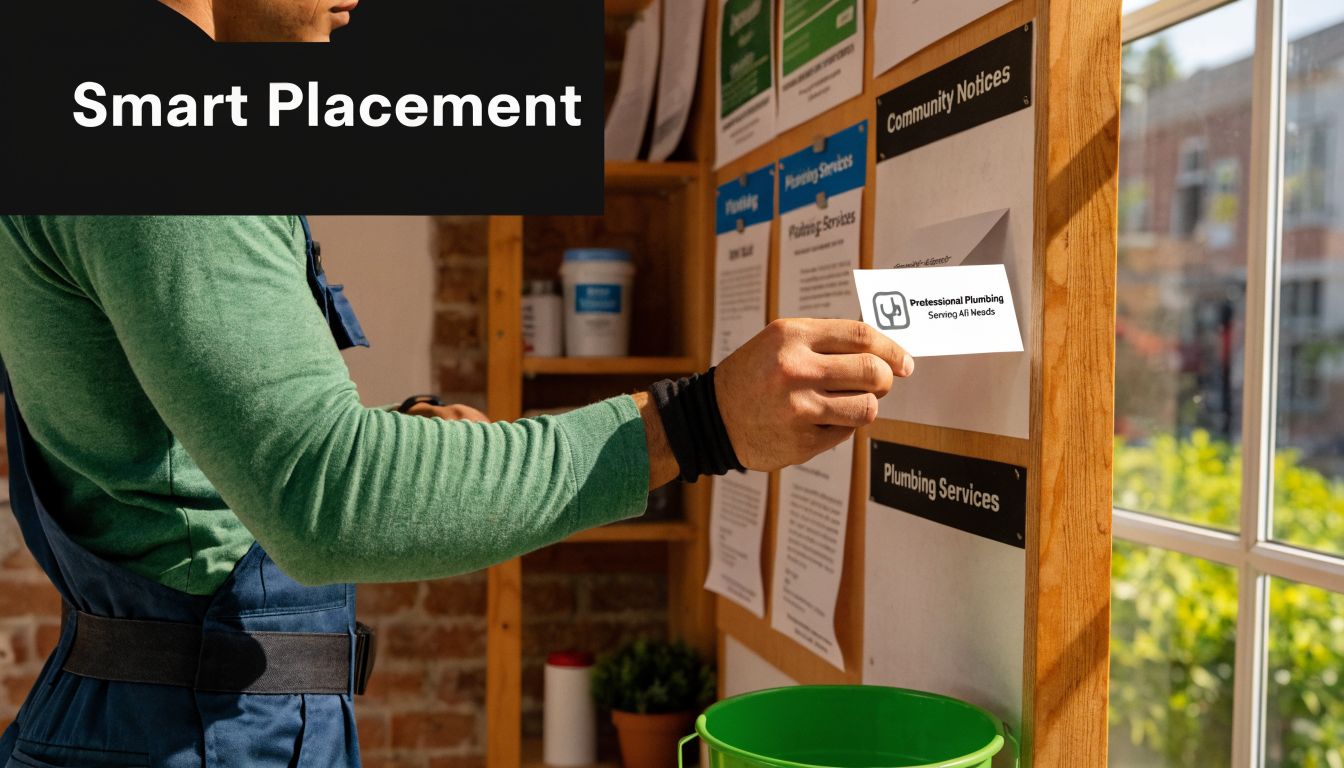
Tie handouts to real plumbing moments
The best time to give a card is when the customer has just seen good work. That means after the job is complete, after a quote conversation goes well, or after you’ve solved an urgent problem cleanly and calmly.
Use a simple habit:
- Leave one for the customer at the end of the job
- Leave an extra one and say it’s for a neighbour, family member, or landlord if someone asks who they use
- Keep cards in quoting folders so every estimate leaves with a contact point
- Pass them to complementary local trades you trust, such as sparkies, tilers, and builders
Community noticeboards and supplier counters can still help, but they’re secondary. The strongest handoff is direct and tied to a positive experience.
A short script works better than just dropping the card on the bench. Something like, “I’ve left a couple of cards here. If anything comes up again, or someone asks who did the work, you’ve got my details.”
Use QR codes to turn a card into an action
This is the upgrade most generic guides miss.
A QR code gives the card one clear job after it leaves your hand. It can send the customer to a booking page, your review profile, or an active social page showing recent jobs and updates. That matters because research referenced by Housecall Pro says including a scannable QR code on a business card can boost response rates by 30% to 50% in service industries, as noted in Housecall Pro’s guide to plumbing business cards.
Use the code for one destination only. Don’t make it a menu with five choices. Pick the action that best fits your business.
Good QR destinations include:
- Book a job if you already have a booking page
- Read reviews if trust is your strongest conversion point
- See recent work if your visual proof helps people choose
- Save contact details if you want to reduce friction
A QR code only works when the destination is simple, mobile-friendly, and worth visiting.
Print the code large enough to scan easily. Put a short line above it so people know why they should use it, such as “Scan to book” or “Scan to see reviews and recent work.”
If you want that destination to look active instead of neglected, keep it updated with social media marketing for plumbers. The card gets them there. The activity reassures them that your business is real, current, and in demand.
Your Simple Plan for Better Business Cards
Most plumbers don’t need a full rebrand. They need a card that’s clear, trustworthy, and easy to act on. If you keep the process simple, you’ll get cards that support booked jobs instead of sitting in a drawer.
The checklist
Follow this order.
Define the essentials first
Write down the essential elements. Business name, phone number, service area, core services, and any relevant licence detail. If something doesn’t help a customer call or trust you, cut it.Choose one main action
Decide what the card should make people do. Call you, book a job, read reviews, or scan a QR code. One action beats several weak ones.Build a clean layout
Put the business name and phone number where the eye finds them first. Keep spacing generous. Limit fonts. Don’t cram every service you offer onto the card.Use quality stock
Pick a card that feels solid in the hand. A flimsy card makes a solid business look less credible.Add digital follow-through
If you use a QR code, send people somewhere useful and current. A dead page wastes the opportunity.Create a handout routine
Don’t wait for networking events. Give cards out after finished jobs, quotes, and good customer interactions. Make it part of the workflow.
Here’s the simple standard to judge the finished result:
| Question | If the answer is no |
|---|---|
| Can someone tell what you do instantly? | Rewrite the service line |
| Is the phone number impossible to miss? | Redo the hierarchy |
| Does the card feel professional in the hand? | Upgrade the stock |
| Is there a clear next step? | Add a better call to action |
| Do you hand it out at the right moments? | Fix the habit, not the design |
A strong plumber business card doesn’t need to be clever. It needs to be useful. If it’s clear, looks professional, feels well made, and points the customer toward the next step, it will do its job.
And that’s the point. Not more cards. Better outcomes from the cards you already hand out.
If you want the online side of your business to back up what your card promises, GrowTradie helps tradies stay visible without having to think about posting between jobs. It creates and publishes branded content for your trade, helping homeowners who scan your card or look you up see a business that looks active, trustworthy, and ready to book.