Choosing a name for your electrician business usually happens at the worst possible time. You're sorting licenses, lining up tools, setting pricing, and trying to get your first steady run of jobs. Then you hit the name. Suddenly every option sounds either too generic, too gimmicky, or already taken.
That pressure is real. In a crowded trade, your name has to do more than sound good. It has to make sense on a van, look credible on an invoice, feel trustworthy to a homeowner, and stay usable as you grow. In the U.S., the electrician business base is large and still expanding, with IBISWorld reporting 261,958 electrician businesses in 2026, up 1.9% from 2025, and average annual growth of 3.2% between 2021 and 2026. That means more competition and more name overlap, especially in local markets.
Most tradies make one of two mistakes. They pick a vague name nobody remembers. Or they choose a generic one that blends into every other electrical contractor in town. Neither helps.
This guide cuts through that. You'll find ten practical categories of electrician business names, examples for each, and blunt advice on when to use them and when to avoid them. The point isn't just to hand you a list. It's to help you choose a name you can register, brand, and build around for years.
Table of Contents
- 1. Service-Based Names
- 2. Location-Based Names
- 3. Owner Personal Names
- 4. Specialty Niche Names
- 5. Quality Reliability Descriptor Names
- 6. Metaphor Creative Names
- 7. Value Proposition Names
- 8. Authority Expert Names
- 9. Family Legacy Names
- 10. Modern Tech-Forward Names
- 10-Category Electrician Business Name Comparison
- A Great Name Is Just the Beginning
1. Service-Based Names
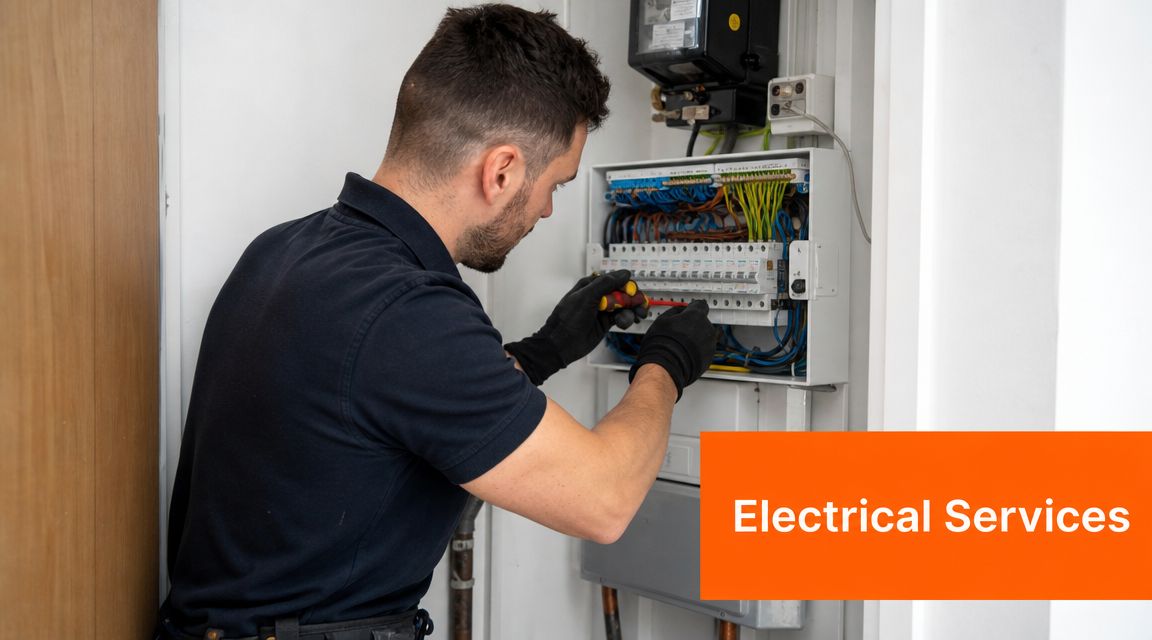
Service-based names are the simplest option, and simple works. If someone sees Sparks Electric, PowerFlow Electrical, Lightning Electric, or Volt Electric Solutions, they know what you do immediately. That matters when a customer is scrolling fast, asking for quotes, or checking a truck parked on a street.
These electrician business names are strongest for new operators. You don't need to educate the market. The name already tells people you handle electrical work.
Best when you want instant clarity
Use this style if you handle broad residential or light commercial work. It fits businesses that install lights, replace switchboards, troubleshoot faults, and take general service calls.
Good examples:
- Sparks Electric: Short, clear, easy to remember.
- PowerFlow Electrical: Slightly more branded, still obvious.
- Lightning Electric: Strong energy, broad appeal.
- Volt Electric Solutions: A bit more modern, still service-first.
What makes these names work isn't creativity. It's clarity.
Practical rule: If a homeowner can understand your business name in two seconds, you're on the right track.
A few ways to make this category stronger:
- Add a specialty: Sparks Residential Electric is better than Sparks Group.
- Add a service promise: PowerFlow Emergency Electrical tells people more.
- Keep words familiar: Electric, Electrical, Power, Volt, Wiring, and Service all work.
Avoid stuffing too much into the name. “Fast Affordable Reliable 24 Hour Residential Commercial Electrical Services” isn't a brand. It's a mess.
Also think beyond the signwriting. Say the name out loud when answering the phone. Print it on a quote. Put it on work shirts. The best service-based names feel natural in all three situations.
2. Location-Based Names
If your work comes from one city, one region, or a tight cluster of suburbs, a location-based name can do heavy lifting. Brisbane Electrical Services, Northside Electric, East London Electrician, and Bay Area Electric Solutions all tell the customer where the business operates before a word is spoken.
That local signal is useful because electrical work is still a highly local business. People want someone nearby, especially for urgent calls and repeat service work.
Best when your service area is your selling point
This category works best for solo operators, small crews, and contractors who don't plan to expand far beyond their current patch. If your whole pitch is “we know this area and show up fast,” put the area into the name.
A few solid structures:
- City + service: Denver Electrical, Tampa Electric Co.
- Region + trade: Northside Electric, Coastal Electrical Group
- Suburb + specialty: West End Residential Electric
The key is choosing a place name that will still fit the business in five years. If you name the company after one suburb but end up servicing half the metro area, the name can start to feel too small.
For local visibility, your business identity needs to stay consistent everywhere customers see it. That includes your signage, directory listings, socials, and service-area messaging. If you want a practical system for that, GrowTradie's guide to marketing for electricians is worth reviewing.
Use this category well:
- Pick the right geography: Choose the area customers recognize.
- Match the market: A city name fits broad coverage. A suburb name fits tight territory.
- Stay expandable: North Metro Electric gives you more room than Elm Street Electric.
One warning. Generic local names can collide with existing businesses fast. Before you commit, check business registrations, licensing records, domain options, and local directories. A local name only helps if customers can clearly identify you and not confuse you with three similar firms nearby.
3. Owner Personal Names
A homeowner's power is out at 7 p.m. They search fast, scan three company names, and pick the one that sounds like a real person will answer. That is why owner personal names still work.
John's Electrical. Mike's Electric Service. Dave's 24-Hour Electrical. Tom's Expert Electric. These names put accountability front and center. They tell customers exactly who stands behind the work.
Best when your reputation drives the sale
Use this category if you are the person selling the job, answering calls, and showing up on site. Your name becomes the brand. That can help a small electrical business win trust faster than a vague or overly clever name.
This approach works best when:
- You are customer-facing every day: Quotes, site visits, and follow-up all run through you.
- Your referrals come from personal reputation: Past clients recommend you by name.
- You want a simple brand: Easy on the van, easy on the invoice, easy to remember.
There is a clear trade-off. A personal name is strong for trust, but weaker for scale. If you want to build a multi-crew company, bring in partners, or sell the business later, the name can start to feel too tied to one person.
Use this framework before you choose it:
- Ask whether you want to stay visible: If customers expect you personally, your business has to deliver that experience.
- Test the resale problem: “Anderson Electrical” is easier to pass on than “John Anderson's Electrical Service.”
- Check memorability: Full legal names can get clunky fast. Shorter is better.
- Pair it with a descriptor: A plain surname often needs a trade word such as Electric, Electrical, Power, or Services.
A few formats that usually work:
- First name + trade: Mason Electric
- Surname + trade: Bennett Electrical
- Surname + descriptor: Carter Power Services
- Family name + group-style wording: Russo Electric Co.
My recommendation is simple. Use an owner name only if you plan to build the company around personal trust for years, not months. If that is your strategy, commit to it fully across your logo, phone greeting, uniforms, trucks, and reviews.
Customers may forget technical terms. They remember the name of the person who solved the problem.
4. Specialty Niche Names
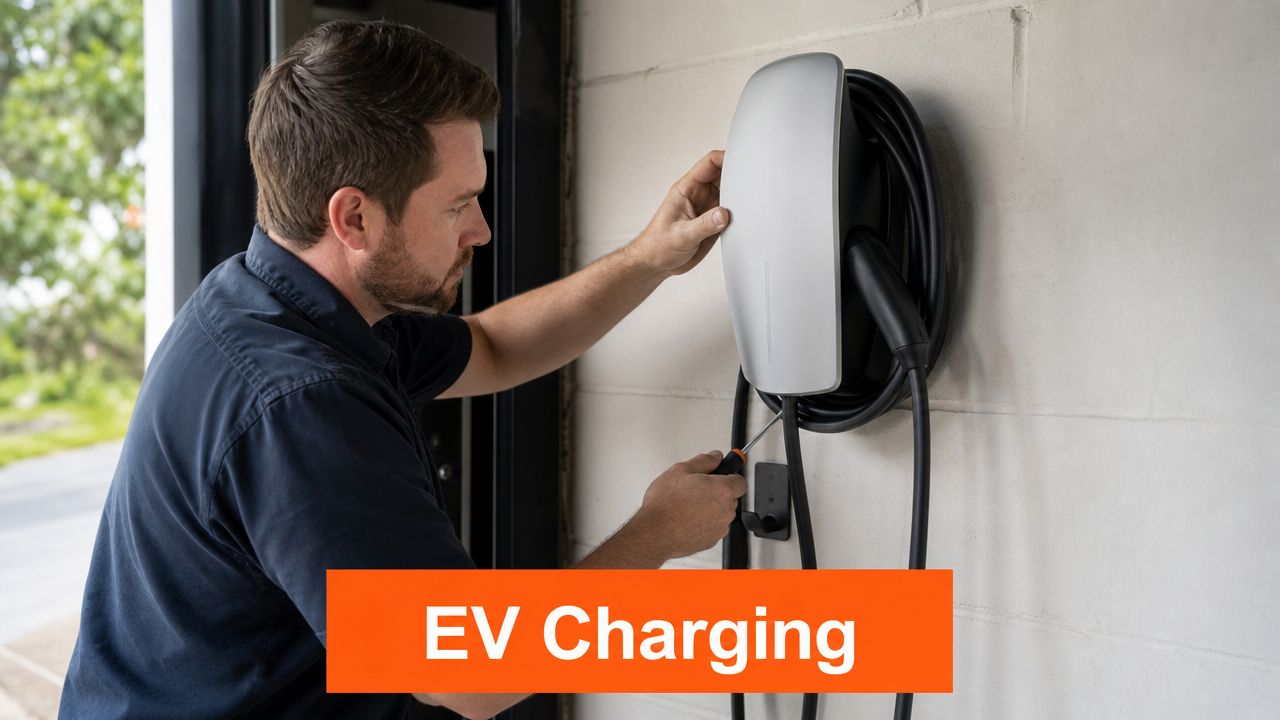
A niche name earns attention faster than a broad one, but only if it matches the work you desire. EV Charge Electric, Smart Home Solutions Electrical, Green Power Electrical, and Emergency Spark all signal a specific lane.
This style works when you don't want to be “just another electrician.” You want to be known for something particular.
Best when your niche makes you different
Use a specialty name if a clear share of your work already sits in one area. Good examples include EV charger installs, switchboard upgrades, emergency fault finding, smart home systems, test and tag, commercial fit-outs, or maintenance contracts.
This category is especially practical because the industry isn't driven only by new builds. IBISWorld data cited by Housecall Pro notes about 262,000 electrician businesses in 2026, projected industry revenue of $347.5 billion, and that roughly one-third of revenue comes from electrical upgrades. That makes upgrade-focused positioning a smart naming angle, not a niche gimmick.
A few examples that carry a clear signal:
- EV Charge Electric: Straight to the point.
- Panel Upgrade Pros: Good for retrofit-heavy work.
- Smart Home Solutions Electrical: Broader, but still focused.
- Emergency Spark: Memorable and service-specific.
This approach only works if the promise is real.
- Back it with credentials: Don't name the business around a specialty you rarely do.
- Show proof in branding: Vehicles, uniforms, and profiles should reinforce the niche.
- Leave some room: A niche can lead the brand without boxing out related work.
A bad specialty name overcommits. A good one attracts the kind of job you want more of.
5. Quality Reliability Descriptor Names
A homeowner has two quotes in front of them. Prices are close. Scope looks similar. They pick the company that feels safer to hire.
That is why quality and reliability descriptor names work. Trusted Electric, Reliable Electrical Services, Premier Power Solutions, and Professional Electric Co. all make a clear promise before the customer even calls.
Best when trust is the product
Use this category if your real advantage is how you run jobs.
This naming style fits businesses known for:
- showing up on time
- communicating clearly
- keeping clean worksites
- finishing punch lists fast
- handling callbacks without excuses
- making customers feel looked after
It also supports premium positioning. As noted earlier, electrician pay sits above the broader national wage average. That gives well-run businesses room to sell confidence, responsiveness, and professionalism instead of racing to the bottom on price.
The words matter, but the operating standard matters more.
Strong options include:
- Trusted
- Reliable
- Premier
- Professional
- Precision
- Dependable
Pick one promise and own it. Do not stack weak adjectives into a forgettable name like “Quality Reliable Professional Electrical Services.” That sounds generic and hard to remember.
Here is the practical filter:
- Choose descriptor names only if you can prove them
- Match the name to your customer experience
- Keep the rest of the name simple
- Use branding that reinforces the promise
Example:
- Reliable Electric works if your scheduling is tight and your follow-up is consistent.
- Precision Power works if your brand feels neat, technical, and organized.
- Premier Electrical works if your quoting, presentation, and service feel higher-end.
If you choose a trust-based name, support it everywhere. Your phone script, quote template, uniforms, van graphics, review requests, and website copy should all repeat the same message. If you need sharper wording for that message, these electrician advertising slogan examples can help.
A quality descriptor name is not just a label. It is an operating standard. If your systems are sloppy, skip this category. If your service is disciplined, this category can help you win better jobs at better margins.
6. Metaphor Creative Names
Creative names can be powerful when most of your competitors sound identical. Bright Electrical, Current Solutions, Volt & Co, and Spark & Shine are easier to remember than another generic city-plus-trade combination.
This category works best when you want a brand people can recall after a quick glance. It's less literal, more distinctive, and often better suited to polished branding.
Best when you want a memorable brand
The trick is keeping the name creative without becoming vague. “Current Solutions” still sounds electrical. “Blue Fox Group” doesn't, unless you've got a much bigger branding budget and a strong market presence already.
Creative names usually fall into a few buckets:
- Light-related: Bright Electrical, Beacon Power
- Energy-related: Current Solutions, LiveWire Electric
- Voltage-related: Volt & Co, Highline Volt
- Spark-related: Spark House Electric, Spark Works
This category gives you more room to shape a visual identity. Colors, logos, taglines, vehicle graphics, and uniforms can all work together better when the name has a distinctive hook.
You still need clarity somewhere. If the business name isn't fully literal, your tagline and profile descriptions should be. For ideas on pairing a strong name with a sharper message, these electrician advertising slogans from GrowTradie can help.
A practical scenario: if “Bright Electrical” appears on a van, the logo should look trade-focused, not like a lighting showroom or a startup app. Your audience shouldn't have to guess.
Creative names are a good choice when:
- Your market is crowded: Distinction matters.
- You care about branding: You want a polished identity.
- You still keep it relevant: The electrical link remains obvious.
A memorable name is useful. A confusing name is expensive.
7. Value Proposition Names
Some names sell the main offer outright. 24/7 Electric. Fast Fix Electrical. Same-Day Electric Solutions. Budget Power Solutions. This category tells the customer why to call before they know anything else about you.
That directness can work very well, but only if the promise is operationally true.
Best when your offer is simple and specific
If your business really is built around emergency availability, rapid response, or low-cost service, putting that promise in the name can be smart. It sets clear expectations and attracts the right type of enquiry.
Here's where many owners get it wrong. They choose a speed-based or availability-based name because it sounds good, then they can't answer after hours, can't fit same-day work, or can't maintain low pricing. That mismatch creates disappointment before the job even begins.
Good value proposition names usually focus on one promise:
- Availability: 24/7 Electric
- Speed: Fast Fix Electrical
- Convenience: Same-Day Electric Solutions
- Price position: Budget Power Solutions
Don't stack all four into one brand. A single clear promise is stronger.
There's also a legal and operational issue with generic, over-optimized naming in crowded markets. Invoice Fly highlights the risk of names that are hard to verify across maps, directories, licensing records, domain availability, and trust signals, and notes that generic keyword-heavy names can create higher collision risk and weaker distinctiveness. That matters here more than anywhere, because value-driven names tend to be the most generic.
Use this category only if you can defend the claim every day. If you can, it's powerful. If you can't, it turns into a liability.
8. Authority Expert Names
Master Electrician Services. Certified Power Solutions. Expert Electric Co. Advanced Electrical Solutions. These names aim higher than trust alone. They signal technical competence.
This category is strong when your buyers care about qualifications, code compliance, complex diagnostics, or high-stakes installations. Commercial clients, builders, and homeowners with difficult jobs often respond well to authority signals.
Best when credentials drive the sale
Authority-based electrician business names work best for operators who have the credentials and experience to back them up. If you've built your reputation on technical problem-solving, not just quick service work, this can be the right fit.
The strongest words in this category are:
- Master
- Certified
- Expert
- Advanced
- Professional
Use them legitimately. If your licensing rules restrict certain terms in business names, check that before registration. Some labels sound impressive but may create compliance issues if they imply a status you can't formally claim in your jurisdiction.
This style also works well when you handle specialized quoting and larger-ticket work. A homeowner comparing three bids for a switchboard replacement may not know the technical details, but they understand what “Certified Power Solutions” suggests.
A practical example: “Expert Electric Co.” can suit a contractor who frequently resolves failed DIY work, persistent faults, or older property rewires. “Advanced Electrical Solutions” may fit a business serving commercial maintenance, control systems, or smart infrastructure.
Use authority words only when your paperwork, job quality, and customer communication all support them.
If your main edge is experience and technical certainty, say so in the name.
9. Family Legacy Names
Family names project stability. Smith & Sons Electrical, Garcia Electrical Services, Wilson & Co, or Henderson Family Electricians all feel established, even when the business is relatively new.
That perception is useful because electrical work is often built on referrals, repeat calls, and local reputation. A family-style name suggests continuity. People assume the business plans to be around.
Best when long-term trust matters
This category fits businesses where multiple relatives work in the company, the surname already carries local recognition, or the owner wants to create a long-term legacy brand.
Family names are especially effective when paired with a straightforward service descriptor. “Garcia Electrical Services” is better than “Garcia Holdings.” One tells people what you do. The other doesn't.
Use this structure if you want the brand to feel:
- Established
- Accountable
- Community-rooted
- Built for the long haul
There's also emotional value in this style. It can make a business feel less transactional and more personal. That's useful when customers are letting you into their homes, trusting your recommendations, and calling you back for future work.
A few examples that work well:
- Smith & Sons Electrical
- Henderson Family Electricians
- Garcia Electrical Services
- Wilson & Co Electrical
Be careful with “& Sons,” “Brothers,” or similar wording if it doesn't reflect reality. Customers can tell when heritage branding is manufactured.
A good family name is simple and solid. It doesn't need to be flashy. It just needs to sound like a business people can trust this year and next year.
10. Modern Tech-Forward Names
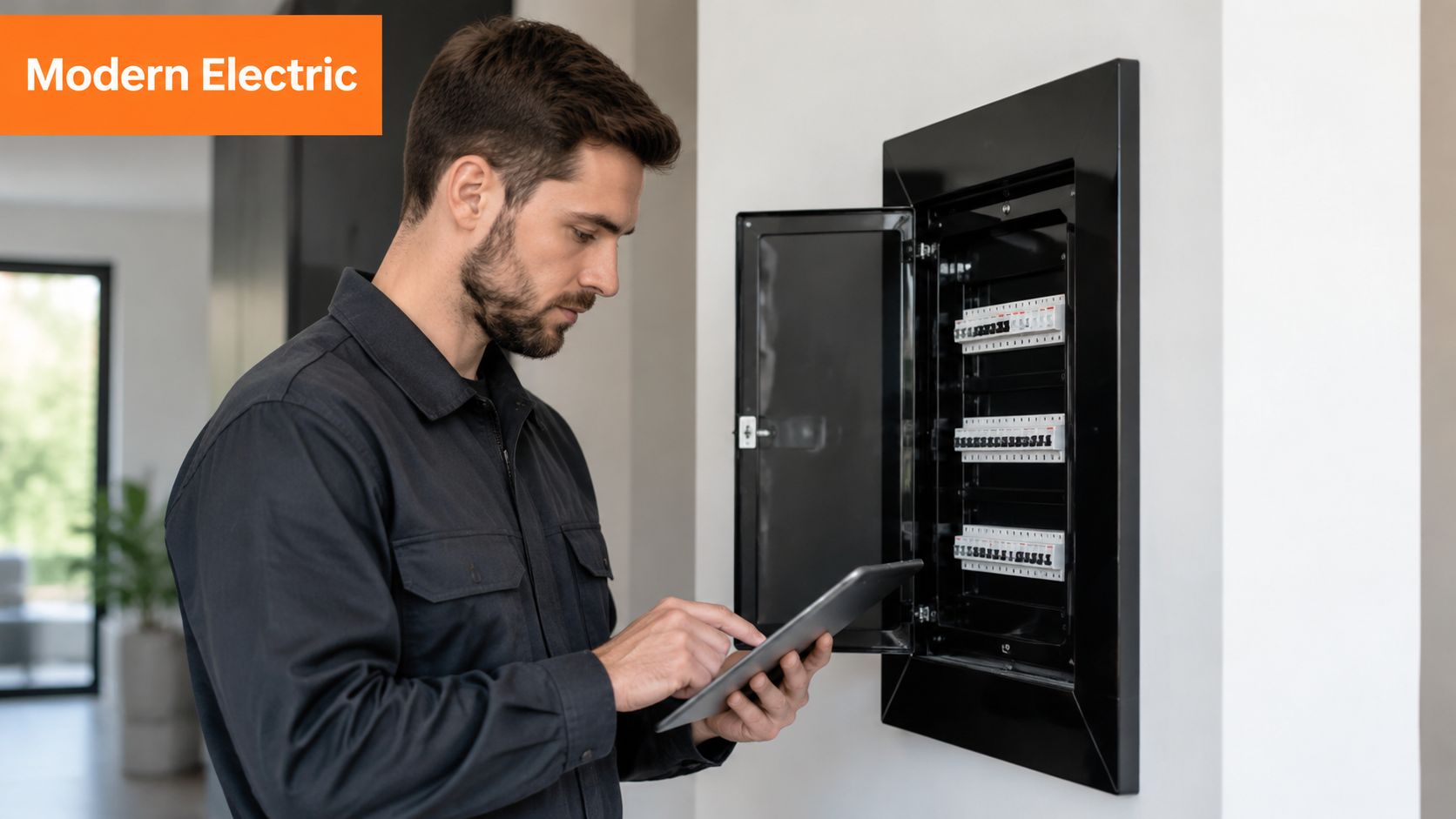
Some electrician business names are built for older-school service work. Others are built for modern installs, connected systems, and newer buyers. ElectriFlow, PowerTech Electric, NextGen Electrical Solutions, and SmartVolt Electric all sit in that second group.
If your work includes EV chargers, smart home devices, energy management systems, modern switchboards, or higher-end residential upgrades, this category can fit well.
Best when you sell newer electrical solutions
Tech-forward names work because they position the business as current. They tell customers you're not just changing outlets and hanging pendants. You understand newer systems and modern expectations.
Good examples in this category tend to use terms like:
- Tech
- Smart
- Next
- Volt
- Flow
- Advanced
This style is strongest when your brand presentation matches the name. A business called NextGen Electrical Solutions should have clean vehicles, modern design, up-to-date service descriptions, and smooth digital communication. If the branding looks dated, the name falls flat.
For tradies who want tools that support a modern brand presence, GrowTradie's roundup of apps for electricians is a practical starting point.
This category works well when:
- You target newer homes or renovations
- You offer smart and connected electrical work
- You want a polished, current identity
It's less effective if most of your work is basic maintenance in an older market that values tradition over innovation. Match the name to the customer, not just to what sounds modern.
10-Category Electrician Business Name Comparison
| Name | Implementation Complexity 🔄 | Resource Requirements 💡 | Expected Outcomes ⭐📊 | Ideal Use Cases | Key Advantages ⚡ |
|---|---|---|---|---|---|
| Service-Based Names (e.g., "Sparks Electric") | 🔄 Low, simple to create and register | 💡 Minimal: basic branding & local SEO | ⭐ Clear service signal; 📊 steady local inquiries | Local residential or commercial electricians | ⚡ Immediate clarity; easy to scale across locations |
| Location-Based Names (e.g., "Brisbane Electrical Services") | 🔄 Low, straightforward geo-targeting | 💡 Moderate: consistent location listings & local content | ⭐ Strong local search visibility; 📊 higher local bookings | Businesses dominating a specific geographic market | ⚡ Boosts local discoverability and community trust |
| Owner/Personal Names (e.g., "John's Electrical") | 🔄 Low, quick to adopt; needs personal brand work | 💡 Low: photo/content of owner, consistent naming | ⭐ High trust & loyalty; 📊 strong referral potential | Solo operators and owner-led businesses | ⚡ Builds personal trust and easy storytelling |
| Specialty/Niche Names (e.g., "EV Charge Electric") | 🔄 Moderate, requires niche positioning and proof | 💡 High: certifications, specialized tools, targeted marketing | ⭐ High perceived expertise; 📊 higher margins, smaller volume | EV charging, smart home, sustainable energy specialists | ⚡ Commands premium pricing; less direct competition |
| Quality/Reliability Descriptor Names (e.g., "Trusted Electric") | 🔄 Low, simple naming but credibility needed | 💡 Moderate: reviews, warranties, quality controls | ⭐ Strong trust signal; 📊 attracts quality-conscious clients | Established pros targeting premium customers | ⚡ Reinforces reliability and long-term loyalty |
| Metaphor/Creative Names (e.g., "Bright Electrical") | 🔄 Moderate, creative branding effort required | 💡 Moderate: marketing to explain services | ⭐ Very memorable; 📊 higher social engagement but possible confusion | Brand-driven businesses and younger residential markets | ⚡ Distinctive identity; boosts shareability on social media |
| Value Proposition Names (e.g., "24/7 Electric") | 🔄 Moderate, operational alignment required | 💡 High: staffing, systems, guarantees to deliver promise | ⭐ Clear differentiation; 📊 attracts right-fit customers if delivered | Emergency repair specialists, fast-response operations | ⚡ Strong conversion when the promise is consistently met |
| Authority/Expert Names (e.g., "Master Electrician") | 🔄 Moderate, must substantiate expertise | 💡 High: certifications, ongoing training, documented credentials | ⭐ Very high credibility; 📊 justifies premium pricing | Highly qualified electricians and complex commercial work | ⚡ Commands higher rates and builds trust quickly |
| Family/Legacy Names (e.g., "Smith & Sons Electrical") | 🔄 Low, simple to implement; authenticity required | 💡 Moderate: family storytelling and consistent service | ⭐ Conveys stability; 📊 builds long-term community loyalty | Multi-generational businesses and community-focused firms | ⚡ Emotional connection and perceived longevity |
| Modern/Tech-Forward Names (e.g., "ElectriFlow") | 🔄 Moderate, needs contemporary branding & offerings | 💡 High: modern tools, tech skills, digital marketing | ⭐ Appeals to tech-savvy clients; 📊 positions firm for future services | Smart home, EV charging, energy-management providers | ⚡ Attracts younger/tech-conscious customers; supports digital-first marketing |
A Great Name Is Just the Beginning
A strong name gives your business a head start. It can signal trust, show your specialty, anchor your local identity, and make you easier to remember. That matters, especially in a busy trade where customers often compare several contractors quickly and make a decision based on who feels most credible.
But the name is only the first decision. It won't carry the business by itself.
The test is whether the name works in daily use. Can a customer say it easily on the phone? Does it look professional on a quote, invoice, van, polo shirt, and social profile? Can people tell what you do without explanation? If the answer is no, keep working.
Good electrician business names do three jobs at once. They make the trade clear. They make the business feel trustworthy. They give you room to grow. That's why the best names are usually simple, not clever for the sake of it.
Before you lock one in, pressure-test it properly. Check local business registrations. Check licensing records. Check whether nearby competitors use something close. Check whether the domain and social handles are available. Search maps and directories. Say it out loud. Ask someone outside the trade what they think the business does. If they hesitate, that's useful feedback.
A smart choice is often less about brilliance and more about fit. A family-run residential electrician may do best with a surname-based name. An emergency contractor may benefit from a speed-led name. A specialist in EV chargers and smart home systems may need a more modern brand. The category should match the business model.
That's the bigger point. Don't choose from random name ideas. Choose from a naming strategy.
If you're still stuck, narrow it fast. Pick your top category first. Then write ten names in that category only. Cut any that are hard to say, hard to spell, too generic, or too limiting. Shortlist three. Then check availability and branding fit before making the final call.
Once the name is set, your next job is making it visible and consistent. Customers need to keep seeing the same business identity attached to real work, useful updates, and proof that you're active in the local area. That repetition builds familiarity. Familiarity builds trust. Trust wins jobs.
That's where many good businesses fall short. They spend time choosing a solid name, then disappear between jobs. Their profiles go quiet. Their branding gets inconsistent. Their business becomes harder to remember than it should be.
A good name opens the door. Consistent visibility keeps it open.
If you've landed on a business name and want people to remember it, GrowTradie helps turn that name into a visible local brand. It creates and posts trade-specific content for your business, keeps your profiles active while you're on the tools, and gives potential customers more chances to see a professional, trustworthy business instead of a blank page.