

You're busy. The phone rings, a tech needs an answer, a customer wants an update, and somewhere in between you're supposed to “sort out your profile.”
Most plumbers treat that profile like paperwork. Fill in the business name, add a phone number, list a few services, done. Then they wonder why people view it and move on.
That's usually the problem. A weak profile doesn't lose work because the plumbing is bad. It loses work because the customer can't get comfortable fast enough. They need to know what you do, where you work, whether you're legitimate, and how to contact you without hunting around. If they can't tell in one quick scan, they call the next plumber.
A good plumbing business profile template fixes that. It gives you a repeatable way to present the details customers use to decide whether to enquire, not just a blank form to complete.
Table of Contents
- Why a Strong Profile Is Your Best Receptionist
- The Core Components of a Winning Profile
- Building Trust with Credentials and Proof
- Sample Profiles for Different Plumbing Scenarios
- Keeping Your Profile Active and Visible with GrowTradie
- Conclusion Your Profile Is Your Digital Handshake
Why a Strong Profile Is Your Best Receptionist
It is 7:10 a.m. A homeowner has water coming through the ceiling and one hand on the shutoff valve. They are not reading your life story. They are scanning your profile for three things right away. Do you handle this job, do you work in their area, and can they reach you now.
If those answers are hard to find, the customer keeps scrolling.
That is why a strong profile works like your receptionist before the phone rings. It handles the first round of customer hesitation. It tells people whether you are relevant, available, and worth contacting, without making them dig through vague copy or hunt for a number.
Good plumbers lose work here every week. Not because they cannot do the job, but because their profile makes simple things feel uncertain. A customer sees "plumbing services," but not blocked drains, hot water repairs, leak detection, or emergency callouts. They see a suburb name, but not the full service area. They see a contact form, but no direct number. Small gaps like that create friction, and friction costs calls.
Practical rule: If a customer has to search your profile to work out what you do, where you work, or how to contact you, the profile is not helping you win the job.
The point of a plumbing business profile template is not to fill boxes for the sake of admin. It is to present the right details in the right order, so a stranger can make a quick decision with less doubt. The best profiles answer the questions customers ask themselves before they call. Can this plumber fix my problem. Will they come to my area. Do they look organized enough to trust in my home or business.
That trust has to land fast. A profile is often the first real contact a customer has with your business, especially when they found you through search, a directory, or a map listing. Before they hear your voice, your profile is already setting expectations about how easy you are to deal with.
This also affects lead quality. A clear profile does not just bring in more enquiries. It helps filter out bad-fit calls by showing your services, hours, and coverage up front. That saves time for the office, cuts back on missed opportunities, and gives serious customers fewer reasons to hesitate.
If you are tightening up the whole front end of your marketing, it helps to treat plumber lead generation as a system instead of a set of disconnected tasks. Your profile is one of the first places that system either wins trust or loses it.
The Core Components of a Winning Profile
A customer finds your profile with a blocked drain, a leaking hot water system, or a tenant calling for the third time. They are not reading for entertainment. They are scanning for one decision. “Does this plumber look like the right fit, and can I contact them fast?”
That is what a winning profile has to do. It needs to answer the job-critical questions in the order people ask them, so trust builds quickly and the next step feels easy.
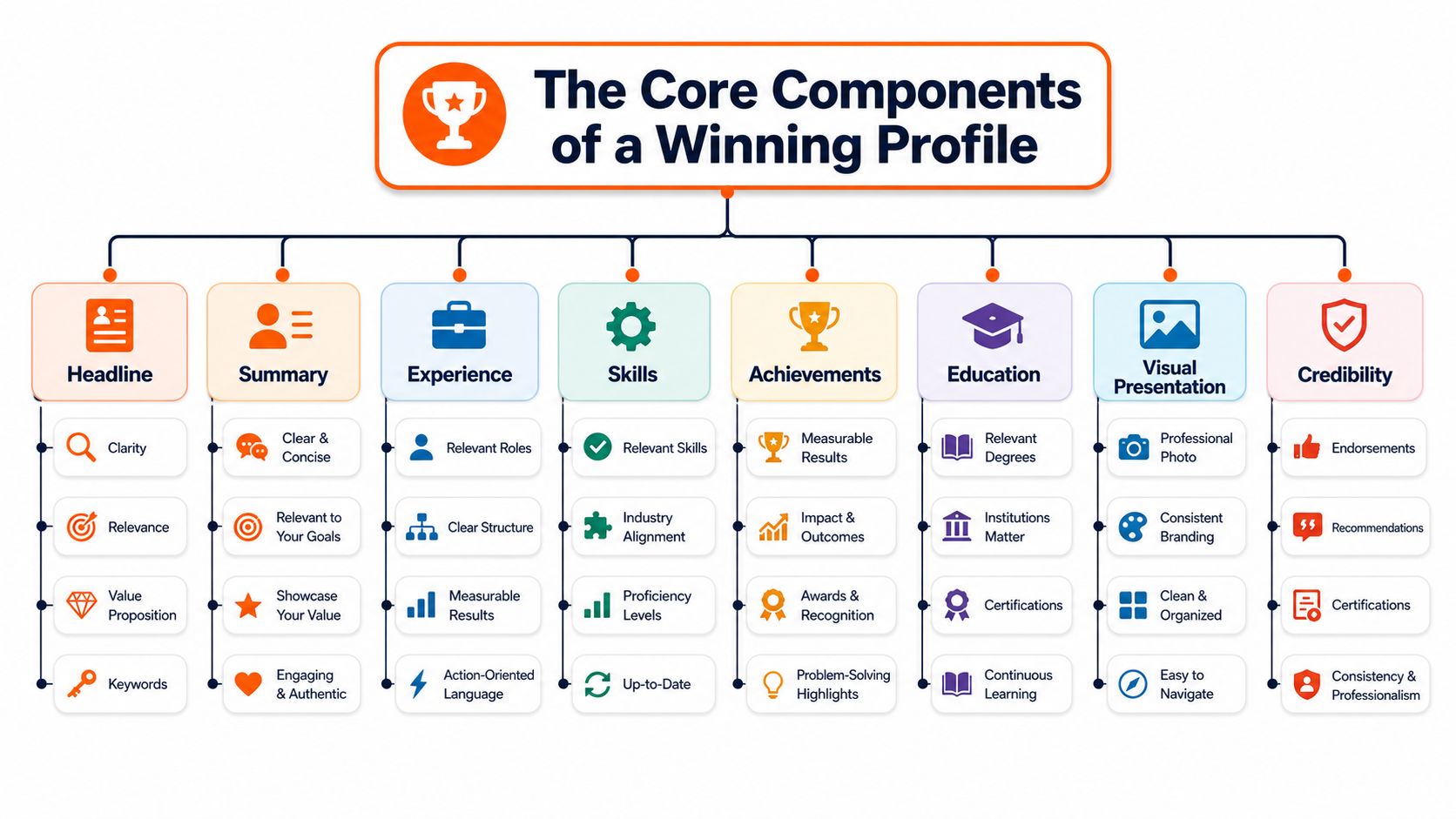
The strongest profiles are not the longest. They are the clearest. They tell people who you help, what work you take on, where you work, and how to book you without making them dig around. Every missing detail creates hesitation. Every vague phrase makes the customer work harder than they should.
Your Headline and Business Description
Your headline should identify the business and the type of work straight away. Clear beats clever every time.
Good
- Local plumbing and emergency callout service
- Residential and commercial plumbing in your service area
Bad
- Quality you can trust
- Your complete solution partner
The description underneath should do a job, not fill space. Write it so a customer can tell, in a few seconds, whether you handle their problem and whether dealing with you will be straightforward.
A useful description covers:
- Who you work for
- What jobs you take on
- What makes your service easier or safer to book
That might mean same-day response, after-hours availability, experience with strata and property managers, or a focus on maintenance instead of new builds. Be specific. “Reliable plumbing services” says almost nothing. “Blocked drains, hot water repairs, leak detection, and general maintenance for homes and small commercial sites” gives the customer something to act on.
If your wording still feels generic, reviewing practical plumbing business name ideas can help tighten the language you use in the header and description.
A Clear Menu of Your Plumbing Services
Customers rarely search the way plumbers talk in the van or the office. They search the problem.
That means your service list should use customer language first. If someone has no hot water, they want to spot “hot water repairs” fast. If they have an overflowing toilet, they want to see “blocked toilets” or “blocked drains,” not a broad label that forces them to guess.
Use a structure like this:
| Profile element | What works | What doesn't |
|---|---|---|
| Service labels | Blocked drains, leak repairs, hot water systems, toilet repairs | General plumbing solutions |
| Service grouping | Emergency, maintenance, installations, commercial | One long unbroken list |
| Customer wording | What the customer calls the problem | Internal trade jargon |
This part does more than explain your offer. It also filters calls. A clear service menu helps the right customers contact you and discourages enquiries for work you do not want, do not quote, or do not service profitably.
Defining Your Service Area
Service area wording is where a lot of profiles lose good leads.
If you say “servicing all areas,” people still do not know whether you cover their suburb. If you list a region that is too wide, you invite calls that turn into pricing friction once travel time gets discussed. If you understate your area, you miss work you would have happily taken.
Name the suburbs, towns, or regions you cover. Keep that wording consistent everywhere your business appears online. Customers notice when one profile says one thing and another says something else. So do search platforms.
Customers are not trying to map your van route. They want a quick yes or no on their address.
Be realistic here. There is no point attracting calls from an area that only works for high-value jobs if your profile does not make that clear.
Contact Details and Operating Hours
Many profiles often lead to booked work being lost subtly.
A customer with an urgent plumbing issue should not need to hunt for your phone number, guess whether you are open, or fill out a long form just to ask a basic question. The easier you make contact, the more likely you are to get the call before they move on.
Your profile should include:
- Primary phone number so the fastest contact option is obvious
- Emergency number or after-hours line if you offer urgent response
- Hours of operation so people know when they can expect an answer
- Simple enquiry option for customers who prefer to message first
There is a trade-off here. More form fields can help qualify leads, but they also reduce enquiries, especially on mobile. For most plumbing businesses, a shorter path to contact wins. Get the call first. Sort the details after.
A strong profile is built to reduce doubt and shorten the distance between “I found you” and “Please come out.” That is what turns a template into a job-winning asset instead of another admin document.
Building Trust with Credentials and Proof
Basic business details get you considered. Proof gets you chosen.
Plumbing is a trust-heavy trade. People are letting someone into their home, around their family, near expensive fixtures, water lines, drainage, or commercial systems that can shut down a site if handled badly. A plain service list doesn't settle those nerves.

Industry guidance for plumbing websites recommends putting the phone number in the header and footer, adding simple booking forms, displaying licenses and certifications, and showing testimonials and before-and-after photos. It also states that 97% of consumers read reviews before choosing a service provider, which is why review display belongs in the core profile, not as an afterthought, according to CI Web Group's plumbing website guidance.
What to Show First
Most plumbers have more proof than they display. The problem isn't lack of credibility. It's poor presentation.
Start with the essentials a cautious customer wants to see:
- Licenses and certifications so people know you're qualified for the work
- Insurance status so they feel protected if something goes wrong
- Business structure and qualifications so the company doesn't look like a random phone number
- Trade-specific differentiators such as specialist service capability or team experience
Don't hide these at the bottom. Put them where a first-time customer can find them without digging.
There's also a trade-off here. Too little proof looks risky. Too much unreadable detail looks bureaucratic. The sweet spot is simple and visible. Use short lines, badges, or a compact credential section.
Show enough proof to remove doubt. Don't turn the profile into a compliance folder.
How to Present Reviews and Job Proof
Reviews work best when they support a decision already forming in the customer's mind. They don't need a giant wall of praise. They need believable evidence that you show up, solve the problem, and act professionally.
That means your profile should include:
- A small set of relevant testimonials, not a random pile
- Before-and-after photos that show the kind of work you want more of
- Short notes about project type so the viewer understands what they're seeing
If you want more emergency jobs, show proof tied to urgent repairs. If you want installation work, show clean finished installs. If you want commercial enquiries, display work that looks commercial.
A quick comparison makes the point:
| Trust element | Effective version | Weak version |
|---|---|---|
| Review use | Recent, specific feedback about response, workmanship, and professionalism | Generic praise with no context |
| Photo proof | Clear project images with job type explained | Random truck photos only |
| Credentials | Visible and easy to verify | Mentioned vaguely in a paragraph |
A lot of template advice stops at “include testimonials.” That's incomplete. The better move is to build a trust narrative. Tell the customer, with proof, that hiring you feels safe.
Sample Profiles for Different Plumbing Scenarios
A customer has a burst pipe, checks your profile on their phone, and decides in seconds whether to call. That decision usually comes down to one thing. Does the profile sound like the business they need right now?
Templates help, but only if the wording fits how you work. A solo plumber should sound direct and accountable. A small crew should sound organised and responsive. A multi-location brand should sound local, not corporate. The goal is not to fill every field. The goal is to reduce hesitation and make booking feel easy.
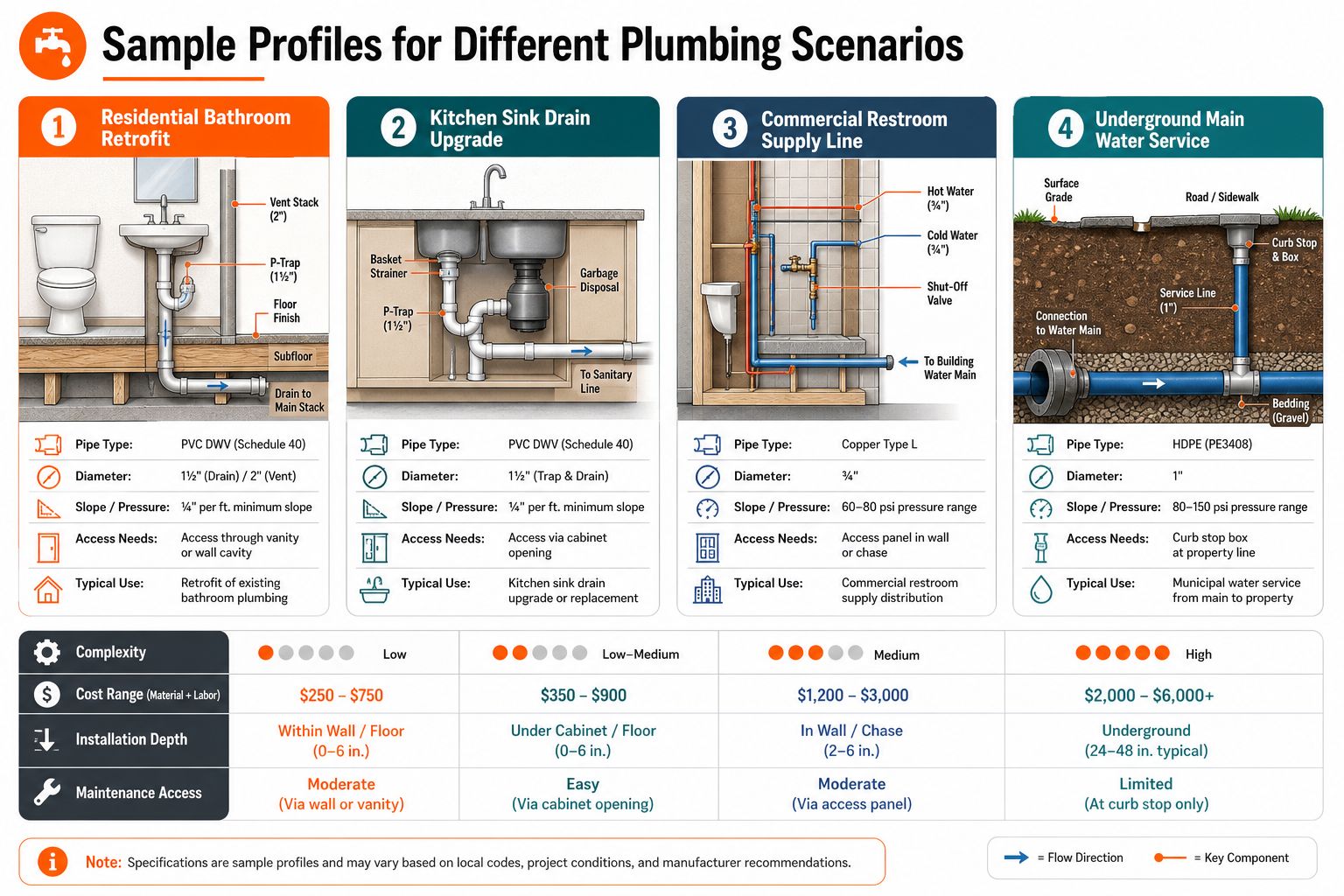
Solo Plumber
A solo plumber wins when the profile makes one promise clear. The person answering the phone is the person doing the work. That lowers customer friction fast, especially for homeowners who are tired of chasing callbacks or explaining the problem twice.
Headline
Licensed local plumber for repairs, maintenance, and emergency callouts
Business description
Providing residential plumbing services across the local area, with direct communication from quote to completion. Specialising in leak repairs, blocked drains, hot water systems, toilet repairs, and general maintenance.
Service list
- Leak repairs
- Blocked drains
- Hot water system service
- Toilet and tap repairs
- Emergency plumbing
Use this style if personal service is the reason customers book you. Keep the language plain. Mention direct contact, response time, and the types of jobs you want more of. If you mainly want maintenance work, do not let the profile read like an emergency-only service.
Small Crew
A small crew needs to sound capable without sounding bloated. Customers want to know there is enough capacity to handle the job, but they also want to feel the business is still easy to deal with.
Headline
Residential and commercial plumbing team for fast, reliable service
Business description
Experienced plumbing crew servicing homes, rentals, and small commercial sites across the service area. Offering maintenance, installations, repairs, and urgent response with clear communication and practical solutions.
Service list
- General plumbing maintenance
- Pipe repairs and replacements
- Hot water systems
- Drain clearing
- Commercial plumbing callouts
This profile works best when you support it with specifics elsewhere in the listing. Clear hours, service suburbs, and a booking method matter. If your team uses scheduling tools or field apps, say booking is straightforward and keep the handoff tidy behind the scenes with apps for plumbing business operations.
If you've got a team, say it clearly. Customers booking a bigger job want to know who is turning up and whether the business can stay on schedule.
Multi-location Franchise
A larger brand has a trust problem of a different kind. Customers may assume they will get a call centre, vague arrival windows, and a different technician every time. The profile has to remove that concern early.
Headline
Trusted plumbing service in [Local Area] backed by an established brand
Business description
Local plumbing team serving [Local Area] with the support, systems, and service range of a larger network. Offering emergency plumbing, repairs, installations, and scheduled maintenance for homes and businesses.
Service list
- Emergency plumbing
- Hot water installations
- Drain and sewer services
- Commercial plumbing support
- Preventive maintenance
The trade-off here is consistency versus local feel. Keep the core brand wording consistent, but write each location profile with local service areas, local contact details, and job types that match that branch. Customers book the business that feels reachable, clear, and ready to send the right plumber.
Keeping Your Profile Active and Visible with GrowTradie
It's 6:15 pm. You've finished a blocked drain, you're still returning missed calls, and a customer checking your profile sees last year's photos, old suburbs, and trading hours that no longer match reality. Good work gets lost by small gaps like that.

Profiles usually don't fail because they were written badly. They fail because nobody updates them after the business changes.
What slips first is predictable:
- Business name formatting that differs across listings
- Service category wording that changes from one platform to another
- Service area details that no longer match where you book work
- Descriptions and service menus that still reflect old job types or old priorities
Those details do more than tidy up your online presence. They affect trust at the exact point a customer is deciding whether to call. If one listing says emergency work, another focuses on renovations, and a third shows the wrong suburb, people hesitate. Hesitation costs bookings.
The practical fix is simple. Keep one master version of your profile template and treat it like live business information, not a one-off setup document. When you add a suburb, stop offering a service, change hours, or shift toward higher-value work, update the template first. Then carry those changes across every place customers find you.
That sounds straightforward until the week fills up. On a busy plumbing schedule, profile maintenance usually drops behind quoting, invoicing, and getting to the next job.
Some businesses solve that with office admin. Others use a monthly checklist. Some use plumbing business apps that help keep marketing activity going between jobs, based on the services and local areas already defined in the business. GrowTradie fits into that last option by turning existing business details into regular local content, which helps keep your presence active while you stay focused on the work.
That does not replace accurate core details. It supports them by stopping the profile from going quiet and looking neglected.
A profile only helps if it still sounds like the business customers are calling today.
Regular control beats constant tinkering. Check the profile, tighten what changed, and keep the information aligned across the places that send you work.
Conclusion Your Profile Is Your Digital Handshake
Your profile is often the first contact a customer has with your business. Before the phone call, before the quote, before anyone meets your team, they're judging the business from what they can see in a few seconds.
That's why a plumbing business profile template matters. It helps you present the right details in the right order. Clear description. Real service list. Defined service area. Easy contact options. Visible proof that you're qualified and trustworthy.
The plumbers who win more calls usually aren't writing poetry. They're reducing doubt. They make it easy for a customer to understand the job fit, trust the business, and take the next step.
A weak profile feels uncertain. A strong one feels safe.
Treat it like a working business asset, not a one-time admin task. Tighten the wording. Show the proof. Remove friction. Keep it current. Do that, and your profile starts acting like a solid digital handshake that opens the conversation the right way.
If you want a simpler way to keep your plumbing business visible between jobs, GrowTradie helps trade businesses create and auto-post professional local content based on their services and area, so your profiles don't sit quiet while you're busy on the tools.