
Some weeks your phone won't stop. Other weeks, the jobs thin out, quotes sit unanswered, and you find yourself relying on referrals to save the month. Most electricians don't have a spare half day to plan posts, write captions, chase photos from the team, and reply to messages. You're running jobs, ordering gear, handling staff, and trying to get home on time.
That's why electrician social media services matter when they're done properly. Not as random posting. Not as “brand awareness” fluff. As a working business system that keeps your company visible, gives people proof you're active and reliable, and helps turn attention into enquiries. Done well, it also helps you look like a company good people want to work for.
Table of Contents
- Why Your Electrical Business Needs a Social Media System
- Defining Your Goals Before You Hire Help
- How to Evaluate Electrician Social Media Services
- Your Onboarding Checklist for a Smooth Start
- Driving Real Results with a Smart Content Plan
- Measuring What Matters and Fixing What Isnt Working
Why Your Electrical Business Needs a Social Media System
A lot of electrical businesses treat social media like a leftover task. Someone remembers to post a switchboard upgrade on Friday. Then nothing goes up for two weeks because the crew is flat out. Then a quiet spell hits, and suddenly everyone wants leads right now.
That stop-start pattern is the problem.
Customers don't just choose the electrician who can do the work. They often choose the one who looks active, local, and professional when they check online. One electrician-focused guide says businesses should post at least once a day if possible, while another recommends 3–5 posts per week to stay visible and attract customers. The same guidance also points electricians toward the right channels, such as Facebook and Instagram for job photos and local engagement, YouTube for how-to and safety videos, and scheduled posting tools to keep accounts active while the team is on-site, according to this electrician social media guide.
Busy tradies don't need more tasks
What most owners need isn't another app to check. They need a repeatable system.
A proper social media system does a few simple things in the background:
- Keeps your business visible: Your profiles don't go quiet every time work gets hectic.
- Shows proof of real work: Prospects see recent installs, tidy workmanship, and real jobs in your service area.
- Builds trust before the call: People feel like they already know your business before they enquire.
- Reduces feast-or-famine pressure: You're not starting from zero every time referrals slow down.
Practical rule: If your socials only come alive when work is quiet, they're not a system. They're a panic response.
Visibility becomes an asset
Good electrician social media services turn your photos, project updates, testimonials, and day-to-day expertise into something useful. Not polished nonsense. Just steady proof that your business is real, current, and worth contacting.
That matters because electrical work is built on trust. People don't buy it the way they buy a gadget online. They want to know who's coming to their home or site, whether you're professional, and whether others have used you before. A quiet profile suggests uncertainty, even if your calendar is full.
If your workload swings too much, it helps to treat social media the same way you treat quoting, scheduling, and follow-up. It needs a process. If you're tightening up the rest of your pipeline, this broader guide to marketing for electricians gives useful context on building steadier demand.
Defining Your Goals Before You Hire Help
A lot of electricians hire social media help after a flat month, hand over a few job photos, and hope the phone starts ringing. A few weeks later, the profile looks busier, but nothing important has changed. Quotes are still inconsistent. The jobs coming in are not the right ones. Hiring is still hard.
That usually comes back to one problem. The provider was hired to post, not to support a business goal.

Set goals that affect sales and hiring
Before you pay anyone, decide what social media needs to do for the business. If that is unclear, the service drifts toward easy tasks like filling the feed, chasing reach, or posting whatever photos happen to be available.
That is not enough for an electrical business.
A useful social media system should support two commercial outcomes. It should help bring in better-fit work and help attract better-fit people. Those are the outcomes worth paying for.
Start with goals like these:
Build local trust with the right type of customer
The aim is not broad attention. The aim is to help homeowners, builders, landlords, or facility managers in your area see recent work, recognise your standards, and feel comfortable making contact.
Bring in more of the jobs you want
If you want EV charger installs, switchboard upgrades, maintenance work, testing and tagging, or commercial fit-outs, your content and messaging need to reflect that. Otherwise you get a mixed bag of enquiries that waste time.
Create a steadier flow of quote requests
Social media should reduce reliance on referrals alone. It should support regular inbound interest, especially when repeat work slows down.
Support recruitment
Good applicants look at your business the same way customers do. They check whether the company looks organised, active, safe, and worth joining. A profile that shows clean work, decent systems, training, and a solid team can help your hiring as much as your sales.
Be specific enough to guide decisions
“More leads” is too vague. It does not tell a provider what to film, what services to feature, what questions to ask on onboarding, or what success looks like after three months.
Clear goals make better decisions easier.
If recruitment matters, the content mix should include team spotlights, training, vans, site standards, and open roles. If higher-value domestic work matters, the content should show finished installs, explain common upgrade jobs, and answer the questions people ask before they book. If commercial clients matter, the tone, examples, and proof need to look different again.
This is the practical point. Your goals shape the content, the posting schedule, the calls to action, and the way results should be reviewed.
A good provider asks what work you want more of and what kind of staff you want to attract. If they start with followers, they are measuring the wrong thing.
Give each goal a pass or fail test
Set a simple test before the work starts. Nothing fancy. Just something you can review without needing a marketing report translated into plain English.
For example:
- Trust goal: More callers mention they have seen your recent jobs online.
- Service goal: A higher share of enquiries comes from your target jobs, not random small work you do not want.
- Recruitment goal: Applicants reference your team, standards, or content when they apply.
- Consistency goal: Your profiles stay current without you chasing photos, captions, or approvals every week.
These checks keep the conversation grounded. They also help you avoid paying for busy-looking activity that does not lead to booked work or better hiring.
If you cannot explain in one sentence what social media is supposed to do for the business, do not hire help yet. Get clear first. Then bring someone in to build around that.
How to Evaluate Electrician Social Media Services
A lot of electricians hire social media help for one reason, then get sold something else. They want more booked work and a better shot at hiring good people. What they get is a content calendar, a few polished graphics, and a monthly report full of reach and likes.
That gap is where money gets wasted.
A good service should help your business stay visible, turn attention into enquiries, and make your company look like a place decent sparkies would want to work. If it cannot do those three jobs, it is a posting service, not a business system.
What a good service must actually deliver
Potential customers usually check your socials near the end of the decision, not the start. They want proof that you are active, legitimate, local, and easy to contact. Job seekers do something similar. They look for signs that your team is organised, your work is up to standard, and the business is going somewhere.
That means the provider needs to handle more than filler posts. They should be able to show real project photos, clear service examples, testimonials, team content, and simple ways to get in touch. As noted in this digital marketing guide for electricians, trust signals like recent activity, proof of work, and visible contact details matter.
I use a simple test. Can this service help you look credible to customers and worth joining to workers, without creating more admin for you? If the answer is fuzzy, keep looking.
Comparing the main service models
The best option depends on how your business runs day to day. Cost matters, but owner time matters too. So does follow-through. A cheaper service that still needs constant chasing can cost more in practice than a higher-fee option that gets the work done.
| Service Type | Typical Monthly Cost | Your Time Commitment | Best For |
|---|---|---|---|
| Full-service agency | Higher than other options | Moderate, because approvals, photos, and direction still come from you | Electrical businesses that want campaign support, paid ads, and regular strategy input |
| Freelancer | Varies widely | Moderate to high, depending on how well they manage themselves and how clear your brief is | Smaller operators who want flexibility and do not mind managing one person closely |
| Automated content platform | Usually lower than agency support | Low after setup | Busy tradies who want regular posting, less back-and-forth, and a simpler system |
There is no perfect model. Agencies can bring structure, but they are often expensive and sometimes too generic. Freelancers can be sharp and practical, but quality varies a lot. Tool-led systems save time, but they only work if the content still feels like your business and not a template.
Questions worth asking before you sign
Skip the polished pitch. Ask how the work gets done.
- Who creates the content, and who publishes it? Some providers write captions, then leave the final steps to your office.
- How do they make the content specific to your service area and job mix? If every post could belong to any electrician in any suburb, it will not help much.
- What do they need from you each month? Ask for the honest answer, not the sales answer.
- How do they deal with messages, comments, and leads? A post that gets attention but no follow-up does not help the business.
- Can they support recruitment content as well as customer-facing content? Hiring matters. The service should be able to show team culture, standards, training, and the kind of work your business does.
- How will success be reviewed? Booked jobs, better-fit enquiries, and applicant quality are the metrics that matter.
One strong answer is better than five vague ones.
Match the model to your operating style
Choose the service you will still use in a busy month, not the one that sounds good in a proposal.
If you want regular input, campaign planning, and someone pushing the process along, an agency may suit. If you like keeping things flexible and do not mind managing details, a freelancer can work well. If your real problem is consistency, and you want less weekly admin, a system-led option is often the better fit. One example is GrowTradie's contractor content system, which is built to create and auto-post trade-specific content with less hands-on work from the owner.
The right choice should save time, support sales, and help your business look hireable. If it only gives you more posts, keep your wallet shut.
Your Onboarding Checklist for a Smooth Start
Most problems with electrician social media services don't start with the posting. They start with poor setup. The provider is guessing your service area, using old logos, posting stock-style content, or waiting on access while the first month drifts by.
Good onboarding saves weeks of back-and-forth.
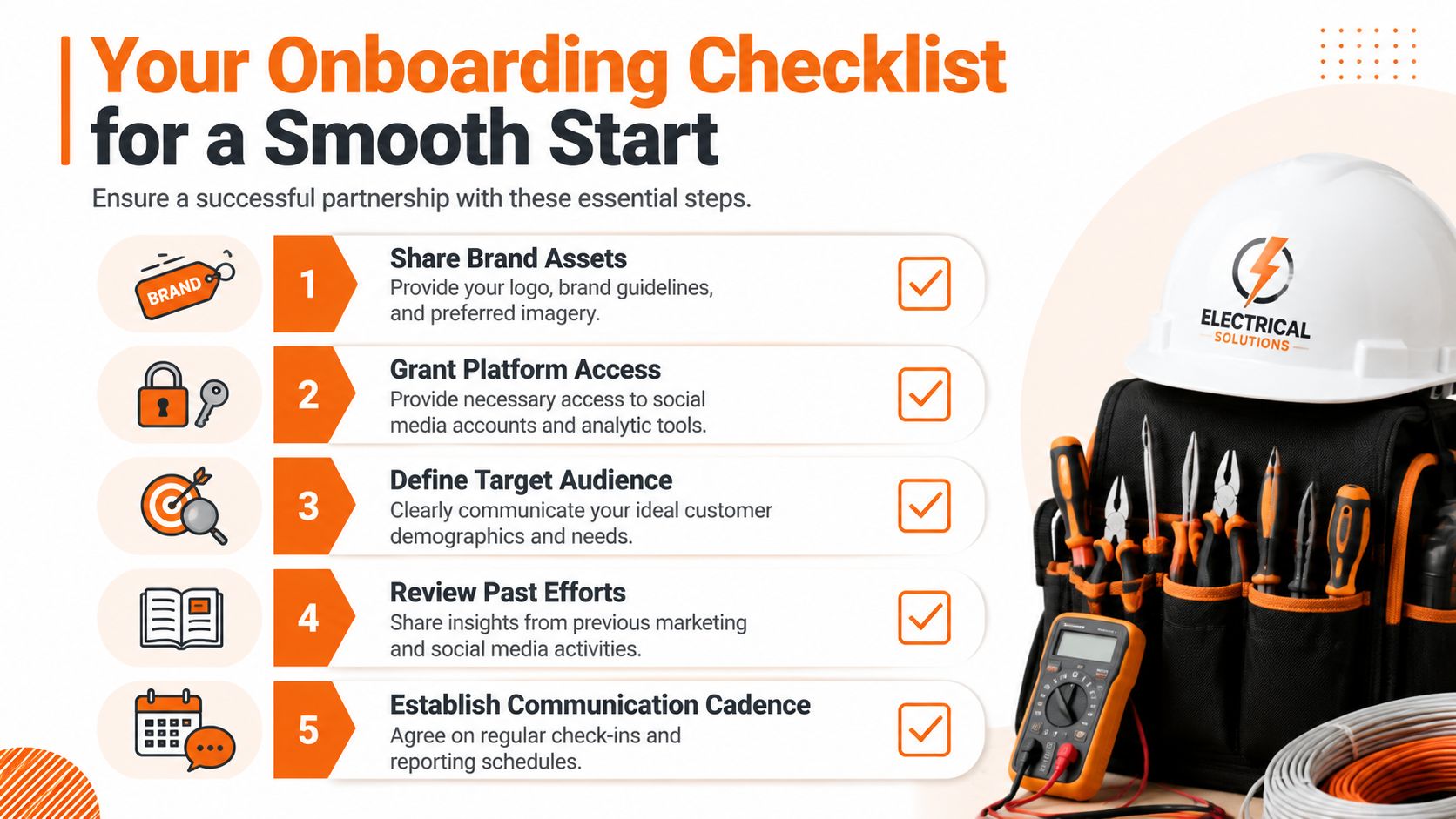
Gather the essentials before day one
A provider can only work with what you hand over. If your files and business details are scattered across phones, inboxes, and old invoices, the setup will drag.
Use this checklist:
- Brand assets: Your logo, brand colours if you use them, and any preferred photos of the team, vans, uniforms, or completed work.
- Platform access: Access to Facebook, Instagram, YouTube, or any scheduling tools you want them to use.
- Core business details: Service area, primary services, emergency availability, phone number, and preferred enquiry method.
- Photo library: Real project photos matter more than polished graphics. Before-and-after shots, switchboards, lighting installs, EV chargers, rewires, and commercial work all help.
- Proof points: Testimonials, licences, certifications, accreditations, and any supplier or product specialisations.
Cut down the back-and-forth
You'll get better content faster if you also provide context that doesn't show up in a logo folder.
That includes:
- Jobs you want more of: Tell them which work is profitable and which work you'd rather not attract.
- Jobs you don't want: This saves wasted promotion on the wrong enquiries.
- Examples you like: Share a few local businesses whose style or tone feels right.
- Your voice: Straight-talking, premium, family-run, commercial-focused, fast-response. Pick what fits.
Avoid this mistake: Don't assume a provider knows your difference just because they've worked with tradies before. Your business still needs its own angle, service focus, and local character.
Set communication rules early
This part sounds minor, but it matters. Decide who approves posts, how often you'll review performance, and how urgent messages get handled. If nobody owns those decisions, delays pile up.
A smooth start usually comes from simple preparation, not a long strategy document. The provider should be able to see who you are, what work you want, where you operate, and what proof you've already got.
Driving Real Results with a Smart Content Plan
A strong content plan for an electrical business isn't complicated. It just needs discipline. Most poor results come from two issues. Posting too rarely, or posting the wrong mix of content.
The framework that keeps things practical is the 80/20 mix. About 80% of content should be educational and 20% should be promotional, based on Scorpion's electrician social media guidance. The same guidance recommends 3–5 posts per week to stay visible and attract customers.

What the 80 percent looks like
The educational side is what builds trust. It gives people a reason to follow, pay attention, and remember your name before they need a quote.
Useful examples include:
- Safety tips: Simple advice around overloaded circuits, smoke alarms, or when to call a licensed electrician.
- Project walkthroughs: Clean install photos with a short explanation of what was done and why.
- Behind-the-scenes posts: Team on site, tidy fit-offs, van setups, testing procedures, or tool talk.
- Common questions answered: The kind of stuff customers ask before booking.
- Technology updates: EV chargers, smart home systems, energy-related upgrades, or modern switchboard considerations.
That content works because it helps without asking for the sale every time.
Here's a useful example of video-led content thinking in action:
What the 20 percent is for
Promotional posts still matter. They just shouldn't dominate the feed.
Use them for:
- Service offers: Spotlight a service you want more of.
- Testimonials: Share customer feedback with a clear next step.
- Availability updates: Let people know when you're booking jobs in a certain area.
- Direct response posts: Encourage quote requests, calls, or messages.
A lot of electricians get this backwards. They post offer after offer and wonder why nobody engages. The feed starts to feel like an ad board instead of a business people trust.
Organic posting and paid promotion do different jobs
Organic posting builds familiarity over time. It proves you're active, shows the quality of your work, and supports word-of-mouth when someone checks you out. Paid promotion is more targeted. It's useful when you want to push a service in a specific local area or bring old visitors back into the conversation.
Used together, they're stronger than either one on its own. If you want more practical ideas on planning useful content around your actual services, this guide to content marketing for contractors is worth a look.
Measuring What Matters and Fixing What Isnt Working
A lot of electricians get a monthly report that looks busy and still have no clear answer to a basic question. Did any of these posts turn into booked work or help bring in a decent apprentice?
If your provider can show reach, likes, and follower growth but cannot tie activity back to calls, quote requests, job bookings, or hiring enquiries, the reporting is not helping you run the business. It is only describing output.
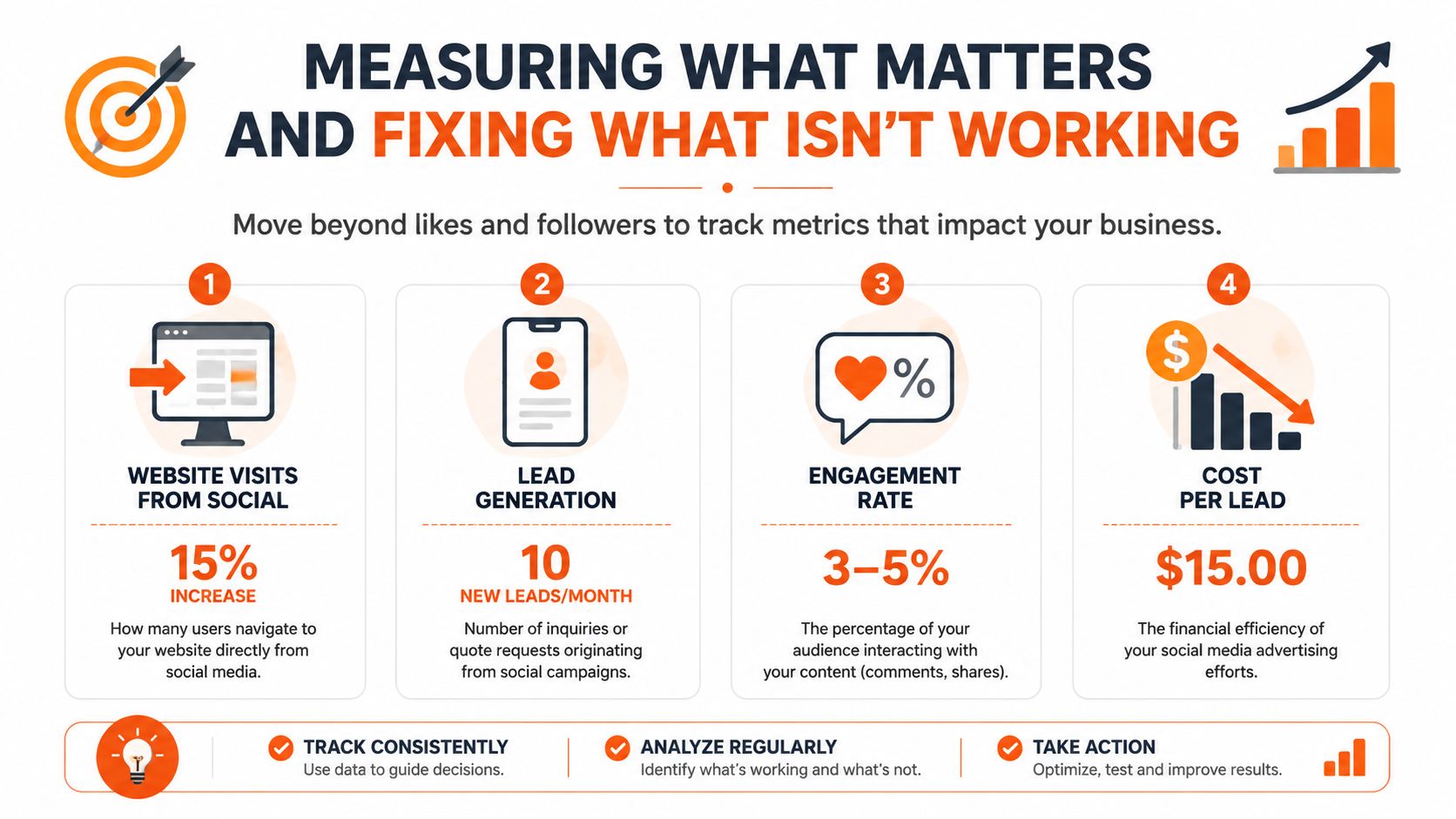
Track business signals first
Start with actions that have a direct path to revenue or recruitment.
A simple setup works well. Use a dedicated phone number for social campaigns, send profile clicks to a quote form you can identify, and log direct messages properly instead of letting them sit in the inbox with no follow-up. If you are trying to hire as well as win work, track recruitment messages separately from customer enquiries so you can see whether your content is helping on both fronts.
Watch for:
- Phone calls from social traffic: Use a trackable number so you can separate these from Google, referrals, and repeat customers.
- Quote requests from social links: Tag the form or landing page so you know which campaign brought the lead in.
- Direct messages with job intent: Booking questions, availability checks, and pricing requests matter more than post reactions.
- Recruitment enquiries: Apprentices, tradesmen, and subcontractors reaching out are a real business result, not a side benefit.
- Booked jobs: This is the number that matters. The lead only counts when it turns into work.
The point is simple. Social media should be measured as part of the business system, not as a stand-alone branding exercise.
Fix the common problems fast
Weak results usually come from one of a few clear issues.
- You are getting attention but no enquiries: The posts may be interesting but too general, with no strong service angle and no obvious next step.
- You are posting consistently but leads are poor: The content may be attracting DIY questions, price shoppers, or people outside your service area.
- People view the work but do not contact you: Trust is missing. Add customer proof, show the type of jobs you want more of, and make it easy to reach you.
- You are getting enquiries but not bookings: The issue may be in follow-up speed, quoting, or how the office handles inbound messages. Social is only one part of the chain.
- You are not attracting staff: Customer-facing content alone will not do it. Mix in team culture, training standards, vehicle setups, and the kind of work a good sparky would want to be part of.
Likes show attention. Booked jobs and quality applicants show whether the system is working.
Review results monthly. Keep the posts and offers that lead to calls, quotes, and hires. Cut the content that gets attention but does nothing for the diary or the team. If you want a clearer way to connect content with actual enquiries, this guide on electrician lead generation strategies that produce measurable jobs is a useful next step.
If you want a simpler way to stay visible without having to write, design, and schedule everything yourself, GrowTradie offers a trade-focused content and posting system built for busy service businesses. It's designed to keep your socials active, professional, and consistent so the business keeps showing up even when you're on the tools.