
You're probably dealing with one of two problems right now. Either the phone goes wild for a few weeks and your team can't keep up, or things go quiet and you start wondering whether your marketing is broken. Most pest control owners bounce between those extremes because their marketing is too broad, too reactive, or too generic to match what customers need.
That's the core mistake. People rarely wake up and search for a company because they feel like engaging with a brand. They search because they saw termite dust, heard scratching in the ceiling, found droppings in a pantry, or got eaten alive in the yard. Good pest control marketing starts there. It lines up your message, your visibility, and your response process with the exact problem the customer wants solved right now.
This matters in a big market, not a tiny niche. In the U.S., the professional pest control market was valued at about USD 24.9 billion in 2023, with projections showing growth to USD 29.1 billion by 2026, according to PestPac's pest control industry statistics and trends overview. There's demand. The core question is whether your business shows up clearly enough, fast enough, and specifically enough to win the call.
Table of Contents
- Forget "Marketing" and Think "Problem Solving"
- Dominate Your Local Service Area Online
- Get Your Phone Ringing with Paid Ads
- Your Practical Content and Social Post Calendar
- Powerful Marketing You Already Own
- Track Your Results and Automate the Work
Forget "Marketing" and Think "Problem Solving"
The word marketing sends a lot of owners in the wrong direction. It makes the job sound abstract, expensive, and disconnected from the work your team does. That's why many pest control campaigns drift into vague slogans, random posts, and broad “we do it all” messaging that doesn't match how customers buy.
The customer isn't looking for marketing. They're looking for relief.
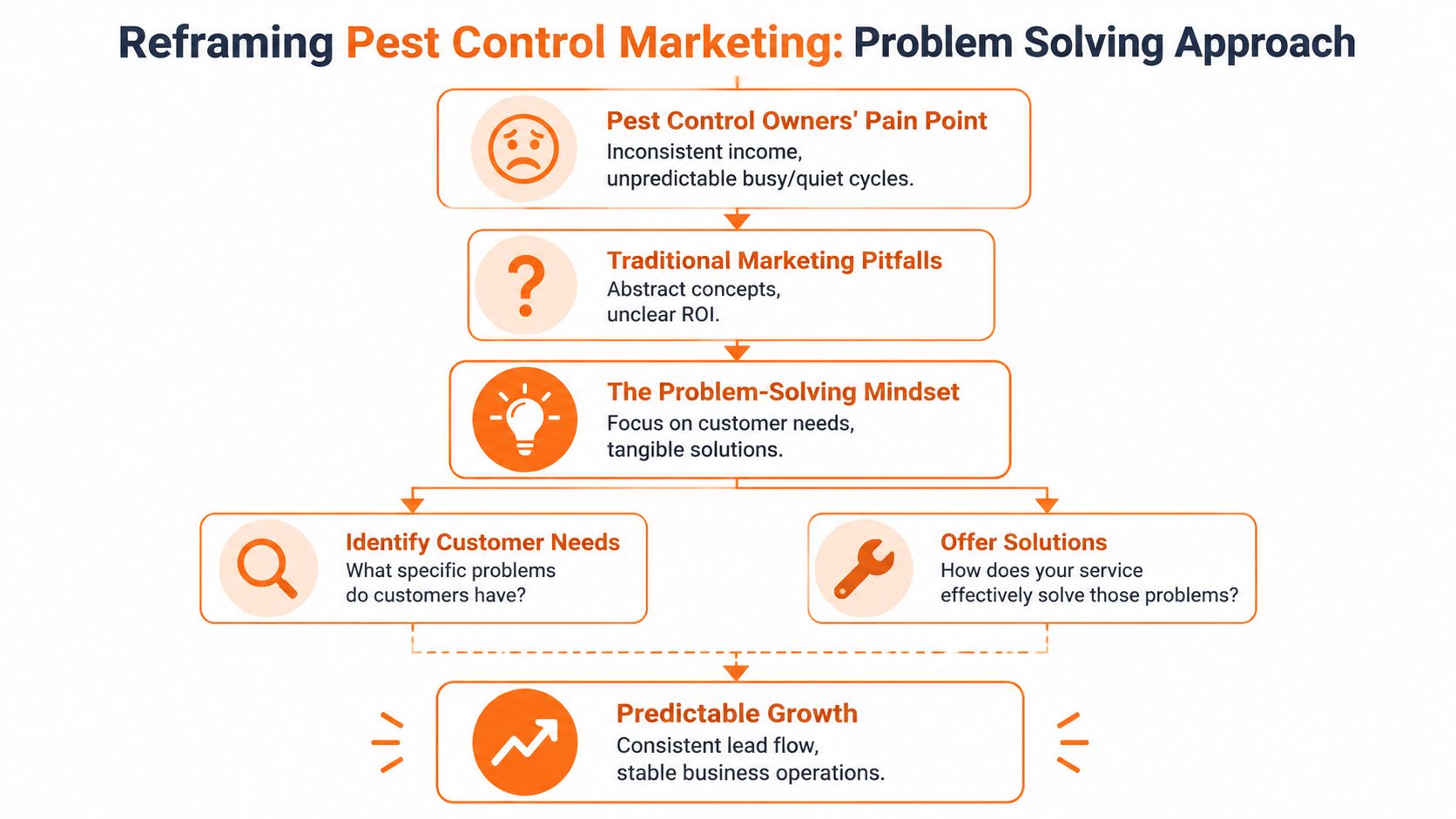
Stop advertising categories and start answering situations
When a homeowner finds what looks like termite evidence, they don't care that you offer “residential pest solutions.” They want to know three things: is it serious, what happens next, and how fast you can get there. A restaurant manager with a rodent issue thinks the same way, just with more urgency and more risk tied to reputation and compliance.
That's why strong pest control marketing is built around service-specific intent. Existing guidance increasingly points toward splitting campaigns by service line and using the customer's own problem language rather than generic brand education, as outlined in Scorpion's guide to pest control marketing strategies.
A better way to frame your offer looks like this:
- Termite work needs messaging around signs, inspections, damage concerns, and next steps.
- Rodent jobs need urgency, health concerns, entry points, and same-day response.
- Mosquito services need seasonal timing, outdoor comfort, and recurring treatment expectations.
- Bed bug calls need discretion, clarity, and confidence that the issue can be contained.
Practical rule: If the ad, page, post, or profile copy could describe every service you offer, it's probably too vague to convert well.
Build your year around pest triggers
Most lead inconsistency isn't random. It comes from treating every month the same. Pest problems change with weather, property type, and season, so your visibility has to move with them.
Spring attention often shifts toward termites and ant activity. Summer creates demand around mosquitoes, wasps, and outdoor nuisance pests. Fall tends to bring rodent pressure as temperatures change and pests look for shelter. Commercial customers also behave differently from homeowners. A property manager, restaurant operator, and homeowner may all need help in the same week, but each one responds to different wording and different urgency.
The practical takeaway is simple. Don't build one annual message and hope it stretches across every service. Build a rotating set of offers, photos, call scripts, and landing experiences around the specific pest issues that are most likely to surface in your area at that time.
That shift alone makes your marketing feel less like guesswork and more like operations.
Dominate Your Local Service Area Online
A homeowner in your service area searches “termite inspection near me” at 8:10 p.m. Another searches “mouse in attic removal” before work. A third wants mosquito treatment before a weekend barbecue. If your local presence looks generic, slow, or outdated, those calls go to the company that looks easier to trust.
Before you add more ad spend, tighten the local assets that already influence whether people call. In pest control, that usually means your Google Business Profile, your reviews, your service details, your photos, and how quickly someone gets a response.

Treat your Google Business Profile like a booked-jobs asset
A neglected profile creates hesitation. A sharp one helps turn searchers into calls.
Set up the basics with the jobs you want:
List real service lines
Don't stop at “pest control service.” Add the specific services that matter in your market, such as termite inspections, rodent removal, mosquito treatment, bed bug treatment, or wasp nest removal, as local search intent is specific. Someone looking for rats in the attic is not searching the same way as someone comparing seasonal mosquito service.Define the service area clearly
If certain towns, ZIP codes, or suburbs produce better tickets and better close rates, reflect that in your profile. Broad coverage sounds good until your office starts fielding calls you do not want to run.Use real photos
Upload trucks, uniforms, equipment, crawlspace work, exclusion repairs, exterior treatment setups, and office staff. Real images answer an unspoken question fast. “Are these people legitimate, and do they do this kind of work every day?”Keep contact paths obvious
Your phone number, hours, and booking path should be easy to find. Rodent and wasp leads often go to the first company that looks reachable. If response feels uncertain, people keep scrolling.
If you want a stronger foundation for map pack visibility and nearby service searches, this guide on local search visibility for contractors is a useful reference.
Match your local presence to seasonal demand
Pest control marketing differentiates itself from generic home service advice. Your local profile should reflect what customers are looking for now, not every service you offer all year.
In spring, emphasize termite inspections, ant issues, and early swarm activity if that fits your area. In summer, shift photo sets, service descriptions, and posts toward mosquito control, wasps, and outdoor treatments. In fall, rodent entry points, attic activity, and exclusion work deserve more visibility. Bed bug and commercial work often need their own wording year-round because the customer concern is different.
Owners who keep the same profile copy all year usually end up with bland visibility. Owners who rotate service emphasis by season tend to look more relevant at the exact moment demand spikes.
Make response speed part of local SEO
Your profile does not work alone. It works with your intake process.
A prospect who finds you through local search is usually comparing two things fast. Can this company handle my specific problem, and will someone get back to me quickly? That is why response handling affects lead volume just as much as profile setup.
Set a simple workflow:
- Calls go to a real person or a reliable answering process.
- Form submissions trigger a fast callback or text.
- Messages get checked throughout the day.
- Reviews get answered consistently, especially the negative ones.
Fast response wins a lot of pest jobs. The customer is not grading your brand presentation. They want a clear answer and the next available appointment.
Use posts, photos, and service detail to remove doubt
Your profile should help the right customer say, “Yes, this is the company I should call.”
That means showing evidence of the services you want more of. Post termite inspection reminders when swarm season starts. Add rodent-focused photos and updates when temperatures drop and entry-point issues rise. Highlight mosquito treatments when outdoor living picks up. Keep the language concrete. Mention inspections, treatment frequency, exclusion work, follow-up expectations, and service areas.
Generic profile updates rarely help much. Specific service signals do.
A short walkthrough can help if you're tightening up your local presence and profile workflow:
A strong local profile earns visibility and reduces hesitation. That combination is what gets more calls from the service area you desire.
Get Your Phone Ringing with Paid Ads
It's Tuesday, the board is lighter than it should be, and you need booked work this week, not a nicer report at the end of the month. Paid ads can fill that gap fast, but only if the account is built around the jobs you want.
The mistake with paid ads is treating all traffic the same. A termite inspection lead in spring, a rodent call during the first cold snap, and a mosquito treatment request at the start of outdoor season should not be handled inside one generic campaign.
Choose the right ad type for the job
For most pest control companies, two paid channels do the heavy lifting.
Local Service Ads are built for high-intent searches from people who want to call a provider now. They fit urgent issues and trust-sensitive services where the customer wants a clear next step fast.
Search Ads give you tighter control over the message, keyword targeting, and landing page. That matters when you want separate campaigns for termites, rodents, mosquitoes, bed bugs, or commercial work, each with different search behavior, urgency, and seasonality.
The practical setup is simple. Use Local Service Ads to capture call-ready demand. Use Search Ads to target specific services, control lead quality, and push the jobs with the best margins or the biggest seasonal opportunity.
Split campaigns by service and season
A lot of ad waste starts with convenience. One campaign. One budget. One generic exterminator ad. One page for every pest problem.
That structure usually produces weak matching between the search, the ad, and the page the customer lands on.
A tighter account separates services so budget and messaging stay aligned with what people are actually searching for:
Termite campaign
Focus on inspections, swarm season, suspected damage, real estate transactions, and annual checks.Rodent campaign
Focus on noises in walls, attic activity, droppings, exclusion work, and fast removal.Mosquito campaign
Focus on backyard use, recurring treatments, event prep, and peak warm-weather demand.Bed bug campaign
Focus on discreet service, home or lodging concerns, inspection steps, and treatment expectations.
The search itself reveals what the customer cares about. A homeowner searching “termite inspection near me” is not looking for the same promise as someone searching “rat removal attic.” If your ads blur those needs together, you pay for clicks and make the customer do the sorting.
For a more detailed breakdown, this guide to pest control ads that generate qualified enquiries shows how to structure campaigns around service intent instead of broad traffic.
Judge ads by booked work, not dashboard activity
Busy ad accounts can still disappoint. Plenty of owners have seen clicks go up while the phone quality gets worse.
The numbers that matter are the ones tied to revenue:
Cost per qualified lead
A call outside your service area or a customer asking about a pest you do not handle should not be counted as a win.Lead-to-customer conversion rate
This shows whether the problem sits in targeting, ad copy, the landing page, or how calls are handled.Booked jobs by service line
You need to know whether termites, rodents, or mosquitoes are producing profitable work, not just volume.Call quality
Listen to real calls. You will hear quickly whether the ad is attracting the right problem, the wrong customer, or too many price-only shoppers.
A good paid strategy does not try to “do Google ads.” It uses paid search to sell the right service at the right time of year in the right part of your service area. That is what turns ad spend into booked jobs instead of noise.
Your Practical Content and Social Post Calendar
It's Tuesday afternoon. The phone has been quiet, your crew still needs work for next week, and someone on your team says, “We should post something on Facebook.”
That is usually how pest control companies end up with filler content. A holiday graphic. A stock photo. A generic “call us for all your pest needs” caption that does nothing for the owner hearing scratching in the attic or the homeowner spotting swarmers by the window.
Useful content starts with the jobs you want more of this month. Then it matches the pest, the season, and the way a real customer describes the problem. That is what keeps your content tied to booked work instead of activity for its own sake.
What useful posting looks like in pest control
Your calendar should follow service demand, not a generic social media schedule.
If termites pick up in spring, post termite content. If rodents spike as temperatures drop, shift the message. If mosquito complaints start as backyards become usable again, talk about outdoor comfort and timing before the season gets away from the homeowner. A pest control owner does not need more “brand awareness” posts. You need posts that support the calls people are already close to making.
Two post types cover most of what works:
- Problem-aware posts that help the customer identify what they are seeing
- Solution-focused posts that explain what inspection, treatment, or follow-up usually involves
That's enough for a practical calendar.
The easiest filter is simple. If your technician says it on-site three times a week, it can probably become a useful post.
Sample seasonal pest control content calendar
| Season | Focus Pests | Example Post Idea 1 (Problem-Aware) | Example Post Idea 2 (Solution-Focused) |
|---|---|---|---|
| Spring | Termites, ants | “Seeing mud tubes near the slab or foundation? That can be an early termite warning sign. Leave it alone and get it checked.” | “A termite inspection should show whether activity is current, where risk is highest, and which treatment option fits the property.” |
| Summer | Mosquitoes, wasps | “If the yard is miserable at dusk, the issue is usually bigger than a can of spray can fix.” | “Mosquito treatments work better on a schedule that starts before outdoor use drops off.” |
| Fall | Rodents, wildlife intrusion | “Noise in the attic after dark often means something got in before the weather changed.” | “Rodent service should cover removal, entry points, and prevention. Otherwise the same problem comes back.” |
| Winter | Bed bugs, indoor pests, ongoing rodent pressure | “Bites and spotting around bedding need an inspection, not guesswork from the internet.” | “Bed bug jobs go better when the customer gets clear prep steps, a defined treatment plan, and follow-up.” |
A few examples that sound like a real company, not a marketing department:
Termites
“Found discarded wings near a window or door? That can point to termite activity, especially in spring.”Rodents
“Hearing movement in the ceiling at night? Traps are only part of the job. The entry point matters just as much.”Mosquitoes
“If your family avoids the yard at sunset, the treatment conversation should start now, not halfway through summer.”
This type of posting also makes your website content easier to plan. If you want a clearer system for turning service questions into pages and posts, use this guide to content marketing for contractors.
One strong post about termite signs in March will usually produce more qualified attention than a month of generic updates. That is the standard to use. Post around the pest, the season, and the exact problem the customer wants solved.
Powerful Marketing You Already Own
A lot of pest control businesses overlook the assets sitting in front of them every day. They focus so hard on screens that they ignore the things customers see in driveways, neighborhoods, and at the exact moment a pest problem gets solved.
That's a mistake, because trust in this category is physical. People notice your truck, your uniform, your paperwork, your follow-up, and how you carry yourself on-site.
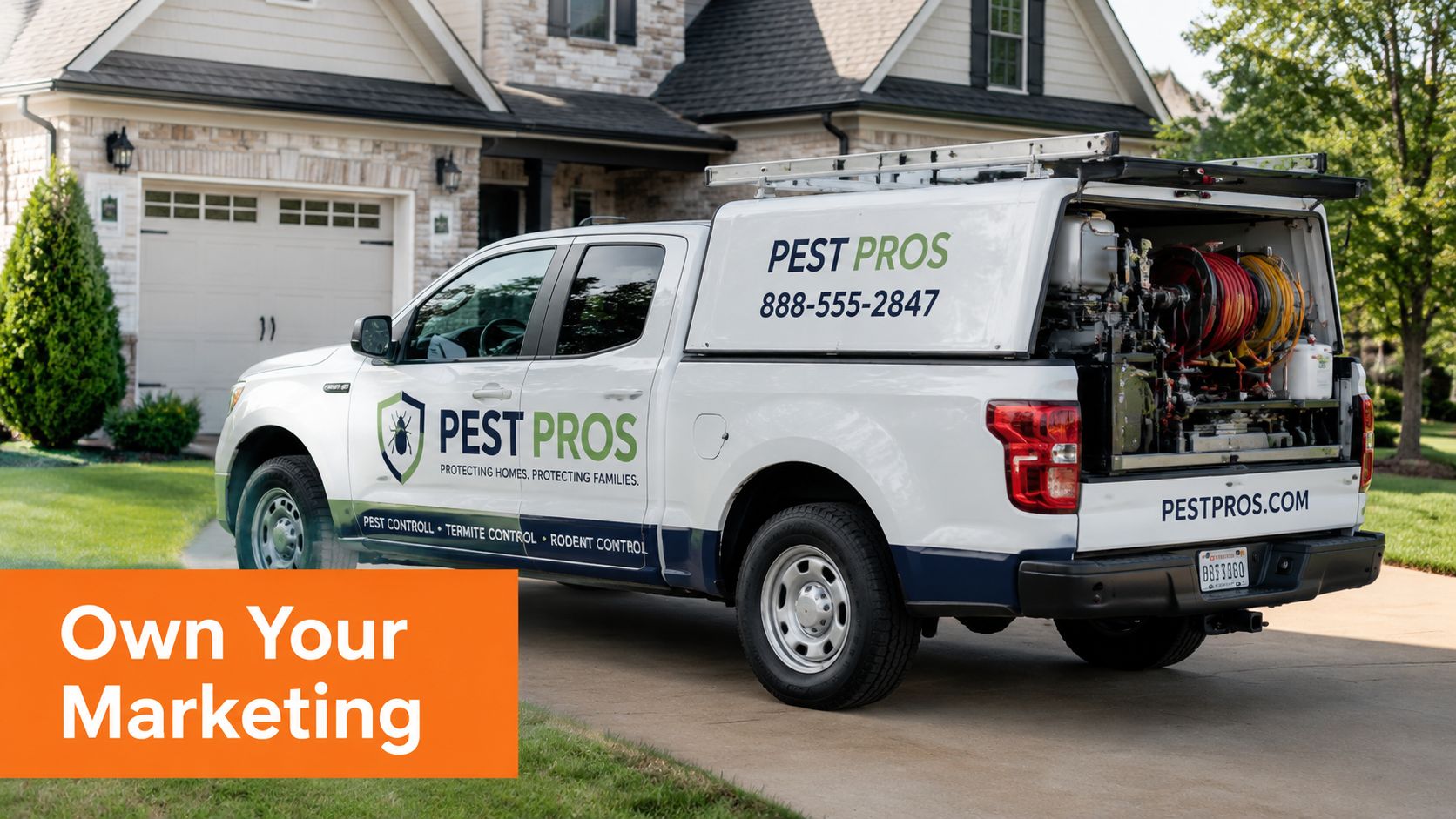
Your vehicles already advertise for you
A clean, branded truck does more than display a logo. It signals that you're established, accountable, and local.
The difference between effective vehicle branding and wasted spend usually comes down to clarity:
- Readable business name
- Primary phone number
- Simple service identifiers
- Clean design that doesn't look cluttered
People don't study a truck. They glance at it. If the design is overloaded, the message disappears.
Use jobsite spillover the smart way
Door hangers and flyers still have a place, but mass drops are usually inefficient. Hyper-local distribution works better.
If your team is already handling a rodent problem on one street, the nearby homes are more relevant than a random suburb on the other side of town. The same logic applies to termite activity, mosquito issues near certain property types, or wasp complaints in tightly packed neighborhoods.
A simple field routine works well:
- Finish the current job professionally.
- Leave tightly targeted material with nearby homes.
- Match the wording to the problem already active in that pocket.
- Give the office a heads-up in case response comes in quickly.
Neighbor targeting works best when it's tied to a real local issue, not a generic saturation play.
Ask for referrals when relief is highest
The best moment to ask for a referral or review is right after the customer feels the problem is under control. That's when the emotional value of your service is most obvious.
Keep the ask simple. Don't give a speech. Don't make the customer work to figure it out.
A dependable script is enough:
- For reviews: ask right after the service outcome is clear
- For referrals: mention neighbors, family, or nearby landlords who might have similar issues
- For repeat service: remind them what to watch for next by season or pest type
This kind of marketing doesn't feel like marketing because it's attached to service delivery. That's why it works.
Track Your Results and Automate the Work
Monday starts with three termite calls, two mosquito quote requests, and a rodent callback from last week. By Friday, it is easy to feel busy and still have no clear read on which marketing produced booked work. That is how pest control owners waste money. They keep funding whatever felt active instead of whatever produced revenue.
A simple scorecard fixes that.
Track the numbers that affect payroll
You do not need a bloated dashboard. You need a short list of numbers that tie directly to jobs, cash flow, and repeat service.
Use a weekly review that answers four questions. Which channel produced qualified leads. Which service lines booked. How well the office converted calls into jobs. Which jobs turned into ongoing value.
| Metric | Why it matters |
|---|---|
| Qualified leads by source | Shows which channels are producing real opportunities |
| Booked jobs by service | Shows whether termite, rodent, or mosquito campaigns match actual demand |
| Lead-to-booking rate | Shows whether the problem is lead quality, weak intake, or slow follow-up |
| Repeat work and ongoing service value | Helps you judge lead quality beyond the first job |
This matters more in pest control than in many other home service categories because demand shifts by season and pest type. A termite campaign can look weak in one month and still be the right play before swarm season. Mosquito ads may spike in spring and summer, while rodent work often gets more traction when temperatures drop. If you only track total leads, you miss what is really happening.
Track by service line, not just by channel.
If Google Ads produced 20 calls but only 3 booked jobs, the issue may be targeting, the office script, or response speed. If termite pages bring fewer leads but a higher close rate and better ticket size, that campaign may deserve more budget than the noisy one.
Automate the repeatable work
Owners usually do not need more marketing ideas. They need fewer loose ends.
Automation should cover the work that gets skipped when the schedule gets full. That includes posting scheduled content, sending review requests after completed jobs, routing leads to the right person, and triggering follow-up for estimates that did not book on the first call.
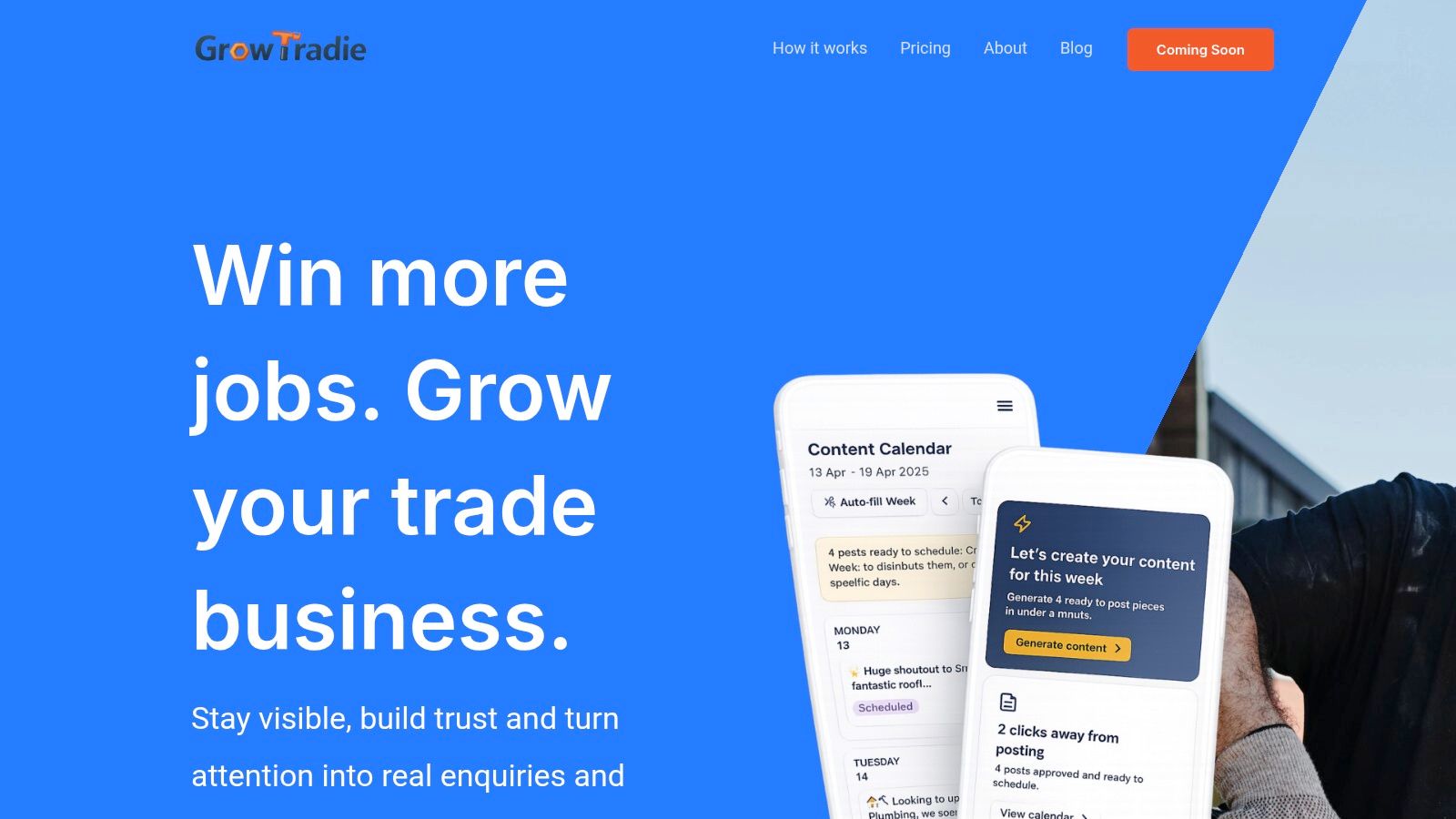
Good automation keeps your marketing active during busy weeks. It also protects service-specific momentum. If mosquito season is starting, your posts, follow-ups, and lead handling should keep that service in front of the right neighborhoods without someone on your team remembering every step manually. The same goes for rodent pushes in colder months or termite inspections when local search interest starts rising.
Automation should not decide strategy for you. It should support it.
You still need to choose which services to promote, which ZIP codes deserve budget, and when to shift focus based on seasonality and margin. The best setup is simple. It keeps the phone answered fast, keeps follow-up from slipping, and shows you which marketing turns into booked jobs instead of empty activity.
If you want a simpler way to stay visible without writing posts by hand every week, GrowTradie is built for trade businesses that need consistent local content and auto-posting without turning marketing into another job. It helps keep your business active online with service-relevant, professionally designed posts so you can spend more time running the work and less time trying to keep up with content.