
You've probably done this at least once. You walk a job, talk through colours and finishes, then send over a quick number in Word or on an invoice template because you're busy and the client wants a price fast. A day later, they go quiet or tell you they chose someone else. It usually isn't just the price. It's that your estimate didn't give them enough confidence to say yes.
That's why a good Painting Estimate Template Word file matters so much. It's not just a document to total labour and materials. It's the first proof that you're organised, clear, and worth trusting inside someone's home or on a commercial site. If the estimate feels loose, clients assume the job will be loose too.
A proper Word template also protects your margin. The painting side of the trade has too many moving parts to rely on memory, rough notes, or a static sheet that doesn't force you to spell things out. The painters who treat estimating as part sales tool and part job control system usually look more professional before they ever lift a brush.
Table of Contents
- Why Your Estimate Is More Than Just a Price
- Building Your Professional Estimate Foundation
- Detailing the Scope with Clear Line Items
- Nailing Your Pricing Markup and Profit
- Including Terms and Contingencies to Protect You
- How to Present Your Estimate to Win the Job
Why Your Estimate Is More Than Just a Price
A vague estimate loses work in two ways. First, the client can't tell what they're buying. Second, you can't properly defend your price when they compare it with a cheaper number from someone else.
I've seen painters write things like “Paint living room and hallway” with one lump sum underneath. That looks fast, but to a client it raises questions. Are ceilings included? What about trim, patching, caulking, stain blocking, two coats, or moving furniture? When the document leaves all that out, the customer fills in the blanks with doubt.

A structured estimate does the opposite. It shows the client you've thought the job through. It also keeps you from missing parts of the work while pricing. That matters because the wider trade industry is paying heavily for poor estimating. The construction and trade services industry lost approximately $1.4 trillion in 2023 due to project inefficiencies, with a significant portion tied to inaccurate estimating, and for painters, a 10% estimating error on a $4,500 job means a direct profit loss of $450, according to this breakdown of painting estimate template impacts.
What a client reads between the lines
Clients don't just read the total. They read the care behind the total.
If your estimate lists prep work, product line, surfaces included, exclusions, and terms in a clean order, the client sees a contractor who plans ahead. That lowers friction before the job starts. It also makes your price feel grounded instead of random.
A strong estimate answers objections before the client says them out loud.
What a good Word template actually does
A solid Word template gives you repeatability. Every estimate starts from the same structure, so you're less likely to forget details when you're quoting after hours or between jobs.
That's why I prefer a Word document built like a working sales sheet, not a blank page. It should help you:
- Build trust early: Show business details, scope, and terms in a format that feels official.
- Explain value clearly: Break down prep, products, coats, and finishes so the client understands your number.
- Reduce bad assumptions: Spell out what is and isn't included before the job turns into an argument.
Building Your Professional Estimate Foundation
Before a client reads one line item, they see your header. That top section tells them whether they're dealing with a proper business or someone throwing numbers around.
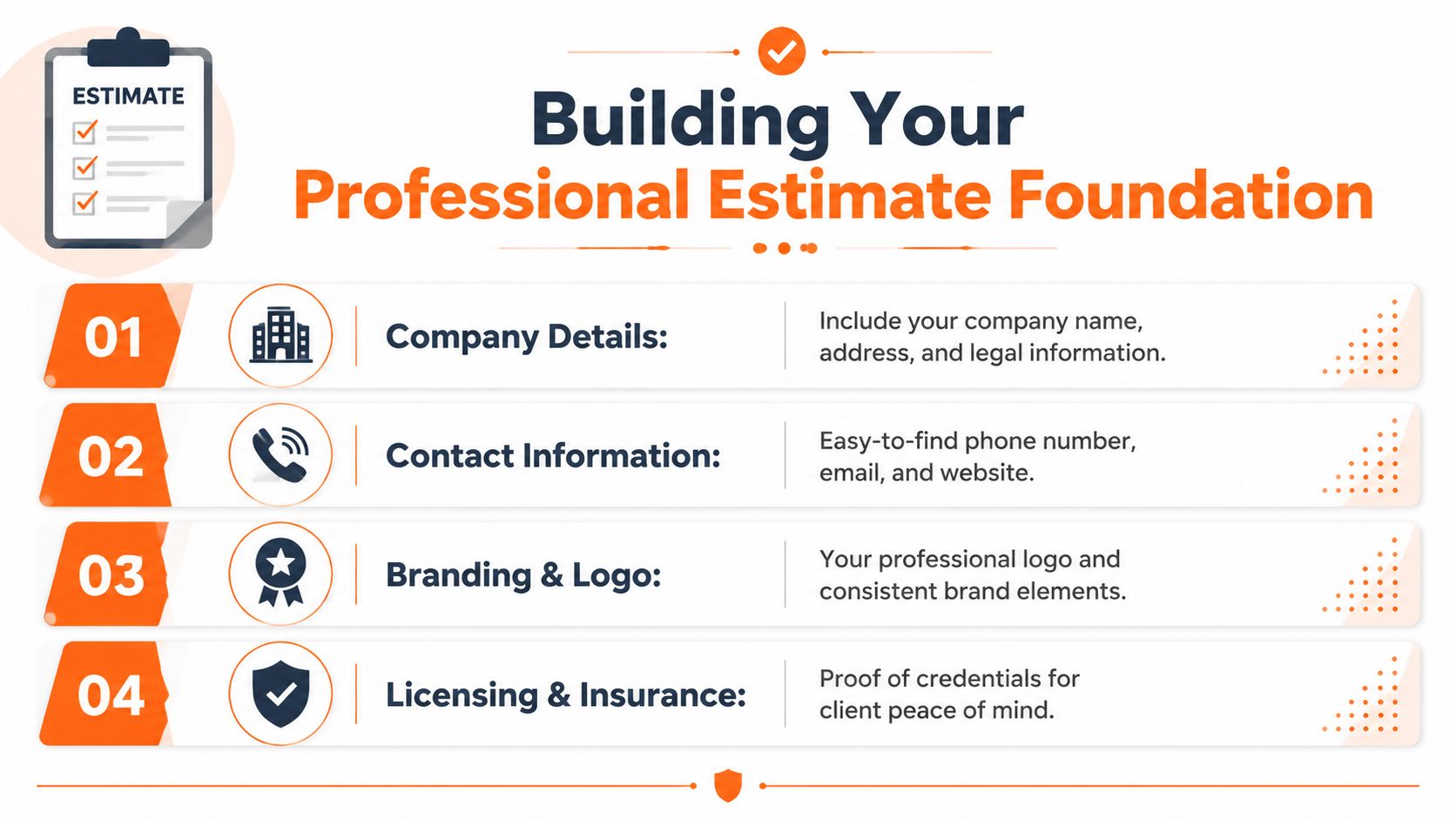
A good Painting Estimate Template Word file should open with a branded front block that's clean and easy to scan. Don't overdesign it. A simple layout with your logo at the top, contact details underneath, and estimate identifiers on the right is enough.
The fields that need to be at the top
These items should appear on every estimate, every time:
Business name and logo
Use the same branding you put on your van, cards, and invoice. Consistency makes you easier to remember.Address and contact details
Include your phone number and email where the client can spot them immediately. Don't make people hunt for a way to approve the job.Licence and insurance details
If your market expects these, show them. That small line adds reassurance fast.Client details and site address
The billing contact and the actual job location both matter. Plenty of mistakes start when those get mixed up.
The admin fields that protect your margin
The next group isn't flashy, but it saves headaches.
| Field | Why it matters |
|---|---|
| Estimate number | Helps you track versions, follow-ups, and accepted jobs |
| Issue date | Shows when the price was prepared |
| Estimate expiry date | Protects you when paint and sundries move in price |
| Prepared by | Useful when more than one person in the business quotes work |
An expiry date is especially important. A quote that sits around too long can turn into your problem if product pricing changes or site conditions shift before start day.
Practical rule: If the estimate doesn't show when it expires, the client assumes your price stays open indefinitely.
Keep the document editable without making it fragile
Many Word templates fall apart when people keep typing over the master file, break spacing, or accidentally remove a formula field or table border. Build one master version, then save each quote as a new file before editing.
Use Word tables for alignment instead of pressing the spacebar until things look straight. Lock in your header layout, then leave only the customer and job-specific fields open for editing. The same mindset that keeps your estimate tidy also helps in the office side of the business, especially if you're tightening up admin systems like bookkeeping for plumbing business owners, where consistency matters just as much as speed.
Detailing the Scope with Clear Line Items
Estimates often determine whether jobs are won or lost. Most estimate problems don't come from the total. They come from weak scope.
If your line items are too broad, clients compare you on price alone. If your line items are clear, they compare you on completeness. That's a much better conversation.
Vague wording kills trust
Don't write this:
- Bad line item: Paint master bedroom
- Bad line item: Exterior repaint
- Bad line item: Prep and paint trim
That wording tells the client almost nothing. It also leaves you open when they say, “I thought patching was included,” or “I assumed doors were part of trim.”
Write this instead:
- Better line item: Master bedroom walls. Minor patching, sand repairs smooth, spot prime repaired areas, mask floors and furnishings, apply two coats of premium wall paint in eggshell finish.
- Better line item: Front elevation timber cladding. Scrape loose coating, sand feathered edges, caulk open joints, spot prime bare timber, apply two coats of exterior acrylic.
- Better line item: Interior trim package. Prepare skirting, architraves, and door frames, fill nail holes, sand, caulk gaps where required, apply undercoat to bare sections, finish with two coats of semi-gloss enamel.
The goal is simple. The client should be able to picture the work without calling you to decode it.
Break the job into how the client thinks
For interiors, most clients think room by room. For exteriors, they think side by side or surface by surface. Build your template around that.
A practical structure looks like this:
| Area | Include |
|---|---|
| Interior rooms | Walls, ceilings, trim, doors, closets, prep notes |
| Exterior surfaces | Siding, fascia, soffits, gutters, windows, doors, prep notes |
| Special items | Stairwells, high walls, feature colours, staining, epoxy, wallpaper removal |
That structure also helps you estimate labour properly. Successful painting estimate templates link square footage to crew production rates, and a common mistake is skipping a production rate multiplier, such as 1.2x for detailed trim, which leads to a 20% underestimation of time on high-end residential jobs. That means a template shouldn't just hold text. It should reflect how long fine detail takes.
Prep work needs its own attention
Most underbids happen in prep, not topcoat application.
When I review weak estimates, the missing pieces are usually the same:
- Surface repair: Filling dents, cracks, popped fasteners, or failed caulk
- Protection: Covering floors, furniture, fixtures, and landscaping
- Coating correction: Scraping, sanding, stain blocking, mildew treatment, or primer work
If prep is substantial, don't bury it inside “paint walls.” Give it its own line. That tells the client why your price may be higher, and it gives you something concrete to point back to on site.
If a client can see the prep in writing, they're less likely to think they're paying “just for paint.”
Name the products properly
Specific product wording makes an estimate feel serious. “Premium paint” is weak. “Benjamin Moore Aura, eggshell” or “Sherwin-Williams Emerald Urethane Trim Enamel, semi-gloss” is clear.
That does two things. It justifies your price, and it reduces the chance that someone expects one finish quality while you've priced another. If the client wants an alternative product, you can revise one line item instead of reworking the whole quote.
Nailing Your Pricing Markup and Profit
A lot of painters can estimate the work. Fewer can price it cleanly.
That's the gap between staying busy and staying profitable. If your Word template only lists labour and paint, you're probably missing the costs that keep the business running between jobs.
The three buckets every estimate needs
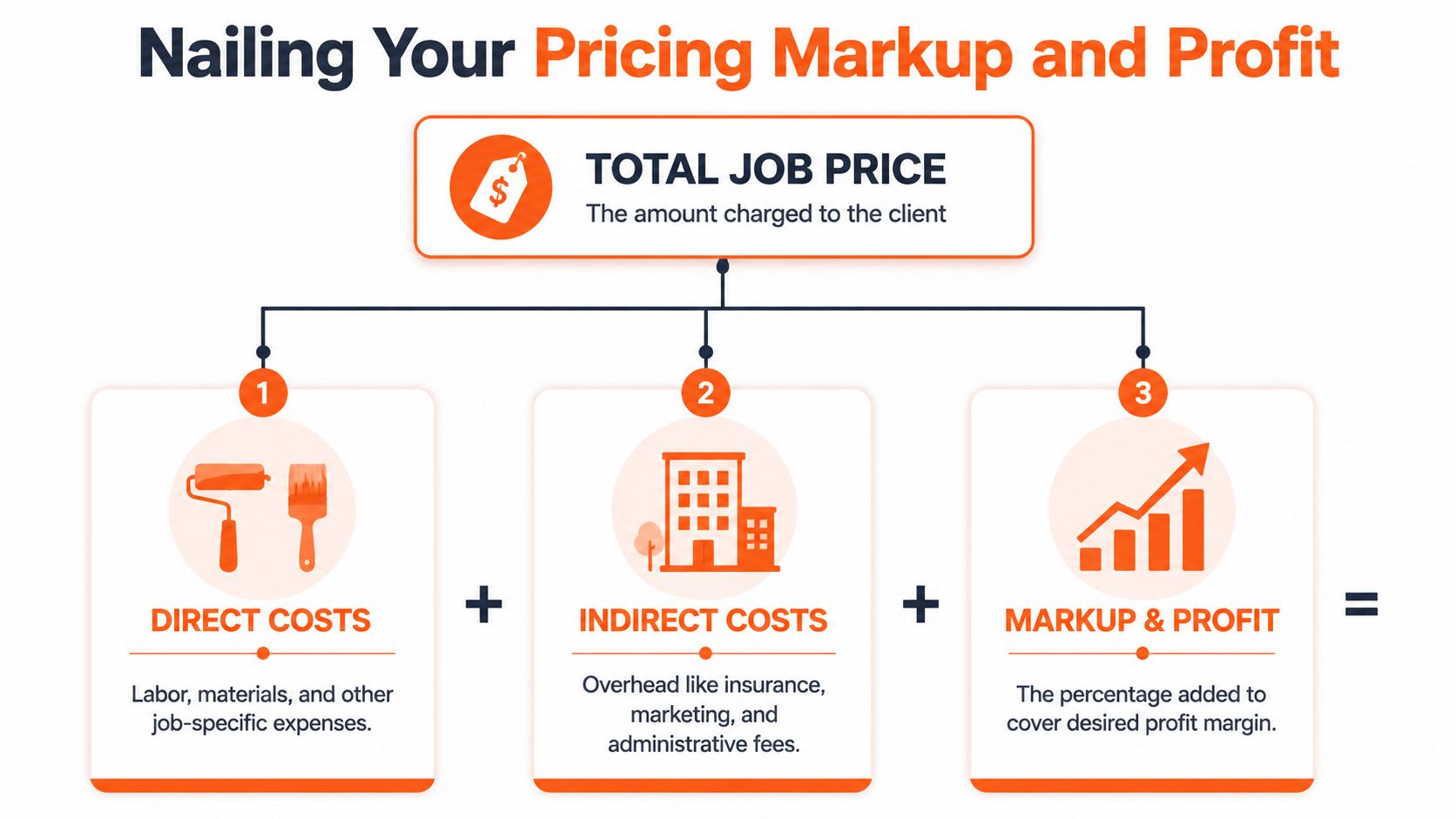
I price every job through three separate buckets. Keep them separate in your template, even if the client only sees the final total.
Direct costs
These are the job-specific costs.
They include paint, primer, fillers, tape, masking, sundries, access equipment hired for that job, and labour tied directly to doing the work. If it's consumed or used because this specific project exists, it belongs here.
Overhead
These are the costs your business pays whether this one client says yes or no. Vehicle expenses, insurance, office costs, quoting time, admin time, software, phones, and supervision sit here.
A standardized template matters because it forces you to include costs many painters forget. A 2024 study found that 78% of independent painting contractors who use detailed, standardized estimate templates achieve a profit margin of at least 12%, compared with 54% using ad-hoc quoting methods, and it notes that overhead is often 15% of total costs while profit typically sits at 10% to 15% in structured pricing systems, according to this painting estimate template analysis.
Profit
Profit is not whatever is left over if the job goes well. It needs to be added on purpose.
Too many painters treat profit like a lucky outcome. It isn't. It's a planned part of the price. If the estimate doesn't add it deliberately, the business ends up funding the project instead of benefiting from it.
What works and what doesn't
Here's the blunt version:
| What works | What doesn't |
|---|---|
| Separate labour, overhead, and profit internally | One lump-sum number you “feel is about right” |
| Use your template to force every cost bucket into the quote | Assume materials and wages are the whole job cost |
| Review margin before sending | Adjust the final price based on gut feel alone |
One of the best habits is to keep a pricing tab or hidden worksheet behind your Word process, then present the clean estimate from that. If you want a broader framework for how to price a painting job, the same rule applies. First build the cost properly, then present it clearly.
Don't let nice-looking estimates hide bad maths
A polished document won't save a weak price. The template has to make the math hard to miss.
Use your Word document to check these before anything goes out:
- Labour assumptions: Are your hours based on real production for this surface and finish?
- Material assumptions: Did you include primer, masking, plastic, fillers, and touch-up stock?
- Business costs: Did this job carry its share of overhead?
- Margin check: Does the final figure pay you properly for the risk and coordination?
Your estimate should feel easy for the client to read and hard for you to underprice.
Including Terms and Contingencies to Protect You
A clean scope and solid price still won't protect you if the rules are vague. Terms matter because painting jobs often change once prep starts and hidden defects show up.
Some painters avoid terms because they think terms sound stiff. In practice, the opposite is true. Clear terms calm clients down because everyone knows what happens if something changes.
The clause most painters leave out
One of the best protections in a Word estimate is a separate conditional scope section. This sits below the base scope and covers work that may be required if concealed issues appear after setup or surface prep begins.
That matters because industry benchmarks show 40% of painting projects exceed initial estimates due to unanticipated prep work, and including a dedicated conditional scope layer can reduce estimate revision rates by 25% and help avoid disputes. When you separate likely repairs from the base quote, the client can see the difference between contracted work and site-condition extras.
Terms worth putting in plain English
You don't need legal theatre. You need readable terms.
Use language like this inside your template:
- Payment terms: Deposit required to secure scheduling. Progress or final payment due according to the agreed stage.
- Change orders: Any work outside the listed scope must be approved in writing before extra charges apply.
- Exclusions: Estimate excludes repairs, substrate failure, hidden water damage, or other conditions not visible at inspection unless listed separately.
- Access and delays: Price assumes clear access to work areas and normal site conditions during scheduled work times.
Why this helps the sale
Clients don't mind clear process. They mind surprises.
If your estimate says nothing about rotten timber, failed plaster, peeling layers underneath, or stain bleed discovered after sanding, the client assumes the original price covers all of it. Then you're forced into an awkward conversation mid-job. When the template already carries a conditional section, you can point to a pre-agreed process instead of defending yourself on the fly.
A contingency clause doesn't make you look difficult. It makes you look experienced.
Use your Word template so the base scope is one section and the conditional scope is another. That one change makes approvals easier and keeps disagreements from getting personal.
How to Present Your Estimate to Win the Job
Most painters spend time building the estimate, then waste the opportunity by firing it off as an attachment with “Let me know if you have any questions.” That turns a strong document into a silent bid.
Your estimate should be presented, not just delivered.
A lot of contractors struggle here. A 2024 survey found that 72% of independent contractors using Word templates for the first time failed to configure them correctly, which led to inconsistent quotes. The problem wasn't just the document setup. It was that most advice focused on what to include, not how to use the estimate to win work.
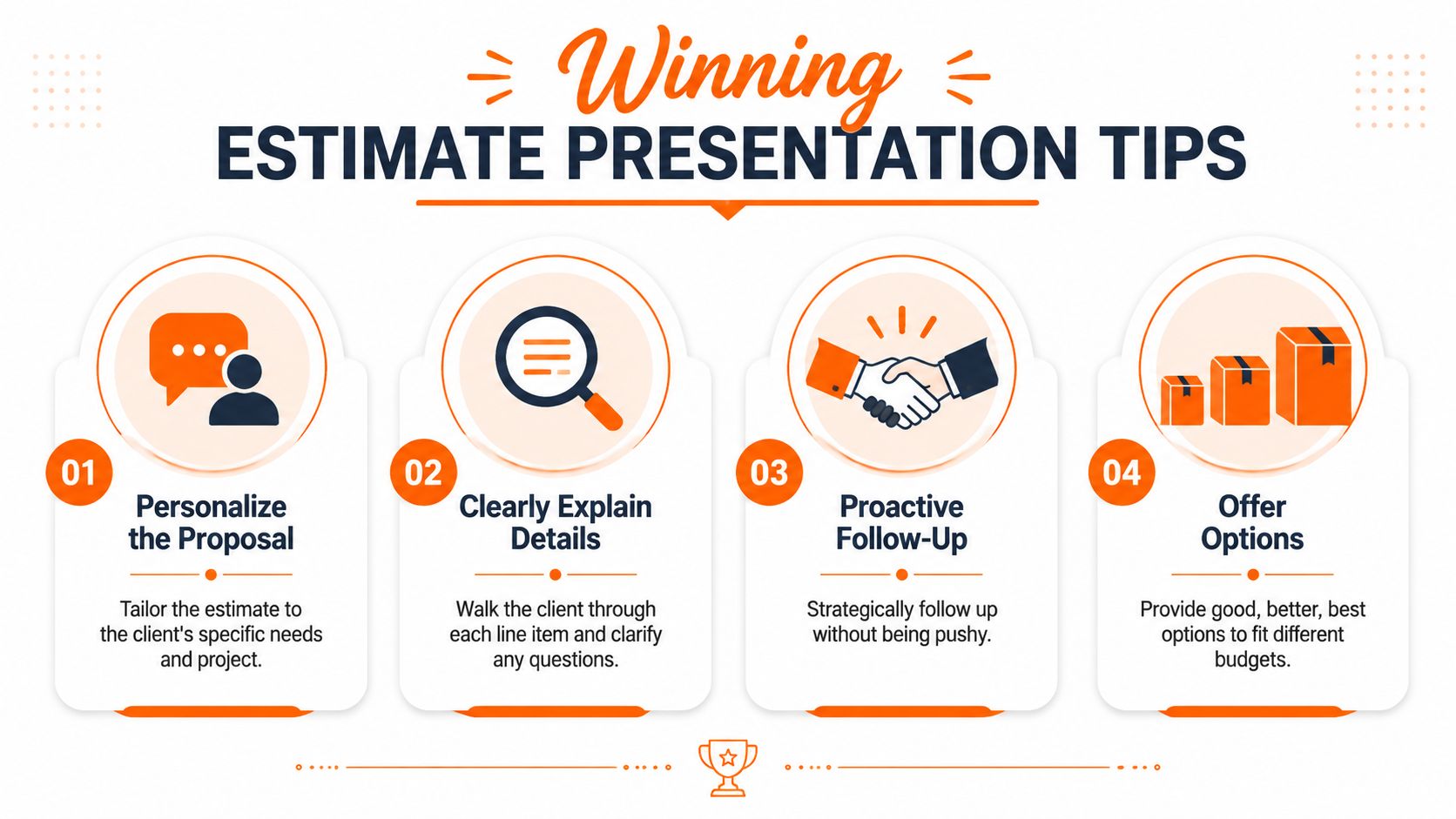
Walk the client through the important parts
If the job is worth having, it's worth a short call or meeting.
Talk them through:
- The prep standard: Explain the steps that protect the finish and the home.
- The product choice: Tell them why you selected that coating system.
- The scope detail: Show them exactly what surfaces are included.
- The options: If needed, offer a simpler package and a premium package so they can choose instead of just rejecting.
This short video gives a useful sales mindset for estimate presentation:
Use the estimate as a trust document
When you present the estimate well, the client stops asking, “Why is it so expensive?” and starts saying, “I can see what's included.”
That shift matters. Your document becomes proof of how you think, how you communicate, and how the job will run. Even related business assets, like a trade business profile template, work the same way. Professional presentation helps people feel safer choosing you.
Follow up professionally after you send it. A short message asking whether they'd like you to walk through the scope is stronger than chasing them for a yes. The estimate already did the heavy lifting. Your job is to help them understand it and make the decision easy.
If you want more enquiries without having to constantly think up posts between quotes, site visits, and admin, GrowTradie is built for that. It helps trade businesses stay visible with customized content and auto-posting, so your business keeps showing up professionally while you focus on the work.