
Most advice about converting followers to customers starts in the wrong place. It tells tradies to chase more reach, more likes, and more followers, then act surprised when the inbox stays quiet. For local trade businesses, attention without trust is just noise, and broad audiences rarely become booked jobs unless the path to enquiry is obvious.
The core issue isn't that social media doesn't work. It's that most trade businesses post content that earns reactions but doesn't move anyone toward a quote, a call, or a booking. The numbers back that up, with industry benchmarks putting average social conversion at about 1.5% to 3.0% and implying that roughly 97% to 99% of followers won't convert unless there's a clear funnel in place, according to a 2025–2026 benchmark roundup on social media follower conversion.
Table of Contents
- Why Your Follower Count Is Misleading You
- Building Trust With Localised Content That Stands Out
- Crafting Posts and CTAs That Lead to Bookings
- Setting Up Simple Funnels With DMs and Bookings
- Automating Posting and Follow-Up Without Losing the Personal Touch
- Measuring Enquiries and Iterating for Better Results
- Your Quick Implementation Checklist for Converting Followers to Customers
Why Your Follower Count Is Misleading You
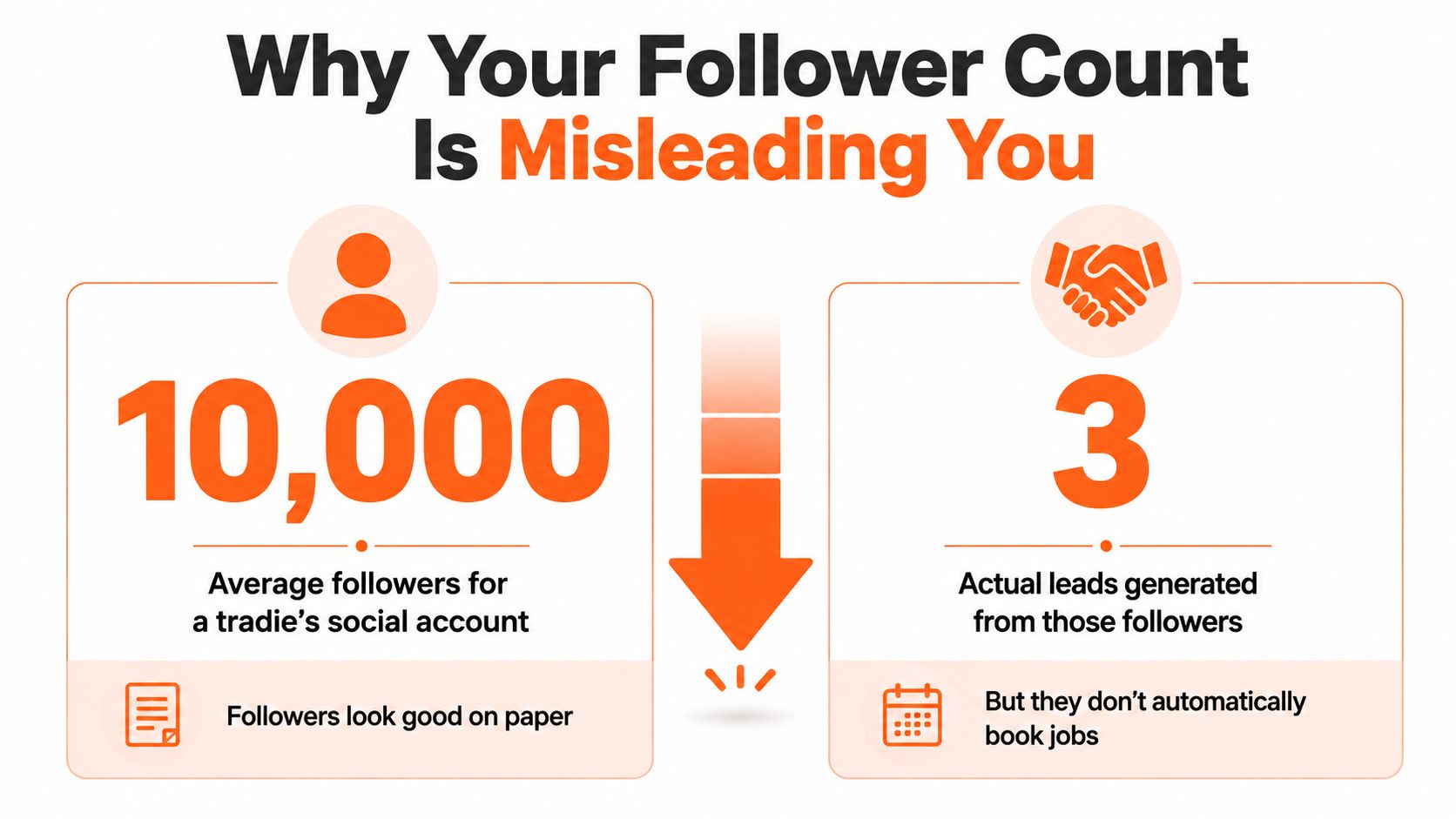
A big follower count can look like momentum, but it doesn't pay invoices. Benchmarks in multiple 2025–2026 roundups put average social media conversion at about 1.5% to 3.0%, which means most followers never turn into customers without a deliberate funnel, according to the 2025–2026 social conversion benchmark roundup. For tradies, that gap shows up as plenty of views, a few likes, and not enough genuine enquiries.
The real problem is intent, not visibility
People follow tradies for different reasons. Some want ideas for a future reno, some like watching the process, and some just enjoy local content. Very few are ready to book a plumber, electrician, carpenter, or HVAC tech the moment they hit follow.
That's why follower count is a poor proxy for revenue. A smaller audience made up of homeowners in your service area, with the right job type and urgency, can outperform a larger audience that never plans to buy. The useful question is not how many people saw the post, but how many were close enough to need your service.
Practical rule: measure attention by the jobs it creates, not the size of the audience that saw it.
Define the buyer before you chase more followers
Start with recent bookings, not with assumptions. Look at the jobs that were easiest to sell, the suburbs that called most often, and the customer type that asked for a quote without endless back and forth. That pattern tells you who your content should attract next.
Broad targeting usually creates broad engagement. Broad engagement feels active, but it often pulls in people who'll never need the service soon. If the goal is converting followers to customers, the audience has to look a lot more like your best past clients and a lot less like a random local feed.
A simple filter helps here:
- Job type: choose the work you want more of, not every job you can do.
- Area: prioritise the suburbs or towns where you already win work.
- Urgency: focus on customers who need help soon, not just people browsing ideas.
- Profitability: pay attention to the work that's worth repeating.
Building Trust With Localised Content That Stands Out
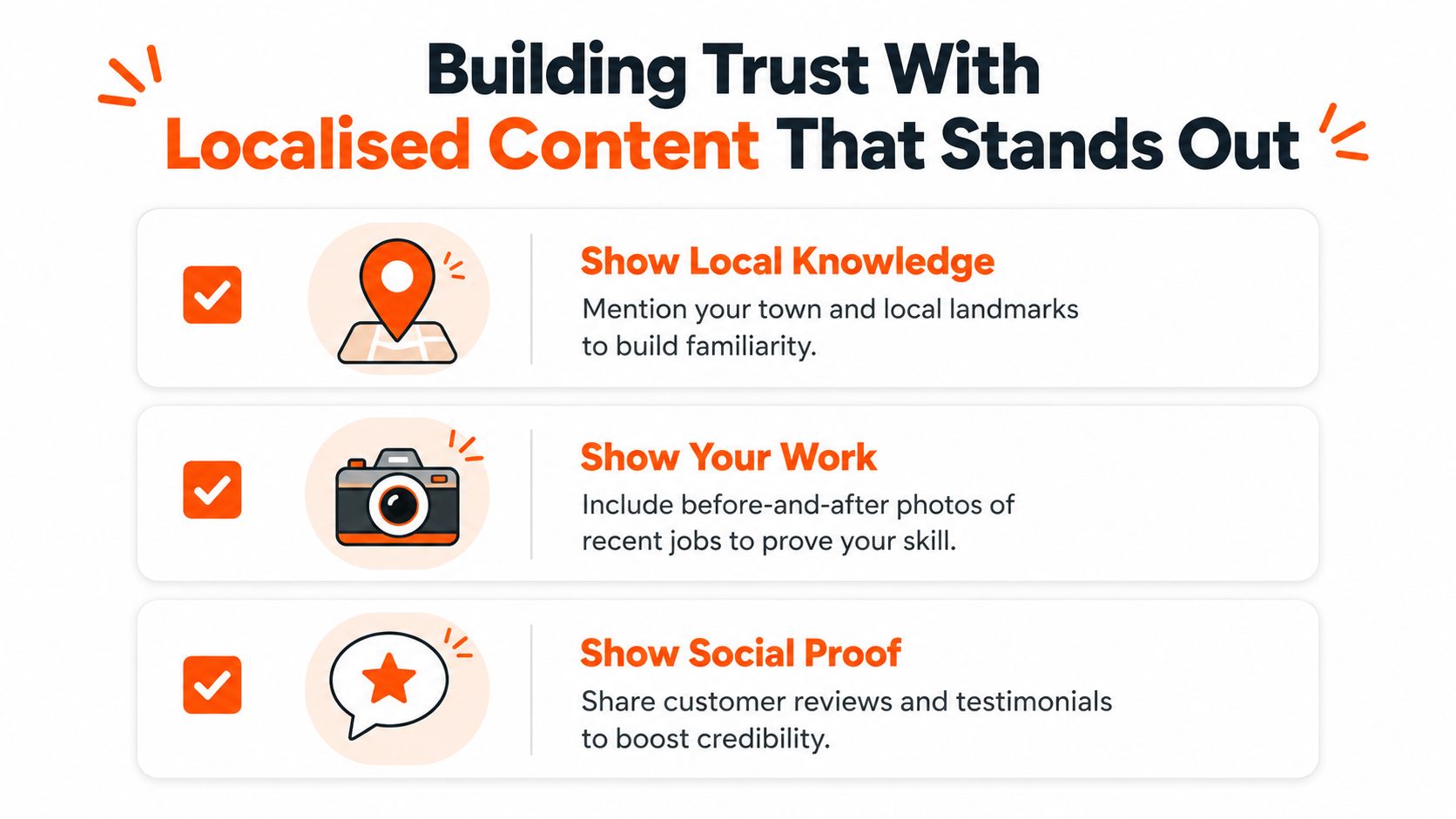
Trade customers do not hire a social profile. They hire the person or crew they trust to turn up, do the work properly, and stand behind it. Local content wins because it shows real jobs in real places, and that is what gives a homeowner confidence to make contact. A finished bathroom from your own service area will usually do more for trust than a polished graphic ever can.
Show the job, the place, and the proof
A before-and-after photo works because it is specific. It shows the work, the standard, and the kind of problem you solve. A short clip from a real site does the same thing in motion, especially when viewers can see your tools, your process, and your face.
Local detail makes that proof more believable. Name the suburb, the type of property, or the common issue you fixed, and the post feels more relevant to nearby homeowners. That level of detail tells people you are not posting for everyone, you are posting for the customers most likely to need the service soon.
Social proof should sit beside the work, not get buried in a separate highlight. A quote from a nearby customer, especially one who had the same problem, makes the next buyer feel safer. The same is true for a review that names the job and the area. Those small details do a lot of the trust-building before anyone sends a message.
Keep the mix balanced
A feed that looks like a sales brochure gets ignored quickly. A simple 60/30/10 content mix keeps the balance healthier, with most content educating, some content building community, and a smaller share promoting the service. That mix is recommended in the local service content framework, and it matches how people build confidence before they enquire.
Use the mix like this:
- Educational posts: explain a common problem, a warning sign, or a repair choice.
- Community posts: show a crew job, a neighbourhood reference, or a local shout-out.
- Promotional posts: invite people to enquire, request a quote, or book a visit.
This balance also supports the kind of brand authority local service businesses need. The point is not to sound polished for its own sake. The point is to look familiar, capable, and local enough that someone feels comfortable reaching out.
Crafting Posts and CTAs That Lead to Bookings
A good post doesn't need to be clever. It needs one next step that makes sense for the job and the customer's urgency. The mistake most trade accounts make is asking for too much at once, or not asking at all.
Make the next step painfully clear
If someone is looking at a blocked drain post, they should know whether to send a message, call, or tap a booking link. If they're looking at a finished deck or a new light install, the action can be softer, like requesting a quote or sending photos of the space. The CTA has to match the intent.
A few simple patterns work better than vague “DM us” captions:
- For urgent jobs: “Send a message now and we'll tell you the earliest available time.”
- For planned work: “Book a quote if you're thinking about a kitchen, bathroom, or outdoor upgrade.”
- For visual proof posts: “Reply with your suburb and we'll let you know if we cover your area.”
- For story sequences: “Tap the poll, then send us the result so we can point you to the right fix.”
The goal is to make one path obvious. Too many choices slow people down, and in local services, hesitation usually means they move on.
Use video where trust matters most
Short-form video performs well because it shows more than a static image can. Viewers see your face, hear how you speak, and get a sense of how you handle the job. In a trade business, that matters because the buyer is choosing a person as much as a service.
A short talking-head clip can work even better than a polished edit if the message is clear. Try a simple structure: problem, what you did, and what the customer should do next. That keeps the post grounded in the actual job, not in marketing language.
For practical posting structure and platform habits, a useful reference is how to post on social media. The main point stays the same, though, every post should move people toward one action, not five.
Setting Up Simple Funnels With DMs and Bookings
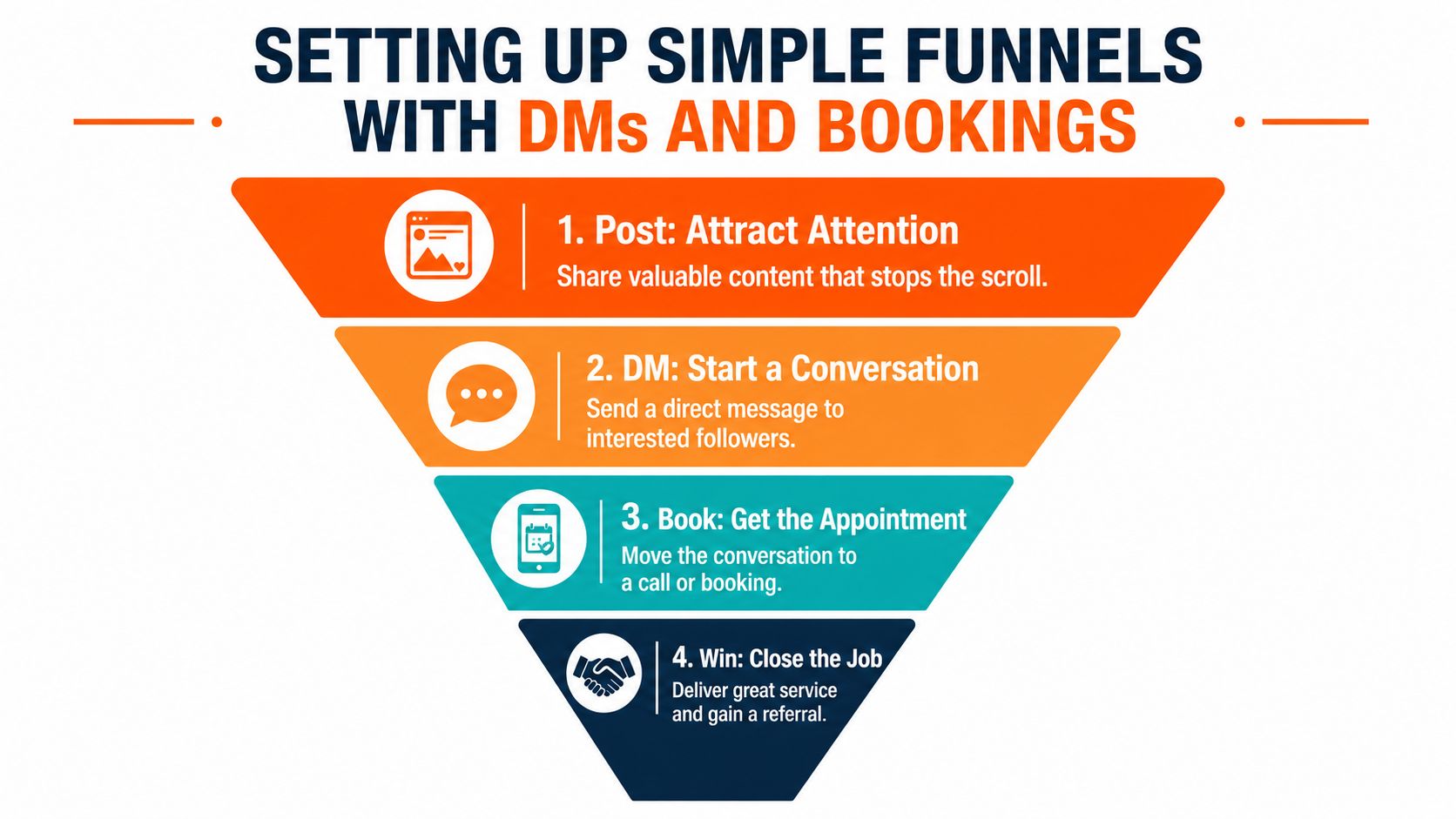
Social media rarely closes the sale on the post itself. It starts the conversation, then the actual conversion happens in a DM, a phone call, or a quote form. For local trade businesses, that handoff matters more than broad reach or a viral post. Trust builds through repeated exposure, local relevance, and a clear next step.
Treat the DM as the primary sales channel
A post should attract interest, not carry the whole burden of selling. A story poll, question sticker, or reply prompt helps separate casual viewers from people with real intent. Once someone responds, move the conversation into a DM where you qualify the job and offer the next step.
A structured path from Story poll to DM, comment-trigger to sales conversation, and email capture to nurture can turn a small share of followers into a much larger share of engaged prospects, especially when you qualify people who already know your work, as noted in the Instagram follower-to-customer playbook. The exact numbers will vary by platform, but the trade-off stays the same, targeted conversations convert better than broad outreach.
A simple DM script can sound like this:
- Ask what the job is and where it's located.
- Confirm whether it's urgent or planned.
- Offer the next step, a call, a quote link, or a booking option.
- Tag the conversation so you know where it came from.
A booking link works best when the person already trusts you enough to use it. The DM builds that trust faster than a cold link ever will.
Keep the funnel friction-free
Don't make people hunt through your profile for the next step. Put the booking path in one place and repeat it in the caption, the Story, and the DM if needed. The more obvious the path, the less likely the lead will disappear.
For a practical way to measure what is working, the social media conversion analysis guide explains conversion as the share of referral traffic that turns into action and recommends checking results by platform and content type, including videos, posts, and carousels. That matters because the same job post can perform differently in a Story, a Reel, or a feed caption.
Use a booking link that is easy to spot and easy to act on, then keep the wording consistent across your profile, posts, and replies. If you want help choosing a tool set that supports that kind of follow-through, the best social media automation tools guide is a useful place to compare options without turning the process into extra admin.
Automating Posting and Follow-Up Without Losing the Personal Touch
Consistency is hard when your day starts on-site and ends with tools in the ute. Sporadic posting creates gaps, and gaps make people forget you exist. Automation solves the visibility problem, as long as it supports real conversation instead of replacing it.
Automate the repetitive work, not the relationship
The useful part to automate is the routine, not the human reply. Scheduled posts, saved responses, and a basic follow-up sequence can keep your profiles active without turning you into a machine. That matters because your customer still wants to feel like they're dealing with a real tradie, not a bot.
If you're using a platform built for trade businesses, the appeal should be simple, fewer tasks, cleaner posts, and less time spent staring at a blank caption box. The right setup helps you stay visible between jobs, then respond personally once someone reaches out. For trade-specific posting support, the relevant resource is best social media automation tools.
Use automation to protect follow-through
Most leads don't fail because the original post was weak. They fail because the reply came late, the next step was unclear, or the follow-up never happened. A saved response that thanks the person, asks for their suburb, and points them to a booking link can save time without sounding cold.
A light-touch workflow is enough:
- Auto-publish: keep the feed active on a schedule.
- Saved replies: answer common DM questions faster.
- Follow-up prompts: check in with people who showed interest but didn't book.
- Tagging: mark leads so you know which posts started the conversation.
That setup keeps the business moving even on busy weeks. It also gives you more chances to turn one good interaction into a booked job.
Measuring Enquiries and Iterating for Better Results
Likes do not tell you whether a post brought in work. Enquiries do. If you want stronger results, track the points where interest turns into action, and the places where people drop off before they book.
Track the numbers that show buying intent
The useful metrics are the ones tied to customer movement, not vanity. Focus on enquiries, DM conversations started, quote requests, and bookings converted. You also need to know which post started the process, so you can keep repeating the content that leads to real jobs.
A useful pattern is to look at the whole path, not just the final booking. Some readers will go from a post to a DM, then to a quote request, then to a job. That is normal for local service businesses, where trust builds over a few interactions and the buyer often wants to check reviews, compare options, or talk it through with someone else before committing. The data-backed social revenue article shows that conversion often happens in stages, not in one jump.
A basic review rhythm helps:
- Weekly: note how many DMs came in and which posts triggered them.
- Monthly: compare which content formats created the most enquiries.
- Quarterly: trim the topics that got attention but did not lead anywhere.
Give your content enough time to work
Short measurement windows can make a working funnel look weak. Buyers for trade services often need repeated exposure before they reach out, and they may not act until they have seen a few posts, checked your work, and had time to decide whether they trust you. That lag matters because many jobs are considered, delayed, or discussed with a partner before the enquiry is made.
Judge the content by pattern, not by one post. If a run of local project updates keeps bringing in the same suburb enquiries, that is useful even if the likes are average. The goal is not to impress the feed, it is to keep creating the next conversation. As noted earlier, a local service conversion framework also points to the value of multiple touchpoints before a customer buys.
Your Quick Implementation Checklist for Converting Followers to Customers
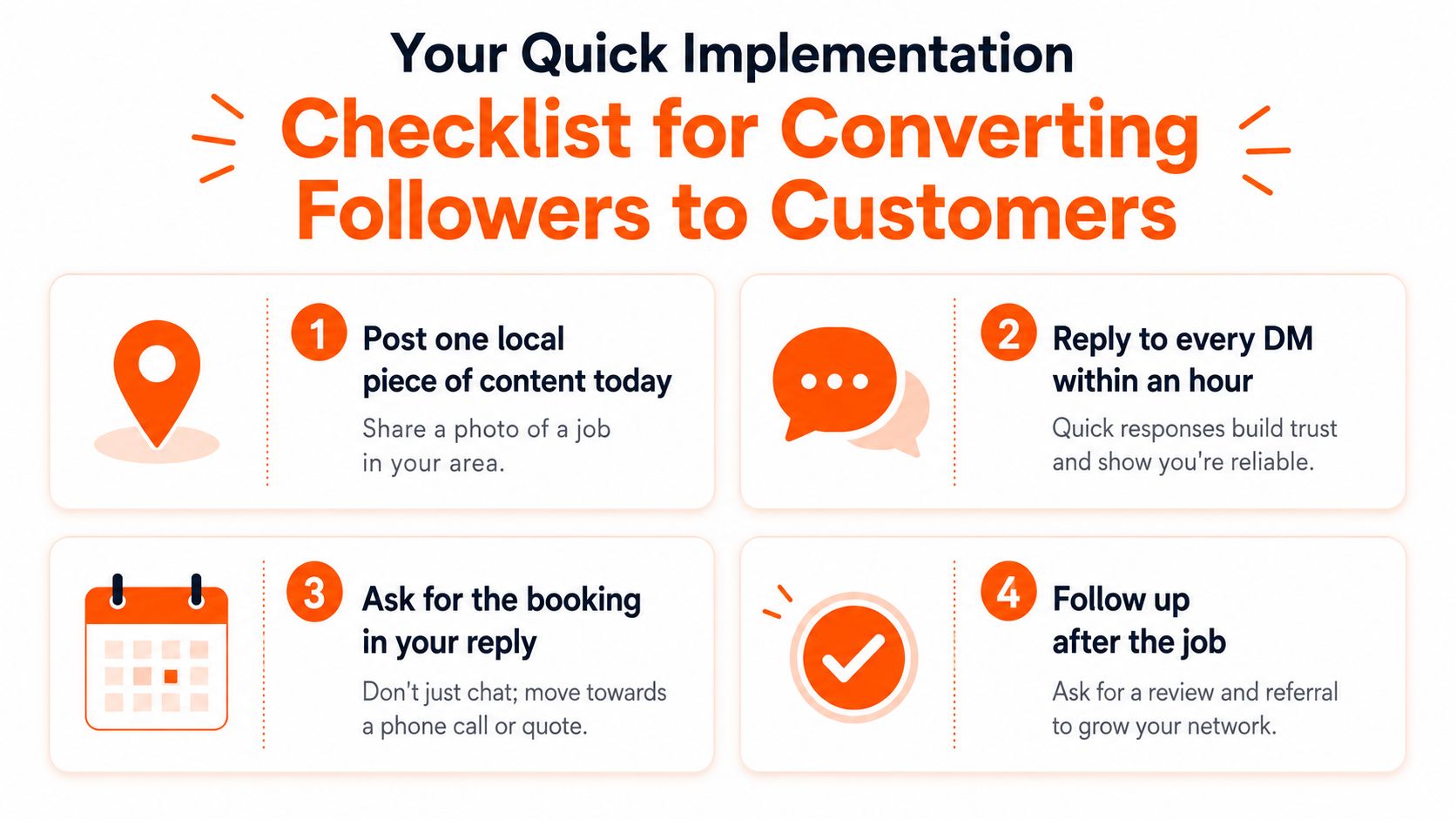
Start with the part that removes the most guesswork, your audience. Write down the job types you want more of, the areas you want to work in, and the kinds of customers who already book easily. That gives every post a better target than “everyone nearby.”
A simple day-one checklist
- Post one local piece of content today. Share a job photo from your area, not a generic stock image. It tells people you're active and local.
- Reply to every DM quickly. Fast replies build trust because they show you're organised and reachable.
- Ask for the booking in your reply. Don't leave the conversation hanging, move it toward a call, quote, or booking link.
- Follow up after the job. Ask for a review and a referral while the work is still fresh in the customer's mind.
Then tighten the content itself. Keep the mix balanced, show real work, and make every post point to one action. If a post gets attention but no enquiries, it probably needs a clearer CTA or a better audience fit.
The best local social accounts don't look busy, they look reliable.
That's the standard to aim for. Consistent visibility, local proof, and a simple enquiry path will do more for your business than chasing viral reach ever will.
If you want a simpler way to keep that system running, GrowTradie is built for tradies who need steady local visibility without having to write every post themselves. It helps turn social attention into real enquiries and booked jobs, so your profiles keep working even when you're busy on-site.