
A typical cost for chimney sweep work in the U.S. lands around $129 to $400, with a common midpoint near $250. The final bill usually moves because of inspection level, chimney condition, and access, not because the visit itself is some fixed flat fee.
You might be comparing a quote from one neighbor who paid for a quick routine sweep and another who got camera work, a tougher roof setup, or a more formal inspection. Those jobs can look similar from the curb, but they're not priced the same once you factor in the actual condition of the flue and what the sweep is expected to document.
Table of Contents
- What You Actually Pay for a Chimney Sweep in 2026
- The Three Prices Hiding Inside Every Chimney Sweep Quote
- Inspection Levels and Why They Change the Bill
- How Chimney Condition Pushes the Same Job Into a Higher Price Band
- Add-On Fees That Often Surprise Homeowners
- Routine Annual Service Versus Problem-Driven Sweeps
- How to Get an Accurate Quote and Avoid Overpaying
- Smart Ways to Lower Chimney Sweep Costs Without Cutting Corners
What You Actually Pay for a Chimney Sweep in 2026
A homeowner asking about the cost for chimney sweep work usually wants one number, but the market doesn't work that way. In the U.S., independent pricing guides put the typical range around $129 to $400, with average figures clustering near $250 to $275. HomeAdvisor lists a normal range of $129 to $381 and an average spend of $254, while Jobber says chimney sweep companies commonly average $275 and shows service prices like $150 to $375 for a wood-burning fireplace and $80 to $150 for a gas fireplace. HomeAdvisor's chimney cost guide makes the spread clear, and that spread is the main point.
The reason the range is wide is simple. A chimney sweep quote usually bundles more than brushing soot out of a flue. The final number depends on what type of chimney you have, how easy it is to reach, and how dirty or complicated the system is.
Practical rule: if two quotes look wildly different, compare what's included before you compare the number.
A standard residential sweep across major U.S. pricing guides tends to land roughly in the $150 to $400 band, with a common midpoint around $200 to $300. That's a better benchmark than any single “average” because it reflects how the market really bills. The sweep itself is only one piece, and the rest of the bill can move quickly once the job involves heavier buildup, tall roofs, or a more formal inspection.
For trade customers, that matters because a flat number doesn't tell the homeowner what they're buying. For homeowners, it matters because a low quote can look attractive until the actual job turns into a more technical visit with more risk, more time, and more documentation.
The Three Prices Hiding Inside Every Chimney Sweep Quote
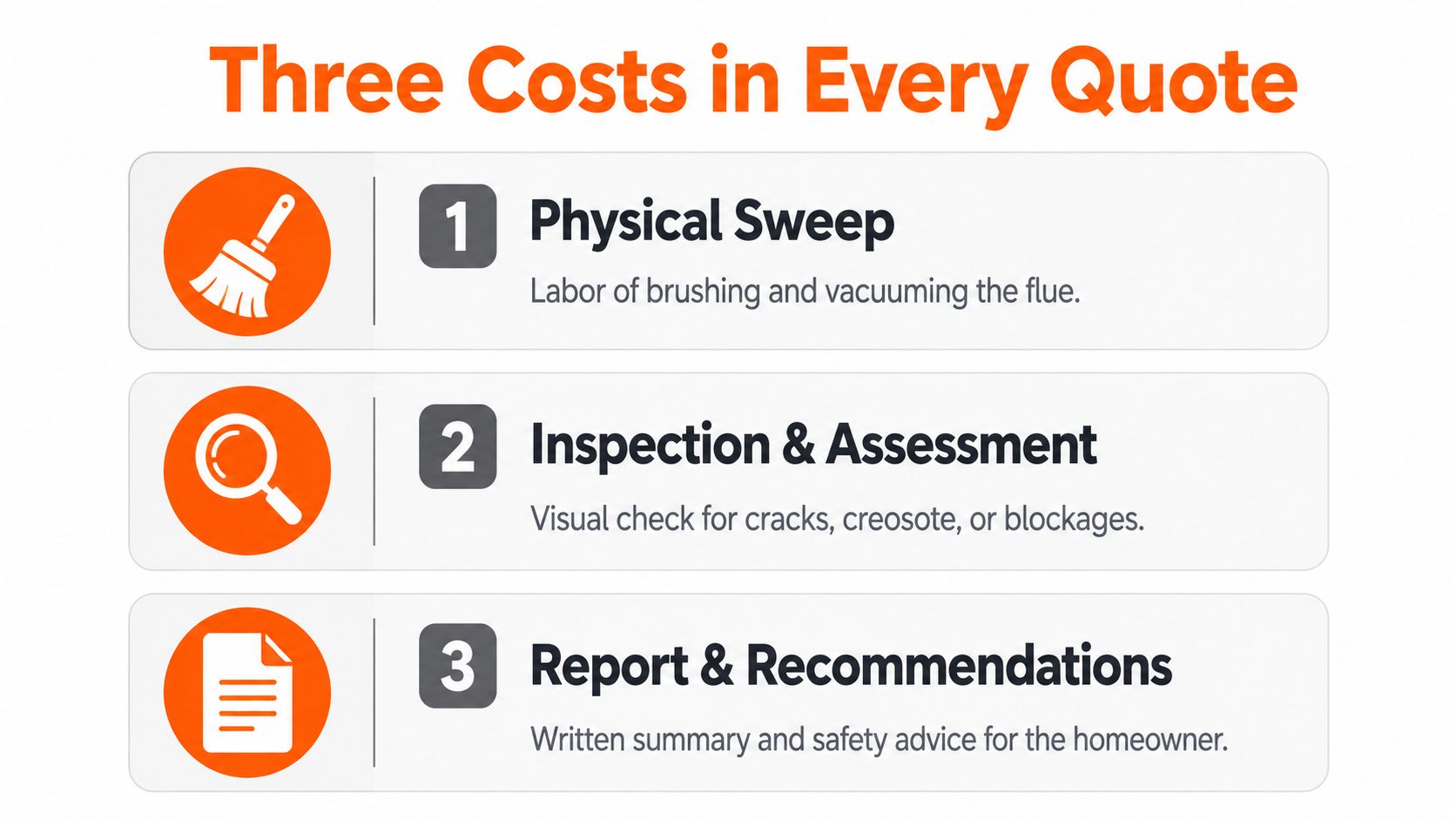
A fair chimney sweep quote usually has three layers hidden inside it. The first is the physical sweep, which is the labor of brushing and vacuuming the flue. The second is the inspection, which can range from a quick visual check to a camera-based assessment. The third is the access and condition layer, which covers things like roof height, multiple flues, heavy creosote, and tight runs that slow the job down.
What the base sweep really covers
A basic sweep pays for the hands-on work. That means getting tools in place, running the brushes through the flue, and clearing loose debris from the system. On an uncomplicated job, this is the part homeowners assume they're paying for, and it's usually the lowest-cost portion of the visit.
The problem is that a quote rarely stops there. The technician still has to check the system, decide whether the chimney needs a more detailed look, and work safely around access issues. That's where the rest of the bill starts to grow.
Why inspection and reporting add value
Inspection changes the price because it changes the job. This pricing guide for tradies is useful as a pricing mindset reference, because the same principle applies here, the work gets priced by scope, not just time. A sweep with no meaningful inspection is not the same service as a sweep paired with documented findings.
A mid-range quote around $250 often reflects a basic sweep plus a standard visual inspection. Once the job needs camera work, detailed reporting, or tougher access, the bill can move toward $400+. That's not arbitrary, it's the cost of the extra time, equipment, and risk.
A quote that separates sweep, inspection, and report is usually easier to trust than one number that tries to hide all three.
The clearest way to read a quote is to ask one question, what exactly is included? If the answer is vague, the final bill usually isn't.
Inspection Levels and Why They Change the Bill
Inspection level is the biggest pricing variable most homeowners never hear about. The National Fire Protection Association uses a three-level framework, and those levels don't just change the paperwork, they change the price.
| Level | What It Covers | When It's Needed | Typical Price Range |
|---|---|---|---|
| Level 1 | Basic visual check of accessible parts of the system | Routine annual service, no known change in the system | $90 to $210 |
| Level 2 | Camera work, reporting, accessible attic or crawlspace checks | Home sale, change in fuel type, weather damage concern, or a more detailed diagnostic need | $250 to $500 |
| Level 3 | Invasive inspection, possibly opening walls or removing parts of the chimney | Serious suspected damage | $500 to $5,000 |
A Level 1 inspection is the one most homeowners expect when they schedule a standard sweep. It's the routine, low-drama option, and it's often what's bundled into the headline price. A Level 2 inspection is different because it goes deeper. It uses camera work and reporting to look for concealed damage, access problems, or issues that aren't obvious from a visual check alone. The added cost reflects that diagnostic work, not just extra time on the roof. This inspection pricing guide shows how much the bill can move once the inspection becomes more formal.
A Level 3 inspection is a different category altogether. It's reserved for serious suspicion of damage, and it can involve opening walls or removing parts of the chimney system. That's why the price range jumps so high.
For homeowners, the decision point is straightforward. If nothing has changed and the system is in normal shape, a Level 1 usually fits. If you're selling the house, changed fuel type, had a storm issue, or suspect hidden damage, a Level 2 is the more realistic quote. A cheap sweep price that doesn't spell out inspection level can be misleading, because the number may only cover the lightest tier.
How Chimney Condition Pushes the Same Job Into a Higher Price Band
A chimney in decent shape costs less to service because the work stays predictable. A neglected chimney costs more because the technician has to deal with buildup, blockages, and a longer diagnostic process. That's why two houses on the same street can get very different prices for what sounds like the same appointment.
A well-kept system stays near the low end
If a homeowner has booked annual service for several years in a row, the flue usually stays manageable. Access is usually normal, buildup is lighter, and a Level 1 inspection is often enough. In that case, the bill tends to sit toward the lower end of the market band, because the technician isn't fighting layered deposits or chasing hidden problems.
That's the kind of job where the quote feels straightforward. The technician can assess the system quickly, do the sweep, and issue a basic report without extra steps.
A neglected flue changes the job entirely
A homeowner who skipped maintenance for years is buying a different visit. Visible soot staining, thick creosote, or something like a bird's nest near the cap can push the work into a heavier sweep with more time on site. Once the system looks suspicious, camera work often becomes sensible, and the quote can move into a Level 2 inspection band.
That's where pricing can climb well past $400, and in complex cases it can reach the higher figures seen in current pricing guides. Project Cost Range's chimney sweep guide notes that heavy buildup, tall chimneys, and added camera inspection can all raise the bill, and severe cases may run to $780 or even higher when the inspection becomes more invasive. The point isn't that every neglected chimney costs that much, it's that neglect creates more work, and more work costs more.
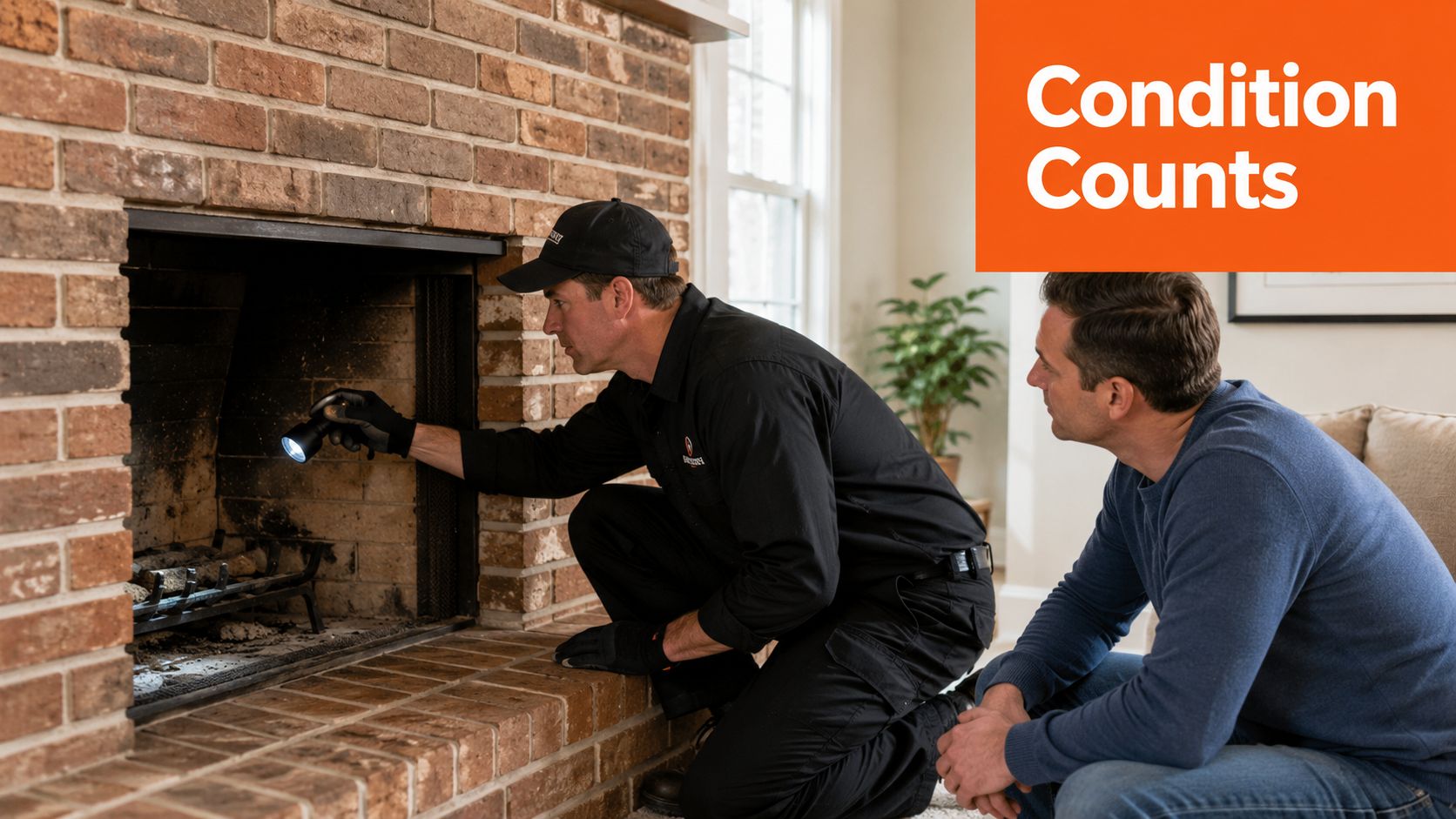
A better way to think about it is this. The same appointment can be routine maintenance or problem detection. Once the technician sees heavy buildup or evidence of animals, the job stops being a quick sweep and starts becoming a condition-based service.
This floor tiling cost guide is a good reminder that trade pricing often rises with preparation and complexity, not just the visible finish. Chimney work behaves the same way.
Add-On Fees That Often Surprise Homeowners
Add-ons are where a simple quote turns into a larger bill. A homeowner may think they're buying a sweep, then discover the quote excludes camera work, animal removal, or minor repairs that the technician can't responsibly ignore once the chimney is open.
The extras worth asking about upfront
- Camera or CCTV scan: This is often priced separately and can add $50 to $150 when it isn't already bundled into the inspection.
- Bird nest, animal, or debris removal: Depending on access and whether pest-related work is involved, this can add $100 to $300 or more.
- Cap, crown, or damper issues: These are usually separate repair items, not part of the sweep itself.
- Multi-flue systems: Each extra run adds time, setup, and inspection work.
- Wood stove liners and connectors: Extra components mean extra labor because the technician has more surfaces and transitions to check.
The important move is to ask for a written breakdown before the job starts. If a technician sees damage, debris, or a blocked section, it's better for everyone if the quote already explains how those discoveries will be priced.
Practical rule: ask what counts as a separate line item before the technician gets on the roof.
Homeowners usually don't mind paying for real work. They mind discovering it after the fact. Transparent add-ons solve that problem because they turn surprises into decisions.
Routine Annual Service Versus Problem-Driven Sweeps
A routine annual sweep and a problem-driven sweep are not the same purchase. One is preventive, the other is reactive, and the price follows that difference.
Routine service usually stays predictable
A regularly maintained chimney with normal access usually lands near the lower end of the market. For many homeowners, that means planning around a $150 to $250 type of visit when the system is in reasonable shape and the inspection stays basic. The work is more predictable because the buildup is lighter and the technician doesn't need extra diagnostic steps.
That's also why annual scheduling tends to feel easier on the wallet. The system hasn't had time to become a project.
Problem-driven work costs more because the risk is higher
A smoky fireplace, a strong odor, a real estate transaction, suspected animal entry, or years of skipped service changes the entire job. The technician has to look harder, possibly use a camera, and often move into a more formal inspection level. That pushes the quote into a higher band because the visit is no longer routine maintenance.
This chimney sweep pricing guide also shows how chimney type affects price, with different averages for gas fires, wood fires, unlined chimneys, and inglenook systems. That type-based difference is a useful reminder that the same appointment can cost more or less depending on how the chimney is built.
One more point matters for homeowners comparing quotes across markets. A quote on an unlined or complex system is usually not a good apples-to-apples comparison with a standard flue. The construction changes the labor, and the labor changes the bill.
How to Get an Accurate Quote and Avoid Overpaying
The fastest way to get a fair quote is to give the technician enough detail to price the job. If you leave out key facts, the estimate is likely to drift once the visit starts.
What to tell the sweep before booking
- Chimney type: Say whether it's masonry or factory-built metal.
- Fuel type: Tell them if it's wood, gas, oil, or pellet.
- Last service date: The more recently it was serviced, the more likely it is to stay in a lower band.
- Known issues: Mention smoke, odors, cracks, loose parts, or visible debris.
- Roof height and access: A tall roof or awkward access changes the labor.
- Number of flues: Multiple flues mean multiple runs and more time.
Those details help the sweep decide whether the quote should cover a simple Level 1 visit or something more involved. They also keep the final price from ballooning after arrival.
What to ask before you agree
Ask which inspection level is included, whether camera work is bundled, what counts as an add-on, and whether the quote is fixed or time-and-materials. A quote that refuses to separate sweeping from inspection is a warning sign. So is a bid that comes in dramatically below every other quote with no explanation.
A low number with no detail is often the most expensive quote of all.
For homeowners who want a straightforward way to compare bids, the best test is whether each company is quoting the same scope. If one quote includes a report and another doesn't, they're not really competing on price yet.
This guide on average snow removal costs is another good example of why scope matters in trade pricing. The service label matters less than what's being done on site.
Smart Ways to Lower Chimney Sweep Costs Without Cutting Corners
The easiest way to keep the cost for chimney sweep work reasonable is to stop the chimney from becoming a project. Annual service, a clear record of prior work, and quick fixes for small issues usually keep the job in the lower price bands. Once you let buildup, odors, or access problems stack up, the quote naturally rises.
A good homeowner checklist is simple. Schedule before peak season, keep your previous reports, and deal with small items like caps or dampers before they trigger a bigger visit. If the chimney has been serviced yearly and is in decent shape, a plan around $150 to $275 is usually realistic. If it's been neglected, has heavy buildup, or needs a formal inspection, $300 to $500 or more is the safer expectation.
For tradies, the lesson is just as clear. Condition-based quoting feels more honest because it matches how the job is priced on site. When the estimate separates sweep, inspection, and add-ons, homeowners understand why the number moved, and that makes approval easier.
If you want a cleaner way to quote chimney work, present the scope before the number. Build transparent, condition-based estimates with GrowTradie, and make it easier for homeowners to say yes to the right job.