
Some weeks the phone won't stop. You're quoting jobs, handling emergencies, and trying to keep up. Then the next week goes quiet, and there's no obvious reason why.
That swing wears people down. Most plumbers don't need more marketing theory. They need a practical system that helps the right customers find them fast, trust them quickly, and call before they ring someone else. That matters even more in plumbing because more than 80% of plumbing service calls come from people dealing with an immediate, high-intent home crisis, which means your online presence has to speak to urgency and availability first, not general advice or broad branding, according to Real Time Marketing's plumbing marketing overview.
Digital marketing for plumbers works best when it's built around one simple outcome. More qualified phone calls from local people who need help now.
Table of Contents
- Your Blueprint for Consistent Work
- Become the First Plumber People Find Locally
- Turn Your Website Into a Job-Booking Machine
- Build Unshakeable Trust with Customer Reviews
- Use Targeted Ads for Immediate Job Requests
- Putting It All Together with a Simple System
Your Blueprint for Consistent Work
The feast-or-famine cycle usually isn't random. A lot of plumbers rely on referrals, repeat customers, and whatever happens to come in. That can work for a while, but it leaves too much to chance. When jobs slow down, most owners react by trying a bit of everything at once. A few social posts, a boosted ad, maybe a website tweak. Nothing sticks because there's no system behind it.
The plumbers who break that cycle build around urgent demand. A homeowner with a burst pipe doesn't compare ten companies. They grab their phone, scan quickly, and call the first business that looks legitimate, local, and available.
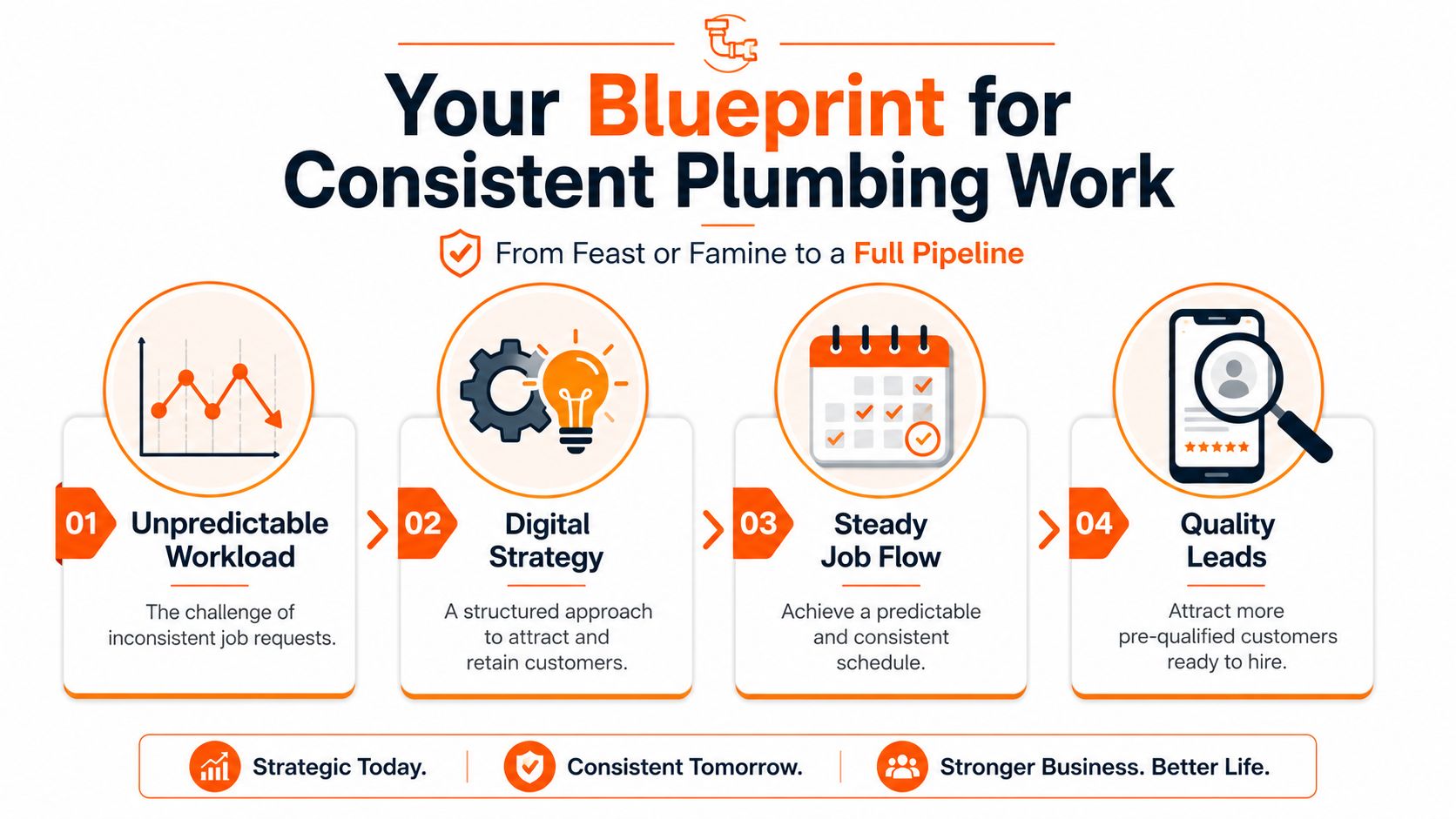
What steady demand actually comes from
Consistent work usually comes from four pieces working together:
- Being easy to find: Your business has to show up where local customers are already looking.
- Looking trustworthy right away: Real photos, complete business details, and strong reviews do more than polished slogans.
- Making it easy to call: If someone has to hunt for your number, you've already lost ground.
- Following up after the job: Happy customers become repeat customers and future referrals when you stay in touch.
That's the practical frame for digital marketing for plumbers. Not vanity metrics. Not complicated dashboards. Just a repeatable setup that turns online visibility into booked jobs.
Practical rule: If your online presence doesn't help a stressed homeowner decide in under a minute, it's costing you work.
Think like the customer, not the marketer
A lot of trade businesses talk online the way suppliers talk. They list technical service terms, long company histories, and broad claims about quality. Customers in a plumbing emergency aren't reading like that. They're checking three things fast. Do you serve their area, do you handle their problem, and can they reach you now.
That's why the best-performing setup is simple. Your local profile brings in the searcher. Your website removes doubt. Your reviews make you the safer choice. Your paid ads give you extra reach when you want calls now, especially for high-value emergency work.
If you treat each part like a separate task, it feels like more work. If you treat it like one system, it becomes manageable. One piece supports the next, and the phone rings more consistently because you're not relying on luck anymore.
Become the First Plumber People Find Locally
When someone needs a plumber fast, they usually don't start on your website. They start on Google Maps or a local search result on their phone. That first impression often decides who gets the call.
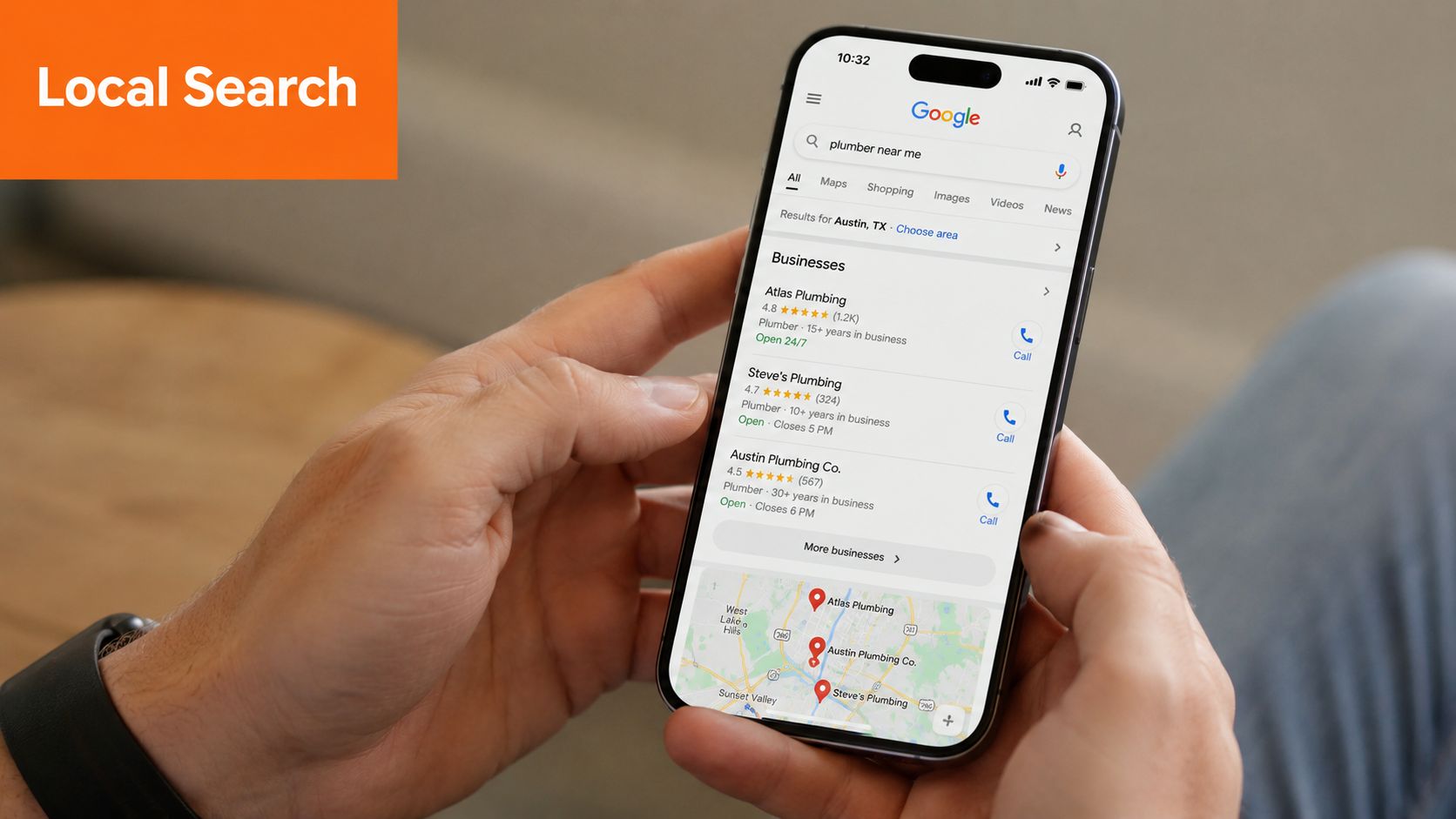
A properly filled-out Google Business Profile matters more than most plumbers realize. Optimizing a Google Business Profile with verified service areas, 50+ authentic reviews, and keyword-rich content correlates with 68% of local search visibility and 3.2× higher click-through rates than non-optimized profiles, according to Forbes Agency Council.
What a stressed customer actually sees
Customers don't think in marketing terms. They scan. They compare. Then they tap.
They notice whether your business name looks real, whether your service area matches where they live, whether your hours make sense, whether your photos look like actual jobs, and whether your reviews sound like genuine customer experiences. If any of that feels incomplete or sloppy, trust drops fast.
For plumbers trying to tighten this up, this guide on the best way to get plumbing leads is useful because it keeps the focus on practical lead generation instead of abstract marketing talk.
The local profile checklist that gets calls
Your profile should answer the customer's immediate questions without making them dig. Start with the basics, then improve the details.
Verify your service areas
Don't keep this vague. List the suburbs, towns, or zones you cover. If you serve a radius, make it accurate.Use real service language
Write the way customers search. “Blocked drain repair” and “hot water system repair” are clearer than broad labels that could mean anything.Upload job photos regularly
Use real van photos, real team photos, and real job photos. Avoid stock imagery. A homeowner wants proof you're an active local business.Check your phone number and hours
If your after-hours availability is a selling point, show it clearly. A wrong number or outdated schedule kills trust.Respond to every review
A short, professional response shows that someone is paying attention.
Here's a useful walkthrough if you want to see how profile setup affects calls in practice.
Customers don't reward the best plumber online. They reward the plumber who looks easiest to trust in the moment.
One more point matters here. Reviews aren't just decoration on the profile. Once you have enough strong, believable feedback, your business stops looking like a gamble. That reduces hesitation, especially when the customer is deciding between two companies that offer the same service.
A weak profile doesn't usually fail because of one major mistake. It fails because of a dozen small ones. No recent photos. No service detail. Mixed contact info. Reviews left unanswered. Fixing those basics is one of the fastest wins in digital marketing for plumbers because it improves visibility and trust at the same time.
Turn Your Website Into a Job-Booking Machine
A lot of plumbing websites are built like online brochures. They look fine, but they don't help a worried customer take the next step. That's a problem because once someone clicks through, your site has to remove friction fast.
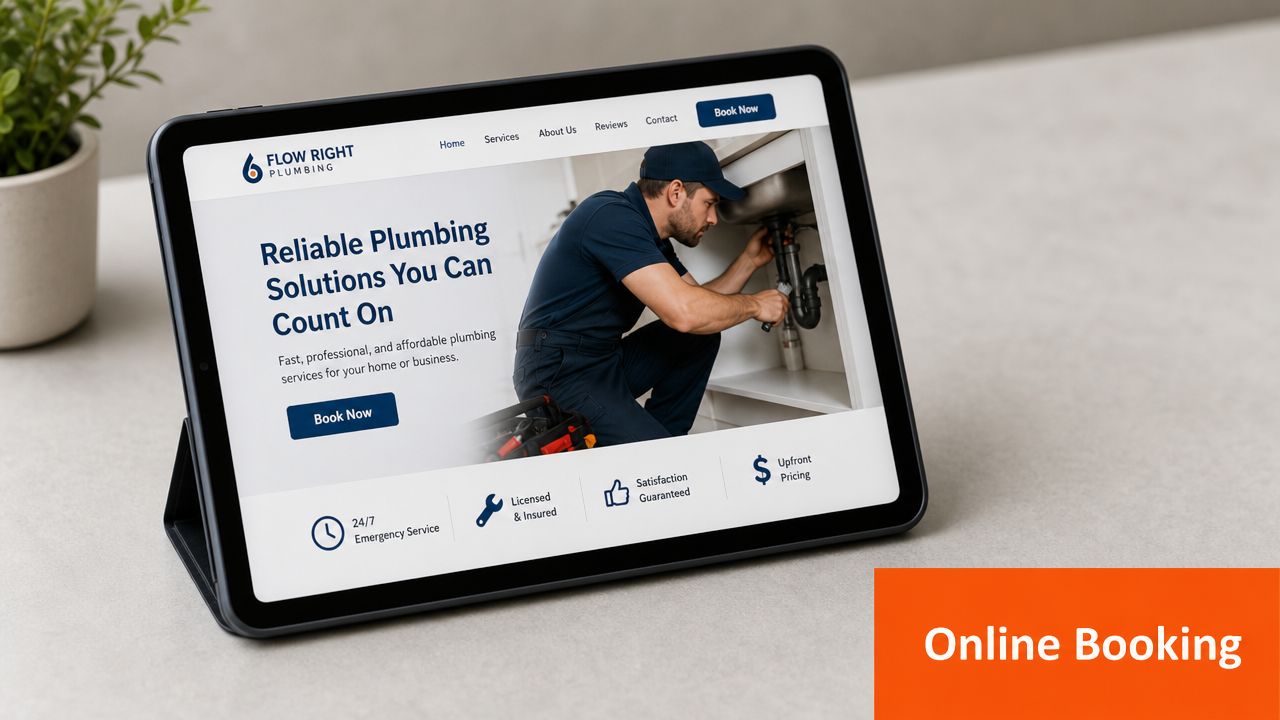
There's strong evidence that a structured online presence changes call volume, not just appearance. Plumbing contractors who implement conversion-optimized websites and other digital strategies can achieve a 149% average annual increase in call volume, according to the City Ranked plumber case study.
A plumbing website has one job
It doesn't need to impress other marketers. It needs to help customers call or book.
That means your mobile experience matters first. Most plumbing customers aren't sitting at a desktop doing research. They're on a phone, usually in a hurry, often distracted, and sometimes already dealing with water on the floor. If your site loads slowly or buries the phone number, you're making the customer work too hard.
This breakdown of content marketing for plumbers is useful if you want examples of how service pages and helpful content support job bookings without making the site bloated.
What to fix first
If your site isn't producing calls consistently, start here:
| Priority | What the customer needs to see | Why it matters |
|---|---|---|
| Top of page | A clear phone number and tap-to-call button | It shortens the path to contact |
| Above the fold | The exact services you offer | It confirms they're in the right place |
| Trust signals | Reviews, certifications, team photos, van photos | It proves you're real and local |
| Service pages | Separate pages for major jobs | It helps match customer intent |
| Contact options | Call, form, and booking request | It captures both urgent and non-urgent jobs |
A good plumbing site also needs clear wording. Don't hide behind generic copy like “quality solutions for all your needs.” Say what you do. Emergency plumbing. Burst pipes. Blocked drains. Leak detection. Hot water repairs. Customers should know within seconds whether you handle their problem.
A website should answer one question fast. “Can this company fix my issue, in my area, without wasting my time?”
There's also a trust gap many plumbers miss. Homeowners are letting someone into their house. They want to see that your business is established, reachable, and professional. Photos of your actual team, branded vehicle, completed jobs, and local service area do more work than fancy design ever will.
If your website looks decent but doesn't convert, the issue usually isn't style. It's friction. Too many clicks. Too much vague wording. Not enough reassurance. Fix those first.
Build Unshakeable Trust with Customer Reviews
Getting found is only half the job. Getting chosen is the harder part.
When two plumbing businesses look similar, reviews often decide the winner. Not because customers read every word, but because reviews reduce perceived risk. They help a homeowner feel that calling you is the safer choice.
Why reviews beat clever advertising
A strong review profile does several things at once. It signals reliability. It shows that real customers had real jobs completed. It also gives prospects clues about the experience they'll get, including punctuality, communication, pricing clarity, and professionalism on site.
The best review profiles don't look manufactured. They look consistent. Different job types, different customers, different wording, and steady recent activity. That's what builds confidence.
A lot of plumbers make the mistake of asking for reviews only when they remember. That leads to long gaps, then a burst of requests, then silence again. A better approach is to build review collection into the end of the job.
A review process that doesn't feel awkward
You don't need a polished script. You need a repeatable moment.
Try this after the customer has seen the completed work and the job is clearly resolved:
- Ask in person first: “Glad we could sort that out for you. If you're happy with the work, I can text you a quick review link.”
- Send the text while the job is fresh: The closer the request is to the finished result, the better.
- Keep the message short: Thank them, include the direct link, and don't over-explain.
- Make responding easy: One link, no extra steps, no long follow-up sequence.
You should also reply to every review. Positive reviews deserve a brief thank you. Negative ones deserve a calm, professional response without defensiveness. Prospects read those responses closely. They're judging how you handle problems, not just praise.
If a bad review appears, don't argue in public. A measured reply makes you look more credible than a perfect score ever could.
One practical habit helps here. Ask your team to flag happy customers before they leave the site. If the customer says “great job,” “thanks for coming so quickly,” or “I'll use you again,” that's the cue to send the review request.
Reviews are the closest thing digital marketing for plumbers has to modern word-of-mouth at scale. They keep working when you're off the tools, after hours, or already on another call. That's why they deserve a system, not random effort.
Use Targeted Ads for Immediate Job Requests
It's 7:15 p.m. A homeowner's hot water system has failed, water is going everywhere, and they need a plumber now. They are not reading blog posts or comparing ten companies. They are searching, tapping, and calling the first business that looks local, available, and trustworthy. That is where paid ads can pull in work fast, if the setup matches urgent buyer behaviour.
Paid ads are useful when you need jobs quickly, want to push into a suburb you have not cracked yet, or want to fill specific gaps in the week. They are also one of the easiest ways to waste money if you target broad searches and hope for the best.
Analysts at ChoiceLocal found that high-intent searches such as “emergency plumber near me” convert far better than generic terms, and broad bidding can push cost per lead up sharply. The takeaway is simple. Pay for searches that signal urgency and local intent, not vague interest.
A tighter setup usually outperforms a bigger one. I have seen plumbers burn through budget on terms like “plumbing services” because those clicks include price shoppers, DIY searchers, tenants gathering quotes, and people with no urgency at all. A smaller campaign built around urgent call-outs, blocked drains, burst pipes, and hot water failures often produces fewer clicks but more booked jobs.
If you want a practical example of how to structure that kind of campaign, this guide to plumbing PPC marketing for plumbers shows how tighter targeting improves lead quality.
What a tighter ad setup looks like
A workable ad account for a plumbing business usually includes a few simple controls:
Urgent job keywords first
Focus on searches that show the customer is ready to call, such as emergency plumber, blocked drain plumber, burst pipe repair, or no hot water plumber.A strict service area
Keep ads limited to the suburbs, postcodes, or radius you can service profitably. WebFX's plumber marketing guide also recommends tight local targeting to reduce wasted spend.Negative keywords
Exclude searches like DIY, free, course, salary, or apprenticeship so you are not paying for the wrong traffic.Call-focused scheduling
Run ads harder during the hours when urgent jobs are most likely and when someone can answer the phone.
That last point matters more than many owners expect. If nobody answers after hours, there is no point paying heavily for late-night clicks unless the ad directs people to a proper emergency line. Fast response wins these jobs. Slow follow-up loses them.
Paid ads work best when you choose the exact work you want more of and build around that. Emergency call-outs, drain clearing, leak detection, and hot water repairs all attract different search behaviour and different margins. Treat ads like a tool for generating phone calls from nearby people who need help now, and they become much easier to control.
Putting It All Together with a Simple System
A busy week can make your marketing disappear fast. The phone rings, jobs stack up, and posting updates or asking for reviews slips down the list. Then a quieter week hits, and there is nothing in place to keep new enquiries coming in.
That is why plumbers need a simple system. Not a pile of marketing tasks. A repeatable routine that keeps you visible, keeps trust high, and makes it easier for the next customer to call.
The pieces in this guide work best when they support each other. Your local business profile helps nearby customers find you. Your website gives them a clear next step. Reviews remove doubt. Ads help fill gaps or push high-value work. Social media keeps your business in front of local people between those moments, so you do not look inactive or forgotten.
The weekly rhythm that keeps you visible
Social media should back up your reputation. It does not need to turn you into a content creator.
For plumbing businesses, a practical routine usually looks like this:
Post real job photos
Share completed work, your van, your team, or a short before-and-after with a plain-English caption.Answer common questions
Short posts about blocked drains, leaking taps, hot water issues, or what a customer should do before you arrive give people a reason to remember you.Reuse customer feedback
Turn a strong review into a simple post. It is fast to create and reinforces trust.Keep the account active
One or two useful posts a week is enough if you can keep it going. An abandoned profile makes people wonder whether you are still operating.
The trade-off is simple. A perfect content plan that never gets used is worthless. A basic routine you can stick to during a busy month will bring in more value over time.
Track what leads to jobs
You do not need complex reporting to make better decisions. You need a clear way to see where good enquiries come from.
Start with one question on every call or quote request: “How did you hear about us?” Keep the answer options consistent. Google, Maps, Facebook, referral, ad, repeat customer. That gives you a cleaner view of what is driving enquiries and where to keep spending.
Then follow up by text where it makes sense. Appointment reminders, review requests, and simple check-ins are often easier for customers to respond to by SMS than email, as noted in Rank Me Top's plumber marketing tips.
Here is a simple version that works for many plumbing businesses:
| Activity | Simple action | Outcome |
|---|---|---|
| Lead tracking | Ask each caller how they found you | Better budget decisions |
| Follow-up | Send text reminders and review requests | More replies and more reviews |
| Social visibility | Post real local work each week | More trust and local recall |
| Consistency | Use the same routine every week | More stable enquiry flow |
The best marketing system for a plumber is one that still runs when the schedule is full.
Keep it practical. If a task helps generate calls, protect it. If it eats time and does not lead to booked work, cut it.
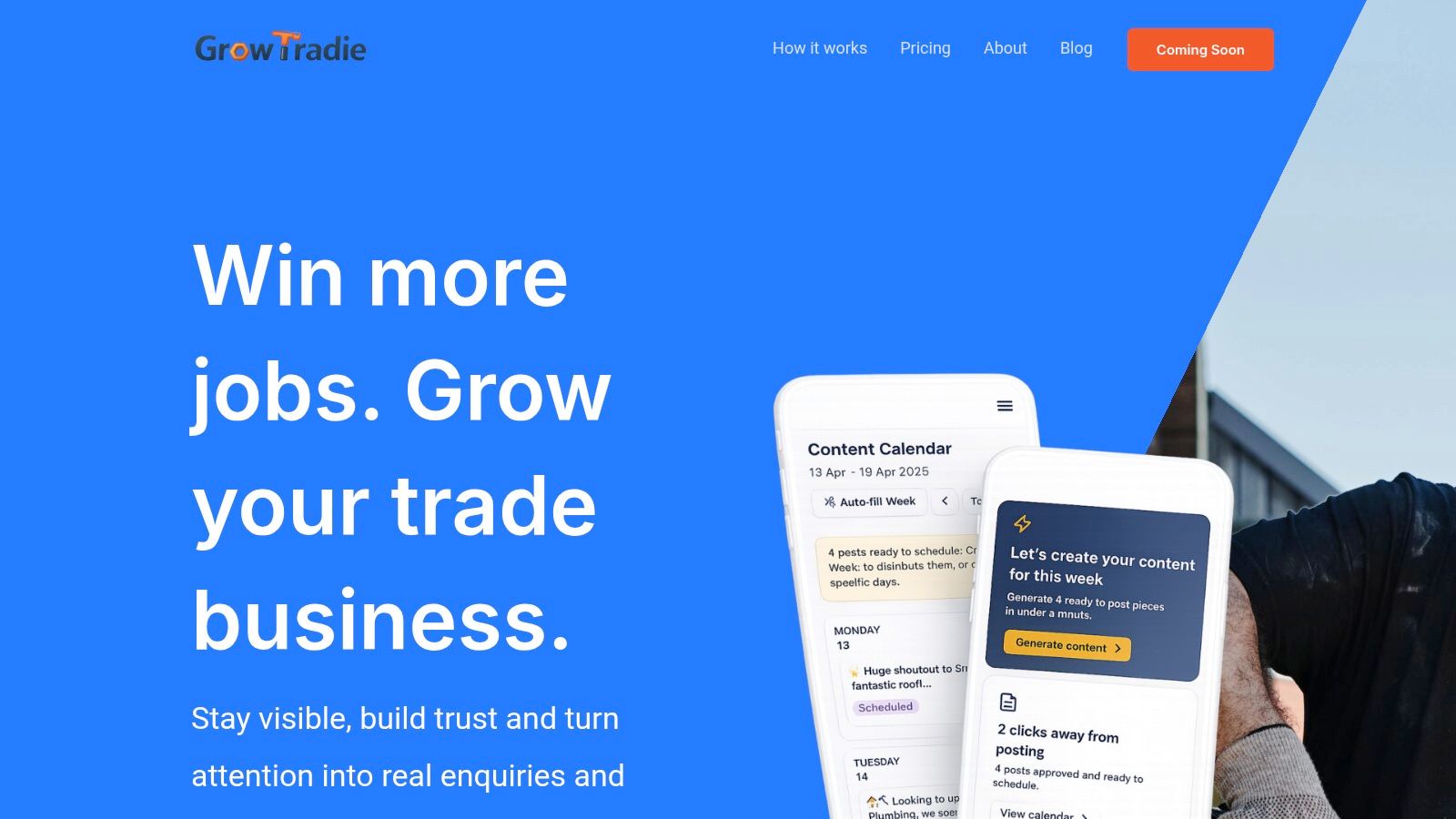
GrowTradie helps trade businesses stay visible without turning you into a full-time marketer. If you want a simpler way to keep your social channels active with professional posts specific to your trade and local area, GrowTradie gives you a practical setup that saves time and supports more enquiries while you stay focused on the work.