
Stop Guessing and Start Getting Plumbing Leads
If you run a plumbing business, you know the cycle. One week, the phone won't stop ringing. The next, it's quiet. This feast-or-famine workflow makes it hard to plan ahead, keep the diary full, or know when it's safe to take on another person.
Usually, the issue isn't demand. People always need plumbers. The issue is that most businesses don't have a reliable system for turning local visibility into calls and booked jobs. They try a bit of this, a bit of that, then wonder why nothing feels consistent.
The best way to get plumbing leads isn't chasing every new tactic. It's building a simple lead system around the channels that show up when someone needs help now, plus the trust signals that make them choose you fast. Industry guidance keeps pointing to the same core stack for plumbers: Google Business Profile, your own local website presence, Google Local Services Ads, and review-driven referrals, while shared-lead marketplaces often disappoint because urgent callers usually go with the first plumber who answers (industry ranking for plumbing lead sources).
This guide keeps it practical. No fluff. No theory for theory's sake. Just 9 ways to get a steadier flow of plumbing leads if you're short on time and care about real enquiries, phone calls, and paid work.
Table of Contents
- 1. Dominate Local Search and Your Google Business Profile
- 2. Use Social Media to Stay Visible Between Jobs
- 3. Run Google Ads and Local Services Ads for Fast Calls
- 4. Get More Reviews and Manage Your Reputation Properly
- 5. Build a Simple Referral System That Actually Gets Used
- 6. Create Local Partnerships That Feed You Ongoing Work
- 7. Publish Helpful Content That Answers Real Plumbing Questions
- 8. Use Facebook and Instagram Ads Carefully
- 9. Follow Up With Email So Old Leads Don't Go Cold
- 9-Point Comparison of Plumbing Lead Strategies
- Your Blueprint for Consistent Plumbing Jobs
1. Dominate Local Search and Your Google Business Profile
When someone types “plumber near me” or “emergency plumber” into Google, they usually need help now. They aren't browsing for fun. They want a business that looks legitimate, nearby, and easy to call.
That's why this is still one of the strongest answers to the best way to get plumbing leads. A major shift in plumbing marketing has been the move away from broad advertising and toward search-driven local discovery, where the businesses that are visible, trusted, and easy to contact win the call (plumbing lead generation trends for local search).
What to tighten up first
Your Google Business Profile has to be complete and current. Wrong hours, missing service areas, old photos, or a dead review section will cost you jobs.
Focus on the basics that affect whether someone calls you or skips past you:
- Use the exact business details everywhere: Keep your business name, address, and phone number consistent across listings.
- List real plumbing services clearly: Add emergency plumbing, hot water, blocked drains, leak detection, gas fitting, or whatever you do.
- Upload recent job photos: Show clean installs, tidy vans, team photos, and finished work.
- Make calling easy: Your main number should be obvious and answered.
What works and what doesn't
What works is relevance and trust. If you're in the map results, your profile looks active, and you have recent reviews, you'll get more calls from high-intent searchers.
What doesn't work is treating your profile like a one-time setup job. Add updates, refresh photos, and check that your service areas still match where you want work.
Practical rule: If your Google Business Profile looks neglected, people assume the business is the same.
2. Use Social Media to Stay Visible Between Jobs
Social media isn't usually where urgent plumbing jobs start. Someone with a burst pipe isn't scrolling Instagram for inspiration. But it does help you stay familiar, local, and credible between those urgent moments.
That matters more than a lot of plumbers realise. When someone sees your name a few times, sees real jobs, sees a real person behind the business, and then later needs a plumber, you're not a stranger anymore.
The kind of posts that pull their weight
You don't need to become a full-time content creator. You need simple proof that you're active and do solid work.
Good examples include:
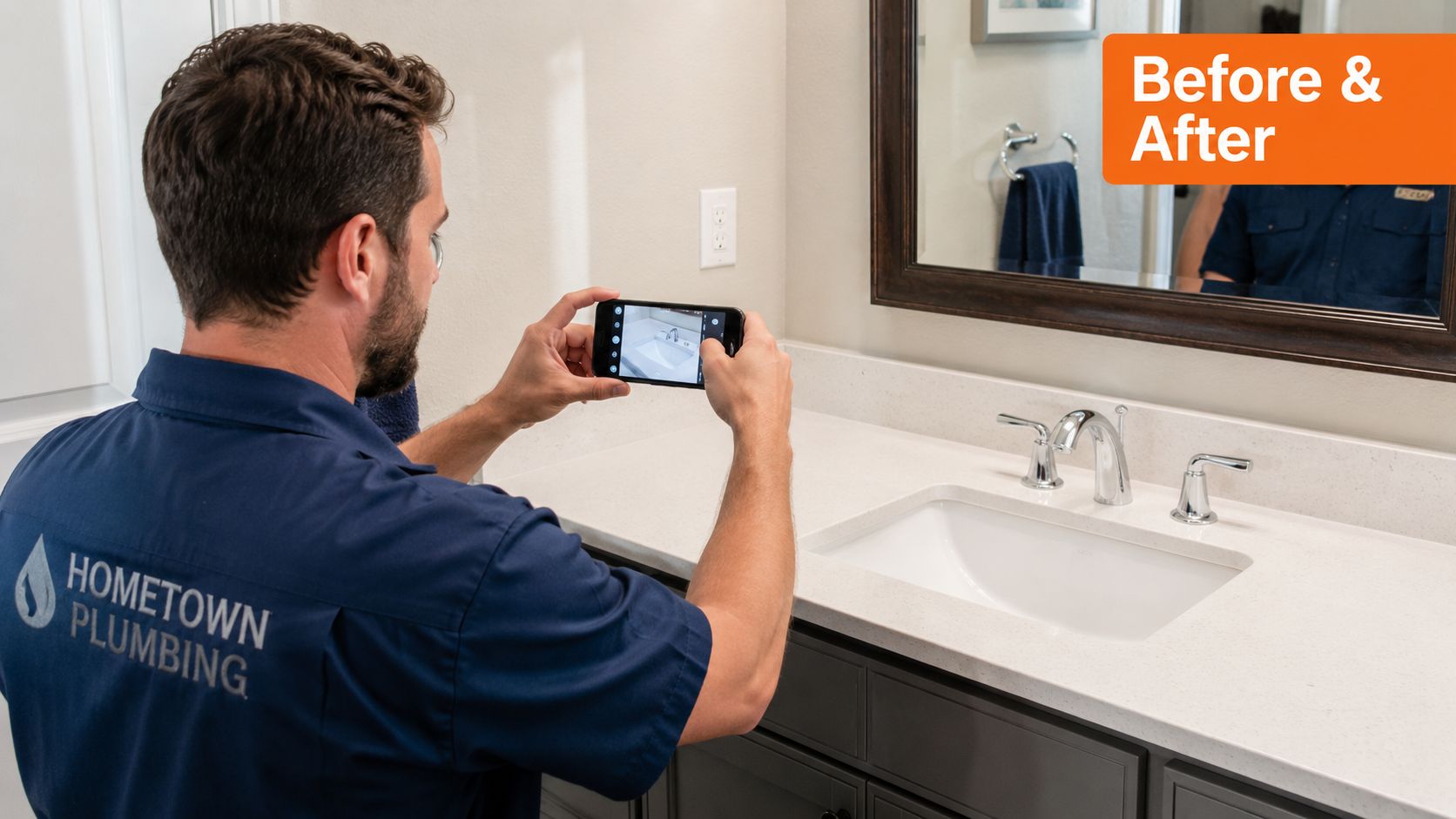
- Before-and-after job photos: Show the problem and the finished result.
- Short practical tips: Explain what causes low water pressure, how to spot a leak, or when to call for help.
- Team and van photos: People trust businesses that look real and reachable.
- Review screenshots: Turn customer feedback into simple proof.
If you want a low-effort system, a service built for social media marketing for plumbers can keep your pages active without you having to think about content every week.
The trade-off most plumbers get wrong
Posting now and then doesn't do much. Consistency matters more than cleverness. One clean post every week that shows real work is better than a burst of effort followed by silence for two months.
A quiet profile makes people wonder if you're still in business.
Social media is not the best standalone way to get plumbing leads. But it supports everything else by making your business easier to trust when someone checks you out.
3. Run Google Ads and Local Services Ads for Fast Calls
It's 7:15am. A homeowner has water coming through the ceiling and needs a plumber now, not after lunch. In that moment, they search Google, tap one of the first options they trust, and ring. If you want faster enquiries, paid search puts you in that race straight away.
Google Ads and Local Services Ads both work, but they do different jobs. Google Ads helps you target the exact searches you want. Local Services Ads put you at the top of the page and charge per lead instead of per click. For a busy plumbing business, that mix can produce phone calls quickly if it is set up properly.
Buy intent, not traffic
The best campaigns focus on jobs people want solved today. Broad keywords waste money. Tight service-based keywords bring better calls.
Good targets include:
- Urgent searches: emergency plumber, same-day plumber, after-hours plumber
- Specific repair terms: blocked drain, burst pipe, leaking toilet, no hot water
- Local searches: suburb-based terms and service area searches
- Call-focused campaigns: ads built around phone enquiries during the hours you can answer
A specialist service for plumbing PPC marketing can save a lot of trial and error if you do not want to manage bids, keywords, and call tracking between jobs.
The setup matters more than the spend
A lot of plumbers assume paid ads fail because Google is expensive. Usually the problem is loose setup.
Budget disappears fast when ads run outside your service area, show overnight when nobody answers, or bring in work you do not want, like full bathroom renovations when you only want maintenance and emergency jobs. Tight location settings, a clear job mix, and call handling rules make a big difference.
Local Services Ads can help because they are built around lead generation, not just clicks. Valve+Meter explains how LSAs changed plumbing lead generation by putting service businesses in a stronger position for high-intent local searches: how Local Services Ads changed plumbing lead generation.
Be careful with shared leads
Speed wins emergency work. That is why shared-lead platforms often disappoint plumbers. If the same lead goes to several businesses, the first one to answer usually gets the job.
Skill Mammoth makes that point clearly in its plumbing lead channel comparison. The practical takeaway is simple. If you pay for leads, pay for channels where your business has a fair shot at booking the work, not just joining a race to call back first.
For a time-poor owner, the best paid setup is boring on purpose. Tight keywords. Tight suburbs. Calls routed properly. A campaign that keeps running without constant fiddling will usually beat a clever setup you never have time to manage.
4. Get More Reviews and Manage Your Reputation Properly
Reviews don't just make you look good. They help people decide whether to call you or the plumber next to you.
In local plumbing, trust gets checked fast. A homeowner sees your name, looks at your Google profile, scans your reviews, and makes a call. If your reviews are recent and your responses sound professional, you're in a much stronger position.
Make review requests part of the job close
The best time to ask is when the work is done, the customer is relieved, and you're still top of mind. If you leave it for later, the chance drops.
Keep it simple:
- Ask in person: A quick “If you're happy with the job, would you mind leaving us a Google review?” works well.
- Send the link straight away: Text it while you're still on site or right after.
- Reply to every review: Thank the good ones and handle the bad ones calmly.
Reputation is more than star ratings
A lot of plumbers chase volume and forget quality control. The better question is whether your lead sources are transparent and whether you can track what turns into booked work.
Industry guidance around plumbing leads increasingly points to documented consent, verified intent, real-time delivery, and tracking return by lead source as the key operational gap, especially when buying third-party leads (lead quality and consent guidance for plumbing leads).
Worth remembering: A lead that never books is not a good lead, no matter how cheap it looked at the start.
That same mindset applies to reviews. Don't just collect them. Use them to support the channels that already bring in real jobs.
5. Build a Simple Referral System That Actually Gets Used
Word of mouth still works because people trust people they know. If a neighbour, friend, builder, or landlord says, “Use this plumber, they're reliable,” you've skipped half the sales process already.
A lot of businesses say referrals matter but never build a system for them. They just hope happy customers will remember them later. Some do. Most don't.
Make referrals easy, not awkward
The best referral system is simple enough that your team will use it and your customers won't feel pushed.
A practical setup looks like this:
- Ask at the right time: Right after a successful job, when the customer is clearly happy.
- Give them a clear next step: A saved contact card, a follow-up text, or a short “feel free to pass our number on.”
- Stay memorable: Clean van branding, clean invoice, clear service follow-up.
Who should feed your referral pipeline
Past customers matter, but don't stop there. Other trades can send excellent work if they trust you not to make them look bad.
The strongest referral relationships usually come from:
- Electricians: They often get asked who they recommend for plumbing issues.
- Builders and renovators: They need reliable subcontractors.
- Property managers: They value fast response and less drama.
- Agents and landlords: They need someone who answers.
Recent industry guidance also points to referrals as one of the sustainable channels that helps plumbers build demand without relying only on expensive bought leads or broad paid campaigns (sustainable plumbing lead channels and referrals).
6. Create Local Partnerships That Feed You Ongoing Work
Good local partnerships can fill your schedule with the kind of work that's easier to win and easier to repeat. That's because the trust has already been borrowed from someone the customer or client knows.
This works especially well with property managers, real estate agents, builders, roofers, restoration companies, and other trades. They don't want a random plumber. They want someone who picks up, turns up, and doesn't make them chase.
What a useful partnership looks like
You don't need formal contracts to start. Most strong partnerships begin with a few reliable jobs and then build from there.
The offer is simple. You make their life easier.
- Respond quickly: Slow replies kill referral momentum.
- Communicate clearly: Let them know when you're booked, on the way, and done.
- Protect their reputation: If they refer you, your service reflects on them.
- Be easy to work with: Clear quotes and clean invoicing matter.
Don't collect contacts. Build trust.
Some plumbers network endlessly and get nowhere because they're collecting business cards instead of solving problems. One solid property manager or one builder who sends regular work is worth more than a stack of weak contacts.
A simple way to build these relationships is to start with the people already around your jobs. If an electrician is on site and they're good to deal with, keep their details. If a builder runs organised jobs, stay in touch. Partnerships grow from repeated good experiences, not clever pitches.
If another business can't trust you to answer their customer's call, they won't refer you twice.
7. Publish Helpful Content That Answers Real Plumbing Questions
A lot of homeowners don't call the second they notice a problem. They search first. They want to know whether the issue is urgent, whether it's fixable, and whether they need a plumber today.
That's where useful content helps. It gives your business more chances to show up before the call, and it helps position you as the local operator who knows the work.
Keep the topics close to real jobs
Don't write broad fluff. Answer the questions customers ask on site and over the phone.
Good topics include:
- Common home issues: Low water pressure, leaking taps, blocked drains, strange pipe noises
- Urgent callouts: What to do before the plumber arrives for a burst pipe or overflow
- Seasonal problems: Stormwater issues, hot water trouble, outdoor taps and pipe concerns
- Service explainers: What a CCTV drain inspection involves, when a hot water unit needs replacing
If you want a structured approach, content marketing for plumbers can help turn those everyday questions into useful posts and pages without eating your whole week.
Use video when words aren't enough
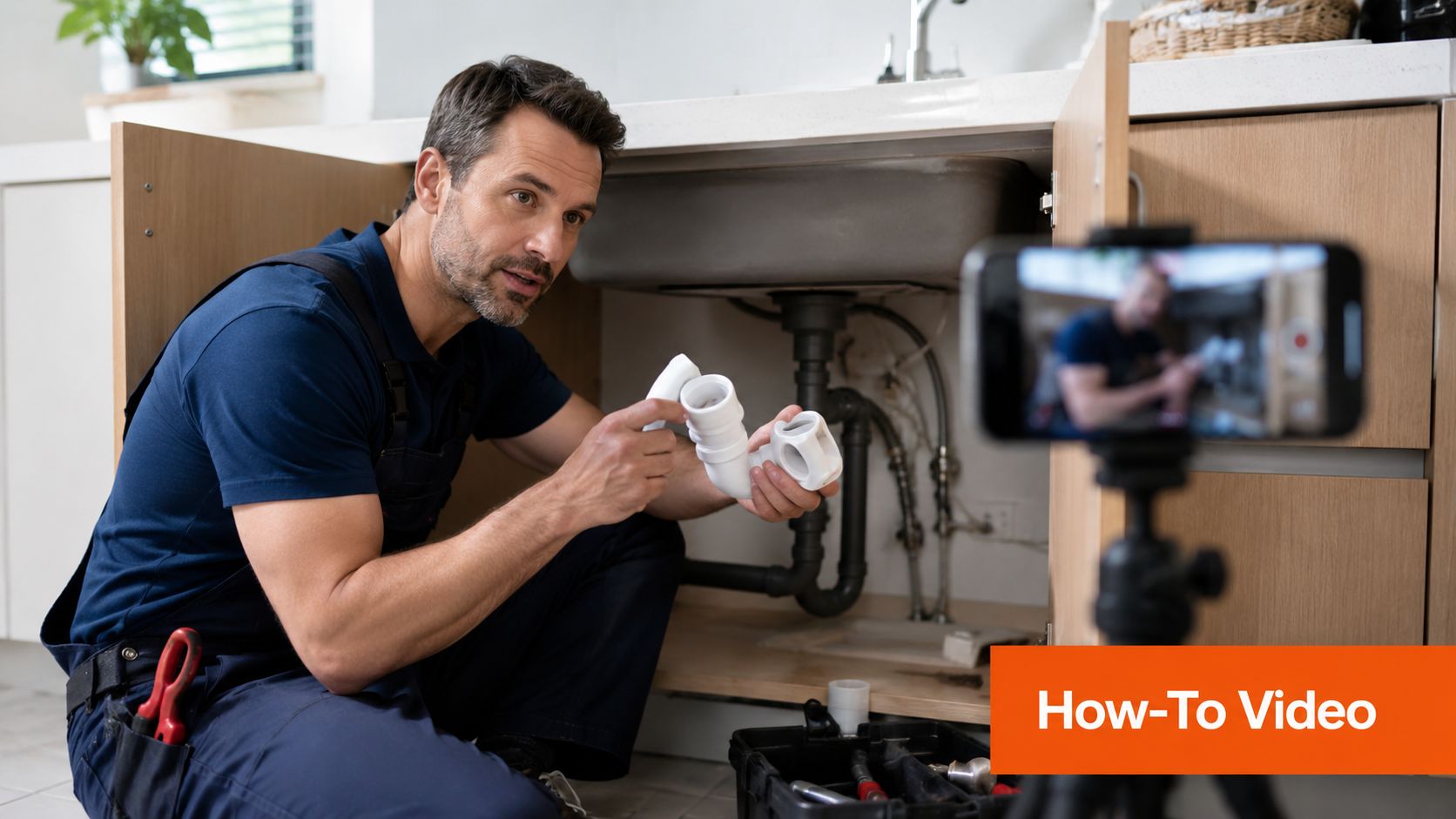
Some jobs are easier to explain visually than in writing. A short video showing what causes a common leak or what happens during a drain inspection can build trust quickly.
A simple example of educational plumbing video content looks like this:
Useful content won't replace urgent lead channels. But it supports them by making your business easier to trust before someone rings.
8. Use Facebook and Instagram Ads Carefully
Paid social can work for plumbers, but only when you use it for the right kind of job. It usually isn't the first choice for emergency callouts. It's better for staying visible locally, promoting specific services, and getting back in front of people who've already seen your business.
That means things like hot water upgrades, maintenance reminders, blocked drain offers, or suburb-based brand awareness can fit better here than urgent repair traffic.
Where paid social actually helps
These ads can keep your name in front of local homeowners who may not need a plumber today but might soon. They also help warm up people who've visited your website, engaged with your page, or seen your content before.
Use creative that looks like real trade work, not stock marketing:
- Real job photos: Bathrooms, kitchens, hot water systems, outdoor plumbing
- Short videos: Quick walkthroughs or technician intros
- Review-based ads: Customer feedback paired with a clear offer
- Suburb-specific messaging: Mention the areas you service
The risk with this channel
The main problem is weak intent. Someone scrolling social media usually isn't in urgent buying mode. So if you expect paid social to act like Google search, you'll likely be disappointed.
Use it to support your visibility stack, not replace it. It works best when your Google presence, reviews, and website already make you look established. Then social ads help keep your business familiar until the customer needs a plumber.
9. Follow Up With Email So Old Leads Don't Go Cold
Most plumbers ignore email because it doesn't feel urgent enough. That's a mistake. Email is useful for follow-up, repeat work, reminders, review requests, and referral nudges.
It isn't usually the first answer to the best way to get plumbing leads. It is one of the best ways to get more value from the leads and customers you already have.
What email should do for a plumbing business
Think of email as a simple follow-up tool, not a newsletter empire. If someone asked for a quote, used you once, or said “not right now,” email helps keep the conversation alive.
Useful emails include:
- Quote follow-ups: A short reminder after an estimate
- Review requests: Sent soon after the work is finished
- Seasonal reminders: Prompts for maintenance-related services
- Past customer reactivation: A simple message that brings your name back to mind
Keep it short and useful
Nobody wants long sales copy from a plumber. A good email is brief, clear, and tied to a real service need.
For example, if you quoted a hot water replacement and the customer went quiet, a short follow-up asking whether they'd like to book works better than a fancy campaign. The same goes for seasonal reminders. Keep the message relevant, make it easy to reply, and include your phone number.
Email is a support channel. Used properly, it helps turn old enquiries, past customers, and one-off jobs into more booked work.
9-Point Comparison of Plumbing Lead Strategies
| Strategy | 🔄 Implementation complexity | ⚡ Resource requirements | ⭐ Expected outcomes | 📊 Ideal use cases | 💡 Key advantages |
|---|---|---|---|---|---|
| Dominate Local Search & Your Google Business Profile | Medium, initial setup + ongoing maintenance | Low–Medium (time, photos, GBP tools) | High local visibility; qualified leads in 3–6 months | Local businesses seeking Map Pack and "near me" searches | Lower cost-per-lead, 24/7 discovery, trust via reviews |
| Social Media Content Marketing (Organic Posts & Engagement) | Medium, ongoing content creation and engagement | Low money cost; high time or outsourced creative resources | Builds brand awareness and social proof; gradual lead growth (3–6 months) | Showcasing work, local community engagement, reputation building | Cost-efficient, authentic engagement, repurposable content |
| Google Ads (Search & Local Services Ads) | High, requires PPC setup and continual optimization | High (daily ad spend, landing pages, tracking) | Immediate visibility and qualified leads while funded | Emergency/urgent services, filling schedule quickly, competitive markets | Fast scale, measurable ROI, Google Guarantee (LSA) |
| Review Generation & Reputation Management | Medium, systems for requests and response protocols | Low–Medium (automation tools, staff time) | Strong conversion lift and improved local rankings | Any local service prioritizing trust and conversion | Major trust signal, boosts SEO and conversion rates |
| Referral Program & Word-of-Mouth Marketing | Low, simple to implement but needs upkeep | Low (pay-on-result rewards; tracking) | Very high conversion and low CAC; volume grows over months | Established customer base and trade networks | Highest lead quality, cost-effective, sustainable |
| Local Partnerships & Business Networking | Medium, relationship building and agreements | Low–Medium (time, occasional co-marketing, commissions) | Steady qualified referrals; scalable with partners | Property managers, builders, complementary trades | Access to partner audiences, mutually beneficial referrals |
| Educational Content (Blog & Video Strategy) | High, consistent production and SEO strategy | Medium–High (writing/video skills, hosting, promotion) | Long-term organic traffic and authority; compounding ROI | Long-tail SEO, authority building, content repurposing | Evergreen asset, multiplatform reach, lowers CPL over time |
| Facebook & Instagram Advertising (Paid Social) | Medium, creative testing and audience optimization | Medium budget; strong visual assets and ad management | Good awareness and warm leads; variable CPL, strong retargeting | Visual promotions, retargeting website visitors, offers | Lower CPC than search, granular targeting, creative formats |
| Email Marketing & Customer Nurture Sequences | Medium, automation setup and segmentation | Low–Medium (email platform fees, content) | High ROI for retention and repeat business | Nurturing past customers, review requests, seasonal offers | Best ROI, personalized automation, boosts repeat bookings |
Your Blueprint for Consistent Plumbing Jobs
If you're looking for the best way to get plumbing leads, don't look for one magic channel. That's where a lot of plumbers get stuck. They try to find the single thing that will solve everything, then get frustrated when it doesn't.
What works is a simple stack.
Start with the channels that catch high-intent demand. For most plumbing businesses, that means showing up well in local Google results, keeping your Google Business Profile in good shape, collecting reviews consistently, and using Google Local Services Ads or search ads if you need leads faster. Those are the channels most closely tied to real customer intent, especially when someone has an urgent problem and wants a plumber now.
Then support that with the channels that build trust and stay active in the background. That's where referrals, local partnerships, email follow-up, and social media come in. They may not all generate immediate emergency calls, but they make your business more familiar, more credible, and easier to choose when the need comes up.
If you're time-poor, don't start all nine strategies at once. Pick two. Get them working properly. For most plumbers, the smartest starting point is this:
- Tighten your Google Business Profile and reviews
- Add paid Google lead generation if you need faster call volume
- Build a simple referral habit into every completed job
- Keep your social presence active enough that people see a real business when they check you out
The biggest problem for a lot of plumbing businesses isn't knowing what to do. It's keeping it going consistently while you're quoting, driving, ordering parts, managing staff, and doing the work itself.
That's why set-and-forget systems matter. Social media is a good example. It helps build trust, but it often gets dropped the second things get busy. Then your profiles go quiet, your brand looks stale, and one more trust signal disappears. A platform like GrowTradie solves that problem by handling content creation and posting for trade businesses, so your business stays visible without needing your attention every few days.
That consistency matters. Not because likes pay the bills, but because visibility and trust turn into enquiries over time.
Build the system once. Keep it simple. Track which channels bring real jobs, not just activity. If a lead source sends work that books and pays well, lean into it. If it sends junk, cut it. That's the no-nonsense way to build steadier plumbing work.
If you want your business to stay visible online without spending your nights writing posts, GrowTradie is built for that. It creates and posts trade-specific social content for you, keeps your profiles active between jobs, and helps your plumbing business look credible when local customers check you out before calling.