

Some weeks you've got three missed calls before 8 a.m. and a full board by lunch. Other weeks, the referrals slow down, the repeat customers stay quiet, and you start wondering whether you need help getting more work in the door. That's usually when the agency pitches start showing up.
Most plumbers don't have a marketing problem because they're lazy. They have a marketing problem because they're busy, skeptical, and tired of hearing promises that don't connect to booked jobs. If you're considering a plumbing digital marketing agency, the right question isn't whether they sound smart. It's whether they can help turn attention into calls, quote requests, and paid work without wasting your time.
Table of Contents
- Why Finding the Right Marketing Partner Is So Hard
- The Core Qualities of a Results-Focused Agency
- Critical Questions to Ask Before You Sign a Contract
- Decoding Agency Pricing and Finding the Right Fit
- How to Measure Success and Hold Your Agency Accountable
- Marketing Red Flags and a Smarter Path Forward
Why Finding the Right Marketing Partner Is So Hard
It usually starts the same way. A plumber takes a call with an agency after a slow month, asks a simple question about getting more booked jobs, and gets a tour of charts, acronyms, and promises that sound polished but don't explain what will make the phone ring.
That gap is the problem.
Plumbing is a practical business. You know your service area, your average ticket, the jobs you want more of, and the jobs that waste a truck roll. A lot of agencies sell activity instead of outcomes, so the conversation drifts away from booked work and into reports you cannot easily tie back to revenue. If you want a clearer baseline before you hire anyone, a practical plumbing company marketing plan helps you judge whether an agency is adding value or just adding noise.
The decision is also harder because plumbing demand is uneven. Some calls are urgent and happen fast. Some homeowners compare quotes for days. Some work comes from repeat customers, Google reviews, local map listings, referrals, or ads they saw weeks earlier. That makes attribution messy, and weak agencies use that mess to claim credit for every lead that comes in.
The money raises the stakes. Marketing is not a small side expense for a growing plumbing company. Done well, it can fill the schedule with profitable work. Done badly, it drains cash, creates bad leads, and leaves you with no clear answer about what went wrong.
A lot of owners have been burned before, and such skepticism is healthy.
What makes the search frustrating
- Agencies often talk in marketing language instead of business language. If they cannot connect their work to calls, quote requests, booked jobs, and job value, it becomes hard to judge whether they are good or just confident.
- You do not have time to manage them closely. If an agency needs constant chasing, long meetings, and repeated explanations about your service area or priorities, it becomes another job on your plate.
- Lead quality matters more than raw lead count. Five good calls in your target suburbs can beat twenty price-shoppers, spam calls, or requests for work you do not even offer.
- Local service businesses have constraints that generalist agencies miss. Capacity, on-call coverage, seasonality, review volume, service radius, and margin by job type all affect whether marketing helps or hurts.
- Results take time, but bad fit shows up early. You may need months to build rankings or review strength, but you should still get clear answers, clean tracking, and a sensible plan from the start.
A good partner makes the business easier to understand. If the first call leaves you more confused than when it started, treat that as a warning, not sophistication.
The Core Qualities of a Results-Focused Agency
A good plumbing digital marketing agency doesn't start by showing off tactics. It starts by understanding your business model. Emergency calls, maintenance work, installations, higher-margin services, service area boundaries, booking capacity, seasonality, and average job value all affect what “good results” mean.
This visual sums up what matters most in a partner.
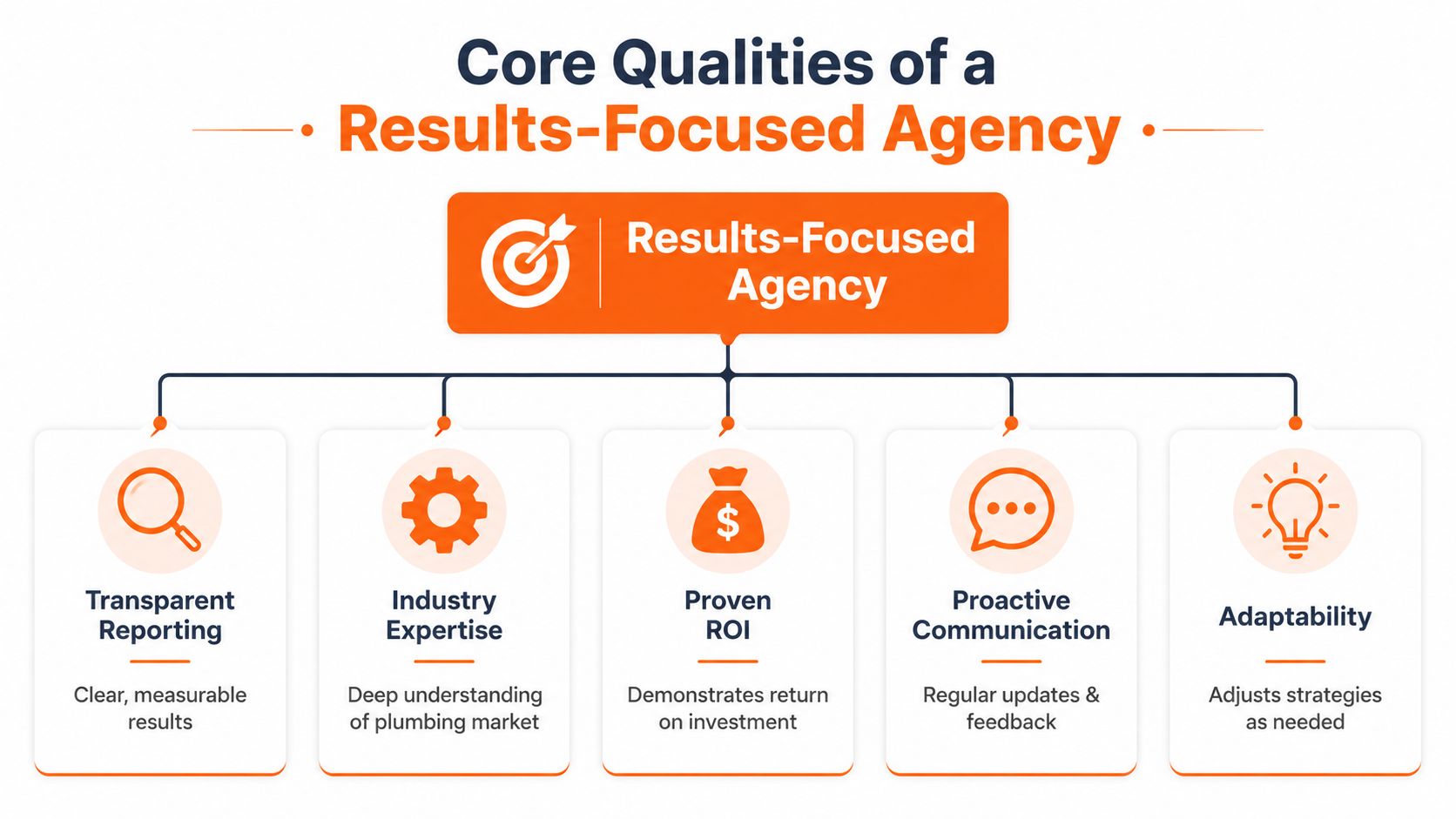
What good agencies talk about first
The first thing I want to hear is how they define success in plumbing terms. Not exposure. Not reach. Not “visibility” on its own. I want to hear calls, quote requests, booked jobs, and service-line performance.
Industry guidance for plumbers recommends building marketing as a measurable funnel. Start with revenue targets, then work backward into sales, lead volume, and traffic. It also recommends separating service lines into dedicated landing pages and tightly grouped ads so you can tell which offer and message produce booked jobs, according to Service Direct's plumber marketing guide.
That tells you a lot about the agency mindset. Strong agencies think like operators.
Practical rule: If an agency can't explain how they'll connect spend to booked work, they're not ready to manage your budget.
The second quality is trade familiarity. They don't need to have worked with your exact company, but they should understand the difference between promoting emergency work and promoting larger planned jobs. They should know that a blocked drain call behaves differently from a full repipe lead. They should understand service areas, dispatch realities, and why after-hours calls need a different approach than standard office-hour enquiries.
For a useful benchmark of what plumbing-specific support can look like, review examples of plumbing company marketing built around trade businesses rather than generic local brands.
What their process should look like
A reliable agency process is usually boring in the best possible way. You should see a clear setup phase, clear tracking, clear assets, and clear review points.
Here's what that normally includes:
- Business intake that goes beyond basics. They should ask about your margin by service type, your preferred jobs, your service radius, your booking bottlenecks, and who answers the phone.
- Service-specific pages and offers. They shouldn't dump all visitors onto one generic page and hope for the best.
- Reporting you can understand in minutes. You should be able to scan a monthly report and know what happened, what changed, and what needs attention.
- A named contact. If you've got a question about poor-quality leads or a sudden drop in calls, you need an actual person.
A good agency also tells you what they won't control. They don't control your call handling, missed calls, pricing competitiveness, or whether your CSR sounds rushed on the phone. They should still talk about those things, because they affect results, but they shouldn't pretend every outcome comes from their work alone.
That honesty is one of the strongest signs you're dealing with an adult business.
Critical Questions to Ask Before You Sign a Contract
A plumber signs with an agency on Friday, feels good about it for two weeks, then realizes the reports are full of clicks, impressions, and form fills that never turned into booked work. By then, the contract is live, the setup fee is gone, and the hard questions should have been asked earlier.
That is the primary job of the first serious meeting. Find out whether they can help you get the right calls, in the right areas, for the right jobs. If they cannot answer plainly before you sign, they will not get clearer after they have your card on file.

Questions that expose vague agencies fast
Ask these in plain English. Then let the silence do some work.
How do you define a qualified lead for my business?
If they treat every call, text, and form as equal, the reporting will look better than the business result. You need their definition tied to real sales value, such as service-area calls, job-fit enquiries, and customers who want to book.Which service lines are you prioritizing first, and why?
Good agencies do not chase every plumbing job at once. They should ask what is profitable, what your team handles well, what you want more of, and where your schedule already gets messy.What happens if lead quality is poor after the first 60 to 90 days?
Listen for a repair plan. They should talk about changing pages, offers, service targeting, ad spend allocation, and call reviews if tracking is in place. If the answer is basically “give it more time,” that is not a plan.Who runs the account after I sign?
Sales reps are often polished. Account delivery is what matters. Ask who will manage campaigns, who writes or edits pages, who reviews lead quality, and who has worked with service businesses before.Can I see a real monthly report before I commit?
You are checking for usefulness, not design. A decent report should show call volume, form leads, job type if tracked, missed calls if available, spend, and what changed that month. If you need a translator, it is the wrong report.Where does paid traffic go?
Sending every visitor to a homepage is lazy and expensive. Emergency drain calls, hot water replacements, and maintenance enquiries do not behave the same way. The page should match the job, the suburb or service area, and the action you want the customer to take.What do you need from my team for this to work?
Honest agencies will say they need fast follow-up, decent call handling, clear job priorities, and feedback on lead quality. That answer matters because it shows they understand booked work is a shared outcome, not just an ad account metric.What does the contract let me change or cancel?
Ask about minimum term, notice period, setup fees, ownership of landing pages, ownership of tracking numbers, and what happens to your assets if you leave. If pricing feels hard to compare, review how small business marketing packages are typically structured before agreeing to anything.
What a solid answer sounds like
Good answers are specific, a little boring, and easy to repeat back to your office manager.
| What you ask | Weak answer | Strong answer |
|---|---|---|
| How is success measured? | “We improve your online visibility.” | “We track qualified calls, quote requests, and which service categories turn into booked jobs.” |
| What happens if results stall? | “Marketing takes time.” | “We check tracking first, then review lead quality, page match, targeting, and budget by service type.” |
| Who manages the account? | “Our team handles it.” | “You'll speak with one account manager, and campaign changes are reviewed by a senior strategist.” |
| Where does the traffic go? | “Your website.” | “Each main service gets its own page and call to action, so ad traffic matches what the customer searched for.” |
One question separates experienced operators from smooth talkers. Ask, “How do you handle leads outside my service area or for work I do not want?” If they have no answer, they are still thinking like a lead seller. You need them thinking like a plumbing business owner.
Volume can look good on paper. Booked jobs pay the wages.
Decoding Agency Pricing and Finding the Right Fit
A plumber gets two proposals on the same day. Both promise more leads. One is $1,500 a month. The other is $3,000. Six months later, the cheaper one has soaked up hours of chasing the agency, fixing bad traffic, and arguing about what counts as a lead. The more expensive one may still be the wrong fit, but at least the actual cost is easier to see.
That is the job here. Compare offers based on what they are likely to produce for the business, how much oversight they need from you, and what happens if results are weak.
Marketing spend for a growing plumbing business is usually a normal operating cost, not a one-off experiment. The right question is whether the spend turns into booked work at a margin that makes sense.
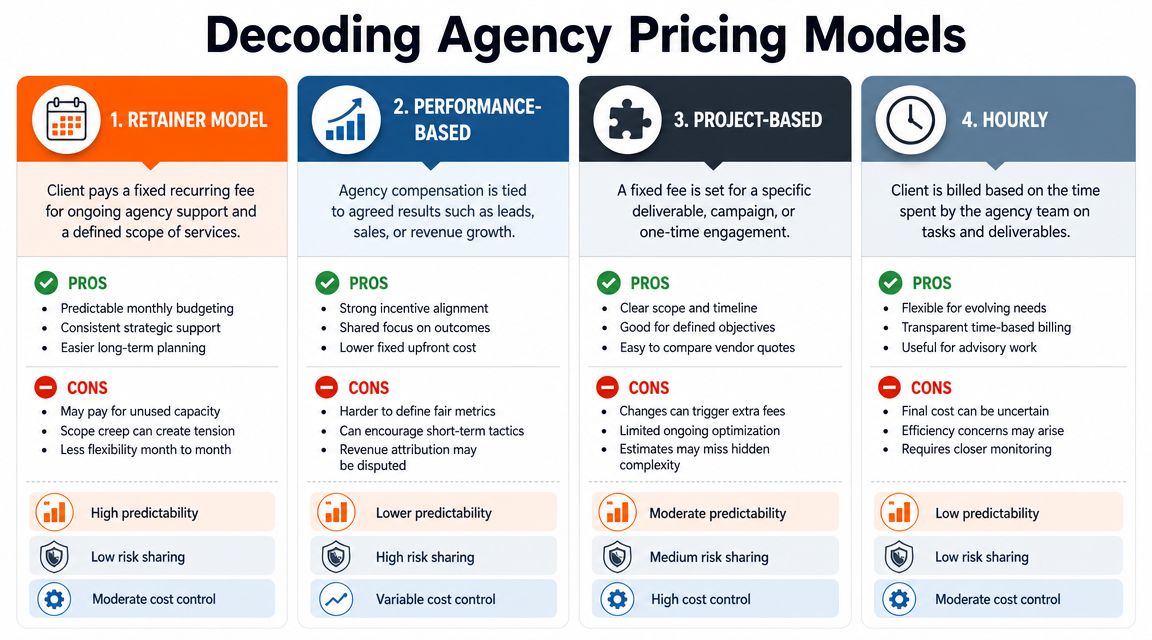
What the common pricing models really mean
| Pricing model | How it works | Good fit | Main risk |
|---|---|---|---|
| Monthly retainer | You pay a fixed monthly fee for ongoing management | Established plumbing businesses that want consistency | You can keep paying while performance drifts |
| Performance-based | You pay based on leads or actions | Owners who want tighter risk-sharing | Lead quality becomes the argument |
| Project-based | You pay for a defined build or setup | Businesses fixing one specific problem | Work often stalls after launch |
| Hourly | You pay for time spent | Owners needing occasional specialist help | Cost and value are hard to predict |
Retainers are common because local marketing needs regular work. Ads need adjustment. Service pages need updates. Tracking breaks. Reviews slow down. Competitors change their bids. A good retainer covers that ongoing maintenance.
The risk is simple. Some agencies sell a retainer and then go quiet. You still get a report, but very little changes underneath it.
Performance-based pricing sounds cleaner, and sometimes it is. It can work well when both sides agree on what a valid lead looks like before the contract starts. If that definition is loose, the agency gets rewarded for volume, not fit. A call from outside your area, a tenant with no authority, or someone asking for work you do not even offer can still end up on your invoice.
Project pricing works best when the problem is narrow and obvious. A new website. Better service pages. Call tracking setup. Cleanup of an old Google Business Profile. It is often the right move if your current setup is broken and you are not ready to hand over monthly management. The catch is that a finished project does not create momentum by itself. Someone still has to run the campaigns, update pages, and keep the phones pointed at the right jobs.
Hourly support is fine for owners who already know what they need. Maybe you want a specialist to audit your ads, fix conversion tracking, or review a landing page before you spend more. If you are still trying to work out strategy, hourly can become expensive drift.
How to choose based on business reality
Pick the model that matches how involved you want to be.
- Choose a retainer if you want one firm handling the weekly work and you are willing to review outcomes every month.
- Choose performance-based if the lead definition is written clearly, disputed leads have a process, and your service area is tightly controlled.
- Choose project-based if you have a specific gap to fix and a clear plan for what happens after delivery.
- Choose hourly if you need specialist help, not full management.
A lot of plumbers compare prices without comparing workload. That is a mistake. Cheap offers often push the burden back onto your team. You may need to provide photos, chase reviews, approve every change, answer technical questions, and sort through weak enquiries yourself. A lower monthly fee can cost more in office time and missed calls than a higher fee with better structure.
It also helps to compare how small business marketing packages are usually scoped so you can see the difference between basic admin, actual campaign management, and strategic work that affects lead quality.
One more trade-off matters. A larger agency may have better systems, but smaller firms can sometimes give tighter attention and faster decisions. Bigger is not better by default. Better is better. Ask who does the work, how often campaigns are adjusted, and what they change when one service line is producing poor-quality leads.
The right fit is the agency whose pricing model matches your tolerance for risk, your available time, and the type of growth you want. The best proposal is usually the one that makes it easiest to trace spend to calls, calls to booked jobs, and booked jobs to profit.
How to Measure Success and Hold Your Agency Accountable
If you leave measurement to the agency, you'll usually get a report built around whatever makes them look busiest. That's not fraud. It's just what happens when the vendor controls the scoreboard.
The fix is simple. Define success in business terms before the work starts.
Track business outcomes, not dashboard theater
A plumbing digital marketing agency should report on things that connect to revenue. That usually means qualified phone calls, quote request forms, booked jobs, and which service lines are producing those outcomes. Everything else is secondary.
This matters even more because search behavior has shifted. Recent data shows that about 58.5% of Google searches in the U.S. and 59.7% in the EU ended without a click in 2024, and Google sent only about 360 clicks per 1,000 searches, according to Bird Marketing's plumbing industry analysis. If an agency is still selling “more traffic” as the main promise, they're behind the market. Plumbers need calls from search results, map visibility, remembered brand names, and repeat exposure, not just site visits.
That changes what you should review.
- Qualified calls matter more than raw call count.
- Booked jobs matter more than total enquiries.
- Service mix matters because not all jobs have equal value.
- Missed-call handling matters because marketing can't save a call nobody answered.
The right report should help you decide what to do next month, not just prove that someone stayed busy last month.
For a useful reference point on what business-focused acquisition should look like, review approaches built around lead generation for plumbers rather than generic awareness campaigns.
A practical monthly review rhythm
Don't overcomplicate this. A short monthly review can tell you most of what you need to know.
Use a simple checklist:
How many qualified calls came in?
Strip out spam, wrong numbers, supplier calls, and poor-fit enquiries.How many quote requests came through?
Look for quality, not just form volume.How many jobs were booked from those enquiries?
If the agency can't track this directly, at least reconcile it manually with your office staff.Which service categories performed best?
You may find one offer consistently brings in better work than another.Where did leads break down?
Did they not call? Did they call but not book? Did your team miss them? Did the page or offer attract the wrong customer?
A short scorecard helps:
| Metric | What to look for |
|---|---|
| Qualified calls | Are the right people calling about the right services? |
| Quote forms | Are requests complete and relevant? |
| Booked jobs | Is enquiry volume turning into real work? |
| Lead quality by service | Which jobs are worth scaling? |
| Response handling | Are internal misses undermining the spend? |
This is also where many plumbers realize the agency isn't the whole story. If your receptionist misses half the calls on Mondays, or your quote follow-up is weak, your marketing can look underwhelming even when lead quality is decent.
That's not a reason to excuse poor agency performance. It's a reason to judge the whole pipeline properly.
Marketing Red Flags and a Smarter Path Forward
Some red flags are obvious. Others only become clear after you've paid for a few months and still can't tell what's improving. The problem isn't just bad agencies. It's also outdated promises built for a search environment that no longer behaves the way it used to.
Keep this checklist in mind when you're evaluating any plumbing digital marketing agency.
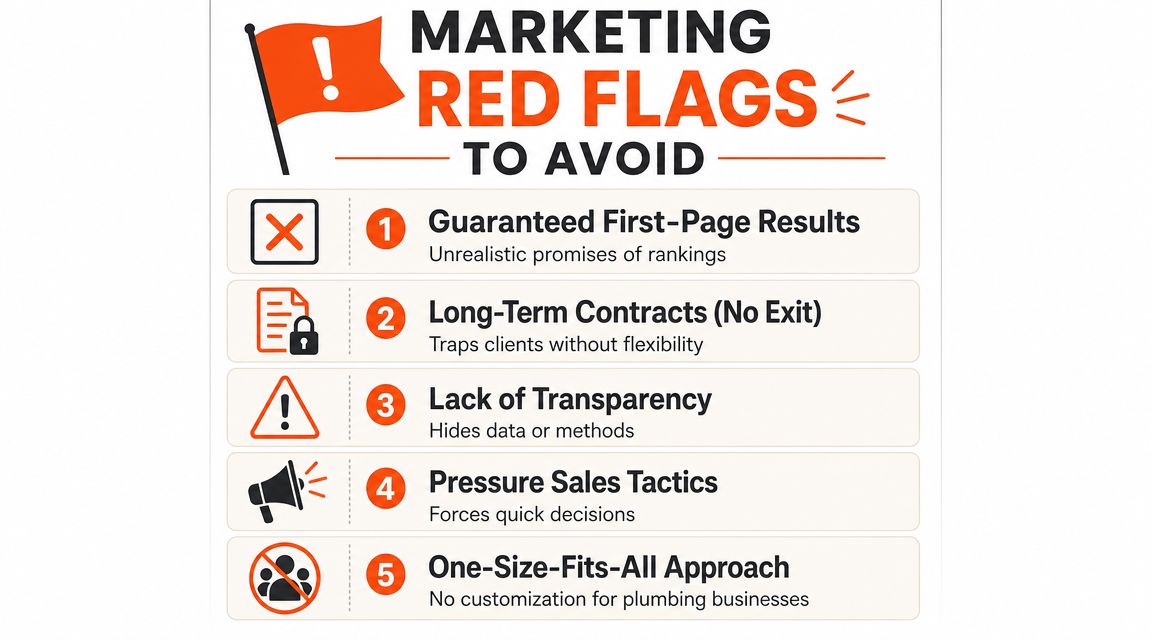
The warning signs that should slow you down
- Guaranteed ranking promises. No serious operator can guarantee exact placement outcomes in a changing local search environment.
- Long contracts with no sensible exit. If they need to trap you to keep you, that tells you something.
- Reports full of noise. If every month is packed with screenshots and vague terms but light on calls and jobs, you're being managed, not helped.
- Pressure to decide fast. Good agencies don't need manufactured urgency.
- The same plan for every plumber. A one-truck emergency plumber, a multi-crew company, and a commercial-focused operator need different priorities.
A subtler red flag is channel dependence. If the whole plan depends on one source of visibility, you're exposed. Plumbing guidance consistently points to a stack built around a conversion-ready website, Google Business Profile, paid search, reviews, social proof, email, and retention, with common failure points including inconsistent business information, weak mobile experience, and overreliance on one channel, as summarized in Rank Me Top's plumbing marketing tips.
That's worth paying attention to because it reflects real business risk. When one source slows, your pipeline can wobble fast.
Why consistency matters more than grand promises
A lot of trade businesses don't fail at marketing because they lack ideas. They fail because work gets busy, posting stops, review requests happen inconsistently, profiles go stale, and months pass with no steady visibility. Research cited in Black n Orange's plumbing marketing agency guide says 63% of small businesses lack a documented content strategy, nearly one-third do no content marketing at all, and 93% of internet users are active on at least one social platform. That gap matters because many local businesses go quiet online between jobs, even though customers are still checking profiles, reviews, and recent activity.
That's why I'd treat “staying active without extra effort” as a buying criterion, not a nice extra.
A plumber doesn't need more marketing theory. They need a practical system that keeps the business visible when the team is too busy to think about posting.
For some plumbing companies, a full-service agency is the right move. If you need aggressive local lead generation across multiple service lines and have the budget, management time, and internal discipline to support it, that can work well.
For others, it's too much. Too much cost. Too much oversight. Too many moving parts for a business owner who's already juggling staff, jobs, quotes, and callbacks.
In that situation, the smarter path isn't doing nothing. It's choosing a simpler setup that keeps your business present, credible, and active online without turning you into a part-time marketer.
If you want steady online visibility without the overhead of a full agency, take a look at GrowTradie. It's built for tradies who don't have time to write posts, plan content, or keep social profiles active between jobs. GrowTradie creates trade-specific content, designs the posts, and auto-publishes them for you, so your business stays visible and trustworthy while you focus on the work.