
Some weeks the phone doesn't stop. Other weeks you start looking at the schedule and wondering where the next decent run of work will come from. That swing is normal in electrical work, but it creates a problem. If you only market when things go quiet, you're already late.
A lot of electricians treat email like admin. Something they know they should do, but never get around to. That's the wrong frame. Done properly, electrician email marketing is a job-booking system. It helps you follow up on quotes, bring back past customers, and stay in front of people who already know your name.
It also suits the way trade businesses operate. Email is one of the most measurable channels for electricians because you can tie it to bookings and revenue, not just attention, as noted in ServiceTitan's guide for electrician email marketing.
Table of Contents
- Why Email Marketing Is a Tool Not a Chore
- Building Your Customer List Without Extra Work
- Four Automated Campaigns That Book Jobs for You
- Writing Emails That Get Opened and Actioned
- Simple Tools and a Realistic Schedule
- Measuring What Matters Booked Jobs Not Opens
Why Email Marketing Is a Tool Not a Chore
If you've been in the trade a while, you already know the expensive mistake. You finish a job, the customer is happy, and then you disappear from their world. Six months later they need another electrician, or their neighbour asks who to call, and your name isn't front of mind.
That isn't a workmanship issue. It's a follow-up issue.
Electrician email marketing works best when you stop thinking of it as a newsletter and start treating it like part of your sales process. You're not emailing for the sake of "keeping active." You're sending messages that help close quotes, reactivate old customers, and prompt the next service call.
It creates consistency when the schedule is uneven
Email's value is simple. It gives you a way to generate work from people who've already dealt with you before. That's easier than trying to win every job cold.
A basic system can do useful work in the background:
- Follow up on open quotes so leads don't go stale.
- Check in after completed jobs and ask for a review.
- Send timely reminders for inspections, upgrades, or safety checks.
- Reconnect with inactive customers before they hire someone else.
Practical rule: If someone already knows your business, they should never have to rediscover you from scratch.
This is why email feels less like marketing and more like operations. It supports the jobs you're already quoting and the customers you've already paid to acquire.
It fits local trade businesses better than broad promotion
A lot of electricians don't need "awareness." They need booked work from the right suburb, the right property type, and the right service need. Broad messages rarely help with that. Relevant messages do.
That also makes email a useful support channel alongside your other marketing efforts. If you're already thinking about how to get more consistent enquiries, this broader guide on marketing for electricians is worth reading. Email is one part of that system, but it's often the part that turns old contacts into fresh jobs.
What doesn't work is sending the same generic update to everyone on your list. Homeowners, property managers, and commercial contacts don't think the same way. Neither does a customer who just had a panel upgrade versus one who asked for an EV charger quote and never booked.
Email becomes useful when it reacts to real situations. New lead. Finished job. Unapproved quote. Lapsed customer. That's where booked work comes from.
Building Your Customer List Without Extra Work
Most electricians don't have a list problem. They have an organisation problem. The contacts are already sitting in invoices, quote records, job management software, email threads, and contact forms. They just haven't been cleaned up and tagged properly.
Start with the contacts you already have
The easiest list to build is the one you've half-built already.
Pull contacts from places like:
- Past invoices: These are previous customers. High value, because they already trusted you once.
- Quote records: These people showed intent, even if they didn't book right away.
- Website forms: Add a simple checkbox so people can agree to receive updates or reminders.
- Job completion paperwork: If you send digital receipts or warranty info, ask for the best email address then.
You don't need a complicated intake process. A sound email workflow starts by collecting practical details like name, zip code, and service type, then segmenting by service category and lifecycle stage so the message matches a known need, as explained in Gushwork's electrician email workflow guide.
That one point matters more than most electricians realise. If you know the suburb and the kind of job they asked about, you can send a much better follow-up later.
Tag people by the job they actually needed
A messy list creates messy results. If everyone goes into one big bucket called "customers," your emails turn into generic noise.
Keep the tagging simple. Start with categories that reflect actual work:
| Tag Type | Example Tags | Why It Helps |
|---|---|---|
| Customer type | Residential, commercial, property manager | Changes the tone and offer |
| Service history | Panel upgrade, lighting, EV charger, maintenance | Keeps future emails relevant |
| Lead stage | New lead, quoted, completed job, inactive | Tells you what message to send next |
| Area | Suburb or ZIP code | Useful for local scheduling and route density |
You don't need perfect data. You need useful data.
A practical setup often looks like this:
- Import the contact list from your invoices and quotes.
- Add one service tag based on the job or enquiry.
- Add one stage tag based on where they sit now.
- Fix records as new jobs come in instead of trying to clean everything in one weekend.
Good electrician email marketing doesn't start with fancy design. It starts with knowing who had what problem, and whether they booked.
This is also where a lot of businesses create more work for themselves by overcomplicating software. If your tool lets you tag contacts, send a basic automated sequence, and track replies, that's enough to get moving.
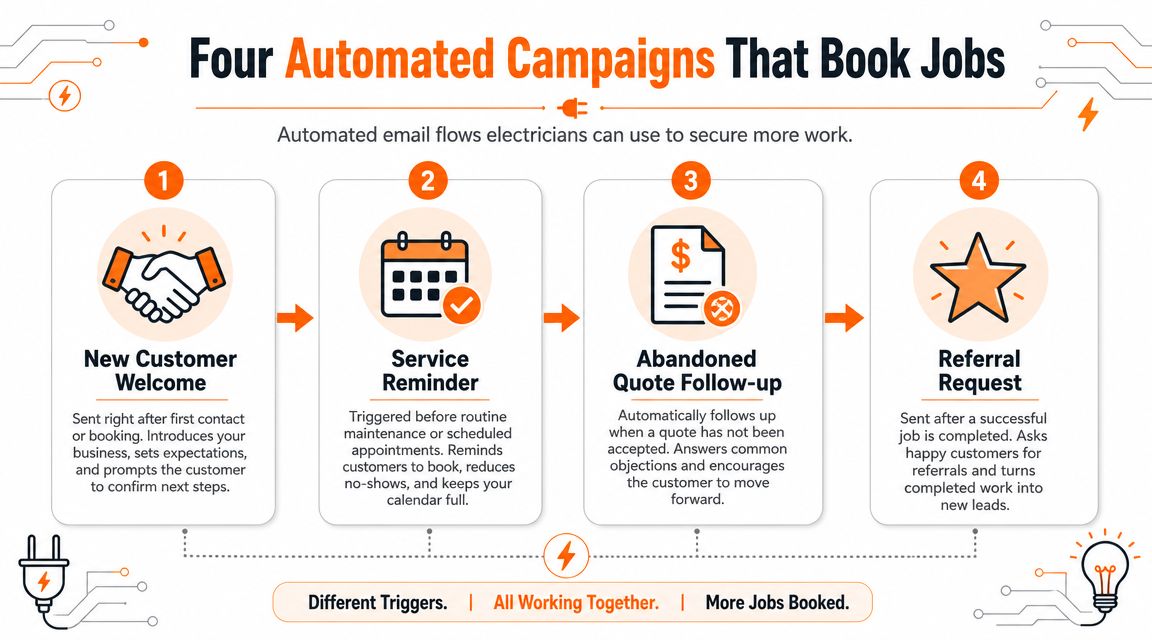
Four Automated Campaigns That Book Jobs for You
Manual emailing falls apart fast. You get busy, someone forgets to follow up, and the quote that looked promising last week goes cold. Automation fixes that by sending the right message when a clear trigger happens.
This is the shift that made email more useful for electricians. Modern electrician email marketing has moved from one-off promotions to automated lifecycle messaging, including post-service follow-ups, annual safety reminders, and service-specific education triggered by job completion or customer segment, according to Sequenzy's guide for electricians.
A strong setup doesn't need dozens of campaigns. It needs a few that connect directly to real work.
Start with this visual summary, then build each one properly.
Post-job follow-up
Trigger this after a job is marked complete.
The first email should be simple. Thank the customer. Remind them what was done. Give them a direct way to reply if anything needs attention. Then ask for a review in the same sequence, not months later when the memory has gone cold.
This campaign matters because it does three jobs at once. It reassures the customer, creates review opportunities, and opens the door for the next piece of work.
A practical version looks like this:
- Email one: Thanks for choosing us. We've detailed the work completed.
- Email two: Quick check-in. Everything working as expected?
- Email three: If the job went well, would you leave a review?
Keep the tone plain. No hype. No graphics overload. Just a real follow-up from a real business.
Here is a helpful walkthrough on setting up automated email flows:
Quote follow-up
This one gets ignored far too often, even though it can recover work that's already half sold.
When someone asks for a quote, they usually don't need endless persuasion. They need a reminder, a reason to decide, or a chance to ask one more question. A short follow-up sequence handles that without your team chasing every lead manually.
Use a sequence with a clear rhythm:
- First touch: Send the quote promptly with a short summary.
- Second touch: Check whether they have questions.
- Final touch: Let them know how to move ahead if they'd like to book.
If a lead asked for a quote, don't assume silence means "no." It often means "not yet."
The mistake here is writing long sales emails. A quote follow-up should feel like a service message, not a marketing blast.
Annual safety reminder
This campaign is one of the easiest to justify because it feels useful, not pushy.
Send it to past customers based on job date or customer type. For homeowners, it can focus on electrical safety checks or common warning signs. For landlords or property managers, it can be framed around staying ahead of problems before they turn urgent.
This kind of message works well because it gives people a sensible reason to get back in touch. You're not asking them to buy something random. You're reminding them about maintenance they may have forgotten.
Make the CTA specific. "Book an inspection" is better than "contact us for more information."
Service-specific tip emails
Tags prove beneficial.
Someone who booked a generator job shouldn't get the same email as someone who asked about lighting. Service-specific education campaigns are useful because they feel relevant to the work the customer already cared about.
A few examples:
- EV charger customers: Send a short note about usage habits, future expansion, or when to ask for a check-up.
- Panel upgrade customers: Send a reminder about warning signs that justify another inspection.
- Lighting customers: Share practical upgrade ideas for outdoor or security lighting.
- Maintenance clients: Send a periodic reminder to book before a small issue becomes a disruptive one.
These emails should always lead to one action. Book a visit. Reply with a question. Request a quote. Anything more than that and response drops.
Writing Emails That Get Opened and Actioned
Most trade emails fail for one of two reasons. The subject line looks like spam, or the email body asks the reader to do too much. You don't need copywriting tricks to fix that. You need clarity.
There's another reason to stop obsessing over flashy subject lines. In local service businesses, many customers are reading on their phone, often quickly, and email isn't always the best channel for urgent situations. It's also worth remembering that open-rate reporting has become less reliable because of changes like Apple's Mail Privacy Protection and Google's sender requirements, as discussed in Scorpion's electrical marketing article. That means your email has to be judged by action, not curiosity.
Use subject lines that sound like a real business message
The best subject lines don't sound clever. They sound relevant.
Good subject lines usually do one of these:
- Reference an existing conversation such as a quote or recent job
- Mention a service need the customer will recognise
- Signal timing such as annual reminders or seasonal checks
Avoid spam-trigger wording. Don't write in all caps. Don't stack punctuation. And don't lean on pushy sales language. One electrician-marketing guide warns against spam-style wording like all caps, excessive punctuation, or terms such as “free,” “deal,” and “now,” and also recommends cleaning out inactive contacts over time instead of hammering one broad list.
Here are workable examples.
| Campaign Type | Example Subject Line | Call to Action (CTA) |
|---|---|---|
| Quote follow-up | Regarding your quote from [Company Name] | Reply to approve your quote |
| Post-job follow-up | Thanks for choosing [Company Name] | Leave a review |
| Annual reminder | Your annual electrical safety check | Book your inspection |
| Service-specific | A quick note about your EV charger setup | Request a service visit |
| Reactivation | Still need help with electrical work? | Reply to book a call |
Keep the body short and give one clear next step
A useful electrician email usually has three parts.
Reminder of who you are
Mention the previous job, quote, or reason for contact.One practical message
Say what matters now. Keep it short.One clear CTA
Ask them to book, reply, or review. Not all three.
A simple structure looks like this:
Hi [First Name],
We sent your quote for [service] and wanted to check if you had any questions. If you'd like to go ahead, reply to this email and we'll book a time that suits.Thanks,
[Company Name]
That's enough.
If you want your overall messaging to stay consistent across channels, this guide to content marketing for contractors can help with tone and clarity. But keep your email tighter than your general content. Email is for decisions.
One last point. Don't hide the action under buttons, banners, and long intros. For trade businesses, plain text often feels more personal and easier to trust.
Simple Tools and a Realistic Schedule
Most electricians don't need an advanced marketing stack. They need one place to store contacts, send basic automated emails, and track who replied or booked. If your CRM or job management platform already does that, use it first.
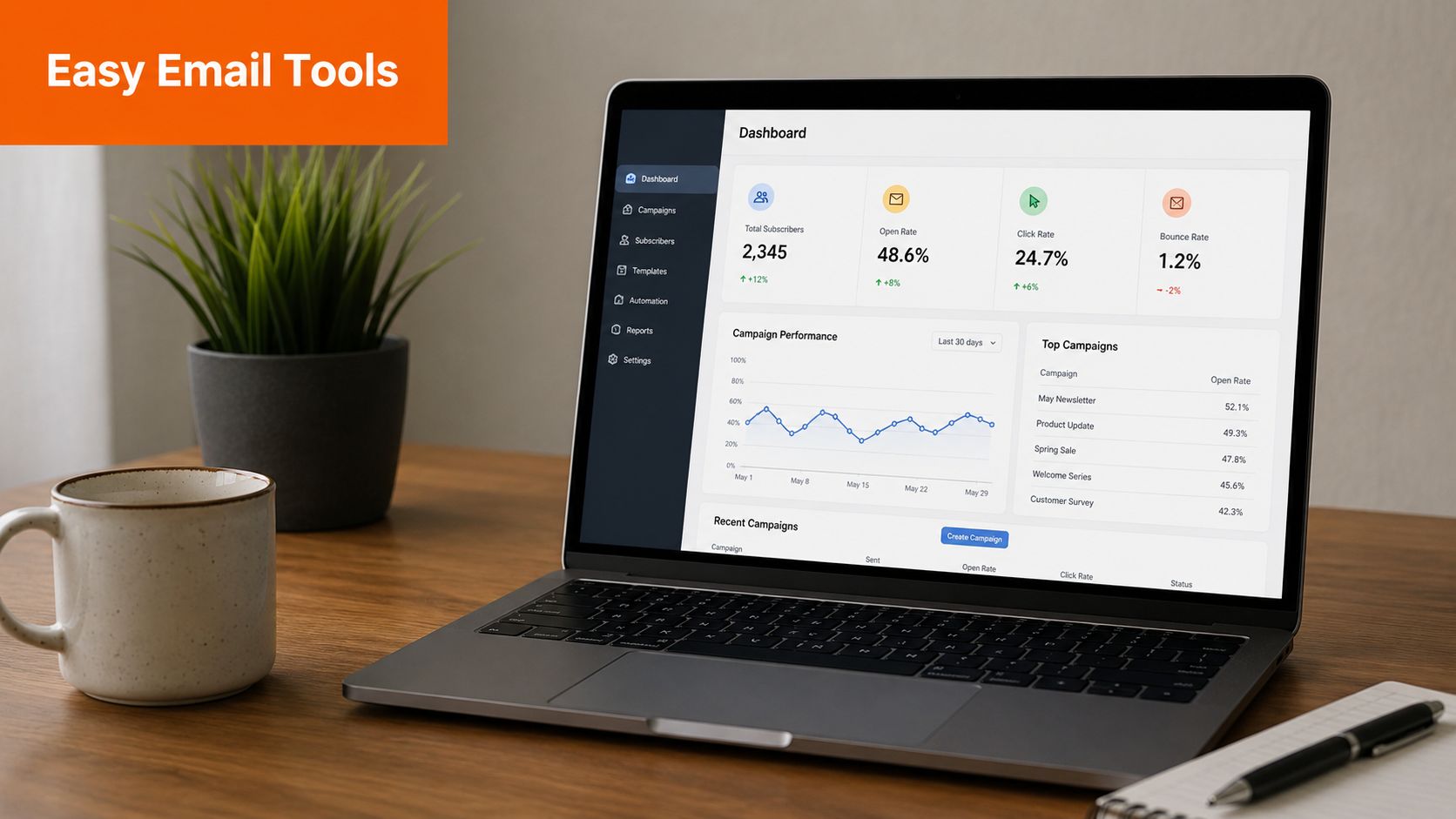
Choose the tool you will actually use
The best tool isn't the one with the longest feature list. It's the one your office manager, admin, or team will keep updated.
Look for practical basics:
- Contact tagging so jobs and customer types stay separated
- Automation triggers tied to completed jobs or quote status
- Simple templates you can reuse without redesigning every email
- Reply tracking so sales conversations don't get lost
If you already run digital systems in the business, it can help to review other apps for electricians that support scheduling, quoting, and customer follow-up. Email works better when it fits into your day-to-day workflow instead of sitting off to the side.
Send less often and with more purpose
Over-emailing is one of the fastest ways to make your list useless.
Most electricians don't need a constant stream of updates. A better schedule is lighter and tied to real events:
- Automated emails for quotes, completed jobs, and reminders
- Occasional manual campaigns when you have a relevant service push
- Periodic list cleanup so dead contacts stop dragging performance down
Trust is integral to sales in electrical work. If every email looks like a promo, customers tune out. If emails arrive when they make sense, they feel helpful.
Field-tested approach: Let automation handle the follow-up, then send manual emails only when the message is timely enough to justify interrupting someone.
A realistic system is boring in a good way. It runs smoothly, supports the office, and brings in work without becoming another job for you.
Measuring What Matters Booked Jobs Not Opens
A lot of businesses still judge email by open rate first. That's shaky ground now, and for electricians it misses the real point anyway. An email that gets opened and ignored is worth less than one that gets a reply and books a job.
Open rates can mislead you
Open data isn't as clean as many people think. Privacy features and inbox changes have made it less reliable, so treating opens as the headline result can send you in the wrong direction.
That doesn't mean you ignore email performance. It means you stop using vanity metrics as your main scoreboard.
Watch for things that connect to work:
- Replies from quote follow-ups
- Bookings after reminder campaigns
- Review submissions after completed jobs
- Revenue tied back to specific email sends
Track replies bookings and revenue
Keep the method simple. If a customer books from an email, note it in your CRM, spreadsheet, or job notes. If a reminder campaign brings in inspections, mark those jobs clearly. After a few months, you'll know which messages produce work.
This is the core idea behind electrician email marketing. You're not trying to become a full-time marketer. You're building a repeatable system that turns old quotes and past customers into new bookings.
The inbox doesn't need to impress anyone. It needs to help fill the schedule.
If you want a simpler way to stay visible between jobs, GrowTradie helps trade businesses keep their online presence active without having to write posts, design graphics, or remember to publish anything. It's built for busy tradies who want more enquiries and booked work without adding more marketing admin to the week.