
You've probably hit this point already. A customer asks if you can handle a pest issue around a structure, or you're thinking about adding pest control work to an existing trade business, and then the Texas rules start looking like a maze of forms, categories, exams, and state jargon.
That's where most small operators lose time. Not because the path is impossible, but because the official language tells you what the law says, not how to get work-ready without tying yourself in knots. The good news is that the Texas pest control license process is structured. Once you know which lane you're in, the steps stop feeling random.
This guide treats it like a field job, not a legal lecture. The aim is simple. Figure out the right license path, get through training and exams without backtracking, handle the paperwork cleanly, and stay compliant so you can keep working.
Table of Contents
- Getting Licensed Your Path to More Pest Control Work
- Choosing Your Texas Pest Control License Type
- Navigating Training Requirements and State Exams
- The Official Application and Business Setup Checklist
- Renewing Your License and Managing Education Credits
- Avoiding Common Mistakes and Getting Work-Ready
- Quick Answers to Your Licensing Questions
Getting Licensed Your Path to More Pest Control Work
You get the call on a Tuesday. A property manager wants recurring pest work on a small block of units, and they want proof you can do it legally before they send the paperwork. If your licensing is still sitting in the "I'll sort that later" pile, that job is gone before you price it.
That is how this usually hits solo operators and small crews. The problem is not just the state requirement. It is the delay between deciding to add pest control work and being ready to invoice for it.
A Texas pest control license is what turns pest work from a risky side offer into a service line you can sell with confidence. For a lean operation, that matters because every new service has two costs attached to it. The field cost is training, equipment, and time. The admin cost is licensing, records, and getting the business setup right the first time.
The practical mistake is treating licensing like a form-filling exercise. It works better as an operations job. Start with the work you want, map the approvals you need, then line up the training, exam timing, and business paperwork in the right order. That approach cuts rework and keeps you from paying for setup steps that do not match the jobs you plan to take.
If you have dealt with other trade licensing, the pattern will feel familiar. The paperwork is different, but the risk is the same. The wrong sequence costs time, pushes jobs back, and creates expensive cleanup later. It is the same reason tradies should understand the difference between trade scope and business approval in guides like what a general contractor license covers in practice.
Two points matter from day one:
- This is regulated field work. You need the right licensing path before you start selling and performing structural pest control jobs.
- The business side counts too. Getting one person qualified is only part of the job if the company setup is not aligned.
Practical rule: Treat the Texas pest control license as part of your startup schedule for the service, not as cleanup after you start marketing.
The operators who get work-ready fastest usually keep one question in front of them. What is the shortest compliant path from my current position to legal field work, with the least wasted training, paperwork, and downtime? Once you work from that question, the process is still a hassle, but it becomes manageable.
Choosing Your Texas Pest Control License Type
The first mistake is aiming at the wrong level. If you pick the wrong license type, you can spend time on training that doesn't match your role, or worse, build a staffing plan around permissions you don't have.
Start with the work you actually want to do
Texas structural pest control licensing runs in tiers. In practical terms, think of it as supervised entry, then working capability, then full responsibility.
An Apprentice is the starting point for someone entering the field under supervision. This is the sensible route if you're new to pest control and need legal access to training and field exposure before carrying more responsibility.
A Technician is the next operational step. This is usually the point where a small business starts getting real value from a team member because the role is tied to defined training, on-the-job development, and an exam standard.
A Certified Applicator is where responsibility gets heavier. This is the level that matters if you're building a business that needs someone carrying the qualification burden for categories, oversight, and ongoing compliance.
For Texas structural pest control work, the pathway is explicitly tiered. An apprentice must register with the Texas Department of Agriculture within 10 days of starting work, and a technician must complete 20 hours of classroom training in general pest control standards, 8 hours in each category sought, and 40 hours of on-the-job training per category, then pass the technician exam with a 70% minimum score, according to this Texas pest control license overview.
That's why the right opening question isn't “What license is best?” It's “Am I learning under supervision, building a productive field role, or taking on top-level compliance responsibility?”
Texas Pest Control License Types Compared
| Attribute | Apprentice | Technician | Certified Applicator |
|---|---|---|---|
| Typical purpose | Entry point for supervised work | Field-ready role with defined qualification requirements | Higher-responsibility role tied to category authority and compliance |
| Can start working right away | Only in a supervised path | After meeting training and exam requirements | After meeting qualification and exam requirements |
| State timing issue | Must register promptly after starting | Delays usually come from incomplete training records or exam prep | Delays usually come from experience pathway and category planning |
| Best fit for | New entrant or helper | Small crew member who needs to become productive | Owner-operator or senior lead taking responsibility for licensed work |
| Main risk | Assuming registration equals independence | Underestimating the training and documentation load | Taking on categories without a clean compliance system |
A solo tradie often wants to jump straight to the top. Sometimes that's the right call. Sometimes it isn't. If you don't yet have the background or support structure, pushing straight toward the highest-responsibility role can slow you down more than starting with a staged plan.
There's a similar pattern in other regulated trades. If you've ever looked at how license pathways shape business growth in related contracting work, this guide on what a general contractor license is shows the same basic reality. The legal category you choose affects the jobs you can take, the supervision you need, and how fast you can scale.
Pick the license type that matches your next year of work, not the version of the business you hope to have someday.
Navigating Training Requirements and State Exams
A lot of small operators hit this stage with the wrong expectation. They assume the hard part is passing a test. In practice, the bigger risk is losing three or four workable weeks because training, records, and exam booking were handled in the wrong order.
What the training load looks like in practice
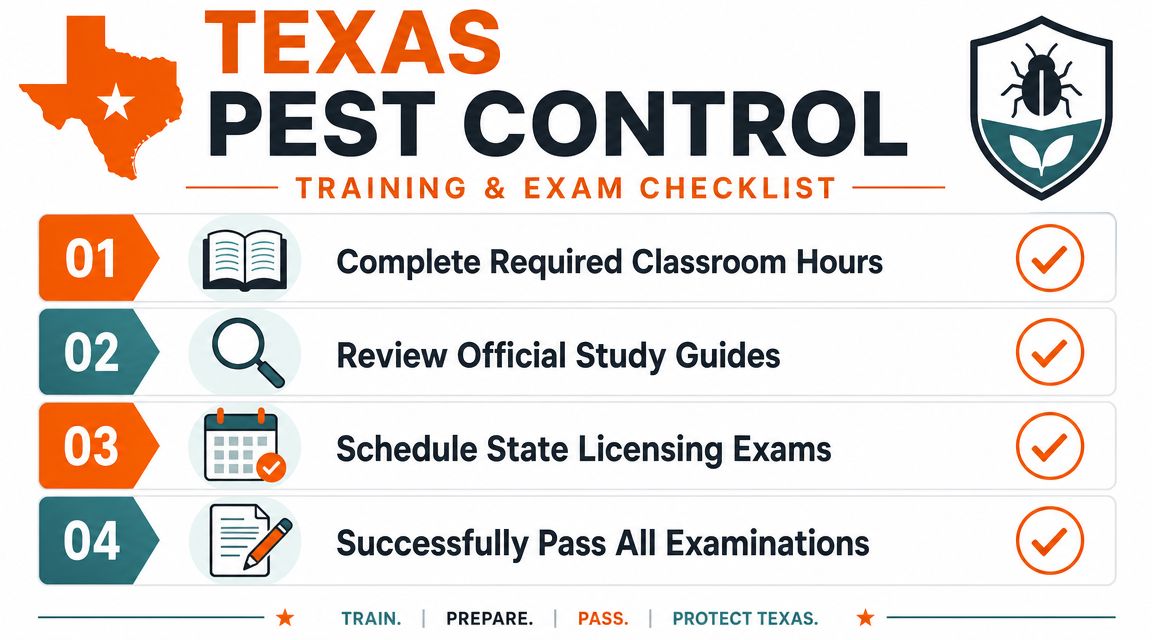
For technician applicants, Texas sets a defined training path. That usually includes 20 classroom hours, 8 category-specific classroom hours, 40 hours of on-the-job training per category, and a 70% or better passing score on the Technician exam. Exam fees vary by license path, as listed on the Texas pesticide applicator licensing information page.
On paper, that looks manageable. In a one-truck business or a small crew, the problem is fitting it around paid work.
If you spend weekdays on quotes, callbacks, termite work, and customer follow-up, training slips to nights and weekends. Then the records get patched together from memory, and that is where delays start. I see the same pattern in other regulated trades. Owners trying to build service capacity too early run into similar bottlenecks with licensing, staffing, and admin, which is why planning matters just as much as study. The same pressure shows up when tradies work through the first-year setup steps in a guide on starting an HVAC company without choking your schedule.
A cleaner approach saves time:
- Pick your category before you book anything. Training only helps if it matches the work you plan to sell.
- Block classroom time early. Busy season will not create spare time for you.
- Record OJT as it happens. A phone note, signed log, or digital file is better than a stack of loose papers in the cab.
- Sit the exam after your records and study material are in order. Booking too early creates rushed prep and retest costs.
How to approach the exams without wasting attempts
Texas uses a layered exam setup. Applicants generally need to pass the General Standards exam and at least one category exam, with a limited exception for aerial certification.
That split matters. General Standards shows baseline knowledge. The category exam ties you to the work you plan to perform.
Solo operators often miss that point and study too broadly. They burn time reading material for services they will not offer in the next 12 months. That may feel productive, but it slows down the one thing that matters right now: getting approved for the work that pays your bills.
Use a simple study order that matches the field:
- Start with General Standards. Get the core rules, safety, and handling requirements straight first.
- Then study your chosen category. Keep it tied to the jobs you expect to quote and perform.
- Use official material, not recycled summary sheets. Shortcuts are fine for revision, not for first-pass learning.
- Study from real service examples. Calibration, label use, target pest ID, treatment choice, and site safety stick better when they match actual jobs.
- Skip categories you are not ready to sell. Extra approvals sound good, but each one adds training, records, and compliance load.
Poor exam results usually start well before exam day. The common causes are weak records, category confusion, and trying to force study around a fully booked work week.
The Official Application and Business Setup Checklist
You passed the exams, lined up the category you want, and you are ready to start quoting work. Then the paperwork stalls you for two or three weeks because the business name on one document does not match the application, or the insurance is still being sorted, or a supporting record is missing. That is a common way solo operators lose momentum.
Texas treats structural pest control as both an individual compliance job and a business compliance job. If your qualification is in order but your company setup is half-done, you are still not work-ready. That is the part that catches small crews. The state process is manageable, but only if you build the file in the right order.
A practical paperwork sequence that saves rework
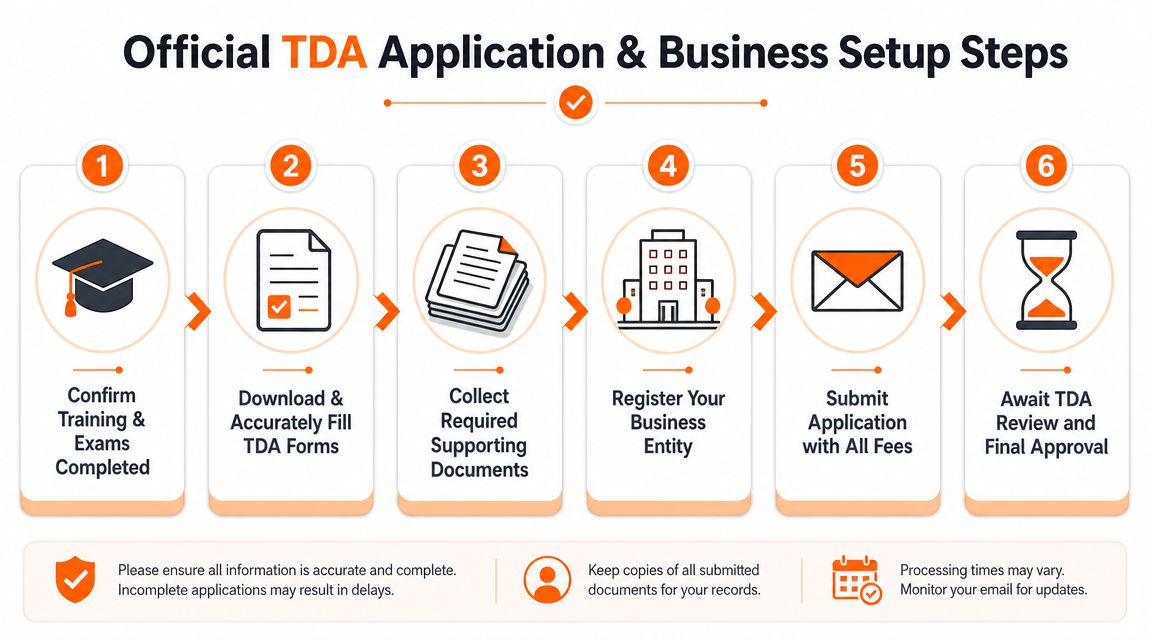
Use this order if you want the shortest path from passed exam to legal trading:
- Confirm your exam and category records first. Do not start the application while details are still changing.
- Set up the business entity early. Your legal business name, registration records, and application details need to match.
- Create one job folder for the full file. Keep training records, exam confirmations, entity paperwork, insurance, and application copies in one place.
- Check every name and address line before you submit. Small mismatches cause avoidable follow-up.
- Send a complete package. Partial submissions rarely save time. They usually create back-and-forth and put your file in a slower lane.
That order matters more than people think.
A tradie running jobs during the day will often try to piece this together at night, one document at a time. That usually leads to duplicate effort. You end up updating the same business details across multiple forms, then correcting them again after someone spots a mismatch.
The business setup side is often the bigger hassle than the license form itself. If you are forming a company, opening accounts, and setting up insurance at the same time, do that admin before you start promising start dates to clients. Operators who already run another service business will recognise the pattern. The same startup discipline used in a guide on how to start an HVAC company applies here. Get the entity, records, and operating paperwork straight before field work ramps up.
A few problems show up repeatedly:
| Paperwork problem | What happens | Better move |
|---|---|---|
| Incomplete support documents | Review slows down or stops | Assemble the full package before submission |
| Business name mismatch | Confusion over who is applying | Use one legal business identity across every document |
| Leaving insurance too late | Approval may be done before you are ready to trade | Sort insurance during application prep |
| Scattered records | You waste time answering follow-up requests | Keep one dated file for every licensing document |
One practical rule saves a lot of grief. Submit as if you will need to defend every line six months later. If a regulator asks for proof, you should be able to pull it up in a minute, not search emails on the ute between jobs.
Good operators lose time on admin because they treat forms as separate from the work. In regulated trade work, the forms are part of the job.
Renewing Your License and Managing Education Credits
The Texas pest control license only helps if it stays active. A surprising number of decent operators handle the first application properly, then get stung later by renewals because they don't build any system around it.

Why renewals trip up good operators
Renewals usually go wrong for ordinary reasons. People assume they'll remember. They leave records scattered across email, paper certificates, and course portals. Then the deadline gets close and they're trying to reconstruct a year's worth of compliance from scraps.
For certified applicators, the recurring education load is specific. Texas A&M AgriLife notes that certified applicators must earn 5 continuing education units annually, typically made up of 2 CEUs in general training and 1 CEU in each certified category, as explained in this Texas pesticide license Q&A from Texas A&M AgriLife.
That's not a huge number on paper. In practice, it becomes a problem when operators leave all of it to the end.
A simple system for keeping CEUs under control
You don't need a fancy compliance department. You need a repeatable routine.
- Keep one renewal file: Digital is fine. The key is one place, not five.
- Log CEUs as you earn them: Same day is best.
- Match each credit to the right category: Don't assume a course covers what you need unless it clearly does.
- Set calendar reminders well ahead of renewal time: Give yourself enough room to fix missing records.
If you run a crew, make one person responsible for checking status. “Everyone manages their own renewal” sounds fair, but it usually produces gaps.
License maintenance is where small teams either look professional or chaotic. The difference is usually record discipline, not technical skill.
Missing renewal obligations can interrupt work, create stress with customers, and force you into a scramble when you should be billing. It's cheaper in time and effort to keep the file current all year than to rescue it at the deadline.
Avoiding Common Mistakes and Getting Work-Ready
Most licensing trouble doesn't come from obscure legal issues. It comes from ordinary field habits that are fine in less regulated work and costly in pest control.
Mistakes that slow down small crews
A common one is choosing the wrong path because the title sounds close enough. A business owner assumes a team member can handle jobs independently when that person is still in a supervised lane. The fix is simple. Match every role in the business to an actual permission level, not a job title you use internally.
Another one is weak training records. A crew member has done the work, the supervisor knows it, but the documentation is thin. That becomes a problem when you need to prove competency steps were met. If the record isn't there, the state won't treat the memory of the work as evidence.
Then there's the “I'll tidy the paperwork later” habit. That causes trouble with business names, insurance documents, support paperwork, and renewal files. Good field people often underestimate how much regulated trades reward admin discipline.
Here are the practical fixes that save the most grief:
- Write down supervision boundaries: If someone is limited to supervised activity, make that clear in your scheduling and job assignment process.
- Document training as it happens: Don't rebuild OJT after the fact.
- Keep customer-facing claims aligned with your actual license status: Don't advertise work your current categories or staffing can't legally support.
- Review compliance before hiring fast: Growth creates holes when a new person starts doing work before the paperwork catches up.
What work-ready really looks like
Being licensed isn't the same as being ready. Work-ready means your business can take a job, perform it legally, document it properly, and survive an audit or complaint without panic.
That includes the basics. Your team needs to know who can do what. Your records need to be easy to retrieve. Your documents need to match your operating business. And your public-facing materials need to reflect a legitimate, well-run company.
If you're coming from another state, don't assume your existing credential transfers cleanly. Texas has its own framework, categories, and administrative expectations. Before promising start dates or taking bookings, confirm what Texas will accept and what it won't. That saves you from selling work on the assumption of reciprocity and then having to walk it back.
One more point that gets missed. Once you're legal, you still need a steady flow of the right enquiries. The operators who look most credible usually present their service clearly, state what they do, and avoid vague marketing. If you need ideas on how pest control businesses position offers without sounding generic, this guide to pest control ads is a useful reference.
The cleanest operators aren't always the biggest. They're the ones whose licensing, records, service scope, and customer messaging all line up.
Quick Answers to Your Licensing Questions
What's the difference between a commercial and noncommercial license?
The practical difference comes down to the work setting and purpose. Commercial licensing applies to business activity where pest control services are being provided in a professional capacity. Noncommercial licensing is tied to work done in a noncommercial context. If you're charging customers or operating a pest control business, don't make assumptions based on the word “applicator” alone. Check the exact TDA category and business context before filing.
Can my entire crew work under my Certified Applicator license?
Not in the loose way some owners hope. A certified applicator's qualification doesn't turn every unqualified worker into a free-standing operator. Roles, supervision, and allowed duties still matter. Build your crew plan around each person's actual status, not just the presence of one senior license holder.
What happens if I miss my renewal deadline?
The practical problem is interruption. Once renewal or education obligations slip, you can end up in a position where you shouldn't be taking on regulated work until the issue is fixed. That creates avoidable downtime and stress. The best response is fast cleanup, complete records, and direct confirmation of your standing before resuming normal operations.
Do I need a separate license for applying herbicides?
It depends on the category and the work you're performing. Texas licensing is category-based, so don't assume one approval automatically covers every treatment type. Check the category attached to the service you plan to offer and make sure your training, exam path, and business scope line up.
A good rule for all of these questions is simple. If the answer affects what jobs you can legally sell or perform, confirm it before you quote the work, not after.
If you're licensed, capable, and too busy to keep your business visible between jobs, GrowTradie helps trade businesses stay active online with done-for-you posts, branded content, and automated publishing that keeps your company in front of local customers without adding more admin to your week.