

Some weeks your phone won't stop. Then a gap opens up and the board goes quiet. You still have overhead, wages, fuel, and supplier bills, but the next run of jobs feels uncertain.
A lot of plumbers assume that's just how the trade works. It isn't. A patchy calendar is often a visibility problem, a trust problem, or a follow-up problem. The good news is that all three are fixable with a practical system.
Most advice online is either too vague to use or too expensive to justify. Plumbers are being quoted $3,500+/month for help they often thought was just a Google Business Profile setup, which shows the gap between basic DIY and full agency retainers, as discussed in this Reddit thread about local marketing quotes for a plumbing business. If you're a busy tradie, you need the middle ground. Clear actions, done in the right order, without turning your week into a second full-time job.
Table of Contents
- Your Game Plan for a Full Job Calendar
- Claim Your Spot on Google Maps and Search
- Turn Your Website into a Job-Winning Tool
- Build Online Trust with Reviews and Mentions
- Use Local Content to Stay Top of Mind
- Become a Recognized Name in Your Community
- Your Marketing Checklist for Steady Growth
Your Game Plan for a Full Job Calendar
Tuesday is quiet. Wednesday is packed. Friday has two emergency calls and a cancellation. That stop-start pattern is common in plumbing, especially when marketing only gets attention after hours or between jobs.
The goal is a steadier flow of booked work from nearby customers who are ready to call, not a pile of random website visits.
A lot of plumbing businesses get stuck between two bad options. One is patching things together late at night. A few directory edits, a social post, maybe a website tweak. The other is handing everything to an agency and hoping the monthly retainer turns into calls. There is a better middle ground.
Stop treating inconsistency like fate
In plain English, this work comes down to three things. Be easy to find, easy to trust, and easy to contact. If any one of those breaks, the calendar shows it.
The usual problem is not effort. It is scattered effort. A half-finished profile, an outdated website, no review habit, no system for keeping business details consistent. Plumbers are busy, and unpredictable job schedules make it hard to stay on top of marketing. That is exactly why a simple process beats bursts of activity.
Practical rule: Start with the places where local customers already look when they need a plumber fast. Polish the rest after that.
There is also a timing reality business owners often underestimate. This kind of visibility work usually builds over months, not days. Good setup can help right away, but the main payoff comes from staying consistent long enough for trust signals, local relevance, and repeat exposure to stack up.
The middle-ground approach works better
You do not need jargon or a marketing degree. You need a clear order of operations you can follow in short blocks each week.
Start with your core visibility assets. Then tighten the pages that support them. Then build proof that your business is active and trusted. After that, keep the habit going with a simple maintenance routine. If you want a faster starting point, use a plumbing business profile template so the basics are not left half-done.
That order matters. I have seen plumbers spend heavily on a site redesign before fixing the business details customers check first. Clean structure beats expensive chaos.
The rest of this guide breaks that process into plain, doable steps.
Claim Your Spot on Google Maps and Search
A homeowner finds your business at 7:10 p.m. after a pipe starts leaking under the sink. They are not reading your life story. They want to know three things fast. Do you handle the job, do you cover their area, and can they reach you right now?
That is why your Google Business Profile deserves real attention. For many plumbers, it is the first thing a local customer sees before they ever visit the website. If the profile is thin, outdated, or unclear, you lose trust before the phone rings.
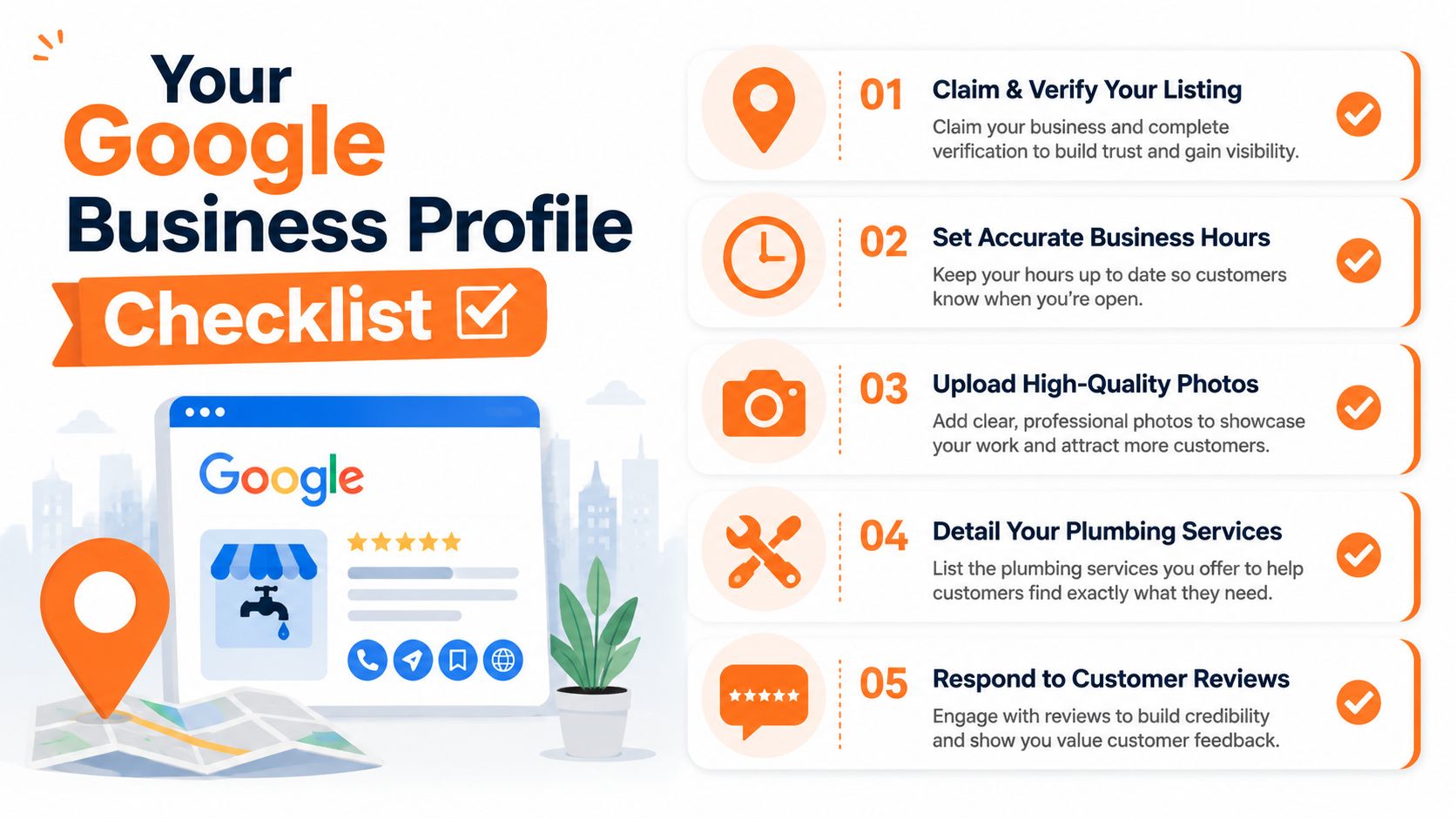
A quick visual checklist helps keep this from turning into guesswork.
Fill out every field properly
Many profiles are weak because they only contain the basics. Name, phone, and website do not tell Google or the customer enough.
Handle the setup in this order:
Claim and verify the profile
Make sure your business controls the listing. If a former employee, old agency, or web designer still has access, fix that first. You do not want account issues slowing you down when you need to change hours or respond to a review.Choose accurate service areas
Set the towns, suburbs, or postcodes you serve. Plumbers often try to claim an entire metro area, then wonder why leads are poor quality or too far away. A tighter service area usually brings better-fit calls.Add the services you want to be hired for
List the core jobs you want more of. Emergency plumbing, blocked drains, hot water repairs, leak detection, gas fitting if licensed, and any high-margin specialty work should be there. If it is missing, you make it harder for Google to match your profile to that search.Use real photos
Add photos of the van, team, uniforms, tools, and finished work. Stock photos make a plumbing business look generic. Real job photos make it look active and local.Keep business details consistent
Your business name, phone number, and address details need to match the details on your website and other listings. Even small differences create confusion.
If writing the profile feels harder than the actual setup, use a plumbing business profile template to get the details straight before you edit anything inside Google.
Treat your profile like a live sales asset
A finished profile is not a one-time task. It needs light maintenance, especially in a trade where hours, workload, and service coverage can change week to week.
Google favors profiles that look active and accurate. Customers do too. Update your hours, add fresh photos, review your service list, and make sure your contact details still match everywhere else. If you take after-hours emergency calls, show that clearly.
A short explainer is worth watching before you edit the profile so you don't miss obvious fields.
If you only do one marketing task this week, fix this profile first. It helps you show up better and helps customers decide faster.
Urgent searches are simple. People type what they need and want an answer fast. Your profile should make the next step obvious at a glance: what you do, where you work, when you are available, and how to call.
Turn Your Website into a Job-Winning Tool
A plumbing website shouldn't read like a brochure from ten years ago. It should help a customer decide, fast, that you cover their problem and their area.
Build pages around services and places
The cleanest setup is one page per core service and one page per main service area. That gives Google and customers a clearer match between what you do and where you do it.
For example, instead of one generic services page, build separate pages for:
- Emergency plumbing: Explain what counts as urgent, what to do before you arrive, and what areas you cover.
- Water heater repair: Cover signs of failure, common issues, and when replacement makes more sense.
- Blocked drains: Describe symptoms, likely causes, and what your process looks like on site.
Then build location pages for the towns, suburbs, or neighborhoods you want to win in. According to the verified guidance, service area pages should include at least 400 words of unique content and reference local landmarks and neighborhoods to strengthen geographic relevance. That means a page for one suburb shouldn't be a copy of the next suburb with the place name swapped out.
Write like someone local would talk. Mention the suburb, nearby roads, landmarks, and the kinds of plumbing calls common in that area.
A useful page answers simple buying questions. What do you fix? How fast can someone call? Do you work in this suburb? What should they do next?
Give Google clear business signals
Think of schema markup as a digital name tag. It tells Google who you are, what service you offer, and where you operate. Most plumbers never need to hand-code it themselves, but they do need a website platform or developer who can add it properly.
Your site should also embed Google Maps on relevant pages where it makes sense, especially for location intent. Combined with accurate business details and service-area content, that gives stronger local relevance than a generic homepage alone.
A solid page structure usually includes:
| Page type | What it should do | Common mistake |
|---|---|---|
| Service page | Match one plumbing job type to one clear customer need | Bundling every service into one page |
| Location page | Prove you work in that area with unique local detail | Reusing the same copy across towns |
| Contact page | Make calling easy and show exact business details | Hiding phone numbers behind forms |
| Homepage | Summarize services and key areas clearly | Talking about the business without saying where you work |
A lot of plumber local SEO marketing fails here because the website talks in general terms. Customers don't search for "reliable plumbing solutions." They search for the actual problem and the actual place.
Build Online Trust with Reviews and Mentions
A customer comparing two plumbers usually makes a quick judgment. Who looks active, established, and safe to call?
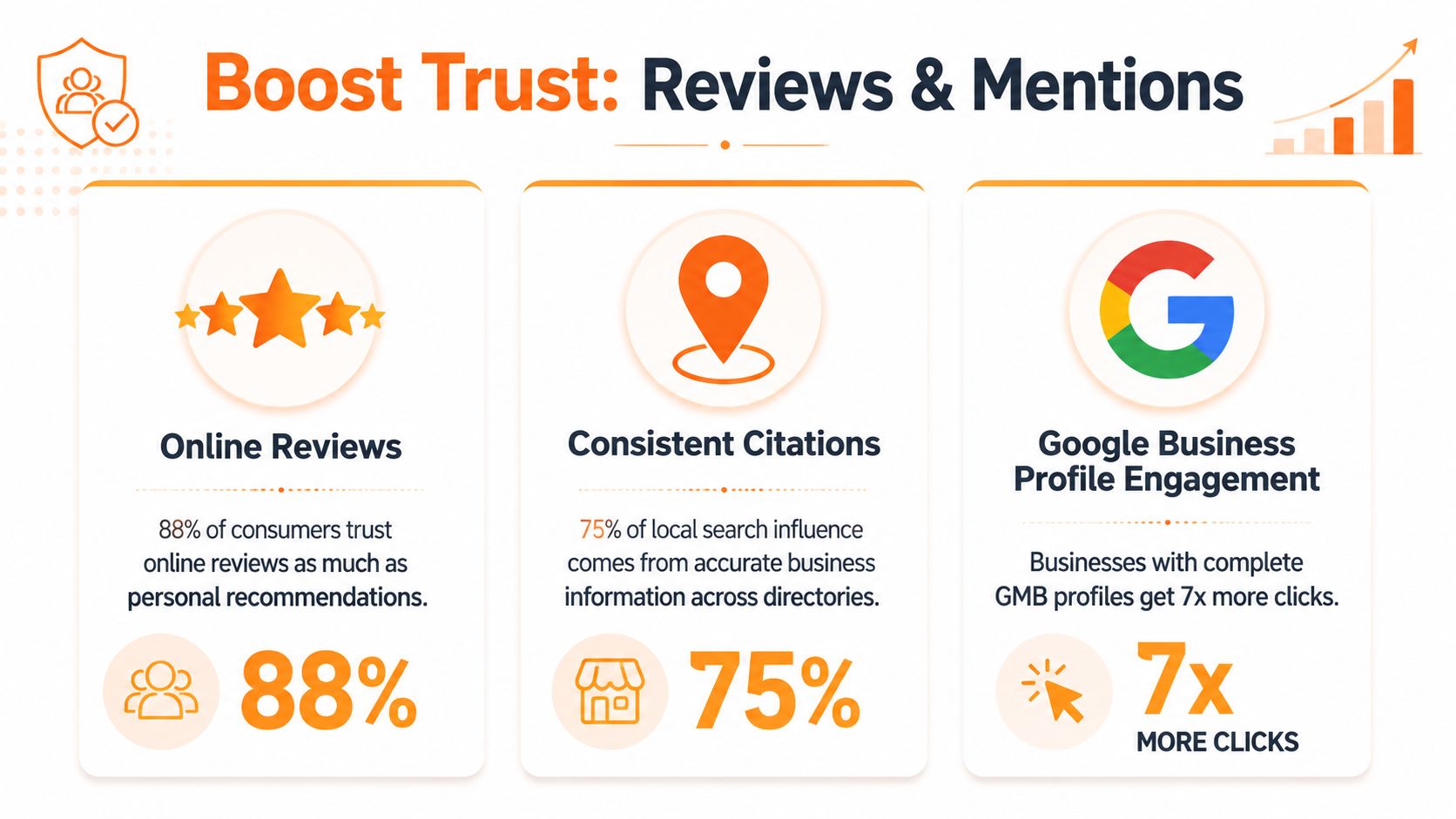
That's why reviews and business mentions matter so much. One audited plumbing company received 4,009 calls over six months, yet only 3.3% were new customers, which shows how badly visibility can underperform when trust and conversion systems are weak, according to Sequoia's local visibility audit for plumbers.
Ask at the right moment
The timing of a review request matters more than most plumbers realize.
The verified guidance is direct. Automated review requests must be sent within two hours of job completion, not days later, because that's when the job is fresh and the customer still remembers the experience clearly.
Use a simple flow:
- In person before leaving: Ask while the customer is satisfied and the fix is visible.
- By text shortly after: Send a direct review link while you're still top of mind.
- With a short message: Keep it easy. Thank them, mention the job, and ask for honest feedback.
Don't overcomplicate it. The best review process is the one your team will use on every suitable job.
Field note: If the request depends on remembering later that night, it won't happen consistently.
Fix your mentions across key platforms
Reviews are only half the trust picture. The other half is where your business appears online and whether the details match.
Priority platforms include:
- Yelp: A common place customers cross-check legitimacy.
- Angi and HomeAdvisor: Useful because people still compare tradies there.
- Better Business Bureau: Another trust layer for cautious buyers.
- Apple Maps and Bing Places: Often missed, but still important for iPhone and Windows users.
The key is consistency. Your name, address, and phone number should match exactly across your website, Google profile, and these priority listings. Small differences create confusion and weaken confidence.
Weekly updates to your Google Business Profile also help. A short job photo, a service update, or a recent review screenshot shows that your business is active, not dormant. That small signal can make the difference when two plumbers look similar on paper.
Use Local Content to Stay Top of Mind
Most plumbing businesses don't need polished brand campaigns. They need simple proof that real work is happening in real places.
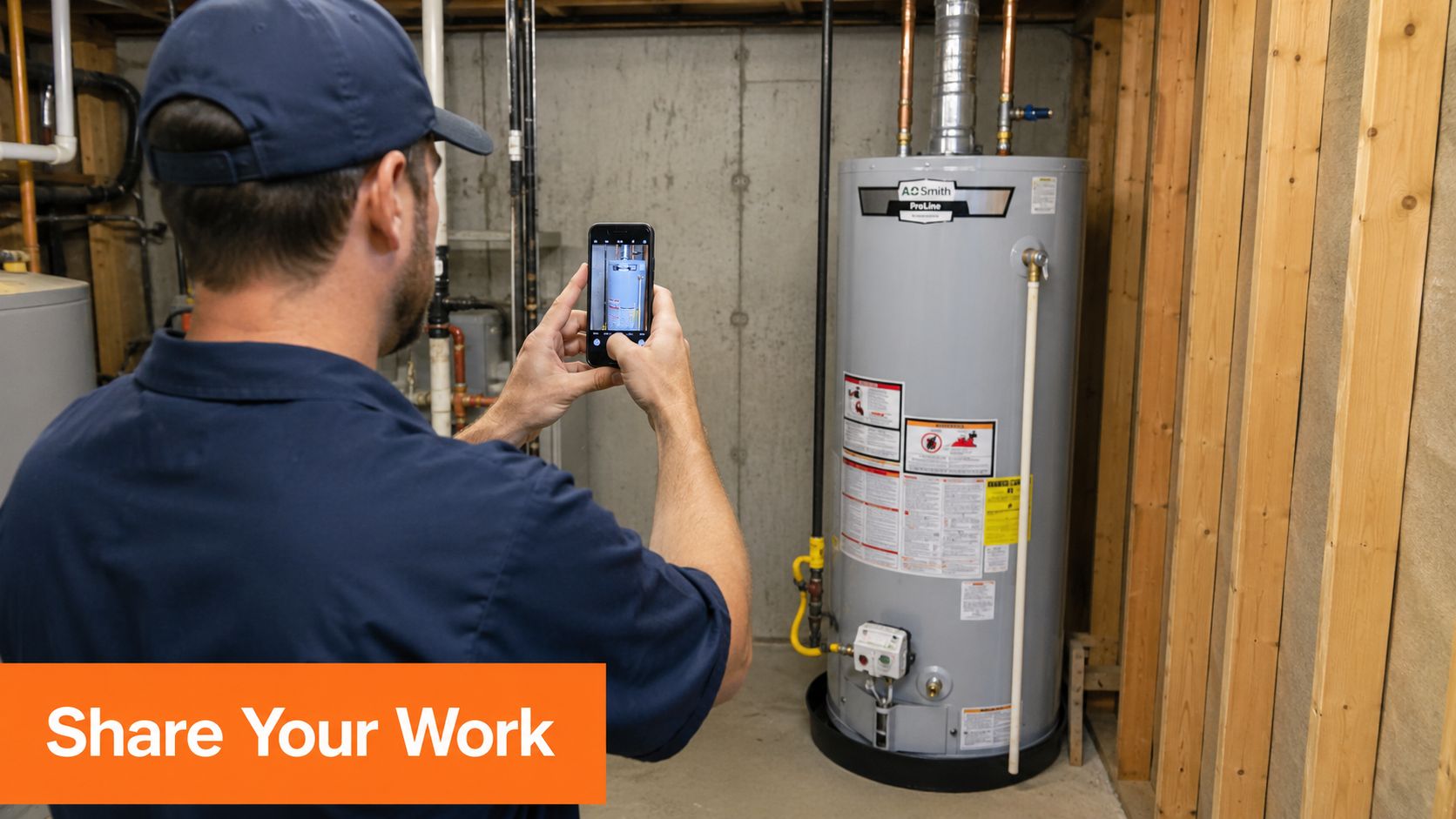
Generic posts like "Call us for all your plumbing needs" get ignored. Local story-based posts are more useful because they connect the service to a place, a problem, and a real job.
Post real jobs with local context
The emerging pattern is clear. Generic advice is losing ground to hyper-local story-based content, and many guides still don't show plumbers how to create it consistently, as noted in this article on optimizing a plumbing website for local visibility.
Good posts are usually short and concrete. Examples:
- A same-day repair story: "Hot water system failure in North Lakes this morning. The unit was leaking from the base, so we isolated it, replaced the faulty parts, and got hot water back on."
- A seasonal tip tied to local conditions: "Cold snap coming through the Hills District this week. Outdoor pipe insulation is worth checking before the temperature drops."
- A team post with local relevance: "Tom handled two blocked drain callouts in Coburg today. He grew up nearby, so he knows the older streets where recurring line issues show up."
These posts do three things at once. They show that you're active, they reinforce the areas you serve, and they give future customers a clearer picture of the jobs you handle.
Use tools to keep the habit going
Most plumbers don't fail because they lack ideas. They fail because they don't have time to turn rough job notes into consistent content.
A workable middle ground is using a system that turns your real jobs into scheduled local posts. One option is content marketing for plumbers, where GrowTradie creates and auto-posts localized trade content so your profiles don't go silent between jobs.
That kind of setup helps if your pattern is predictable. You finish jobs, take photos, note the suburb, then let the system handle writing and posting.
Stay specific. A single post about a leaking water heater in a named suburb is more convincing than a month of generic slogans.
Become a Recognized Name in Your Community
You don't need complicated tactics to build authority online. You need credible local mentions from places people already trust.
Turn offline reputation into online signals
A plumber who shows up in the community should also show up on community websites.
That can come from ordinary business activity:
- Sponsoring a local club: Ask for a business mention on the team or club website.
- Working with a real estate agent: Offer a short pre-sale plumbing checklist they can publish with your business credited.
- Joining a chamber or local business directory: Get listed where residents look for established local providers.
This works because local trust isn't built in one place. People see your van, hear your name from a property manager, spot your listing in a directory, and then look you up online. Each mention supports the next one.
Pick mentions that actually matter
Not every mention is worth chasing. Focus on websites and organizations that are local and relevant.
A strong local mention usually has at least one of these traits:
| Type of mention | Why it helps | Better than |
|---|---|---|
| Community sponsorship page | Ties your brand to a real local group | Random low-quality directories |
| Chamber listing | Confirms you operate in the area | Paid listings with no local audience |
| Supplier or partner page | Connects you to related trusted businesses | Generic business databases |
| Local article or guide | Adds context and credibility | Thin profile pages with no substance |
The practical test is simple. If a local customer saw that site, would the mention make your business seem more legitimate? If yes, it's worth pursuing.
Your Marketing Checklist for Steady Growth
Plumber local SEO marketing works best when the routine is light enough to keep doing. Big one-off bursts don't beat steady maintenance.
What to do daily weekly and monthly
A plumber with a small team doesn't need a giant marketing department. You need a short list that fits around real work.
Daily
- Check missed calls and messages: Speed matters when someone has a burst pipe or no hot water.
- Save usable job photos: Trucks, finished work, parts replaced, team on site.
- Note the suburb and service: This gives you material for future profile updates and local posts.
Weekly
- Post an update to your Google Business Profile: A job photo, a review highlight, or a service update.
- Ask for reviews on completed jobs: Use the same process every time.
- Check your business hours and service details: Especially before weekends, holidays, and busy weather periods.
Monthly
- Review your service area pages: Add better local detail where pages feel thin.
- Audit your key mentions: Google, Apple Maps, Bing Places, Yelp, Angi, HomeAdvisor, and BBB.
- Look at what content got engagement: Keep topics tied to real local jobs and common service calls.
Plumbing marketing maintenance cadence
| Cadence | Task | Tool / Method |
|---|---|---|
| Daily | Save job photos and note suburb plus service | Phone camera and simple notes app |
| Daily | Respond to enquiries and missed calls | Phone, office admin, or call handling process |
| Weekly | Request reviews after completed work | Text message workflow sent within the same day |
| Weekly | Add one Google Business Profile update | Direct post inside your profile |
| Weekly | Publish a local job or service post | Scheduled social posting workflow |
| Monthly | Review directory accuracy | Manual check across core listings |
| Monthly | Refresh website service and area pages | Website editor or developer support |
| Monthly | Review enquiry sources and booked jobs | Call logs, form submissions, booking notes |
If the recurring content work keeps slipping, use a system that removes the manual effort. A practical starting point is this guide to lead generation for plumbers, especially if you're trying to turn visibility into a steadier stream of booked work without adding another admin task to your week.
The main thing is consistency. Plumbers who keep their profile active, collect reviews quickly, maintain accurate mentions, and publish local proof of work tend to build momentum over time. The businesses that disappear for months at a time usually end up relying on referrals alone and feeling every quiet patch harder than they should.
GrowTradie helps trade businesses stay visible by generating and posting localized content automatically, which can reduce the weekly admin load that usually causes marketing to stall. If you want a simpler way to stay active online and support more enquiries, you can learn more at GrowTradie.