
Coming up with electrician advertising ideas is easy. Finding ones that make the phone ring is the hard part. Most electricians have tried a mixed bag already. A few posts on Facebook, a local sponsorship, maybe some paid ads, then silence. No clear pattern. No reliable flow of enquiries.
That's usually because the problem isn't effort. It's scattered effort. Electrical work gets bought on urgency, trust, and local relevance. People don't sit around admiring a contractor's brand for months. They search when a breaker won't reset, when lights keep flickering, when they need a panel upgrade, or when a renovation is about to start.
That local intent matters. Leads4Build notes that 46% of all Google Search queries are local, which is exactly why generic advertising falls flat for trade businesses. If your ads, posts, and proof don't clearly show where you work, what you do, and how to contact you fast, you'll lose jobs to a business that does.
This guide keeps it simple. No fluff. No theory-heavy nonsense. Just practical electrician advertising ideas that busy tradies can repeat without turning into full-time marketers. Some of these ideas bring quick wins. Some build trust over time. The best results come when they work together.
Table of Contents
- 1. Before and After Project Showcases
- 2. Educational How To and Safety Tips Content
- 3. Local Community Involvement and Sponsorships
- 4. Customer Testimonials and Success Stories
- 5. Time Sensitive Promotional Offers and Seasonal Campaigns
- 6. Industry News and Trend Commentary
- 7. Team Spotlight and Behind the Scenes Content
- 8. Problem Solution Specific Service Posts
- 8-Point Electrician Ad Ideas Comparison
- From Ideas to Income The Power of Consistency
1. Before and After Project Showcases
Homeowners understand visual proof faster than technical explanations. They may not know what separates a clean panel upgrade from a messy one, but they can see the difference between dated, crowded, risky-looking work and a tidy finished result. That's why before and after content is one of the most practical electrician advertising ideas you can use.

The jobs that usually perform best are easy to grasp at a glance. Panel replacements. Downlight installs. Switchboard cleanups. Exterior lighting upgrades. Garage power installs. Smoke alarm upgrades. Anything that makes the outcome obvious tends to hold attention better than a generic “another great job completed” post.
Show work people can understand fast
Most tradies overcomplicate these posts. They write like they're submitting a compliance document. The customer doesn't need that much detail. They need enough to know what was wrong, what you fixed, and why it matters.
A solid caption usually covers:
- The original problem: Old board, poor lighting, damaged fittings, overloaded setup, or unsafe layout.
- The work completed: Rewire, upgrade, replacement, added circuits, new fittings, or fault correction.
- The customer benefit: Safer home, cleaner finish, better lighting, more capacity, or less hassle.
Practical rule: If the customer's partner could understand the post in ten seconds, it's clear enough.
What to post and what to avoid
Use the same angle for the before and after if you can. Keep the phone still. Don't crop too tight. Show enough of the space that people can tell what changed.
A few things work better than others:
- Use real jobs only: Stock photos weaken trust. Real switchboards, real lighting installs, real homes.
- Keep branding visible: A van in the background or branded shirt helps people remember who did the work.
- Explain the safety angle: If the job corrected something risky, say so in plain language.
What doesn't work is posting a finished photo with no context. It looks nice, but it doesn't sell the job. People book electricians to solve problems, not to admire copper.
If you want a simple system, build a running folder on your phone. Save one before photo, one after photo, and one sentence about the job while you're still on site. That's enough to create a steady stream of useful content without adding much admin.
2. Educational How To and Safety Tips Content
A homeowner finds a warm outlet, hears a breaker trip again, and grabs their phone before they call anyone. If your business has a clear post or short video explaining what to look for, you start building trust before the enquiry comes in.
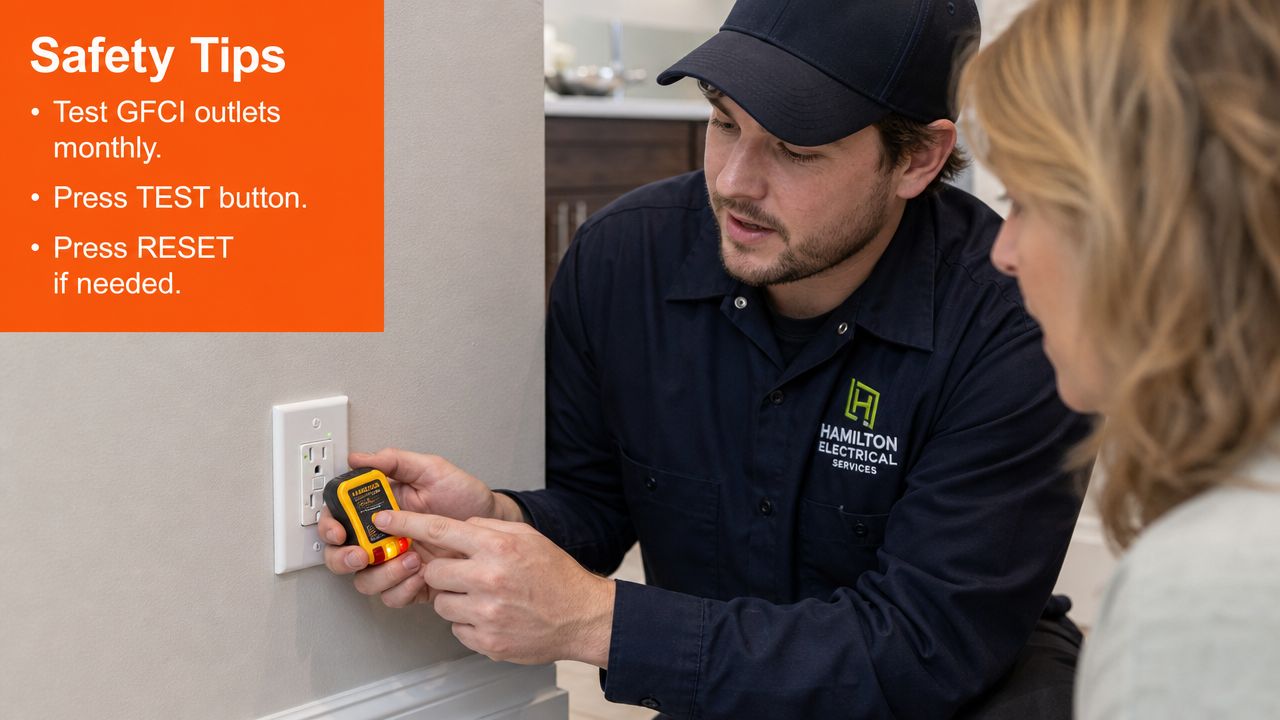
Educational content works because it answers the questions people already have. It also shows how you think on the job. That is often enough to separate a professional outfit from a business that only posts sales offers and stock photos.
Teach enough to build trust
Keep these posts short and safe. The goal is not to turn homeowners into electricians. The goal is to help them spot warning signs, avoid doing something silly, and know when to call.
Topics that usually pull solid engagement:
- Outlet safety: What discolouration, buzzing, or heat can point to
- Breaker basics: What repeated trips often mean in a home
- Extension cords: Where temporary use turns into a hazard
- Bathroom power points: Why older setups deserve a proper check
- Outdoor electrics: What to inspect after storms, water exposure, or garden work
A good rule is simple. Cover what they can observe safely. Stop well before step by step repair advice.
That line matters.
Posts like "3 things to check before you call" work well because they lower panic and show common sense. Then finish with a clear instruction such as, "If any of these signs are present, switch the circuit off if safe and book a licensed electrician."
If you need a simple system for producing this sort of content every week, this guide to content marketing for local businesses gives a practical framework without turning it into a full-time office job.
Turn advice into enquiries
One post will not do much. A repeatable series will.
Use a format your team can stick to:
- One problem
- One plain-English explanation
- One safe next step
- One call to book
That is enough for a decent post, reel, or short talking-head video.
For example:
- Problem: "If your lights dip when the oven kicks in, pay attention."
- What it can mean: "The circuit may be overloaded, or there may be a wiring issue."
- Next step: "Stop testing it yourself and get it checked properly."
Video usually works best when it sounds like a real electrician speaking on site. No hard sell. No dramatic music. Just a direct explanation in 20 to 40 seconds.
Here's the kind of video format that fits this style of content:
The trade-off is time. Filming and posting can easily become another half-finished plan. Keep it basic. One tip each week is enough if you keep doing it.
The mistake is trying to sound urgent in every post. Constant fear wears thin. Calm, useful advice gets remembered, shared, and trusted. That is what turns simple content into booked jobs.
3. Local Community Involvement and Sponsorships
Community sponsorships can work well, but only if you treat them like part of your advertising, not a random donation with a logo slapped on the side. Too many electricians sponsor a team or local event, then never mention it again. The result is weak visibility and no follow-through.

The strongest local community ideas are simple. Sponsor a junior sports team. Back a school fundraiser. Support a local event where families show up. Then use the moment properly. Take photos. Tag the organisers. Post the team banner. Show your van there. Make it visible.
Be visible where people already know your name
This kind of advertising isn't usually about instant bookings. It's about familiarity. People remember the business they keep seeing around town. Then when a fault happens or a job comes up, your name feels safer than a stranger's.
That trust angle matters more than many tradies realise. Housecall Pro highlights that consumers rely heavily on recent reviews and evidence of legitimacy when choosing local businesses, and notes Google's local guidance around relevance, distance, and prominence. In plain terms, local customers want proof you're active, established, and operating in the area.
Make community work look like real advertising
A sponsorship only helps if people can connect it back to your services. That doesn't mean every post needs a hard sell. It means your business name, your team, and your local presence should be easy to recognise.
A few practical ways to do that:
- Use clear branding: Shirts, van signage, banners, and event boards should be readable in photos.
- Post more than once: Share the setup, the event day, and a follow-up thank you.
- Tag local organisations: That expands reach beyond your own page and keeps the post tied to the area you serve.
One good real-world pattern is sponsoring a school raffle or local sports club, then posting a short caption like: proud to support local families in the area we work in every week. That works better than pretending the sponsorship itself is the story.
If you're doing community work already, don't keep it hidden. Quiet support is generous. Visible support is advertising.
4. Customer Testimonials and Success Stories
Most electricians say they rely on word of mouth. Fair enough. But too many never capture that word of mouth in a form they can reuse. A great job gets done, the customer is happy, then the proof disappears. That's a waste.

Testimonials work because they answer the question every new customer is asking. “Can I trust this electrician to turn up, sort it out, and not make a mess of the process?” Your ad copy can't answer that as well as a customer can.
Proof beats promises
The best testimonial isn't always the most polished one. It's the one that feels believable. A homeowner saying you fixed a dangerous switchboard issue quickly and explained everything clearly is stronger than a generic “great service, highly recommend.”
Ask for details that matter:
- What problem were you having
- Why did you call us
- What was the experience like
- Would you recommend us and why
That gives you a story, not just praise.
A review that mentions the actual job is more persuasive than one that only says you were friendly.
Ask better and you'll get better testimonials
Timing matters. Ask right after the successful result. Not three weeks later when the customer has moved on. If the job solved an urgent problem, that's often the best moment because relief is fresh and the value is obvious.
You don't need to overproduce it. A quick phone video outside the house can work. A screenshot of a written review can work. A short caption with the service type can work. The important thing is rotation. Keep fresh proof coming through so people don't feel like your reputation is old news.
Use variety:
- Emergency jobs: Fast response and problem-solving.
- Upgrade jobs: Professional finish and clear communication.
- Family homes: Safety and peace of mind.
- Property work: Reliability and tidy handover.
What doesn't work is bunching all testimonials onto one page and forgetting them. Pull them into your regular advertising. Put one beside a panel upgrade post. Pair another with a seasonal safety campaign. Proof works best close to the buying decision.
5. Time Sensitive Promotional Offers and Seasonal Campaigns
Offers can bring in work fast. They can also attract the wrong jobs if you use them badly. A weak offer trains people to wait for discounts. A smart offer helps people act on work they already need done.
For electricians, seasonal campaigns work best when they match real household concerns. Storm season. Holiday lighting. Switchboard checks before heavy seasonal power use. Safety inspections before a property sale or renovation. The offer needs a reason to exist.
Match the offer to the season
One useful benchmark from paid search guidance is practical budget sizing. Built Right Digital recommends electrician Google Ads campaigns around high-intent searches such as “emergency electrical repair” and “panel upgrade cost,” with starting daily budgets of $20 to $50 and estimated cost per click of $5 to $15, plus call and service extensions to capture leads. That matters because seasonal offers perform better when paired with direct response ads, not when they're buried in a social post no one sees.
Good examples include:
- Storm prep checks: Before bad weather becomes a real problem.
- Holiday lighting installs: For homeowners who want the result without the hassle.
- Switchboard upgrade campaigns: When households are adding more load.
- Safety inspection bundles: Before winter heaters or summer cooling systems get heavy use.
Keep the offer tight
The best seasonal promotions are easy to understand. One service, one audience, one action. Don't stack three offers into one ad. That just creates hesitation.
A few practical rules help:
- Bundle around a clear job: Inspection plus surge protection advice is easier to grasp than a vague “summer special.”
- Set an obvious time frame: Limited windows create action if the service itself is relevant.
- Use one booking path: Call, quote request, or online booking. Don't scatter the next step.
If you want more ways to turn seasonal demand into booked work, GrowTradie's electrician lead generation guide is built around practical visibility and enquiry flow rather than vague brand talk.
The trade-off is simple. Promotions can create urgency, but if you run them all the time they stop feeling urgent. Use them as a push, not as your whole strategy.
6. Industry News and Trend Commentary
A homeowner asks about an EV charger. Then they mention the switchboard is old, they may add solar later, and they want the job done once. That is where industry commentary earns its keep. It helps you answer the job in front of you and puts you in the running for the next one.
Customers do not care about industry news by itself. They care about what changes in their house, their power use, their budget, or their safety. Good commentary translates trade updates into plain-English advice and ties it to a service you already offer.
Stay relevant with real-world updates
Use commentary to explain shifts you are already seeing on-site:
- More EV charger questions in older homes with limited capacity
- Higher demand for smart switches, sensors, and app-based control
- Product recalls that affect common household electrical items
- Renovation trends that increase circuit load and switchboard pressure
- Rising interest in energy monitoring and load planning
This works best when the update connects to a booking trigger. A short post about changing power demands can lead into a switchboard assessment. A recall post can lead into a safety inspection. A comment on EV charging can lead into a site check for capacity, cable run, and charger position.
Add your take, not just the headline
Reposting trade news does very little. Customers are not following you for raw updates. They want the practical version.
A better format looks like this:
- What changed
- Who it affects
- What signs to watch for
- What the next step should be
For example, do not post, “EV adoption is growing.” Say, “We are seeing more charger enquiries in homes that were never set up for that extra load. If your board is older, check capacity before you buy the charger.”
That is useful. It also leads to a job.
If you want a practical system for turning short updates into posts that stay visible, this guide to electrician social media marketing is built around consistent local content, not generic brand fluff.
Keep the commentary tied to booked work
The trade-off is simple. If every post sounds too technical, people scroll past. If every post is watered down, it builds no authority. The middle ground works best. Explain the issue clearly. Then give people a reason to contact you now, before it becomes a bigger or more expensive problem.
Good examples include:
- Explaining why older switchboards often struggle with modern appliance loads
- Commenting on smart lighting demand during renovation season
- Explaining what a recall means for a homeowner and when to call an electrician
- Breaking down the difference between “charger compatible” and “charger ready”
One field rule matters here. Speak from jobs you do. If you never install home automation, do not post broad commentary about the future of smart homes. Stick to the work your team can quote, book, and complete well.
Done consistently, this type of content brings in better enquiries. People contact you earlier, ask better questions, and arrive with a clearer idea of the work involved.
7. Team Spotlight and Behind the Scenes Content
A lot of electrical businesses hide the people doing the work. That's a mistake. Customers aren't just hiring a licence and a van. They're letting someone into their home. Showing the team lowers that barrier.
This isn't about forced culture posts or awkward birthday photos. It's about making the business feel real. A quick intro to a senior sparkie. A van restock before the day starts. A training moment. A clean handover after a board upgrade. Those details build confidence.
People hire people
Trust builds faster when customers can see who may show up at the door. That's especially true for smaller operators competing against bigger names. You may not have the biggest ad budget, but you can feel more familiar and more accountable.
Useful team spotlight angles include:
- Role clarity: Who handles residential service calls, upgrades, or fault finding.
- Experience signals: Licences, areas of expertise, and practical strengths.
- Work habits: Punctuality, tidy work, clear explanations, safe process.
For businesses that struggle to keep this content moving, GrowTradie's electrician social media marketing page gives a practical option for staying visible without relying on someone in the office to remember every week.
Show routine not polish
Behind-the-scenes content works best when it feels normal. Not staged. Not overly branded. Just professional and human.
A few examples from the field:
- Morning check of stock levels before jobs.
- Testing and tagging equipment before the day starts.
- Team member explaining what they check before isolating a circuit.
- End-of-job walkthrough showing a clean finish.
Customers read a lot into small signals. Organised van. Branded gear. Clean tools. Calm explanation. They all suggest the same thing. This business is switched on and takes the work seriously.
The trap is trying to make every post look like a corporate campaign. Don't. Real beats polished most of the time in local trade advertising.
8. Problem Solution Specific Service Posts
This is one of the most direct electrician advertising ideas because it lines up with how people look for help. They don't always search by service category. Often they search by problem. Outlet not working. Lights flickering. Breaker keeps tripping. Burning smell near switchboard.
When your content mirrors those exact issues, you stop sounding like a generic contractor and start sounding like the person who fixes that problem every week.
Speak to the exact problem
A good problem-solution post follows a simple structure. State the symptom. Explain the likely risk in plain language. Describe the professional fix. End with a clear next step.
Examples:
- Lights flicker when appliances start
- One room keeps losing power
- GFCI keeps tripping
- Switch feels warm
- Power point has burn marks
- Smoke alarm setup looks outdated
The wording matters. Use the language customers use. Technical accuracy matters too, but if the headline sounds like a training textbook, people scroll past it.
Build posts around buying intent
This style also works well in paid search. Zeely recommends splitting electrician search campaigns into at least two tightly themed ad groups, one for emergency work and one for planned installs, then building each with 15 to 20 specific keywords plus a weekly-updated negatives list. That structure mirrors real buyer intent. Someone with a burning smell has a different mindset from someone planning new downlights.
You can apply the same thinking to organic content:
- Emergency intent posts: Burning smell, sparking outlet, repeated trips, sudden outage.
- Planned work posts: Panel upgrades, new circuits, lighting installs, EV charger prep.
- Maintenance and safety posts: Older fittings, overloaded boards, outdoor damage.
A practical example. Don't post “We offer fault finding.” Post “If half your house loses power but the breaker looks normal, there are a few common causes. Don't keep resetting everything. Get the fault located properly.”
That kind of content books jobs because it matches the customer's mental state. They don't want broad promises. They want confidence that you've seen this issue before and know what to do.
8-Point Electrician Ad Ideas Comparison
| Strategy | Implementation Complexity 🔄 | Resource Requirements ⚡ | Expected Outcomes 📊 | Ideal Use Cases 💡 | Key Advantages ⭐ |
|---|---|---|---|---|---|
| Before & After Project Showcases | Medium, requires consistent photo/video workflow 🔄 | Medium, good photography/editing and client permissions ⚡ | High, strong engagement and local lead generation 📊 | Portfolio building, local homeowner lead capture 💡 | Visual proof of quality; highly shareable ⭐⭐ |
| Educational How-To and Safety Tips Content | Low, simple formats, repeatable series 🔄 | Low, time for accurate content and basic visuals ⚡ | Medium-High, builds authority and long-term engagement 📊 | Ongoing engagement; trust-building; reduce basic inquiries 💡 | Positions as expert; evergreen value ⭐⭐ |
| Local Community Involvement and Sponsorships | Medium-High, event coordination and planning 🔄 | High, financial sponsorships and staff time ⚡ | High, local awareness and word-of-mouth referrals 📊 | Brand awareness; long-term community trust and referrals 💡 | Authentic local credibility; differentiates from chains ⭐⭐ |
| Customer Testimonials and Success Stories | Medium, scheduling, recording, consent management 🔄 | Medium, time and modest production quality (video preferred) ⚡ | Very High, converts hesitant leads, strong social proof 📊 | Converting leads; highlighting specific services or demographics 💡 | Persuasive peer recommendations; high conversion impact ⭐⭐⭐ |
| Time-Sensitive Promotional Offers & Seasonal Campaigns | Low-Medium, campaign setup and tracking 🔄 | Medium, promotional costs, landing pages, ad spend ⚡ | Very High, drives immediate inquiries and bookings 📊 | Filling slow periods; seasonal demand capture; short-term sales boosts 💡 | Creates urgency and measurable ROI; increases bookings ⭐⭐ |
| Industry News and Trend Commentary | Medium, research and thoughtful commentary 🔄 | Low-Medium, monitoring sources and content creation ⚡ | Medium, builds thought leadership and trust over time 📊 | Attracting quality-focused customers; long-term positioning 💡 | Demonstrates expertise and justifies pricing ⭐ |
| Team Spotlight and Behind-the-Scenes Content | Low, simple shoots and candid moments 🔄 | Low, staff participation and basic recording tools ⚡ | High, increases engagement, trust, and retention 📊 | Humanizing brand, local connection, recruitment 💡 | Personal connection; memorable and relatable content ⭐⭐ |
| Problem-Solution Specific Service Posts | Low-Medium, structured templates for repeatability 🔄 | Low, research and visuals per problem ⚡ | Very High, captures users actively seeking solutions and converts 📊 | SEO-driven lead capture; urgent service needs; educational sales posts 💡 | Targets immediate needs; high conversion intent ⭐⭐⭐ |
From Ideas to Income The Power of Consistency
Any one of these electrician advertising ideas can help bring in work. But none of them will do much if you use them once, then disappear for a month. That's the pattern that keeps a lot of good electrical businesses stuck. They advertise in bursts. They post when things are quiet. They run one campaign, get distracted by jobs, then go silent again. The result is uneven visibility and uneven enquiries.
Consistency is what turns advertising into a system.
That doesn't mean doing everything. It means choosing a few things you can keep up. For most electricians, a practical mix looks like this: one stream of proof content, one stream of trust-building content, and one direct-response channel for ready-to-book jobs. For example, before and after job posts, customer testimonials, and a tightly managed search campaign. Or problem-solution posts, seasonal offers, and regular team content. The exact mix matters less than the discipline behind it.
There's a reason this matters so much in local trade work. Electrical customers often need help fast, but they still compare. They look at your reviews. They check whether your business looks active. They want to see signs that you really work in their area. They notice if your profile is stale, your last post was months ago, or your advertising feels generic. On the other hand, if they keep seeing recent jobs, clear advice, proof from local customers, and a straightforward booking path, you feel like the safer option.
That's what good advertising does in this trade. It reduces doubt.
It also makes your paid efforts work harder. If someone clicks an ad and then checks your business presence, they should find a living business, not a dead page. If someone hears your name through a local sponsorship, they should be able to confirm you're active. If a customer gets referred by a friend, they should see proof that backs up the recommendation. The channels support each other.
Most tradies don't need more ideas. They need fewer ideas done properly.
Start with the content you can collect naturally while doing the work anyway. Take before and after shots. Save strong customer reviews. Record short clips answering common questions. Turn common faults into repeatable problem-solution posts. Build seasonal offers around work customers already understand. Then keep the rhythm going. Not perfectly. Just steadily.
If you've got a team, make this part of the workflow. If you're solo, keep it simple enough that you'll still do it after a long day on the tools. The best advertising plan is the one you won't abandon.
Grow that consistency and the compounding effect is real. More visibility leads to more familiarity. More familiarity leads to more trust. More trust leads to more enquiries. More enquiries give you clearer feedback on what books profitable work.
That's the shift. Advertising stops being a random chore and starts becoming part of how the business wins jobs every week.
If you want that consistency without spending your nights writing captions and planning posts, GrowTradie gives trade businesses a practical way to stay visible. It creates and schedules content specific to your services and local area, so your business keeps showing proof, trust signals, and job-winning activity even when you're flat out on site.