
You're flat out on the tools, the phone's quiet between jobs, and the last time you posted anything online was weeks ago. That's the reality for a lot of tradies. The fix isn't “be everywhere”, it's to show up where local customers check first, then make sure those places turn attention into calls, quote requests, and booked work.
If your presence online feels patchy, you're probably losing jobs before you even hear about them. People scan a business website, a Google profile, and recent reviews, then decide fast whether you look legitimate enough to contact. A tidy, consistent setup beats random posting every time.
Table of Contents
- Why Most Tradies Stay Invisible Online
- Claim and Optimise Your Google Business Profile
- Website Quick Wins Tradies Can Fix Today
- A Realistic Social Posting Strategy for Tradies
- Getting More Reviews Without Feeling Pushy
- Simple Paid Options Worth Trying
- Track the Numbers That Actually Matter
Why Most Tradies Stay Invisible Online
A lot of tradies don't have an online problem because they're bad at marketing. They have one because they're working. The site goes stale, the social page sits untouched, and the business profile only gets attention when someone remembers to update it after hours. Meanwhile, local customers are checking before they call.
WordStream reports that 56% of consumers won't consider a business without a website, and it also notes that complete, consistent listings help local visibility. That's not a nice-to-have. For a plumber, sparkie, chippy, or HVAC crew, the first credibility test is often a quick scan of the website, the business profile, and directory listings, not a phone call.
Visibility is an enquiry system, not a vanity project
The mistake is treating online presence like a photo gallery. It's a trust system. Independent research shows users form an opinion about a website in 0.05 seconds, and 61% will leave if they can't find what they need in about five seconds. That's why a slow, cluttered, or outdated site costs you leads before the offer even lands.
Practical rule: if a local customer can't tell what you do, where you work, and how to contact you in seconds, they'll move on.
The good news is that you don't need a giant marketing machine. You need a few repeatable actions done properly. Show up consistently in the places locals check, keep the details accurate, and make it dead simple to enquire. That's the difference between looking busy online and getting calls.
Claim and Optimise Your Google Business Profile
Your Google Business Profile is often the first thing local customers see, so treat it like a front counter, not a directory listing. Google says a complete and accurate Business Profile can help a business appear in Google Search and Maps, and it lets you add hours, phone numbers, photos, services, and posts. Verification is part of the job too, because many edits do not show publicly until the profile is verified.
Claim the profile, verify it, and fill in every field that matters. Use the trade name you use on the job, the main phone number you answer, the website, opening hours, and the suburbs or service areas you cover. Keep the business description short and specific, with the trade, the main services, and the locations you serve.
Make the profile look like a real business
Use real job photos, not stock images. A snapped photo of a finished switchboard, a clean bathroom install, a roof repair, or a fresh fit-out does more for trust than polished filler ever will. Upload a few clear examples of recent work, then keep adding to them as jobs come through.
A useful habit is to post small updates when the business is active, such as a recent job, a service reminder, or a seasonal message. Google Posts do not need to be dramatic. They just need to show the profile is alive and being maintained.
Use the profile to answer three questions fast: what do you do, where do you work, and can people trust you to answer the phone?
If you want a deeper local setup, use this trade-focused guide to local visibility to check the gaps most businesses miss. The goal is simple. Make the profile complete, current, and easy to act on.
Website Quick Wins Tradies Can Fix Today
A strong website is still the base layer. WordStream says a website remains a foundation of online presence, and the same logic applies here, if your site looks messy, slow, or hard to use on a phone, people assume the business is the same. That first impression happens before they read the services page.
Put contact details where people can't miss them
The phone number belongs near the top of the homepage, not buried in the footer. The service area should be visible straight away too, because local customers want to know if you work in their suburb. If a homeowner has to hunt for the basics, you've already made the enquiry harder than it needs to be.
Use plain navigation. A short menu with Services, About, Reviews, and Contact is enough for most trade businesses. Cut anything that adds clutter without helping someone call, book, or check your work.
Replace weak trust signals with proof
Job photos should do the heavy lifting. Add short captions that explain what the job was, where it was done, and what the customer needed. That's more convincing than generic statements about quality or reliability.
A few quick fixes make a bigger difference than a full rebuild:
- Make mobile first: Most local visitors are checking from a phone, so buttons, text, and forms need to work cleanly on small screens.
- Show the services clearly: List the actual jobs you take on, not vague industry language.
- Add proof of work: Recent project photos beat stock images every time.
- Keep the enquiry path short: One obvious call button and one simple contact form are enough.
The goal isn't to impress designers. It's to remove friction. If the website tells people you're real, local, and easy to contact, it does its job.
A Realistic Social Posting Strategy for Tradies
A tradie with a quiet job calendar does not need more posting ideas. They need a posting routine that turns local attention into calls. Post with a clear job in mind, then watch which updates bring in enquiries, not just likes.
Most tradies do better with a small, repeatable plan than a big content machine. Regular posting matters, but only if it stays tied to work that prospects can recognise, trust, and act on. Keep the focus on visibility that helps someone pick up the phone.
Keep the cadence small and sustainable
Do not spread yourself across every platform. Stay active on the accounts you can maintain and drop the rest. Thin posting on too many channels lowers quality, and local buyers notice that fast.
Batch a few posts when the week is quiet, then schedule them while you are on-site. If you want a repeatable way to turn jobs into posts, content batching for trade businesses shows how to structure that process without wasting time. That approach suits trade businesses that have work to show but not much spare time to write from scratch.
Use three content types that local customers care about
The posts that work for tradies usually fall into three buckets.
- Proof of work: Finished jobs, progress shots, before-and-after updates.
- Helpful tips: Simple advice a customer can use before they call.
- Behind the scenes: Site prep, problem solving, and the crew at work.
Practical rule: if a post does not help a local customer trust you faster, it is probably noise.
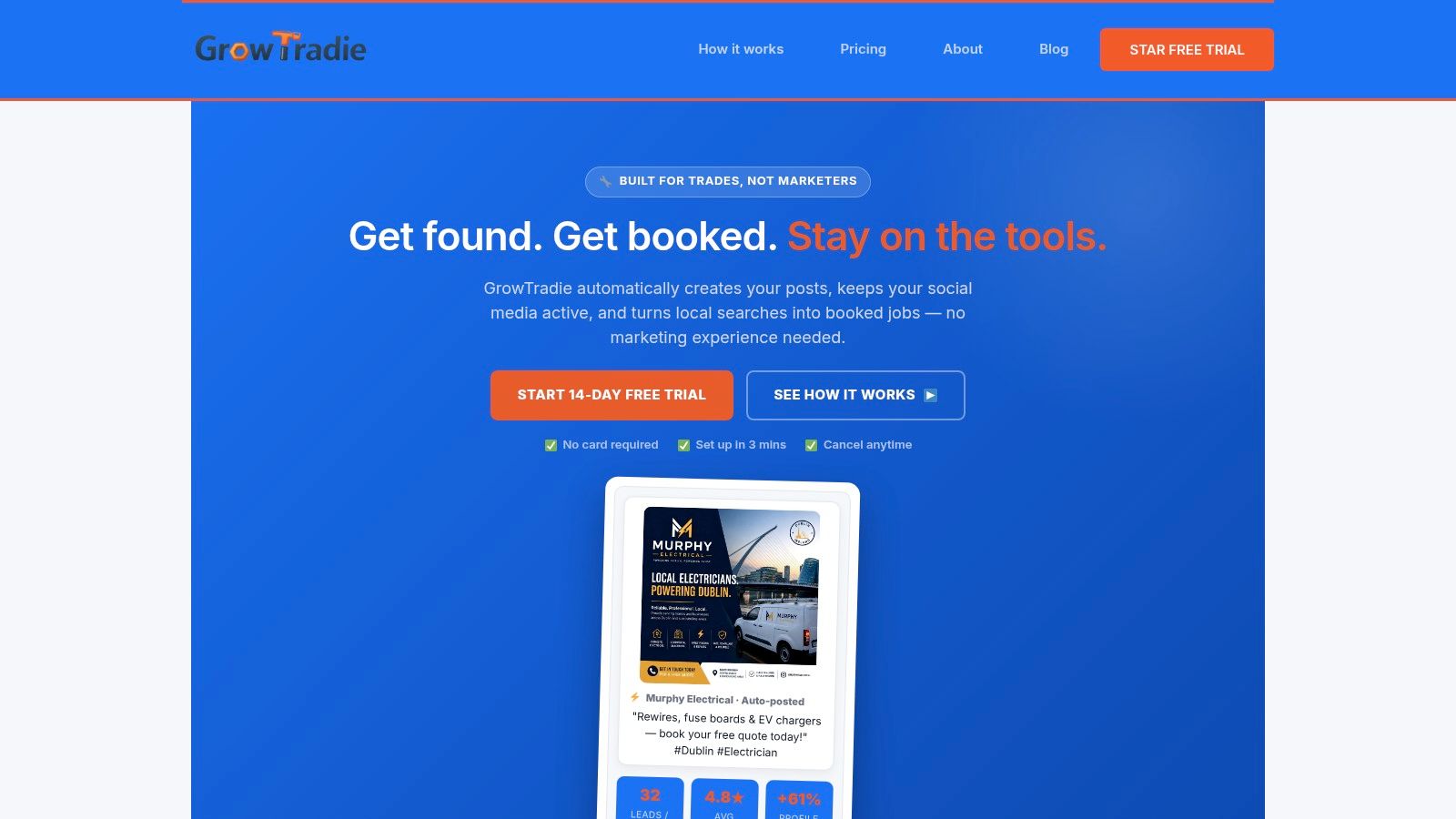
Keep the prompts simple when you batch content. “What did we finish this week?”, “What issue did we fix?”, and “What should a customer know before booking this trade?” are enough to fill a month of posts without overthinking it. If you need a system for turning those prompts into a steady queue, GrowTradie can help organise posts around real jobs without making the process messy.
A strong social presence is less about volume and more about consistency. A quiet profile makes people wonder if you are still active. A steady one says you are working, visible, and easy to hire.
Getting More Reviews Without Feeling Pushy
Reviews are one of the quickest trust shortcuts in local trade work, and most businesses don't ask enough. The fix is to make the ask part of the job flow, not an awkward extra. Ask once the job is done, the customer is happy, and the result is still fresh in their mind.
Build the ask into the job close-out
The best time to ask is at handover. Keep it short and direct, then give the customer an easy way to do it. A short link, a QR code on the invoice, or a simple text message after payment takes the friction out of the process.
Respond to every review you get. Thank the positive ones with specific language that shows you noticed the job. Reply to the negative ones calmly, briefly, and professionally. A defensive reply hurts more than the review itself.
Reuse the good ones
A strong review shouldn't sit in one place. Put the best lines on the website, turn them into post captions, and add them to service pages where they reinforce trust. That way the same customer proof works in more than one place.
If you want the review process tied into broader reputation work, this reputation guide for trade businesses is a practical companion. The big win is consistency. Fresh reviews keep the profile active, and active profiles look like businesses locals can rely on.
Simple Paid Options Worth Trying
Paid activity only makes sense when it has a clear job to do. Don't spend just to “get seen”. Spend when you want calls, contact forms, or booked quotes from a specific area. If the budget is tight, keep the test small and measurable.
Compare the options before you spend
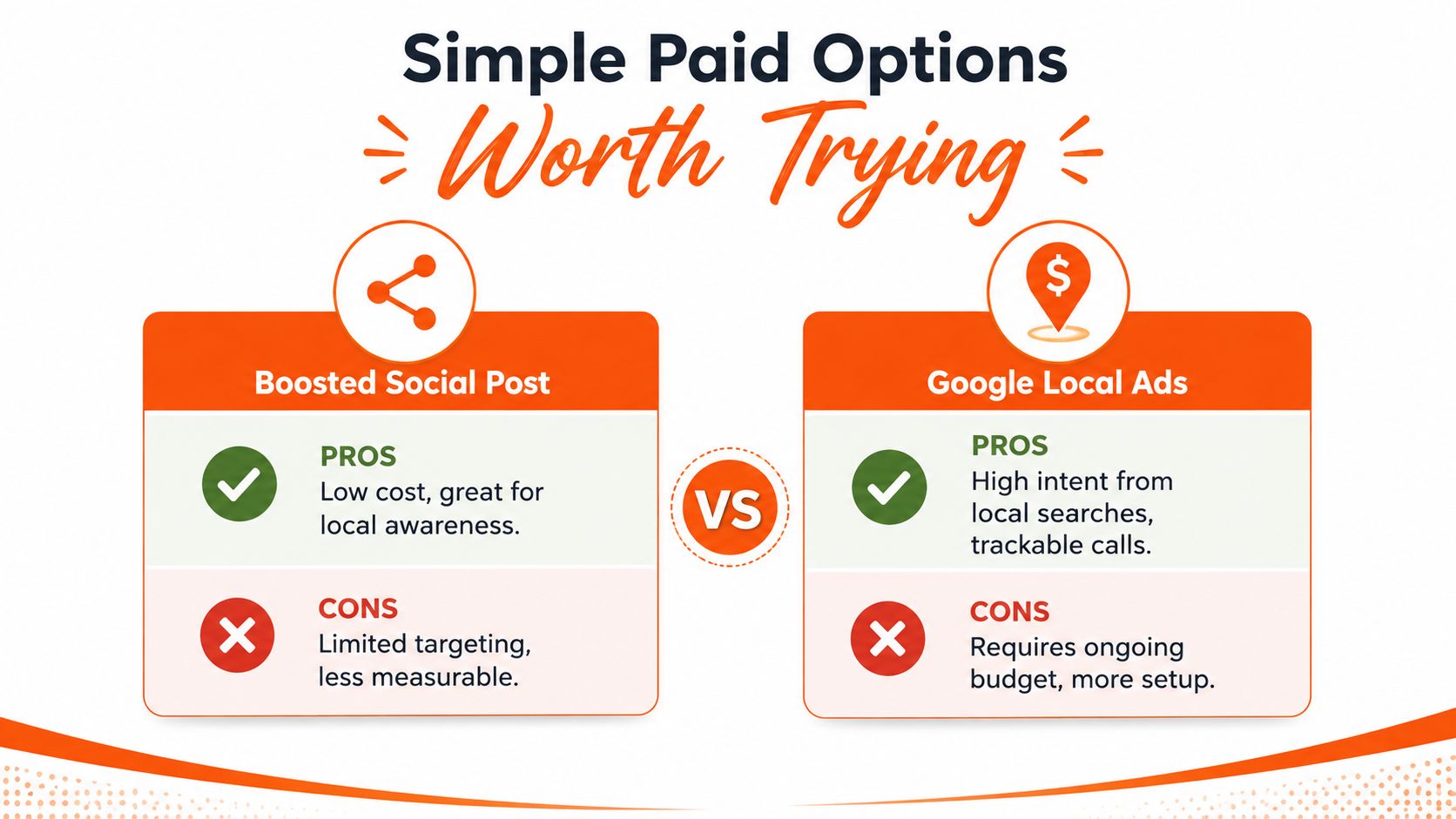
Boosted social posts can work for local awareness and give your best jobs more reach. They're useful when you want nearby homeowners to see finished work or a seasonal offer, but they're not built for precise intent. You're paying to show up in feeds, not to catch someone actively searching for a tradesperson.
Google Local Ads are different. They put you in front of people already looking for a service, which means the traffic is usually warmer. They also give you a clearer view of calls and enquiry activity, which matters when every dollar has to earn its keep.
Lead-generation ads on social sit somewhere in between. They can be useful when the goal is quote requests delivered straight into a contact list, but they still need disciplined follow-up. If nobody answers quickly, the leads cool off.
Use paid channels as tests, not crutches
The mistake is running ads without a follow-up system. A clicked ad means nothing if the form sits unanswered, the phone goes to voicemail, or the message reply sounds generic. The same applies to boosted posts, they help exposure, but they don't fix a weak offer or a slow response.
If you can't answer enquiries quickly, paid traffic will expose that problem faster.
Keep the setup clean. Use one offer, one suburb focus, one contact path, and one person responsible for replying. That's enough to learn whether paid visibility is helping.
Automate the boring parts
Automation should save time, not make you sound robotic. Use scheduling for social posts, saved replies for common questions, and text or email alerts for new form submissions. That keeps the enquiry loop moving even on a busy day.
Avoid the junk. Auto-DM spam, generic chatbot replies, and clumsy follow-ups make a trade business look careless. Simple systems are better. Fewer moving parts mean fewer mistakes, and fewer mistakes mean more booked jobs.
Track the Numbers That Actually Matter
Business.gov.au recommends tracking website analytics such as visits, visitor location, how people find the site, and which pages they view, plus social metrics like reach and engagement. It also says performance should be monitored over time so businesses can make changes based on evidence rather than assumptions. That's the right mindset. If you're not measuring enquiries, you're guessing.
Keep the monthly check short
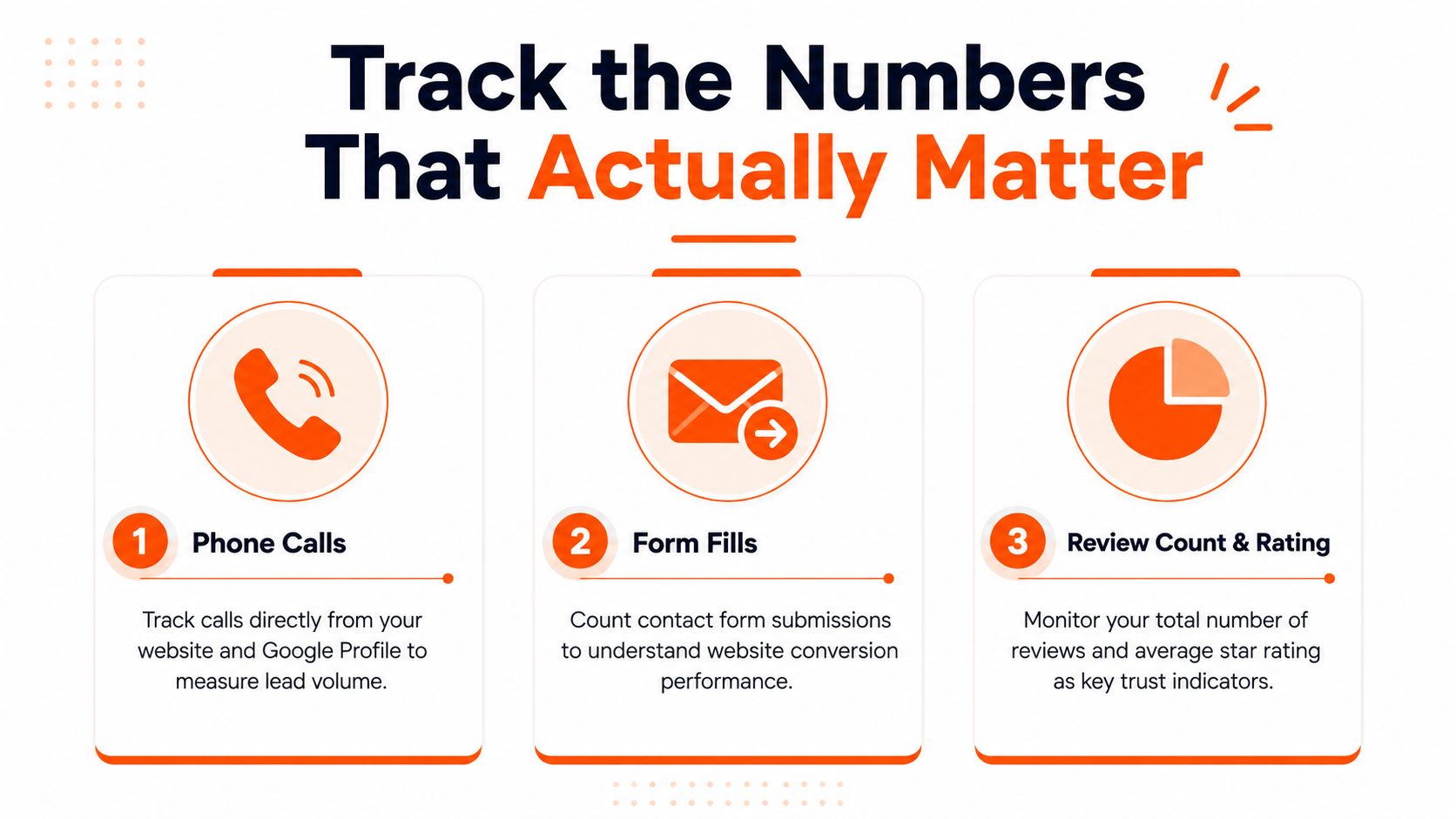
You don't need a complicated dashboard. Fifteen minutes a month is enough if you focus on the right numbers. Start with calls, form fills, reviews, and which pages or posts drove those actions. Then compare that month with the one before it.
| Key Metric Tradies Should Track Each Month | What it tells you | Where to find it |
|---|---|---|
| Phone calls | Whether people are contacting you directly | Google Business Profile, phone records |
| Form fills | Whether the website is turning visitors into enquiries | Website contact form, inbox notifications |
| Reviews | Whether trust is building over time | Google Business Profile, review platforms |
| Top pages | Which pages people actually use before contacting you | Website analytics |
| Social engagement | Which posts get attention and response | Social platform insights |
Read the trend, not the vanity number
A bigger follower count means little if the phone stays quiet. A lower reach number can still be valuable if it brings better enquiries. The same goes for reviews, the count matters less than whether they're recent, specific, and visible where customers check first.
The best habit is simple. Check the numbers, note what changed, then decide what to repeat next month. If a certain job photo, suburb mention, or review request method is bringing more calls, do more of that and stop wasting time on the rest.
If you want a system that keeps your trade business visible without living on your phone, GrowTradie is built for that job. It turns real work into scheduled posts, keeps profiles active, and helps you stay consistent across the channels local customers check before they call.