
You're busy all week, then the phone goes quiet. A heat wave hits and every truck is booked. Two weeks later, lead flow dries up and you're wondering whether your ads are doing anything useful at all.
This is the situation for a lot of Chicago HVAC owners. You don't need more marketing theory. You need a simple system that gets you found, gets you called, and keeps work coming in between the big weather swings.
Table of Contents
- Why Most HVAC Marketing in Chicago Fails
- Your Foundation for Getting Found on Google
- Building a Website That Books Jobs
- Using Paid Ads for Immediate Leads
- Automating Your Social Media to Stay Visible
- Managing Reviews and Seasonal Promotions
- Budgeting Tracking and High-ROI Tactics
Why Most HVAC Marketing in Chicago Fails
Most HVAC marketing Chicago contractors try fails for a boring reason. It isn't because there are no options. It fails because the work is scattered across too many tactics with no clear order.
A common pattern looks like this. A contractor runs some ads, boosts a few posts, updates the website once, asks for reviews when someone remembers, then stops when installs get busy. Nothing is connected, nothing is tracked properly, and the slow weeks feel random.
That approach is especially rough in Chicago because the market is crowded. Chicago-NPVL, IL ranks as the top metropolitan area for HVAC contractor density in the United States, with 2,274 HVAC companies according to BDR's HVAC marketing budget analysis. If you're blending in, you're losing calls to companies that are easier to find and easier to trust.
What usually goes wrong
- Too much attention on appearance. Owners spend money on a flashy site or a logo refresh while the phone number is hard to find and service pages are vague.
- No system for slow seasons. They market only when they're already slammed, then disappear when the schedule opens up.
- No follow-up process. Past customers sit in a database untouched, even though those people already know your name.
- No local focus. Messaging talks to “everyone in Chicagoland” but doesn't speak clearly to the areas you serve.
Practical rule: If a homeowner can't tell within a few seconds what you do, where you work, and how to contact you, your marketing is leaking jobs.
What actually works
The contractors who stay busy usually do a few simple things well. They show up strongly on Google. They make it easy to call. They build trust with reviews, real photos, and clear service pages. They stay visible even when they're too busy to post manually. And they reactivate past customers before weather-driven demand hits.
That's the difference between random activity and a working system. One gets attention. The other gets booked jobs.
Your Foundation for Getting Found on Google
If you want more calls, start with Google. In HVAC, people don't browse for fun. They search when something stops working, when they need a quote, or when they want someone local they can trust quickly.
84% of consumers contact an HVAC company after first searching online, and 91% rely on online reviews before making a purchase decision, based on SequoiaGeo's HVAC statistics roundup. That tells you where the fight starts. It starts on Google Search and Google Maps.
Treat your business profile like a storefront
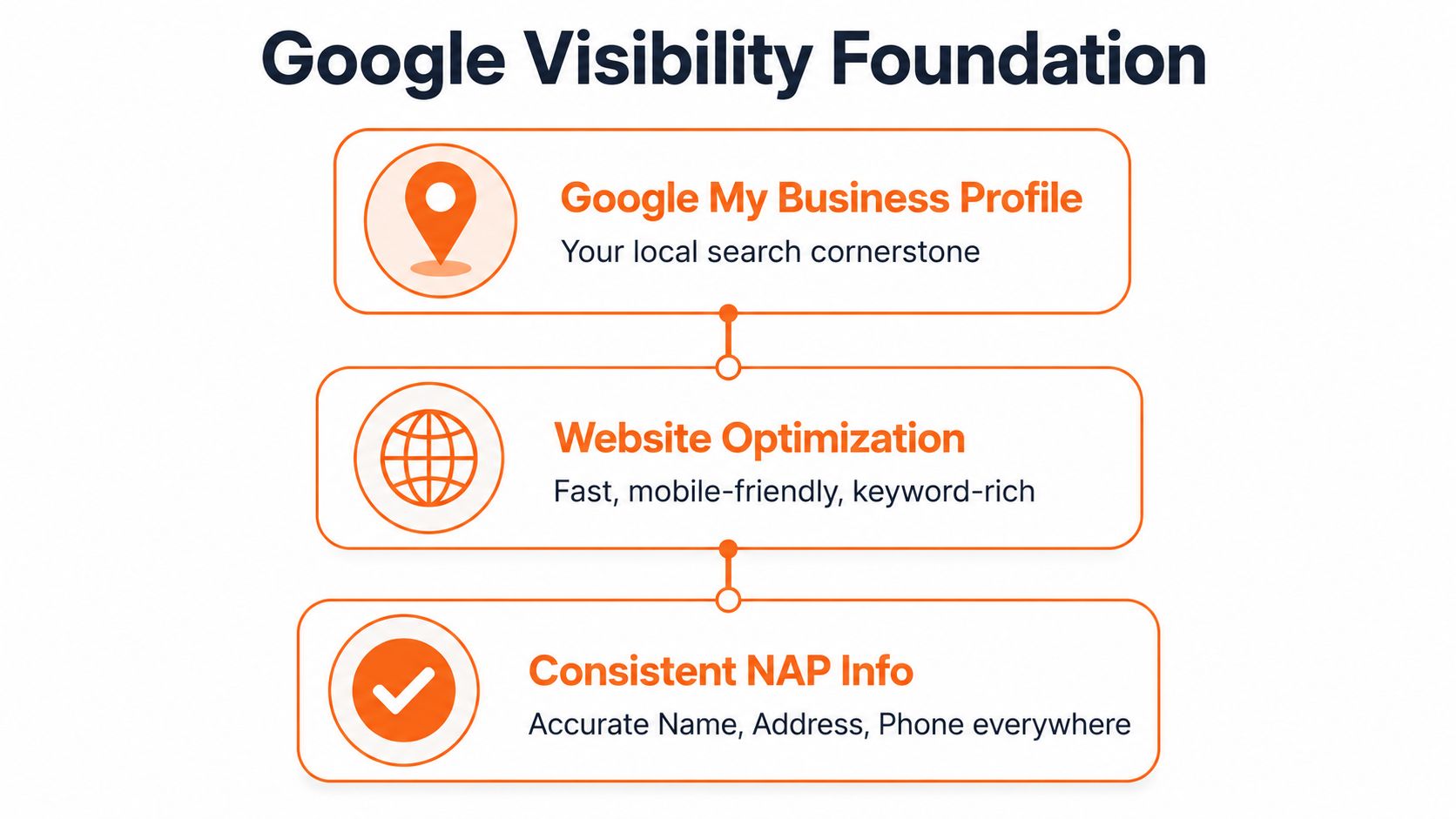
Your Google Business Profile is often the first thing a homeowner sees. For many local service searches, they won't even visit your website first. They'll look at your profile, scan reviews, check photos, and tap call.
Do these basics without shortcuts:
- Claim and verify the profile
- Use your real business name consistently
- List your primary services clearly
- Set service areas you cover, such as Lincoln Park, Naperville, Evanston, or the North Shore if those are active service zones for your team
- Add real photos of vans, techs, installs, and service calls
- Keep hours accurate, especially for emergency work
Fill in what most contractors leave blank
A half-finished profile won't help much. Owners often claim the listing and stop there.
What matters more is completeness and relevance:
- Services: Break them out clearly. Furnace repair, AC repair, heat pump installation, boiler service, maintenance plans, emergency HVAC service.
- Business description: Write it in plain English. Say what you do, where you do it, and what kind of calls you want.
- Photos: Skip stock images. Real crew photos beat generic graphics every time.
- Reviews and responses: When homeowners compare two companies, this is often the tie-breaker.
For a deeper local visibility framework, this guide on HVAC contractor local marketing is a useful reference for structuring your presence properly.
A strong Google presence doesn't need clever wording. It needs accuracy, proof, and consistency.
Make it easy for the zero-click customer
A lot of HVAC leads come from people who never browse around. They search, compare, and call directly from the results page.
That means your profile should answer the practical questions fast:
| What they want to know | What you should show |
|---|---|
| Do you work in my area | Clear service areas |
| Do you handle my problem | Specific service list |
| Can I trust you | Reviews, responses, real photos |
| Can I call right now | Click-to-call phone number |
| Are you active | Fresh updates and current info |
If you fix only one thing this week, fix this. For many Chicago contractors, it's the shortest path from search to ringing phone.
Building a Website That Books Jobs
A good HVAC website isn't there to win design awards. It's there to help a homeowner decide, fast, that you're the right company to call.
Too many sites try to say everything at once. One giant services page. A vague headline. A few stock photos. No strong local signals. No pages for the actual jobs people search for. That kind of site looks fine to the owner and underperforms in practice.
One page per service type works better
If you want your site to book jobs, build pages around how customers think. A homeowner doesn't search for “full service indoor comfort solutions.” They search for a furnace repair company, an AC installer, or emergency HVAC service in their area.
Your website should reflect that with dedicated pages such as:
- Furnace Repair in Chicago
- AC Installation in Naperville
- Emergency HVAC Service in Lincoln Park
- Boiler Repair for North Side Homes
- Heat Pump Installation in Evanston
Each page should answer the same core questions. What service do you provide. What signs tell the homeowner they need it. What areas do you cover. How do they contact you now.
The pages that usually matter most
A practical HVAC site usually needs these first:
- Homepage: Clear headline, main services, service area, phone number, contact path
- Repair pages: Separate pages for cooling and heating issues
- Installation pages: New system and replacement work
- Maintenance page: Tune-ups, inspections, recurring service options
- Emergency service page: After-hours and urgent calls
- Service area pages: Main neighborhoods or suburbs you actively target
If every service is buried on one generic page, you're forcing the customer to do the sorting. Most won't.
What the best pages include
Don't overcomplicate the copy. Use direct headings and useful details.
A strong page usually includes:
- A local headline that matches the service and area
- A short list of symptoms the homeowner may be dealing with
- A plain explanation of what your team does
- Trust elements like reviews, certifications, photos, and service guarantees if applicable
- A visible phone number and contact form near the top and again lower on the page
Fancy animations and oversized banners often slow people down. Clear pages move them forward. When someone lands on your site during a breakdown, they aren't looking for creativity. They want confirmation that you handle their problem in their part of Chicago and can get them on the schedule.
That's the standard your website has to meet. Not impressive. Useful.
Using Paid Ads for Immediate Leads
When you need leads now, paid ads can fill the gap. They work best when you already have the basics in place, but they can also help you cover urgent demand windows and empty spots on the schedule.
For most HVAC contractors, the two main options are Local Services Ads and Google Ads. They are not the same tool, and mixing them up wastes money.
Start with the simpler channel
Local Services Ads are usually the easier starting point for a contractor who wants direct enquiries. They're built for service businesses, they show prominently, and they're designed around lead generation rather than broad traffic.
Google Ads gives you more control. You can choose tighter keyword targeting, shape landing pages around specific services, and push certain jobs harder. That control is useful, but it also means more room for bad setup.
A simple comparison helps:
| Channel | Best for | Main strength | Main drawback |
|---|---|---|---|
| Local Services Ads | Fast local leads | Simple setup and direct enquiries | Less control over search terms and presentation |
| Google Ads | Targeted campaigns | Greater control over service focus and messaging | Easier to waste budget with poor setup |
If you're doing HVAC marketing in Chicago and you need fast demand capture, start with the option that's easiest to manage correctly.
Match the ad to the job type
Not every ad campaign should push the same offer.
Use paid ads when you need to drive action around:
- Emergency repairs
- Same-day service calls
- Open schedule gaps
- Specific seasonal pushes
- High-value installation enquiries
Keep the message tight. Don't send every click to your homepage. A furnace repair ad should land on a furnace repair page. An emergency AC ad should land on an emergency cooling page.
For more ideas on structuring this properly, review this resource on digital marketing for HVAC companies.
Don't judge paid ads by traffic
A lot of contractors ask the wrong question. They ask whether ads are getting views or clicks. That's not the point.
The point is whether they produce calls and booked work.
Here's a practical walkthrough that shows how these campaigns fit into real HVAC lead generation:
The trade-off is simple. Paid ads can bring immediate visibility, but only if the targeting, landing pages, and call handling are tight. If your office misses calls or your pages are vague, ads won't fix that. They'll just expose the weakness faster.
Automating Your Social Media to Stay Visible
Most HVAC owners don't fail at social media because they lack ideas. They fail because they're running a business. When dispatch is busy, posting slips. Then the profile sits quiet for weeks, and a homeowner checking you out sees a dead page.
That matters more than people admit. Social platforms don't usually drive the same kind of urgent lead as a direct search, but they do help people decide whether your company looks current, real, and trustworthy.

Consistency beats intensity
You do not need to become a full-time content creator. You need a steady drumbeat of useful, local, professional posts.
That can include:
- Seasonal reminders: AC checkups before summer, heating prep before winter
- Job photos: Real installs, repairs, equipment swaps
- Team posts: Tech introductions, vans on site, company updates
- Simple homeowner tips: Filter changes, thermostat basics, warning signs before breakdowns
- Promotions: Limited seasonal offers or maintenance reminders
An active profile reassures people. A silent one raises questions.
The goal isn't to go viral. The goal is to look like the company that's active, established, and still serving your area every week.
Why automation makes sense for trade businesses
Manual posting sounds easy until it lands on the owner's desk. Then it becomes another half-finished task.
Automation solves a real operational problem. It keeps your profiles moving even when you're on calls, quoting installs, or dealing with dispatch issues. That's especially useful for smaller HVAC shops that don't have an office team focused on marketing every day.
A solid automated setup should do three things well:
- Create relevant posts based on your services and local area
- Design them professionally so they look clean and credible
- Publish on schedule without you chasing it every week
If you want a practical example of that model, take a look at social media marketing for contractors.
What to expect from it
Don't expect social posting alone to rescue a broken lead pipeline. That's not its job.
What it does well is support trust, reinforce your brand locally, and keep your company visible between the moments when people are ready to call. It also helps when a prospect finds you elsewhere, then checks your profiles before deciding.
This is the primary role of social media in HVAC marketing Chicago contractors can effectively maintain. It supports credibility without demanding constant hands-on effort from the owner.
Managing Reviews and Seasonal Promotions
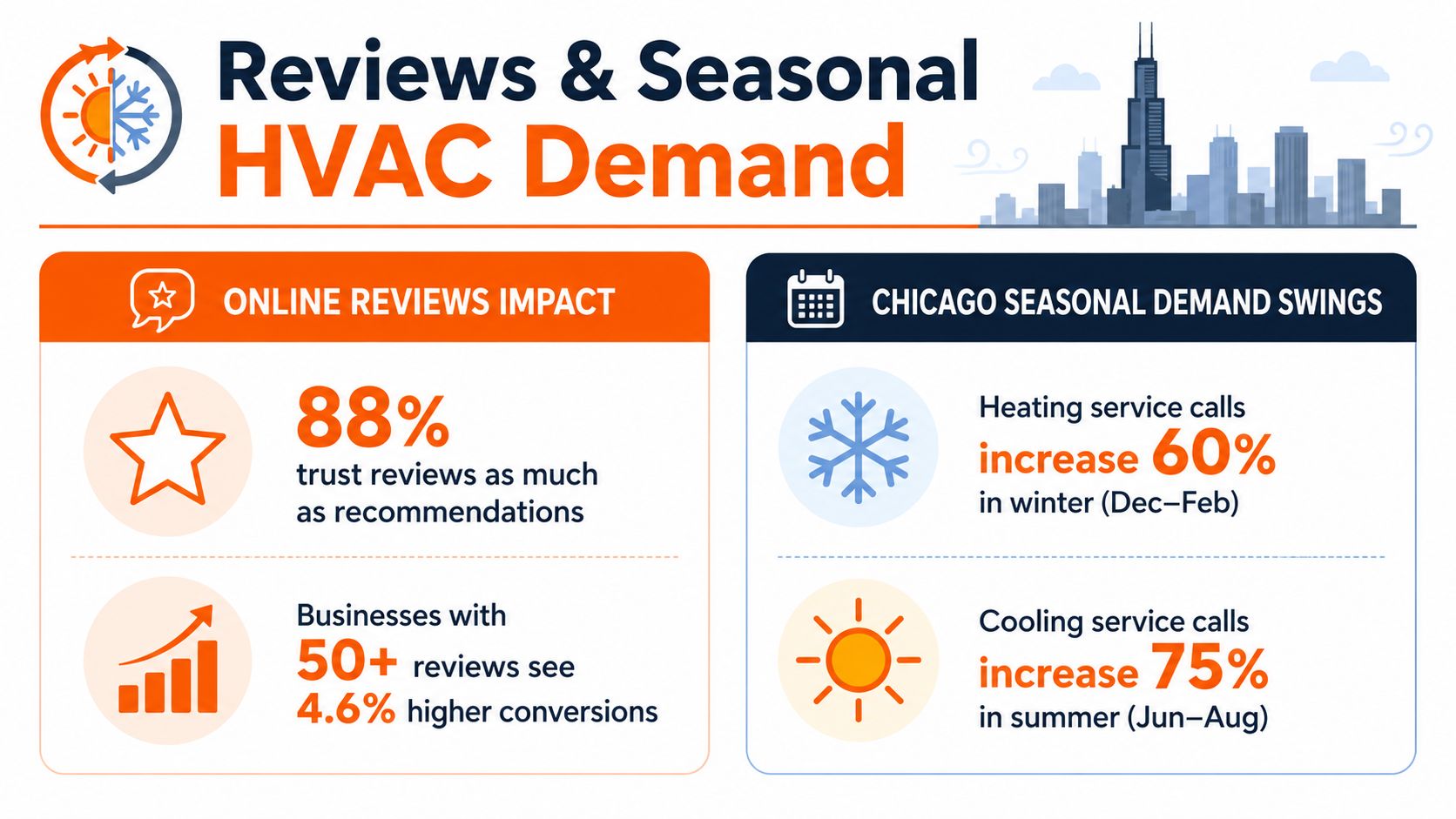
A Chicago homeowner's furnace quits on the first hard cold snap. They search, compare three companies, and click the one with fresh reviews, a clear offer, and a fast path to book. That decision happens in minutes.
That is why reviews and seasonal promotions should run together. One reduces hesitation. The other gives people a reason to call now.
Ask for reviews while the service call still feels recent
The best review request goes out right after a completed job, while the homeowner still feels the relief of having heat or AC back.
Keep the process simple. Your technician finishes the call, the office sends a text with the Google review link, and the customer does not have to hunt for anything. If you wait two days, response rates usually drop because life gets in the way.
Use a short script:
“Thanks for choosing us today. If everything looks good, would you mind leaving a quick Google review? It helps other Chicago homeowners feel comfortable calling us.”
Consistency matters more than wording. A decent script used after every completed call will beat a perfect script used once in a while.
Negative reviews need a process too. Respond quickly, stay calm, acknowledge the issue, and move the resolution offline. Prospects read those responses closely. They want to see whether your company handles problems like professionals.
Tie promotions to the weather and your service mix
Seasonal promotions work best before the phones get slammed, not after.
In late spring, push AC tune-ups, capacitor checks, and drain line cleanings. In early fall, push furnace inspections, safety checks, and filter replacement. During peak heat or deep winter, switch the message from maintenance to speed, availability, and financing for replacements.
Keep the offer practical. Chicago homeowners respond better to clear value than clever marketing.
Examples:
- Spring: AC tune-up special for existing customers
- Early summer: Cooling system check before the first hot week
- Fall: Furnace safety inspection and maintenance reminder
- Winter: No-heat diagnostic priority and replacement financing promotion
The trade-off is simple. Broad discounts can bring in calls, but they also attract price shoppers. Narrow offers tied to a real seasonal need usually produce better jobs and fewer wasted leads.
Use your existing customer list before buying more attention
This is the part many HVAC companies skip.
Your past customers are the easiest audience to reactivate for tune-ups, inspections, and replacement estimates. They already know your name. They are far less expensive to reach than cold traffic from paid ads, and they often book faster.
A basic system works well:
- Send a spring tune-up reminder to past AC customers
- Send a fall heating check reminder to past furnace customers
- Follow up with customers whose equipment is older or who declined work last season
- Ask for a review in the same follow-up sequence after a completed visit
This approach keeps work steadier between spikes in emergency demand. It also gives your promotions a warmer audience than a stranger seeing your ad for the first time.
Reviews help promotions convert
A seasonal offer gets the click. Recent reviews help get the call.
If a homeowner sees your furnace inspection offer and then reads five strong reviews from the last 30 days, trust goes up fast. That combination matters more than a bigger coupon in many cases.
Run one simple rule. Every seasonal campaign should include two follow-ups. One message asks past customers to book. The other asks completed jobs for a review. That system builds demand and reputation at the same time.
Budgeting Tracking and High-ROI Tactics
A lot of Chicago HVAC owners set a marketing budget by gut feel. Then summer hits, calls spike, and spending climbs without a clear plan. By fall, nobody can say which dollars produced maintenance calls, replacement leads, or dead-end price shoppers.
Set the budget before the season gets busy.
Established contractors often put a modest share of revenue into marketing. Companies trying to grow faster usually spend more aggressively. The exact number matters less than building a budget you can defend month to month with booked-job data, cost per lead, and close rates by service line.
Track revenue, not activity
Plenty of owners still judge marketing by clicks, impressions, or whether the phone felt busy last week. That is too loose to manage.
Track these numbers every month:
- Phone calls by source
- Contact form submissions by source
- Booked jobs
- Cost per lead
- Cost per booked job
- Close rate by service type
- Revenue by channel
- Zip codes producing profitable work
This does not need fancy software. A call tracking setup, basic form tracking, and a simple spreadsheet are enough if someone updates it every week.
The goal is simple. Know which channels produce repair calls, which ones produce system replacements, and which ones waste your budget.
Put money where the return is highest
In Chicago, the highest-return tactic is often the least exciting. Reaching past customers usually costs less and books faster than chasing cold traffic.
KickCharge's HVAC marketing guide points to a pattern many contractors already see in the field. Maintenance revenue often comes from customers you already served, yet many HVAC companies still do very little structured follow-up. That gap creates an opening.
Start with the house list you already own:
- Send seasonal service reminders based on equipment type
- Follow up on unsold estimates from the last 6 to 12 months
- Contact owners with aging systems before peak weather hits
- Offer maintenance agreements to recent repair customers
- Ask office staff to call high-value past customers, not just email them
- Build referral relationships with property managers and real estate agents
Here is the trade-off. Paid ads can create demand fast, but they get expensive when every contractor bids on the same emergency keywords. Customer reactivation takes more setup and better recordkeeping, but the lead cost is usually lower and the trust is already there.
That is why smart budgeting is not just about how much you spend. It is about protecting enough budget for the channels you control, especially your customer database, while using paid channels where speed matters.
Good HVAC marketing Chicago contractors can sustain is measured by booked work, not marketing activity. Track the source. Track the sale. Keep funding what produces profitable jobs.
If you want a simpler way to stay visible without having to write posts yourself, GrowTradie helps trade businesses keep their social profiles active with AI-generated, professionally designed content that's specific to your services and local area. It's built for busy contractors who want consistent visibility and more enquiries without adding another job to the day.