
Marketing That Books Electrical Jobs
Coming up with ideas isn't the hard part. Most electricians already know the usual options: post on Facebook, ask for referrals, maybe run ads, maybe update the website when things go quiet. The core problem is consistency. If your marketing depends on spare time at the end of a long day, it usually stops the moment the phone gets busy.
That creates the cycle most trade businesses know too well. One month is flat out, the next month feels too quiet, and then you scramble to “do some marketing” again. Guesswork creeps in, money gets spent in the wrong places, and it becomes hard to tell what's bringing in work.
The best electrician marketing strategies don't require you to become a full-time marketer. They require a system. Industry guidance for electrical contractors now consistently puts a professional website, Google Business Profile, paid search, review management, social media, email, video, and call tracking at the center of customer acquisition because people now look for trades online at the moment they need help, not after seeing a flyer a week earlier (Blue Corona on electrical contractor marketing channels).
This guide keeps it practical. These 8 electrician marketing strategies are built to help you get found, earn trust fast, and keep enquiries coming in without constantly reinventing the wheel.
Table of Contents
- 1. Get Found by Customers in Your Service Area
- 2. Before-and-After Content Marketing
- 3. Educational Content and Safety Tips
- 4. Leveraging Customer Testimonials and Reviews
- 5. Showcasing Service Volume and Reliability
- 6. Behind-the-Scenes and Team Culture Content
- 7. Local Community Engagement and Sponsorships
- 8. Problem-Solution Content for Common Issues
- Electrician Marketing: 8-Point Comparison
- Putting Your Marketing on Autopilot
1. Get Found by Customers in Your Service Area
If someone needs an electrician because the power is playing up, they won't admire your branding. They'll search for someone nearby and call the business that looks credible, local, and easy to reach.
That's why your Google Business Profile does so much heavy lifting. A fully completed profile, matched service areas, current hours, real job photos, and active review replies all help your business appear in searches for an electrician in their suburb. That matters because local search visibility has become one of the main ways electrical contractors get discovered in the first place.
Build the local basics properly
A lot of electricians set up the profile once and leave it half-finished. That's a mistake. Add every service you offer, list the areas you really cover, upload photos from real jobs, and make sure your business name, phone number, and address details match everywhere they appear online.
If you serve multiple suburbs, your website should reflect that too. Separate pages for real service areas often work better than one generic “we service everywhere” page because they match how people search.
Practical rule: Be specific enough that a customer in Parramatta, Geelong, or Ipswich can instantly tell you work in their area.
For a more complete system around turning local visibility into booked work, this guide to electrician lead generation is worth a look.
Reviews and response speed matter more than most electricians think
A lot of marketing advice stops at “get more leads.” In practice, the businesses that win local jobs usually combine visibility with fast response and strong reviews. Industry commentary also points out that reviews are a major ranking and conversion signal, and that slow replies can cost bookings because local-service buyers often contact multiple providers and go with the fastest trustworthy option (Wex on review systems and response speed for electricians).
That changes how you should think about electrician marketing strategies. It's not just about getting seen. It's about looking trustworthy enough to contact, then replying quickly enough to win.
A simple real-world example is the emergency callout search. A customer looking for “emergency electrician Parramatta” isn't browsing for fun. They're comparing three things fast: who looks local, who looks legitimate, and who responds first.
2. Before-and-After Content Marketing
Some posts get ignored because they say nothing. “Another great job completed today” is one of them. It doesn't show the problem, the fix, or why your work mattered.
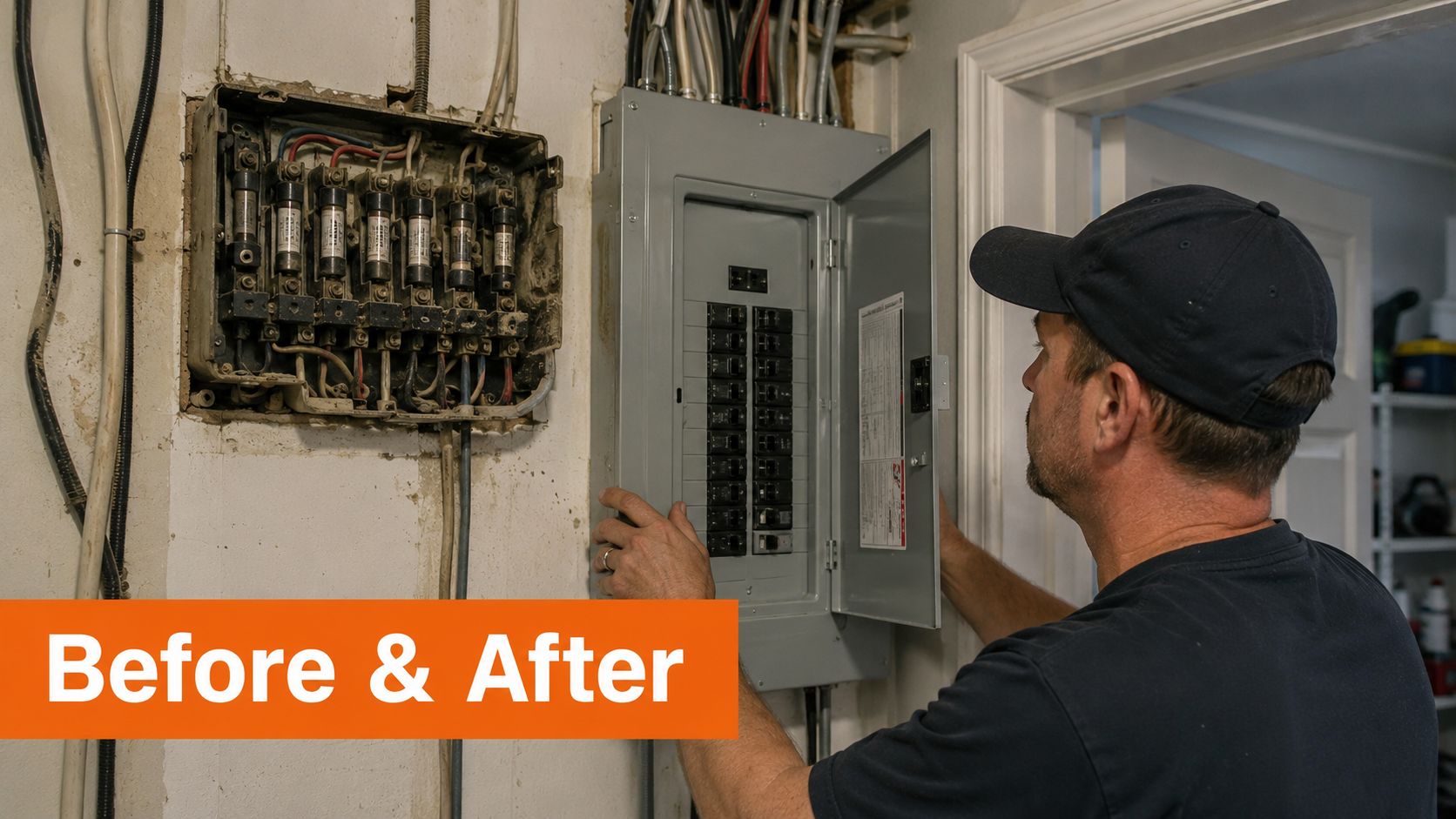
Before-and-after content works because it gives proof. A burnt-out switchboard replaced with a tidy new setup, old downlights upgraded to a cleaner modern fitout, messy cabling reorganized into something safe and professional. People understand that immediately, even if they know nothing about electrical work.
Show the change, not just the finished photo
A single polished after-shot is better than nothing, but its greatest value comes from contrast. Show the outdated panel, the worn fittings, the poor lighting layout, or the damage you were called out to inspect. Then show the finished result and explain what changed.
Keep the explanation short and useful. For example: “Client had repeated tripping issues from an outdated board. We upgraded the panel, tested circuits, and left the property with a safer, more reliable setup.” That tells a better story than “panel upgrade completed.”
Three formats tend to work well:
- Safety upgrade posts: Old wiring, damaged fittings, overloaded boards.
- Visual improvement posts: Lighting upgrades, exterior lighting, feature lighting.
- Problem-solving posts: Fault tracing, repeated outages, replacement of failed components.
Keep it professional and easy to repeat
Always get permission before posting photos from a customer's property. Also pay attention to what appears in the background. House numbers, family photos, car plates, and anything else identifiable should be cropped or blurred.
Good before-and-after content doesn't need fancy editing. It needs clear photos, a plain-English explanation, and a local reference that makes the job feel real.
A local electrician can turn one switchboard upgrade into several useful pieces of content. One post for the before-and-after images. Another with a short explanation of why old boards fail. Another featuring the suburb and service provided. That's how electrician marketing strategies become a system instead of a one-off post whenever you remember.
3. Educational Content and Safety Tips
Customers ask the same questions all the time. Why does the breaker keep tripping? Is flickering lighting dangerous? Do I need a panel upgrade? Can that outlet be repaired or replaced? If you're answering those questions on site every week, you've already got content ideas.
Useful educational content builds trust before the phone rings. It helps people understand the issue, shows that you know what you're talking about, and gives them a reason to contact you when the fix is beyond DIY.
Use the questions you already hear on jobs
Start with the common calls, not random topics. If homeowners keep asking about power loss in one room, overloaded circuits, smoke alarm compliance, or outdoor lighting faults, write short posts about those exact issues.
Keep the language simple. Most customers don't care about technical terminology. They care about what the problem might mean, whether it's urgent, and when they should call a licensed electrician.
A few strong examples:
- “Why your circuit breaker keeps tripping” with common causes and warning signs
- “Signs your switchboard may need attention” with plain-language explanations
- “What to check before calling about a lighting fault” without encouraging unsafe work
If you want help turning everyday service questions into posts that bring enquiries, this guide on content marketing for contractors is useful.
Educational content works best when it leads somewhere
A lot of electricians post “tips” that get likes but don't lead to work. The fix is simple. Tie each post to a real service. If you explain breaker trips, mention fault finding and switchboard inspections. If you explain outdated panels, mention upgrade assessments.
Best-practice guidance for trade marketing also stresses that strong systems don't stop at posting. They connect a clear website experience, review generation, email follow-up, segmentation, and automation so the business captures attention, converts enquiries, and keeps past customers engaged (Weave on building a measurable electrical marketing pipeline).
That matters because educational posts aren't just there to “build a brand.” They're there to move people one step closer to booking.
A short post that answers a real customer question and ends with “book an inspection if this is happening at your property” will usually outperform a vague awareness post.
4. Leveraging Customer Testimonials and Reviews
Customers often don't know how to judge electrical work before hiring you. They can't inspect your cable runs from a Facebook post. They can't verify your fault-finding process from your van signage. So they look for the next best thing. Proof from other customers.
That's why reviews and testimonials carry so much weight. They answer the question every prospect is really asking: “If I call this electrician, will they turn up, do the job properly, and be easy to deal with?”
Ask at the right time and make it easy
The best time to ask for a review is right after the job is complete and the customer is happy with the result. Not a month later when they've forgotten your name. Send a direct message with a simple request and a direct review link.
Don't overcomplicate the wording. A short message like “Thanks again for choosing us. If you're happy with the work, we'd really appreciate a quick Google review” does the job.
Then put those reviews to work. Turn them into simple branded graphics, add them to your website, and reuse them in social posts. A screenshot of a strong review paired with a photo from the job often performs better than another generic promotional post.
Not all testimonials are equal
The strongest testimonials mention something specific. “Prompt, professional, fixed a fault another contractor couldn't find” is much more convincing than “great service.” If a customer gives you a detailed compliment by text or email, ask if you can use it publicly.
A few good ways to present social proof:
- Screenshot reviews: Fast to create and easy to post.
- Short video testimonials: Strong when the customer is comfortable on camera.
- Job-based quotes: Pair the review with a photo of the actual work completed.
One more point matters here. Replying to reviews isn't admin. It's marketing. A polite public response shows future customers that you're active, professional, and paying attention.
5. Showcasing Service Volume and Reliability
A homeowner checks your page at 7:30 p.m. after spotting a burnt outlet. They are not studying your captions like a marketer. They are looking for one simple sign. Does this electrician look active, reliable, and likely to answer the phone tomorrow?
That is what this section is really about. Service volume content works best when it shows steady proof that your business is operating well week after week. It is not about boasting. It is about reducing doubt.
Show consistent activity, not inflated claims
Customers do not need exact job totals to trust you. They need to see that you are regularly on the tools, covering your area, and finishing real work for real people. A quiet page creates doubt, even if you are flat out. A steady stream of simple updates creates confidence.
Good examples are straightforward:
- “Three switchboard upgrades completed across the north side this week.”
- “Out today handling fault finding, smoke alarm installs, and a last-minute emergency callout.”
- “Another full schedule of residential maintenance jobs before the weekend.”
Those posts work because they are believable. They show momentum without sounding made up.
If you have been operating in the same area for years, say that. If your diary is consistently full with maintenance, upgrades, testing, or commercial work, show that through photos, short recaps, and job snapshots. Keep it plain. Busy electricians do not need a polished campaign. They need a repeatable system. For ideas on building that rhythm, this guide to social media marketing for contractors is useful.
Reliability is shown in patterns
One post about a busy week means very little. A month of regular updates tells a different story.
That is the trade-off. Posting every day sounds good in theory, but it usually falls apart once the work piles up. Two or three solid updates a week is enough for many electrical businesses if you keep it going. Consistency beats intensity here.
Useful reliability signals include:
- recent job photos from different suburbs or job types
- short captions that mention the work completed
- updates that show your team is booked and turning up
- occasional mentions of repeat builders, landlords, or local customers
This kind of content does two jobs at once. It reassures new customers, and it keeps your business visible so people remember you when the next problem comes up.
Keep the message grounded
Overclaiming does damage fast. “Fastest response in town” or “number one electrician” means nothing if the customer cannot verify it. Stick to what you can stand behind. Clear, factual updates are stronger than big statements.
A reliable business looks organized. Your marketing should reflect that. If your posts disappear for two months, then suddenly return with hard-sell offers, people notice. A simple content routine fixes that. Save photos as you go, write short captions before finishing your day, and schedule a few posts in advance when the week is packed.
That is how service volume content becomes more than filler. It becomes part of a system that keeps bringing in work, even when you are too busy to think about marketing.
6. Behind-the-Scenes and Team Culture Content
People invite electricians into homes, offices, workshops, and job sites. They care about credentials, but they also care about who is showing up.
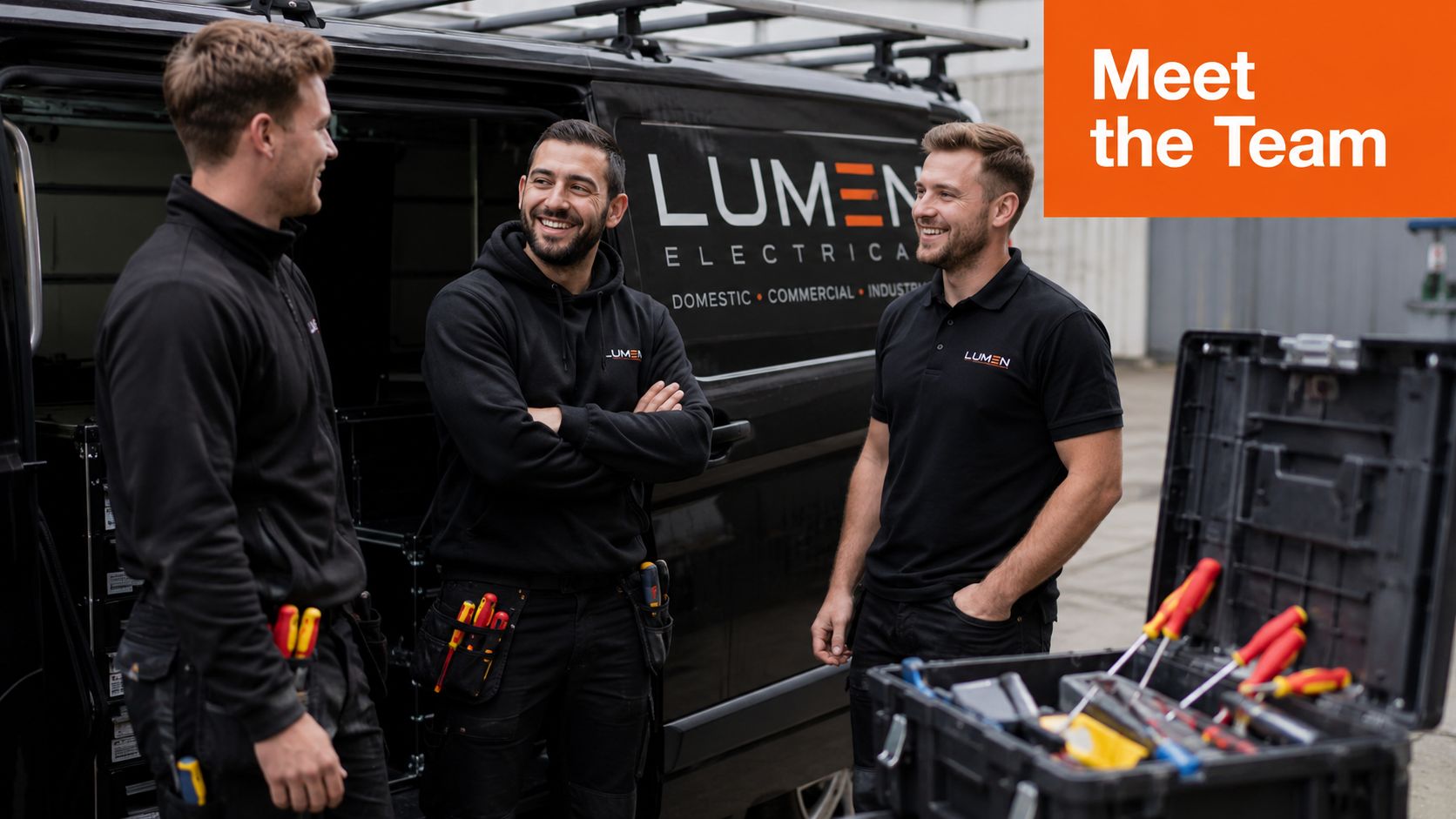
Behind-the-scenes content helps remove that uncertainty. It shows your team, your standards, your tools, your process, and the way you run jobs. That's valuable because trust often grows from small details. Clean vans, organized gear, tidy work habits, apprentices being trained properly, and obvious safety discipline all say something before a word is spoken.
Show the people and the process
A “meet the team” post is simple and effective. Name the person, what they do, and what type of work they handle. That helps future customers feel like they're hiring real people, not a faceless business page.
Other strong options include a quick van setup walkthrough, a short clip from a training day, or a post about a team member gaining a new qualification. These aren't vanity posts. They reassure customers that your business is serious about standards.
If you need a framework for turning everyday team activity into consistent social content, this resource on social media marketing for contractors gives a practical starting point.
Keep it authentic
This type of content falls apart when it looks staged or corporate for the sake of it. A phone video showing how your team protects a work area or explains a safety check can do more for trust than polished graphics.
A real-world example is the service van post. One electrician films a quick walkthrough showing labelled storage, stocked consumables, test gear, and site protection materials. That tells the customer the business comes prepared. Another electrician just posts a logo graphic saying “quality service.” One of those builds trust. The other gets scrolled past.
Customers notice signs of professionalism in ordinary details. Use that to your advantage.
7. Local Community Engagement and Sponsorships
Not every job starts with a search. Some start because people recognize your name from around town, see your business supporting a local event, or hear about you through another local business owner who trusts your work.
Community involvement works best when it's genuine. Sponsoring a junior footy team, helping with lighting at a local hall, supporting a school event, or teaming up with a nearby builder or property manager can all put your business in front of the right people without feeling like hard selling.
Be visible where your customers already are
If you work in a defined service area, local recognition matters. A branded presence at a community event won't replace your digital channels, but it can reinforce them. When someone later sees your name online, it feels familiar.
Good community content usually includes real people and a real story. Photos from the event, a short explanation of why you supported it, and a tag for the local organization are usually enough. Keep the tone grounded. This isn't the place for aggressive promotion.
A few practical ideas that fit electrical businesses:
- Sponsor junior sport: Your branding gets repeated exposure in the right suburbs.
- Support local facilities: Small electrical improvements for a hall or club can build goodwill.
- Cross-promote with nearby businesses: Builders, real estate agents, and suppliers often know who needs reliable electricians.
Relationships often outperform extra promotion
A lot of businesses look for another ad tactic when they really need a better local network. A property manager who trusts you can send repeat work. A builder who knows you'll communicate properly can become a steady referral source. A community organization that sees you show up can mention your name for years.
This is one of the quieter electrician marketing strategies, but it tends to compound over time because it builds recognition and trust in the exact places you want to work.
8. Problem-Solution Content for Common Issues
This is some of the most useful marketing you can create because it meets customers at the exact moment they have a problem.
They don't wake up wanting “content.” They want to know why the lights are flickering, why the breaker won't stay on, why one side of the house has no power, or whether an old panel is now a safety issue. If your post answers that clearly and points them toward professional help, you've done your job.

Use a simple problem-cause-solution format
This structure works because it mirrors how customers think.
Problem: “My circuit breaker keeps tripping.”
Cause: “This can happen because of overloaded circuits, appliance faults, or issues within the electrical system.”
Solution: “If it's recurring, book a licensed electrician to test the circuit and find the fault safely.”
That format works for all kinds of services. Flickering lights. Dead outlets. Hot power points. Failing smoke alarms. Outdoor lighting faults. Old switchboards. Generator issues. EV charger questions.
Focus on urgency, clarity, and safety
You don't need to give away technical detail that turns a risky job into a DIY attempt. Give enough information to help people identify the issue and enough direction to know when to call.
The most effective posts usually do three things well:
- Name the symptom clearly: Use the words customers use.
- Explain the likely issue clearly: Avoid technical overload.
- Offer the next step: Inspection, diagnosis, repair, or upgrade.
A good real-world example is the tripping breaker post. That's not abstract brand content. It's a direct answer to a common callout. Someone reading it often isn't browsing casually. They're actively trying to decide whether to call now or wait. Strong problem-solution content helps them make that call, and it positions your business as the one that understands the issue.
Electrician Marketing: 8-Point Comparison
| Strategy | 🔄 Implementation Complexity | ⚡ Resource Requirements | 📊⭐ Expected Outcomes | 💡 Ideal Use Cases | ⭐ Key Advantages |
|---|---|---|---|---|---|
| Get Found by Customers in Your Service Area | Medium 🔄🔄, GBP, citations, schema setup | Low–Medium ⚡⚡, time, listing tools, review management | High local leads; measurable ranking gains in ~2–3 months 📊 ⭐⭐⭐⭐ | Emergency calls; local service-area growth | Cost-effective high-intent leads; long-term visibility |
| Before-and-After Content Marketing | Low–Medium 🔄🔄, photo/video capture & editing | Low ⚡⚡, smartphone photos, basic editing, permissions | Strong engagement and trust; portfolio growth over time 📊 ⭐⭐⭐ | Showcasing workmanship; conversions via visual proof | Highly credible, shareable, low production cost |
| Educational Content and Safety Tips | Medium 🔄🔄🔄, requires accurate, safe content | Medium ⚡⚡⚡, research, infographics, video production | Builds authority and organic traffic; qualified leads 📊 ⭐⭐⭐⭐ | Questions, seasonal safety, thought leadership | Positions as trusted expert; reduces customer hesitation |
| Leveraging Customer Testimonials and Reviews | Low 🔄, collect and repurpose reviews | Low ⚡, request systems, simple design tools | Strong social proof and conversion lift; ongoing impact 📊 ⭐⭐⭐⭐ | New-customer trust-building; website and socials | High credibility; cost-effective trust builder |
| Showcasing Service Volume and Reliability | Low–Medium 🔄🔄, data aggregation & presentation | Low ⚡⚡, tracking metrics, design templates | Increases confidence and perceived reliability 📊 ⭐⭐⭐ | Scaling businesses; demonstrating capacity & uptime | Signals experience and demand; creates urgency |
| Behind-the-Scenes and Team Culture Content | Low–Medium 🔄🔄, coordination with staff | Medium ⚡⚡⚡, filming, editing, consent management | Humanizes brand and improves local trust 📊 ⭐⭐⭐ | Trust-building for residential clients; recruitment | Personal connection; differentiates from faceless competitors |
| Local Community Engagement and Sponsorships | Medium 🔄🔄🔄, requires genuine involvement | Medium–High ⚡⚡⚡⚡, sponsorship costs, time | Long-term goodwill and local recognition; harder to track ROI 📊 ⭐⭐⭐ | Brand-building, local loyalty, community-focused marketing | Builds authentic local reputation; fosters referrals |
| Problem-Solution Content for Common Issues | Low–Medium 🔄🔄, content structuring & safety guidance | Low–Medium ⚡⚡, content creation, visuals | Captures high-intent searchers; strong conversion potential 📊 ⭐⭐⭐⭐ | Troubleshooting searches; service-specific queries | Directly addresses customer pain points; drives qualified leads |
Putting Your Marketing on Autopilot
Monday starts with two urgent callouts, a quote that has to go out by lunch, and a van that still needs stock. By Friday, marketing has dropped off the list again. That is how a lot of electrical businesses end up with patchy enquiries. The problem usually is not effort. It is relying on spare time that never shows up.
Autopilot marketing comes from a simple system you can repeat without thinking about it too much. Set a small number of actions, assign them to a set day, and keep the standard high enough that each piece of work does a job. One completed install becomes a before-and-after post, a review request, a photo for your gallery, and a note about the service involved. One customer question becomes a short post, a website FAQ update, and a talking point for the next quote visit. That is how you get more output without adding a second job to your week.
Keep the admin side simple too. You do not need a big reporting setup. You need a basic way to check what is producing booked work. Track where enquiries came from, which services people ask for most, how many review requests turn into reviews, how quickly leads get a reply, and whether any paid spend leads to actual jobs. If those numbers are unclear, decisions get made on guesswork, and guesswork usually wastes money.
Start smaller than you think.
For a lot of electricians, three parts are enough to begin with. Stay visible in your service area, ask every happy customer for a review, and publish content that answers common problems people already search for. Run that properly for a few months before adding more. After that, add job photos and team content if you can keep them going consistently.
This is the primary trade-off. A wider marketing mix can bring in more opportunities, but only if you can maintain it. Eight half-done tactics will not outperform three that run every week. Consistency beats variety for small trade businesses because customers need to see signs of life, proof of work, and reasons to trust you before they call.
The goal is not to turn yourself into a marketer. The goal is to build a system that keeps working while you focus on quotes, jobs, staff, and customers. If your profiles stay active, your reviews keep growing, and your content reflects the work you want more of, marketing stops being a stop-start task and starts acting like part of the business.
If content is the part that keeps slipping, GrowTradie handles the posting side for you, so your electrician marketing strategies keep running while you stay on the tools.