
It's 6:30 p.m. You've finished the last job, two quotes still need sending, and a missed call comes through from a number you don't recognise. That call could be a full rewire, a fault-finding job, or a customer ready to book. It could also go to the electrician down the road if your business is hard to find or doesn't look trustworthy fast.
That is the core job of marketing for electricians. It is not about being on every app, posting every day, or learning a pile of agency jargon. It is about making sure local customers can find you, feel confident you're the right person, and contact you without hassle.
A lot of marketing advice falls apart because it ignores how trade businesses run. You are on site, in the van, pricing work, ordering gear, and dealing with jobs that change halfway through the day. Any tactic that needs constant babysitting usually gets dropped. The better option is a small set of actions that keep working even when you are flat out.
Start with the basics that bring in enquiries. Show up where people already look. Make your past work easy to see. Collect reviews properly. Stay visible in your area. If local search is one of your weak spots, this guide to local SEO for contractors is a useful place to tighten that up.
The ideas in this guide stay plain-English on purpose. No technical waffle. No theory built for companies with a marketing team. Just practical ways to get more of the right calls and more booked work.
Table of Contents
- 1. Show Up First When Customers Search on Google
- 2. Before and After Project Showcase Content
- 3. Educational Content and Problem-Solving Posts
- 4. Customer Testimonials and Social Proof Strategy
- 5. Community Engagement and Local Relationship Building
- 6. Seasonal and Timely Service Promotions
- 7. Video Content and Behind-the-Scenes Storytelling
- 8. Referral Program and Incentive Strategy
- 9. Email Marketing and Customer Nurture Sequences
- 10. Lead Magnet and Content Offer Strategy
- 10-Point Comparison of Electrician Marketing Ideas
- Putting These Ideas into Action
1. Show Up First When Customers Search on Google
When someone's power is tripping, they're not scrolling for entertainment. They're searching for a local electrician and calling one of the first businesses that looks legitimate. If you don't show up clearly, you lose the job before the customer even sees your website.
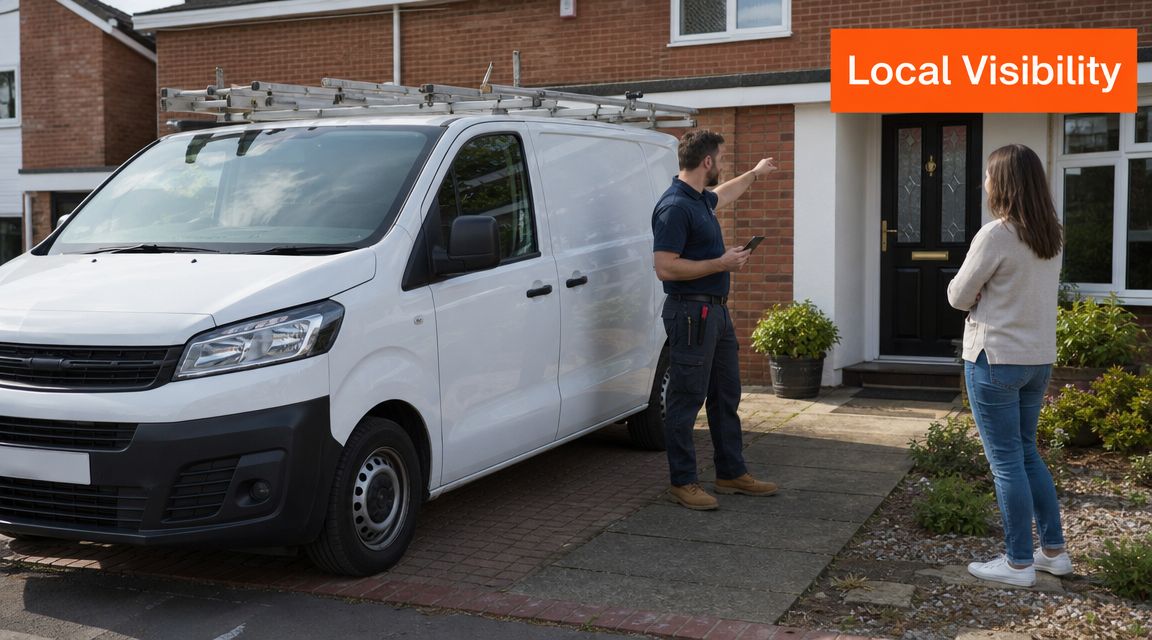
Your Google Business Profile is the first thing to tighten up. Keep your business name, phone number, hours, service areas, and categories accurate. Add real photos of your van, team, switchboards, lighting installs, rewires, and charger installs. That gives people a fast trust signal before they ever call.
What actually moves the needle
Electrician guides consistently put Google Business Profile optimisation and review volume near the top because they directly support local visibility and trust for high-intent buyers, especially when your listing makes it easy to click to call or book a service through clear actions in your profile and site flow, as explained in this guide to Google listing and review tactics for electricians.
A good local setup usually includes:
- Accurate contact details: Match your phone number, hours, and service area everywhere customers might find you.
- Service-specific wording: Mention work people search for, like emergency repairs, switchboard upgrades, rewiring, smoke alarms, and EV charger installation.
- Fresh reviews: Ask after every completed job, not once in a while when you remember.
Practical rule: Ask for the review when the customer is already thanking you. Later usually means never.
If you cover multiple towns, give each area its own page on your site with real service details, not copy-pasted suburb text. For contractors who want a clearer breakdown of how local visibility works in practice, this local search guide for contractors is useful.
A simple example. If you service three suburbs and only mention your head office location online, customers in the other two areas may never see you. Fix that, and you often create more opportunity without changing anything about your actual service.
2. Before and After Project Showcase Content
A lot of electricians overthink content. You don't need polished brand campaigns. You need proof.
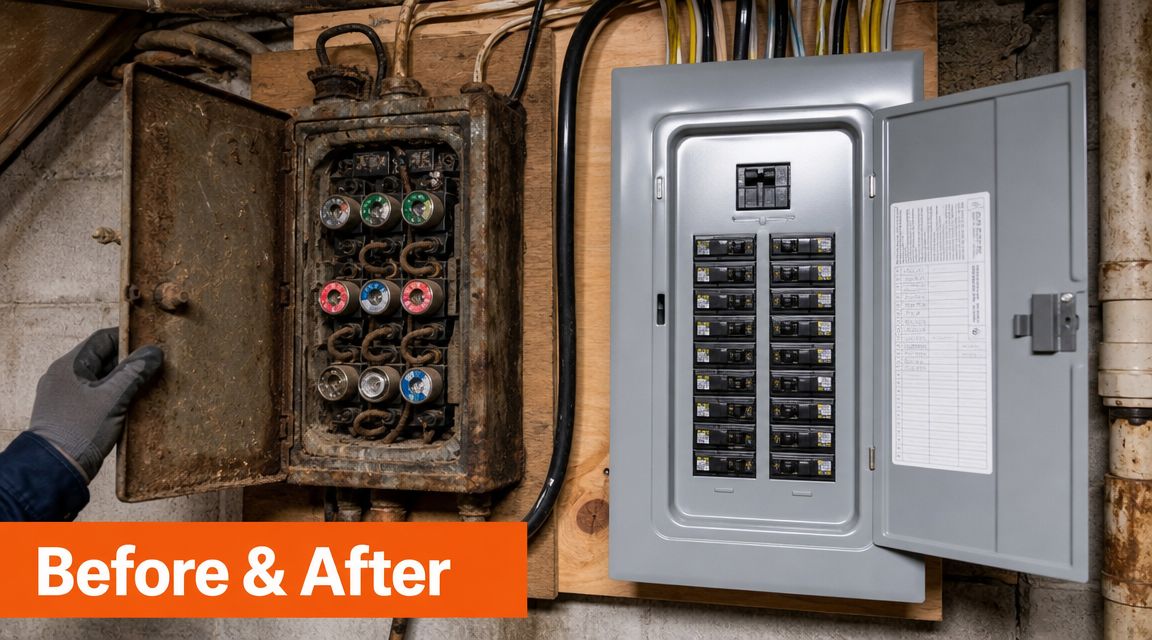
Before and after photos do that better than most sales copy ever will. A tired switchboard replaced with a clean new setup, damaged fittings swapped out for safe modern lighting, or a messy commercial panel brought back under control tells the story fast.
Use one clear image of the problem, then one of the finished result.
Make the post explain the job
The best before and after posts don't just show the work. They explain why it mattered. Was the old board unsafe, outdated, overloaded, or causing repeated faults? Did the upgrade support new appliances, a renovation, or a charger install?
That context helps the customer connect your work to their own problem. It also stops your feed becoming a gallery that only other electricians appreciate.
Try captions built around three points:
- The issue: What was wrong when you arrived.
- The fix: What you installed, repaired, or upgraded.
- The result: Safer setup, more capacity, cleaner finish, fewer faults, or a better layout.
A residential rewire is a good example. “Old wiring replaced during renovation” is weak. “Found ageing wiring during renovation, replaced circuits and upgraded protection so the owners could move forward safely” is much stronger.
Show the customer the difference, then tell them why the difference matters.
If you want to push this harder, create a repeatable routine. Snap photos at the start, midway point, and completion on every suitable job. Keep a shared album for the team so you're not digging through phones later.
This is also where short clips help. A quick walk-through of a completed install often gets more attention than a static post because people can see scale, layout, and finish more clearly.
Here's a strong example format for that kind of post:
Always get permission before posting customer property. That should be part of your job process, not an afterthought.
3. Educational Content and Problem-Solving Posts
A customer notices the breaker tripping again at 8 pm, searches the problem on their phone, and finds your post explaining what repeated trips usually mean. That post can win the call before you ever speak to them.
This kind of content works because it answers real questions in plain English. No trade language. No theory lesson. Just a clear explanation of what might be wrong, what needs quick attention, and whether it makes sense to call an electrician now or book it in.
Good topics usually come straight from the jobs you already do:
- Safety warning posts: Hot outlets, damaged cords, buzzing switches, repeat tripping, or signs an older setup needs checking.
- Decision posts: Repair or replace, patch it up or upgrade, small fix or full board change.
- Seasonal posts: Storm damage checks, outdoor power before summer, workshop load issues, or holiday lighting done safely.
The standard is simple. If a customer can read the post in a minute and understand the risk, you are on the right track.
A short post about repeated breaker trips is a solid example. Explain that a breaker trips to stop a fault or overload causing damage. Mention a few common causes, such as too many appliances on one circuit, a faulty appliance, or a wiring issue. Then tell the reader what to do next. Cut power to the problem area if needed, stop resetting it over and over, and book an inspection if it keeps happening.
That structure is repeatable. Pick one common question from the week, answer it clearly, and publish it. Over time, you build a bank of useful posts that keep bringing in local searches and give you material for Facebook, email, and quote follow-ups. If you want a practical framework for turning everyday service questions into posts, this content marketing guide for contractors is worth a look.
Keep the tone calm and useful. Customers are usually not looking for a lesson. They want to know if the issue is dangerous, expensive, urgent, or avoidable.
That is why problem-solving posts bring in better leads than vague “tips” content. The reader already has the problem. Your job is to explain it clearly enough that calling you feels like the obvious next step.
4. Customer Testimonials and Social Proof Strategy
Most electricians collect reviews by accident. A happy customer leaves one now and then, and that's the whole system. That's better than nothing, but it's not a strategy.
A proper testimonial system gives you proof you can use everywhere. Not just on your Google profile, but on your website, quote follow-ups, social posts, and job pages. People trust other customers because they sound like people, not ads.

Ask for the right kind of feedback
“Can you leave us a review?” is fine. “Could you mention what problem we fixed and how the process went?” is better.
That small prompt changes the quality of what you get. Instead of “great service,” you might get “they fixed repeated circuit trips, arrived when they said they would, explained the issue clearly, and left the place tidy.” That's much more persuasive.
Use a mix of formats:
- Google reviews: Best for visibility and first impressions.
- Short written testimonials: Good for your site and quote emails.
- Quick video clips: Best after bigger jobs like rewires, fit-outs, or upgrades.
Don't over-polish customer feedback. A natural phone video from a relieved homeowner often works better than a staged script. It feels real, because it is.
A strong example is a family who had an unsafe board replaced before moving into a house. Their review can support your switchboard upgrade page, a social post, and a follow-up email to similar leads. One job can give you multiple trust assets if you capture it properly.
A review isn't just praise. It's evidence that a stranger can trust you with their home or business.
5. Community Engagement and Local Relationship Building
Some electrician marketing ideas look impressive online but do very little locally. Community involvement works the other way around. It can look modest, but it builds recognition where jobs come from.
You don't need to sponsor everything in town. Pick the places where your likely customers already spend time. That might be a junior sports club, a school raffle, a local business association, a property investors group, or a neighbourhood Facebook group where people regularly ask for trade recommendations.
Aim for useful visibility, not random exposure
The best local relationship building is tied to trust. If a real estate agent, builder, property manager, or plumber sees you as reliable, you can become the first name they pass on when an electrical issue comes up.
A few practical examples:
- Real estate relationships: Offer fast turnaround for electrical issues that affect sales, rentals, or compliance-related fixes.
- Neighbourhood groups: Answer questions helpfully without turning every reply into a pitch.
- Local events: Sponsor something small, then post photos from it so the visibility continues beyond the day itself.
Another smart move is to create posts around your local involvement. If your team helps at a community event or supports a local club, share it. That gives people a reason to remember your business outside of an emergency.
Electrician marketing isn't only about lead capture. As noted earlier in industry guidance, credibility and trust signals matter heavily in a local market where customers compare licensed providers quickly. People often choose the business that feels familiar and dependable, not just the one that appears first.
One caution. Don't confuse “being known” with “being booked.” Track where enquiries come from. If a local sponsorship never leads to calls, keep supporting it if you want to, but don't pretend it's a strong sales channel.
6. Seasonal and Timely Service Promotions
Some work sells better when the timing is obvious. Customers think about outdoor lighting before entertaining season, switchboard load when the air conditioning is working hard, and safety checks when storms or holiday setup create extra demand.
If you only promote services after everyone already needs them, you're late. Timely campaigns work best when they go out before the problem hits.

Match the message to the season
Good seasonal promotion isn't just “book now.” It links a service to a real situation customers understand.
Examples that make sense:
- Summer: Circuit load, ceiling fans, outdoor entertaining areas, shed power, and switchboard capacity.
- Winter: Heating-related electrical demand, lighting, garage and workshop circuits, and backup power planning.
- Holiday periods: Outdoor lights, safety checks, timer installs, extra outlets, and fault finding after heavy use.
One useful angle that many businesses still underuse is promoting newer, high-value services such as EV charger installation and solar-related electrical work. Several guides now point to these electrification-related services as a smarter focus because homeowners are actively researching them, which creates an opportunity to build content and offers around demand that's still less crowded than generic residential promotion, as discussed in this overview of electrician marketing strategies and emerging service demand.
That's a practical lesson. Don't just post “we do electrical work.” Post “we install home EV chargers” before local demand spikes further. Same trade. Better positioning.
Seasonal posts also work well as reminders to previous customers. Someone who used you for a lighting install last year may well need help with outdoor power, a charger, or a board upgrade this year. Timing gives them a reason to act.
7. Video Content and Behind-the-Scenes Storytelling
If photos prove the result, video proves the people. That matters because customers aren't only hiring your business name. They're letting your team onto their property.
Short video clips help remove that uncertainty. A quick introduction from the person who'll turn up, a walk-through of a completed job, or a simple explanation of a common issue can make your business feel familiar before the first call.
What to film when you're short on time
You don't need cinematic production. A phone camera is enough if the clip is steady, clear, and useful.
Film things like:
- Team introductions: Who you are, where you work, and what jobs you handle.
- Job walk-throughs: A quick explanation of what was wrong and what you fixed.
- Van and tools prep: Simple behind-the-scenes clips that show organisation and professionalism.
One reason this works is that modern electrician marketing advice increasingly recommends regular posting across platforms such as Facebook, Instagram, LinkedIn, and TikTok to maintain local awareness. That doesn't mean you need to dance on camera. It means you should show up consistently where local customers spend time.
A good example is a brief clip after a panel upgrade. Stand in front of the completed work, explain the original problem in plain English, mention the outcome, and end with a direct call to book an inspection if someone's experiencing similar issues.
Customers often decide you seem trustworthy before they decide you seem cheapest.
Keep videos short. Most service businesses do better with concise clips than long explanations. And always add captions, because plenty of people watch with the sound off.
8. Referral Program and Incentive Strategy
Referral work is great. Waiting around and hoping for it isn't.
The best referral systems are simple, visible, and repeated often. Customers should know you welcome referrals, know how to make one, and know what happens next. If any part of that is vague, the program fades into the background.
Keep the offer easy to explain
Complicated referral rules kill momentum. So does making the reward awkward to claim.
Instead, build a referral process around three basic parts:
- Clear reward: Credit, gift card, or another practical thank-you.
- Simple handoff: A card, text link, invoice note, or quick message they can forward.
- Fast follow-through: Confirm the referral and deliver the reward promptly.
One electrician might hand every completed customer a small card that says, “If a friend or neighbour needs electrical work, pass this on.” Another might include a referral line on every invoice and in every follow-up message. Both are fine. The key is consistency.
Industry guidance also recommends referral programs as a foundational tactic alongside reviews and local business profiles. That makes sense in trade businesses. A referred lead usually arrives with built-in trust because someone has already vouched for you.
A practical scenario is a homeowner who had a smooth switchboard upgrade and then refers you to a neighbour doing renovations. That second customer starts from a better place than a cold enquiry. They're less worried, less sceptical, and more ready to book.
The mistake is treating referrals as luck. They work better when you ask, remind, and make it frictionless.
9. Email Marketing and Customer Nurture Sequences
A customer hires you for a fault, the job goes well, and then life moves on. Six months later they need outdoor power, extra sockets in a new room, or help with an EV charger. If they have not heard from you since the invoice was paid, there is a good chance they search again and book whoever shows up first.
That is what email is for. It keeps you familiar without constant posting, chasing, or wasted phone calls.
Keep it plain and useful. One or two emails a month is usually enough for most electrical businesses. The job is simple. Stay visible, remind people what you do, and give them a sensible reason to get back in touch.
What to send
The strongest emails are tied to real jobs people already buy, not generic company updates.
Good options include:
- Recent customer follow-up: Thank them for the work, confirm what was done, and invite them to reply if anything else comes up.
- Seasonal service reminders: Storm season checks, outdoor lighting, switchboard inspections, smoke alarm checks, or EV charger planning.
- Quote follow-up emails: A short reminder for people who asked for pricing but have not booked.
- Past customer reactivation: A check-in for customers you have not heard from in a while, with one relevant service offer.
- Customer-type specific emails: Homeowners, landlords, and commercial clients usually care about different problems, so send different messages.
The trade-off is straightforward. Send too often and people tune out. Send too rarely and they forget your name.
If you want a practical setup, this email marketing guide for electricians shows how to build simple follow-up emails without making it a full-time admin job.
A good nurture sequence also sounds like a person wrote it. Skip the polished sales language. Write the same way you would speak to a customer on site. Clear subject line, short body copy, one point, one next step.
For example, a customer who booked you for fault finding does not need a long newsletter. They need a short email a few months later saying you are booking winter safety checks, switchboard upgrades, and outdoor power work, with a direct link or reply prompt to ask for a quote.
That approach works because it is easy to understand and easy to act on. No jargon. No clever funnel talk. Just useful reminders that bring past customers back before they start shopping around.
10. Lead Magnet and Content Offer Strategy
This one sounds more complicated than it is. A lead magnet is just a useful free resource that gives people a reason to hand over their email address.
For electricians, that could be a home electrical safety checklist, a guide to choosing the right EV charger setup, a renovation power planning guide, or a landlord-ready electrical inspection summary. The point isn't to impress people with design. It's to solve one specific problem well.
Offer something people actually want
Generic freebies don't work. “Our complete electrical guide” is too broad. “Home electrical safety checklist before buying an older property” is much stronger because it matches a real concern.
The strongest offers usually have these traits:
- Narrow focus: One topic, one audience, one problem.
- Immediate use: The customer can apply it straight away.
- Logical next step: The checklist naturally leads to an inspection, quote, or booked service.
This tactic works especially well when paired with emerging service demand. If you're pushing EV chargers or solar-related electrical work, build a guide around those services instead of another broad household safety PDF. That attracts people already thinking about a higher-value job.
A good real-world setup would be a page offering a “Home EV Charger Planning Guide” with a short form. After download, the customer gets a follow-up email that explains common installation considerations and invites them to request a quote.
This is one of the more practical electrician marketing ideas for businesses that want to turn website visits into actual contacts. Not every visitor is ready to call today. A useful guide gives you a second chance to stay in touch.
10-Point Comparison of Electrician Marketing Ideas
| Strategy | Implementation complexity 🔄 | Resource & time ⚡ | Expected impact ⭐📊 | Best use cases 💡 | Key advantage ⭐ |
|---|---|---|---|---|---|
| Show Up First When Customers Search on Google | Medium 🔄🔄, setup + ongoing local SEO management | Moderate ⚡⚡, profile upkeep, review generation | High ⭐📊, steady, high-intent local leads | Emergency/local search, service-area targeting | Top local visibility and trust via reviews |
| Before & After Project Showcase Content | Low–Medium 🔄🔄, routine capture & basic editing | Moderate ⚡⚡, photography/video time, permissions | High ⭐📊, strong engagement and referral potential | Demonstrating workmanship, social proof on feeds | Visual proof of quality that converts prospects |
| Educational Content & Problem-Solving Posts | Medium 🔄🔄, requires accurate technical content | Low–Moderate ⚡⚡, research and simple design tools | Medium–High ⭐📊, builds authority and organic shares | Safety tips, awareness, long-term trust building | Positions you as a knowledgeable expert |
| Customer Testimonials & Social Proof Strategy | Low–Medium 🔄🔄, system to collect & present reviews | Moderate ⚡⚡, filming/coordination and consent | High ⭐📊, increases conversions and trust quickly | Consideration stage, high-value or trust-sensitive jobs | Persuasive real-customer endorsements |
| Community Engagement & Local Relationship Building | Medium–High 🔄🔄🔄, ongoing local commitments | Moderate–High ⚡⚡⚡, sponsorship costs and time | Medium ⭐📊, improves local reputation and referrals | Brand-building, hiring, local-centric businesses | Generates word-of-mouth and lasting goodwill |
| Seasonal & Timely Service Promotions | Low–Medium 🔄🔄, planning and calendar management | Low–Moderate ⚡⚡, promo materials and scheduling | Medium–High ⭐📊, drives seasonal urgency and bookings | Peak seasons, weather-related services, holidays | Capitalizes on predictable demand cycles |
| Video Content & Behind-the-Scenes Storytelling | Medium–High 🔄🔄🔄, filming + editing workflow | Moderate–High ⚡⚡⚡, capture time, editing, permissions | High ⭐📊, exceptional engagement and reach | Social platforms, humanizing the team, tutorials | Strong emotional connection and shareability |
| Referral Program & Incentive Strategy | Low–Medium 🔄🔄, rules and tracking required | Low–Moderate ⚡⚡, incentive costs and admin | High ⭐📊, qualified, lower-cost customer acquisition | Repeat customers, satisfied-client networks | Cost-effective leads with higher close rates |
| Email Marketing & Customer Nurture Sequences | Medium 🔄🔄🔄, automation and segmentation setup | Low–Moderate ⚡⚡, platform fees and content creation | High ⭐📊, excellent ROI; drives repeat business | Retention, seasonal reminders, re-engagement | Automated, measurable long-term revenue driver |
| Lead Magnet & Content Offer Strategy | Medium 🔄🔄, create valuable asset + landing page | Moderate ⚡⚡, design, landing page, promotion | Medium–High ⭐📊, captures qualified leads for nurture | Website visitors, social traffic, list building | Converts audience into contactable, nurturable leads |
Putting These Ideas into Action
It's 6:30 on a Tuesday. The phone is quiet, you have quotes to send, and you know you should be doing something about marketing, but you do not have half a day to build a grand plan. Good. You do not need one.
The electricians who get steady results usually start smaller than they think. Pick two or three actions you can keep doing for the next three months. If a tactic needs more time than you can realistically give it, park it for now. A simple system you stick to will beat an ambitious plan that falls apart after a week.
For a lot of firms, the best starting point is the work that helps customers find you and trust you fast. Tidy up your Google Business Profile. Ask for a review at the end of every job that went well. Take clear before and after photos while you are still on site. Those jobs are not glamorous, but they directly affect who calls you.
Then set a weekly rhythm. One job photo post. One short tip that answers a common customer question. One follow-up message to recent customers asking for feedback or reminding them what services you handle. Keep a folder of testimonials and job photos so you are not hunting for material every time you want to post.
Repetition matters more than novelty.
That is where a lot of electrical businesses stall. They spend too much time worrying about the next clever idea and not enough time building habits that produce enquiries month after month. One review does very little on its own. Fifty good reviews collected steadily over time change how people judge your business before they ever call.
Be honest about trade-offs, too. Paid ads can bring calls quickly, but they also need budget control, regular checking, and someone who knows when a lead is worth paying for. Referral work is cheaper and often closes better, but it takes longer to build because it depends on doing good work consistently and asking for recommendations at the right time. Email is useful for past customers, but only if you send practical reminders people will actually read.
A balanced approach usually works best. Use one channel that can generate work now, such as paid search or lead platforms if the numbers make sense in your area. Back that up with slower, steadier work like reviews, local visibility, customer follow-up, and project photos. That mix gives you both short-term leads and a stronger position six months from now.
If time is tight, build this into the job instead of treating it as extra admin. Ask for the review before you leave. Take the photos before you pack up. Save customer comments in one place the day they come in. Write one useful post at the end of the week based on a question a customer asked that morning.
That is how marketing becomes manageable.
If you want help staying visible without writing every post yourself, GrowTradie is built for exactly that. It helps trade businesses create and publish clean, professional content based on their services and local area, so your profiles stay active even when you're flat out on the tools.